
More Control with the Gas Detector Fleet Manager
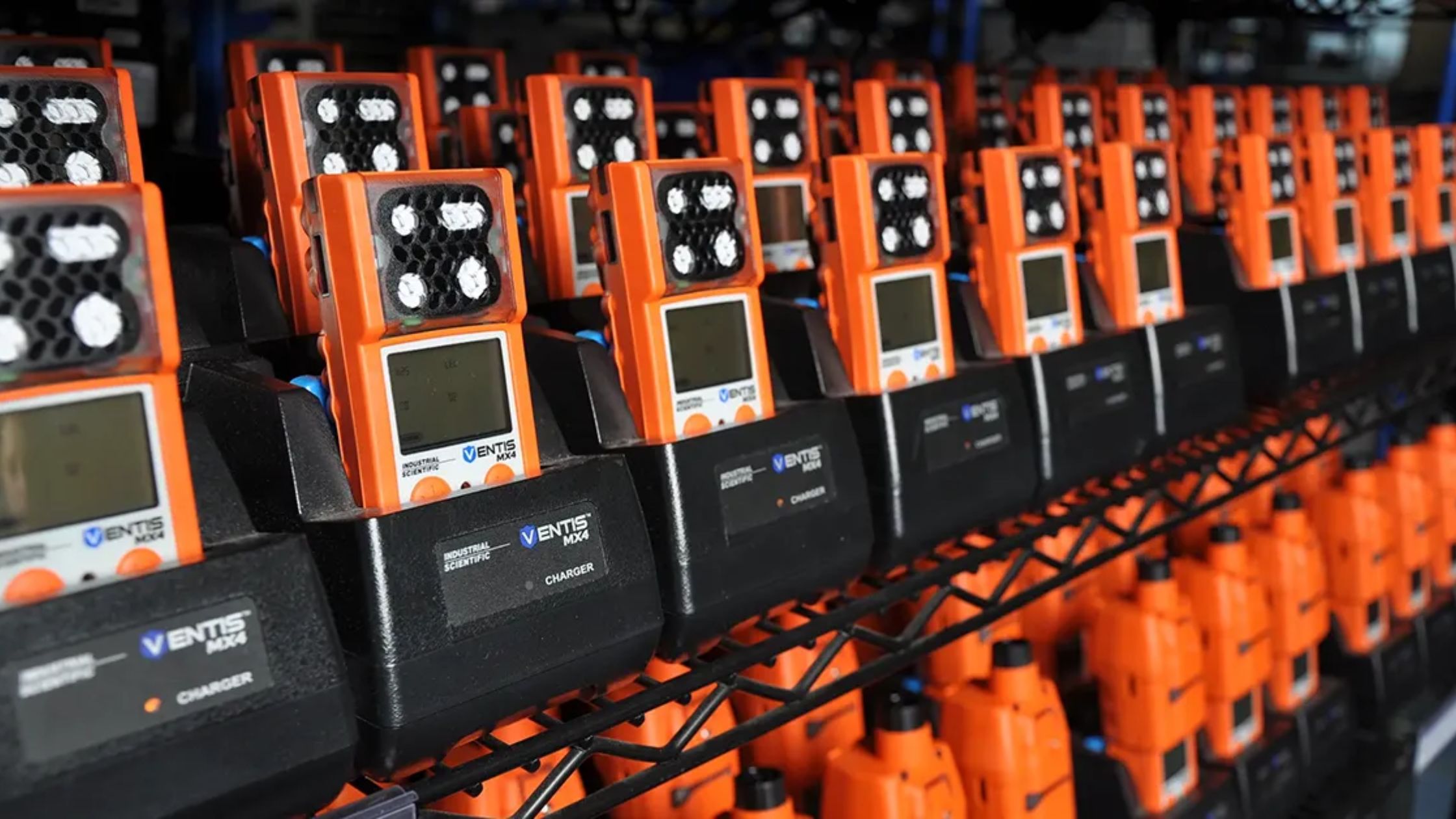
In industrial environments, mining operations, and other high-risk worksites, managing gas detectors across different users, shifts, and maintenance schedules can quickly become a logistical headache. But a new solution from Industrial Scientific is changing the game: the Gas Detector Fleet Manager (GDFM), a smart, secure locker-style cabinet system that charges, stores, tracks, and manages gas detectors, all while syncing data directly with iNet Exchange. Users check in and out devices before and after each shift, and the system automatically logs compliance data, monitors usage, charges units, and sends alerts for unreturned or missing monitors.
This blog explores what the GDFM is, how it works, and why it matters for teams working in high-risk environments.
What Is the Gas Detector Fleet Manager (GDFM)?
The GDFM, developed by Industrial Scientific, is a connected cabinet system built for secure gas detector management. It functions as a locker-based check-in/check-out system. Each cabinet holds up to 12 compatible monitors (such as the Ventis Pro5) and is designed for organisations using iNet Exchange. When a user removes a device at the start of a shift, the system logs the action. Upon return, the device is charged, synced, and stored and the system monitors who has what, when, and whether it has been returned. If not, it sends automated alerts. Permission-based access controls ensure that only authorised users can access detectors.
The cabinet charges detectors, automatically uploads calibration and bump test records, and securely stores devices between uses. While each cabinet accommodates 12 detectors, the system is fully scalable multiple cabinets can be installed side-by-side and connected to function as one centralised unit. This makes it ideal for growing operations or larger sites with extensive gas detection fleets.
Learn moreWhy Is It Important?
Managing gas detectors manually often leads to missed calibrations, lost units, poor recordkeeping, and compliance headaches. The GDFM solves these issues with:
- Centralised storage to reduce device loss
- Automatic data logging to improve compliance
- Integrated charging to ensure readiness
- Full visibility via iNet Exchange so nothing slips through the cracks
These four key features allow businesses to proactively manage safety devices across departments, sites, and shifts reducing risks, administrative time, and long-term costs.
What Problems Does It Solve?
The GDFM helps reduce costs from lost or damaged detectors, simplifies compliance reporting, and prevents downtime due to uncharged or uncalibrated devices. It also improves workforce accountability, helping safety managers ensure detectors are returned and maintained without chasing staff or relying on paper logs. This automation streamlines operations, supports audit readiness, and helps teams focus on work, not logistics.
How Does It Work?
The GDFM is a wall-mounted cabinet connected via Ethernet or cellular to iNet Control. Each cabinet includes 12 dock cradles that:
- Automatically detect compatible gas detectors
- Charge the units between shifts
- Upload calibration, usage, and bump test data to the cloud
- Track device location (in-use, in-cabinet, overdue)
Users insert their detector, and the GDFM takes care of charging, syncing, and tracking, eliminating the need for manual logging or paperwork.
Supported Devices and Integrations
Currently supporting the Ventis Pro5, the GDFM integrates directly with iNet Exchange, handling maintenance scheduling, diagnostics, and fleet management. Future compatibility with more Industrial Scientific devices is expected.
Who Is It For?
This system is purpose-built for teams in oil and gas, mining, civil construction, utilities, infrastructure, and chemical manufacturing or any industry where gas exposure is a serious risk and safety compliance is non-negotiable.
Key Benefits at a Glance
- Save time: No more chasing down devices or completing manual uploads
- Improve accountability: Know who used which detector and when
- Stay compliant: All bump and calibration data logged automatically
- Avoid downtime: Fully charged, ready-to-use detectors every shift
- Control access: Permission-based settings prevent unauthorised usage
Common Questions
What are the four types of gas detectors?
The four main types are catalytic, infrared (NDIR), electrochemical, and photoionisation detectors. Each is suited to detecting different gases in different environments.
How does a gas detection system work?
A gas detection system uses sensors to monitor air for hazardous gases. These sensors trigger alarms or actions when gas levels exceed safe thresholds, helping to prevent exposure or incidents.
Can you buy a gas detector?
Yes. Portable and fixed gas detectors are available for purchase from safety and industrial suppliers. For large sites, systems like GDFM can manage an entire fleet of detectors for you. Not sure what you need? Contact us to speak with a technical consultant about the best gas detection solution for your site.
What does a 4-gas detector do?
A 4 gas detector typically monitors oxygen (O₂), carbon monoxide (CO), hydrogen sulphide (H₂S), and the lower explosive limits (LEL) of combustible gases. This combination is widely used for confined space entry and general industrial safety. However, these devices are often configurable, meaning you can swap in other sensors—like ammonia (NH₃), sulfur dioxide (SO₂), or nitrogen dioxide (NO₂), to suit your specific application. It’s best to speak with a technical consultant to make sure your detector matches the hazards present in your environment.
Is GDFM a rental robot?
Not exactly. While the concept of a “rental robot” exists in the industry, GDFM offers more than just storage, it provides full automation, user access control, real-time data tracking, and maintenance alerts for portable gas detectors.
A Smarter Way to Manage Gas Detection
The GDFM by Industrial Scientific isn’t just a cabinet it’s a connected gas detection management system. It puts control back in the hands of safety teams, removes admin burden, and supports a smarter, more reliable gas detection program.
Whether you're already using iNet or want to modernise your safety systems, the GDFM offers scalable efficiency and peace of mind.
To learn more about the Gas Detector Fleet Manager, visit our GDFM product page or get in touch with the Gastech team to arrange a walkthrough.