
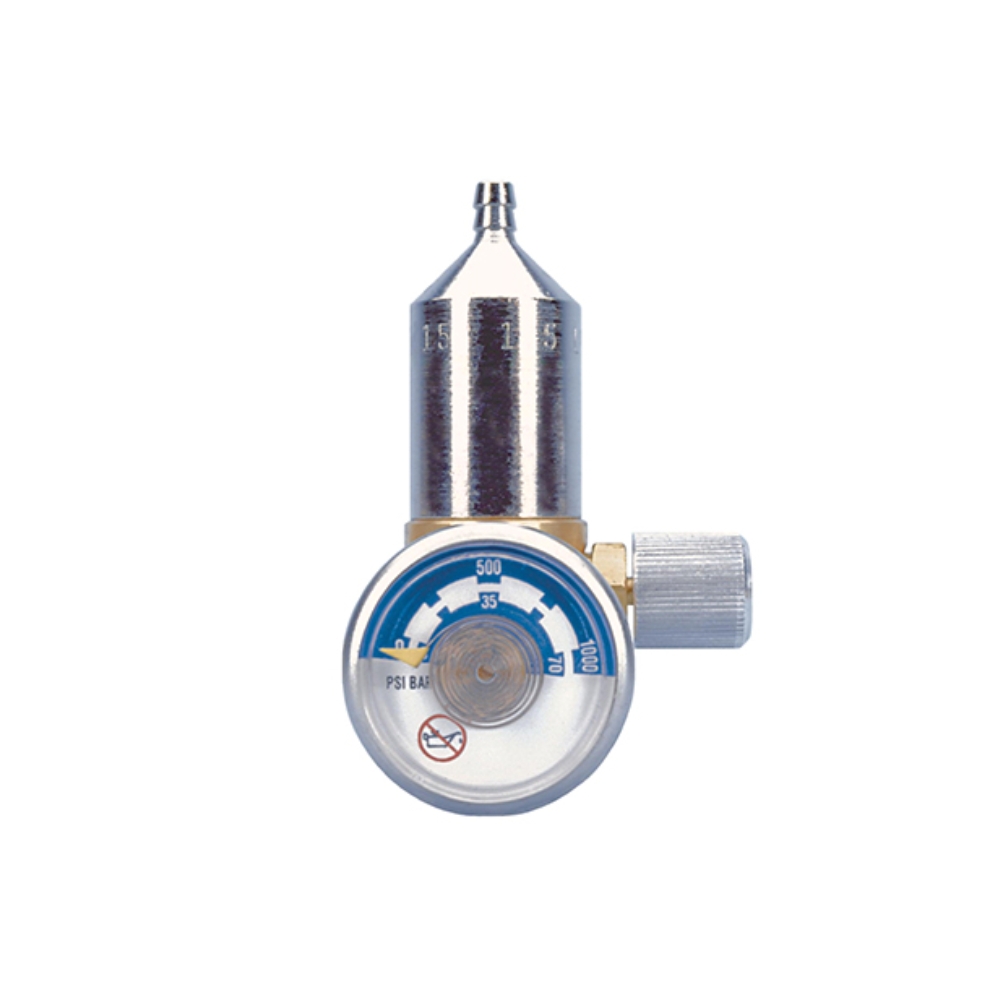
700 Series Regulators
Fixed Flow Calibration Gas Regulators
The 700 Series is the regulator most calibrations use. It delivers gas at a preset rate, set and flow checked at the factory so it arrives ready to work. Common rates are 0.5, 1 and 1.5 litres per minute, with presets available from 0.2 up to 6. Body materials run from nickel plated brass through to full stainless steel, depending on how reactive the gas is.
KEY BENEFITS
- Preset and flow checked at the factory, so no adjustment is needed on arrival
- Common rates of 0.5, 1 and 1.5 litres per minute, with presets from 0.2 up to 6
- Nickel plated brass suits non-reactive gases plus hydrogen sulphide and sulphur dioxide
- Hybrid aluminium and stainless bodies handle more reactive gases
- Full stainless steel for the most reactive mixtures such as chlorine and ammonia
+ more in the Description tab below
A fixed flow regulator suits any instrument that relies on gas reaching the sensor by itself, which covers most diffusion detectors and calibration caps.
The flow rate is not a preference. The instrument manufacturer specifies it, and exceeding it floods the sensor and wastes gas without improving anything. Falling short gives a slow or incomplete response that reads as a sensor problem. So the rate is selected to match the instrument rather than chosen for convenience.
Body material matters as much as flow rate, and for the same reason cylinders for reactive mixtures are specially treated. Reactive gases adhere to the surfaces they pass through, so a brass regulator on a chlorine or ammonia cylinder consumes gas you have paid for before it reaches the instrument. Nickel plated brass covers non-reactive gases along with hydrogen sulphide and sulphur dioxide. Hybrid aluminium and stainless handles more reactive mixtures. Full stainless steel is the answer for the most reactive.
One version is supplied without an on and off knob, for continuous flow applications where the regulator stays open.
If your detector has a pump, this is not the regulator you need. A 2000 Series demand flow regulator is.
Benefits
- Preset and flow checked at the factory, so no adjustment is needed on arrival
- Common rates of 0.5, 1 and 1.5 litres per minute, with presets from 0.2 up to 6
- Nickel plated brass suits non-reactive gases plus hydrogen sulphide and sulphur dioxide
- Hybrid aluminium and stainless bodies handle more reactive gases
- Full stainless steel for the most reactive mixtures such as chlorine and ammonia
- Aviation & Transportation
- Carpark & HVAC
- Chemical Manufacturing
- Confined Space & Compliance
- Energy (Oil & Gas)
- Food & Beverage
- Landfill & Remediation
- Marine & Maritime
- Medical & Healthcare
- Mining & Minerals
- Power Generation & BESS
- Technology & Semiconductor
- Water & Wastewater
The one the instrument manufacturer specifies. More flow is not better, since it floods the sensor and wastes gas.
Nickel plated brass for non-reactive gases, hydrogen sulphide and sulphur dioxide. Hybrid aluminium and stainless for more reactive gases. Full stainless steel for the most reactive.
No. A pump needs a demand flow regulator, because a fixed flow either starves it or pressurises the sensor.
Trusted by









Contact Us
Can’t find what you’re looking for? Our team is happy to help.