
Mounting, Protection And Alignment Accessories
An optical flame detector only works if it is pointing at the right place and can see clearly. Most of what goes wrong with a flame detection installation after commissioning is not the detector, it is one of those two things, and the accessories on this page exist to address both.
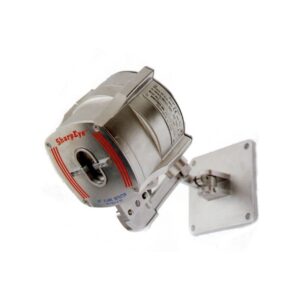
Aim is the first problem. A flame detector protects a cone of vision rather than a point, so where it is aimed decides what is covered and what is not. Swivel mounting brackets allow a detector to be angled precisely toward the risk area rather than roughly toward it. That matters most in the positions detectors typically end up in: high and looking down, in a corner covering a bay, or fixed to structure that was never designed with a detector in mind. Getting the angle right at installation is considerably cheaper than discovering a blind spot later.
An alignment tool takes that further, and it is worth having on any installation with more than a handful of detectors. Aiming a detector by eye across a large process area is guesswork, and a tool that lets you sight along the detector’s axis turns it into a measurement. On an open path or long range flame detection layout, that is the difference between a design that works and one that nominally complies.
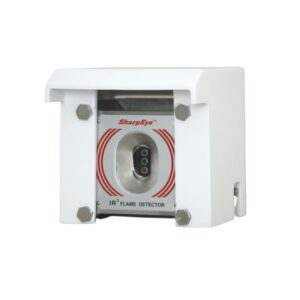
Protection is the second problem, and in Australian conditions it is the one that shortens service life. A weather protector keeps direct rain off the window and reduces the sun load on a housing that may already be running near its temperature limit. That is not only about survival, it is about the optics staying clear, because a detector with a dirty or wet window is a detector reporting a fault or missing a fire.
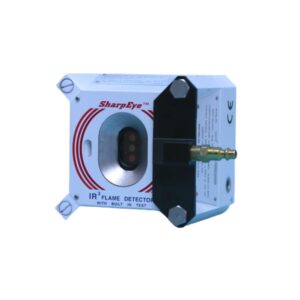
Airshields solve a specific version of the same problem. In dusty, oily or salt laden atmospheres, a continuous flow of clean instrument air across the window keeps contamination off it between service visits. On a site where a detector would otherwise need cleaning weekly, an airshield changes the maintenance interval rather than just the cleaning method.
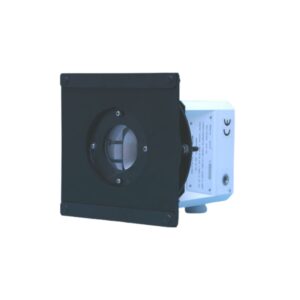
High temperature duct mounts cover a narrower case. The detector has to watch inside a duct or an enclosure rather than a room, and the ambient temperature at the mounting point is beyond what a standard bracket is rated for.
None of these are expensive relative to the detector, and none of them are optional in the environments that need them. If you are specifying a flame detection system and are not sure which of these applies, our Technical Consultants will work through it against the mounting positions and the conditions on site. Support runs from WA, NSW and QLD.
Trusted by









Contact Us
Can’t find what you’re looking for? Our team is happy to help.