
Emissions Analysers For Combustion Tuning And Compliance
An emissions analyser is not a gas detector, and the distinction matters when you are choosing one.
A gas detector protects people from an atmosphere. It watches for something that should not be there and raises an alarm. An emissions analyser measures a process so somebody can make a decision about it. Different instrument, different user, and usually a different reason for the purchase entirely.
Most people buy an emissions analyser for one of three reasons, and it is worth knowing which is yours before comparing specifications.
The first is combustion tuning, and it is the one that pays for the instrument. Gas turbine combustion tuning optimises the combustion process to improve efficiency, reduce emissions and increase overall performance. A correctly tuned unit burns less fuel, emits less, lasts longer and runs more reliably. A badly tuned one misfires, runs hotter, wears faster and costs more to service. On diesel generation, air surplus, fuel pressure, ambient temperature and humidity all significantly affect how a unit runs and what it emits. That makes tuning a measurement exercise rather than a judgement one. Proper tuning also reduces the risk of flame instability and other operational problems that cause significant downtime and lost production.
The second is compliance. Emissions of nitrogen oxides, carbon monoxide and unburned hydrocarbons have to be minimised to meet regulatory requirements, and demonstrating that requires a measurement rather than an assertion.
The third is the one people do not expect. In glass manufacturing, flue gas analysis is a product quality control. The melting process produces oxygen, carbon dioxide, sulphur dioxide and nitric oxide, which are displaced during refining to prevent defects forming on the glass surface. Nitrogen oxides form when nitrogen and oxygen react at furnace temperatures. Sulphur oxides come from the decomposition of sulphates in the batch and sulphur in the fuel. The ideal loss value of 15 percent should not be exceeded, because beyond that the clarification of the melt is compromised. Here the analyser is protecting the product, not the people or the licence.
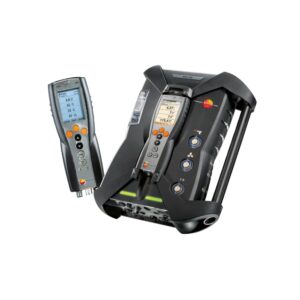
Gastech supplies portable analysers covering the gases these applications need. A Testo 350 measures oxygen to 25 percent by volume and carbon dioxide by infrared to 50 percent. On the combustion and toxic side it reaches 10,000 ppm carbon monoxide, 40,000 ppm methane, 4,000 ppm nitric oxide, 5,000 ppm sulphur dioxide and 500 ppm nitrogen dioxide.
Three practical points decide whether an analyser survives the application. Sample temperature is the first, and a furnace or turbine exhaust needs a probe rated for it, which in glass melting means a high temperature ceramic probe. Dust is the second, and it affects both the probe and the sampling path. Humidity is the third, since condensing moisture in a sample line affects the reading and the instrument.
The fourth point is calibration. An analyser used to tune a turbine or demonstrate compliance is only as good as its own certified accuracy. That makes NATA calibration and service matter more here than on an instrument that only needs to raise an alarm.
For tuning and testing that happens once or twice a year, hire usually works out better than owning. Our Technical Consultants will work through the application, the sample conditions and the gases you actually need, from WA, NSW and QLD.
Trusted by









Contact Us
Can’t find what you’re looking for? Our team is happy to help.