
Dual Sensor Flame Detection Across A Wide Fuel Range
A UV/IR flame detector watches two parts of the electromagnetic spectrum at once, the short wave ultraviolet and the short wave infrared. Signals from both sensors are analysed independently for frequency, intensity and duration, and an alarm is raised only when both agree that what they are seeing is a fire.
That requirement for agreement is the reason the technology exists. Ultraviolet detection on its own responds very quickly but is susceptible to arc welding, lightning and other short wavelength sources. Infrared detection on its own can be misled by hot bodies and modulated blackbody radiation. Requiring simultaneous confirmation from both sensors eliminates most of each technology’s weaknesses, since a welding arc does not produce the infrared signature of a fire and a hot exhaust does not produce the ultraviolet. The ultraviolet sensor also incorporates a dedicated logic circuit to reject false alarms caused by solar radiation.
Where UV/IR earns its place over triple infrared is fuel coverage rather than immunity. Triple infrared offers the longest detection range and the highest false alarm rejection, but it is tuned to the carbon dioxide emission of a hydrocarbon fire. A UV/IR detector with its infrared sensor at 2.5 to 3.0 micron detects hydrocarbon fuel and gas fires, hydroxyl and hydrogen fires, and metal and inorganic fires. Where the risk on site includes hydrogen, or metals such as magnesium, or materials that do not burn as hydrocarbons, this is the technology that sees them.
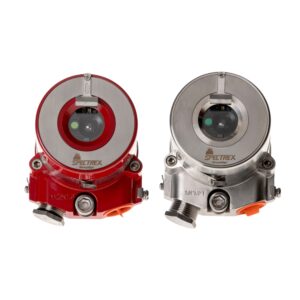
Two infrared wavelength options are available and the choice narrows the coverage deliberately. The 40/40L and 40/40LB use the 2.5 to 3.0 micron sensor for the broad fuel range described above. The 40/40L4 and 40/40L4B are otherwise identical but place the infrared sensor at 4.5 micron, which restricts detection to hydrocarbon based fires. That is the right choice where the fuel risk is purely hydrocarbon and the priority is rejecting anything that is not one.
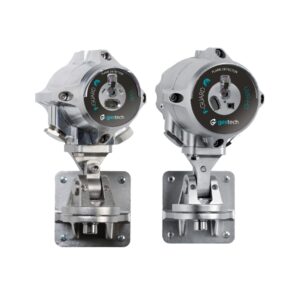
The SharpEye 40/40 models all incorporate heated optics and HART communication. Heated optics matter more in Australian conditions than the specification suggests, because condensation or frost on a lens obstructs a detector as completely as physical damage. For installations that need HD video alongside detection, the F-Guard UV/IR offers the same detection principle with an optional HD camera.
Approvals across the range include IECEx, ATEX, FM, EN 54-10, CSA, DNV, DNV MED and ABS, which covers land based industrial installation through to marine and offshore.
Selecting between UV/IR, triple infrared and multi infrared depends on the fuels present, the false alarm sources in the detector’s field of view, and the mounting geometry available. The SharpEye selection guide sets out typical detection distances by model and by fuel, and Gastech engineering will work through the assessment with you. Support runs from WA, NSW and QLD.
Trusted by









Contact Us
Can’t find what you’re looking for? Our team is happy to help.