
Compressed Breathing Air Testing And Monitoring
The uncomfortable thing about supplied breathing air is that the equipment providing it is usually what contaminates it.
Where breathing apparatus is connected to a compressed air line rather than a cylinder, the compressor becomes part of the safety system. A failing compressor puts oil into the air line, and the wearer inhales it. A standard compressor concentrates whatever is in the ambient air it draws from. Water vapour accumulates, and carbon dioxide and carbon monoxide can both build to levels that matter. None of it announces itself, and the person breathing it has no way of knowing.
The effects run from headaches, dizziness and nausea through to vomiting in severe cases, and they arrive without the wearer being able to identify the cause.
One practical point decides whether a test means anything. Colorimetric tubes and measuring devices have to be connected downstream of the filters, so the air being tested is the same air the user will inhale. Testing upstream measures what the filters are dealing with rather than what is getting through them, which is a different and much less useful question. AS 1715:2009 Appendix A sets out the Australian requirements.
There are two ways to do it and they suit different situations.
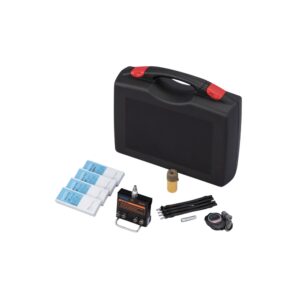
Detector tubes are the spot check. A Gastec CG-1 kit connects to the compressor line or cylinder. It reads carbon dioxide from 250 to 3,000 ppm, carbon monoxide from 5 to 50 ppm, oil mist from 0.1 to 5.0 mg/m³ and water vapour from 10 to 80 mg/m³. No power, no calibration, nothing to fail, and a result in minutes. For a single compressor tested periodically, that is a proportionate answer. Two things to be aware of: tubes are delicate and can break if mishandled, and incorrect storage shortens their shelf life.
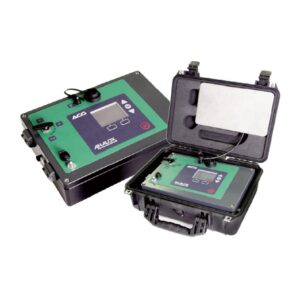
Continuous monitoring answers a different question. The Analox ACG+ monitors oxygen, carbon dioxide, carbon monoxide, volatile organic compounds and dewpoint continuously, with a sample port for oil mist checking, and holds 90 days of data retrievable over USB. It runs portable in a carry case or fixed in a purpose built housing, mains or battery powered, and it supports compliance with EN 12021 among other standards.
The difference is not accuracy, it is coverage. A tube test tells you the air was acceptable at the moment you sampled it. Continuous monitoring tells you whether it stayed acceptable, which matters when the failure mode is a compressor seal degrading rather than a step change.
The ACG+ also does something a tube cannot. Audible and visual alarms are backed by relays that can drive a beacon or shut the compressor down, which makes it an engineering control rather than an indication.
There is a second reason to monitor that has nothing to do with the wearer. A rising dewpoint reading usually means a seal has failed and the compressor needs service. So the monitoring predicts a compressor failure as well as protecting the people breathing from it, and catching it early prevents both contaminated air and unplanned downtime. Volatile organic compounds, carbon monoxide and water together are the indicators of oil mist reaching the line from a compressor problem.
Applications run wherever airline breathing apparatus is used. Confined space entry. Spray painting and coating. Abrasive blasting. Commercial diving. Fire and emergency response. Marine and offshore. Chemical plant. Mining. Any operation running a breathing air compressor, which is the piece of equipment most people forget is part of their respiratory protection.
Our Technical Consultants will work through whether periodic testing or continuous monitoring suits your system, from WA, NSW and QLD.
Trusted by









Contact Us
Can’t find what you’re looking for? Our team is happy to help.