
Measuring The Workplace Environment Beyond Gas
Gas detection covers one class of hazard. An occupational hygiene assessment covers several others, and the instruments here are for those.
Respirable dust is the most consequential of them, and respirable crystalline silica is why. Silica exposure causes silicosis and lung cancer, the disease takes years to appear, and Australia has tightened its position considerably, reducing the workplace exposure standard and banning engineered stone outright. The problem for anybody managing it is that traditional measurement means clipping a filter to a worker, sending it away and waiting for a gravimetric analysis. The result arrives days later as a single number for a whole shift, which tells you the average exposure and nothing about what caused it.
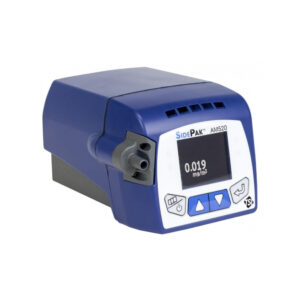
The SidePak AM520 measures in real time instead. It is a light scattering laser photometer worn in the worker’s breathing zone, giving aerosol mass concentration as it happens across a range from 0.001 to 100 milligrams per cubic metre. Interchangeable inlet conditioners set the size fraction, covering PM10, respirable PM4, PM5, PM2.5, PM1 and diesel particulate at 0.8 micron, and a secondary reading displays respirable silica or DPM alongside the total mass.
Real time changes what the measurement is for. A gravimetric result tells you a shift averaged above the limit. A real time trace tells you which task, which fifteen minutes and which location produced it, which is the information you need to fix it. A twenty hour battery covers a full shift, and audible and visual alarms warn the wearer rather than only recording the exposure for later.
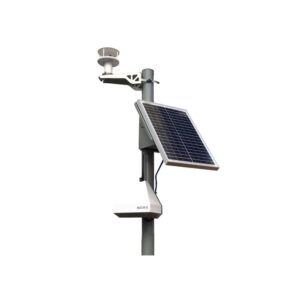
Ambient and boundary air quality is the second measurement, and it answers a different question. Personal monitoring tells you what one worker breathed. AQMesh pods measure what an area or a site boundary contains, continuously, across toxic gases, particulate and noise, streaming to a cloud platform and alerting on exceedance. Used together, personal and area monitoring identify both the exposure and its source.
Two further environmental parameters sit alongside them and both are legitimate occupational hygiene measurements rather than afterthoughts.
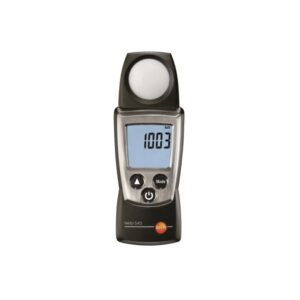
Lighting is a hazard when it is inadequate. Poor illuminance contributes to slips, trips, errors and eye strain, and Australian workplaces have illuminance requirements to meet for the task being performed. A Testo 540 lux meter measures it, which turns a subjective judgement about whether an area is dark into a number.
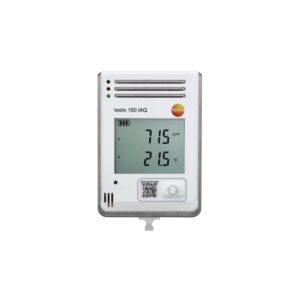
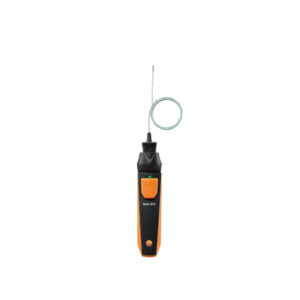
Temperature matters for heat stress, for thermal comfort, and for verifying that ventilation and air conditioning are performing as designed. A Testo 915i temperature probe covers spot measurements and connects to the Testo Smart App for logging and reporting.
The reason these instruments sit together is that an occupational hygiene assessment does not stop at gas. A workshop with a welding fume problem usually has a lighting problem and a ventilation problem as well, and the same visit can measure all three. Our Technical Consultants will work through what your assessment needs to demonstrate, from WA, NSW and QLD.
Trusted by









Contact Us
Can’t find what you’re looking for? Our team is happy to help.