
Index of target gases/substances
How to use the detector tube list
After finding the first letter in the name of your target gas or vapour in the above alphabetized index and clicking it, the list of all gases/vapours beginning with that letter will be displayed. Should your desired target gas or vapour not appear try looking for it under an alternate name (as many gases go by more than one name.) Some links to other helpful information are also provided for your reference.
Detector Tubes For Gases Electronic Sensors Cannot Measure
There is a reason detector tubes are still in use decades after electronic gas detection arrived, and it is not cost.
Electrochemical and infrared sensors exist for perhaps thirty gases. Gastec manufacture detector tubes for several hundred. So if the hazard on your site is acetic acid, aniline, hydrazine, epichlorohydrin, methyl bromide or any of a long list of others, there is no portable electronic instrument that will measure it. A tube is not the cheaper option in that situation, it is the only option.
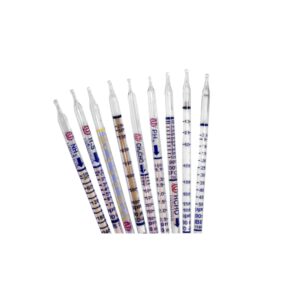
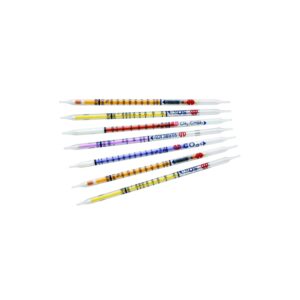
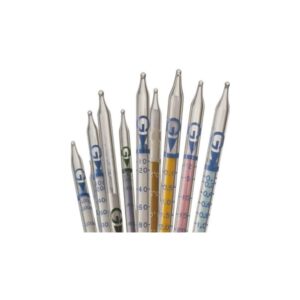
The method is straightforward. A glass tube contains a reagent that changes colour when the target gas passes through it, and the length of the colour change is proportional to the concentration. Break both ends, fit the tube to a hand pump, draw a measured volume of air through it, and read the result off the scale printed on the glass. A measurement takes a minute or two and needs nothing else.
Three characteristics follow from having no electronics, and each one solves a problem an instrument has.
Nothing needs power, so nothing runs flat. Nothing needs calibration, so there is no annual cost and no downtime while an instrument is away. And there is nothing electrical to ignite a flammable atmosphere, so a tube goes into a classified area without a certificate to check.
That combination is why tubes remain the sensible answer for measurements taken periodically rather than continuously. An electronic analyser left in a store for six months has a discharged battery, drifted sensors and expired calibration. A tube kit is ready when you pick it up, provided the tubes are within their shelf life. It is also why tubes are specified in refuge chambers, where equipment has to work after months of standby without anybody checking it.
Range selection is the other advantage, and it addresses a problem that catches people out. Tubes are made in several ranges for the same gas. Phosphine is a good example. A personal monitor is ranged to a few parts per million because that is what protects a worker, so it saturates immediately inside a fumigated silo where concentrations run into thousands. A tube in the appropriate range reads it. One gas, several ranges, chosen for the situation rather than fixed at manufacture.
Gastech supplies three tube types. Colorimetric tubes give an immediate spot reading with a pump. Dosimeter tubes work passively over hours, without a pump, giving a time weighted average for personal exposure assessment. Polytec tubes contain several reagent layers reacting to different gas groups, which helps identify what is present when the atmosphere is unknown. That last capability has no electronic equivalent, and it matters for emergency response, container and vessel entry, and any survey where the question is what is in there rather than how much.
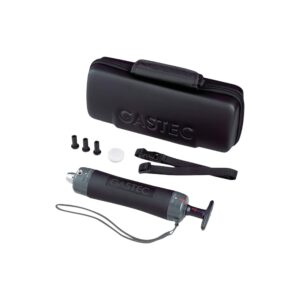
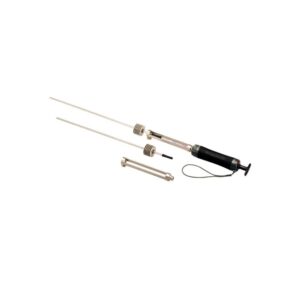
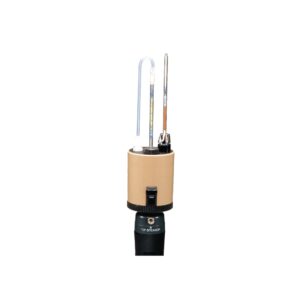
Alongside the tubes sit the Gastec sampling pump, which draws the measured sample volume, and two accessories worth knowing about. The Pyrotec pyrolyzer thermally cracks halogenated hydrocarbons and sulphuryl fluoride into a form a tube can detect, which opens up refrigerant and fumigant measurement that would otherwise be impossible. A hot probe handles sampling from elevated temperature sources.
Australian applications run wider than most people expect. Grain fumigation with phosphine, methyl bromide and sulphuryl fluoride. Quarantine and container fumigation clearance. Refuge chamber provisioning. Confined space entry where the hazard is an unusual solvent or process chemical. Compressed breathing air testing. Emergency response to an unknown release. Occupational hygiene assessment of specific chemicals.
Selecting the right tube means knowing the gas, the concentration range expected, and whether the measurement is a spot check or an exposure assessment. Our Technical Consultants will work through that with you, from WA, NSW and QLD.
Trusted by









Contact Us
Can’t find what you’re looking for? Our team is happy to help.