
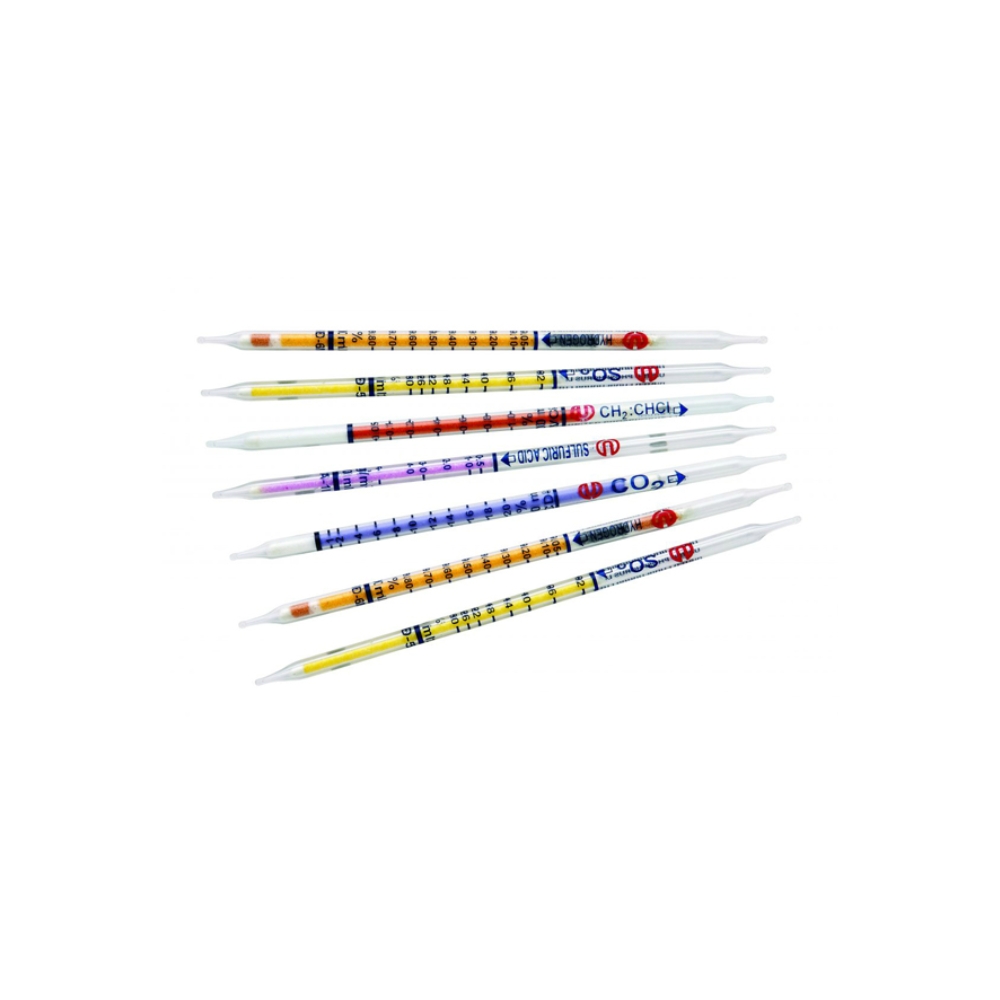
Dosimeter Tubes
Passive TWA Exposure Tubes
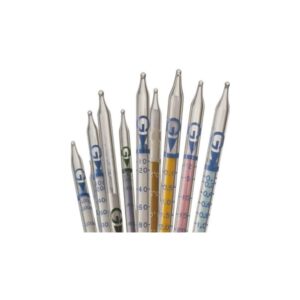
A dosimeter tube answers a different question from a spot reading. Rather than telling you what the concentration is now, it tells you what somebody was exposed to across a shift. It works by natural diffusion with no pump, no power and no calibration, clipped to a collar in the breathing zone or placed in a work area. The result is read straight off the tube at the end.
KEY BENEFITS
- Measures time weighted average exposure, which is what exposure standards are written against
- No pump required, since the gas diffuses naturally through the tube
- Sampling periods from 30 minutes to 48 hours, so it covers peaks and full shifts
- Read directly off the tube at the end, with no laboratory analysis
- About the size of a pen, clipped to a collar in the worker's breathing zone
+ more in the Description tab below
A Different Question From a Spot Reading
A colorimetric tube tells you the concentration at the moment you draw the sample. A dosimeter tube tells you what someone was exposed to across a shift, which is the figure workplace exposure standards are written against.
It works without a pump. Gas moves into the tube by natural diffusion at a constant, known rate, so there’s nothing to carry, nothing to charge and nothing to calibrate. Clip the tube into a holder on a collar to measure a person, or place it in a work area to measure a location.
The result is read straight off the printed scale. Divide by the actual sampling time, and you have the time weighted average. There’s no chart, no laboratory and no waiting.
Sampling runs from 30 minutes to 48 hours, depending on the tube. The short end captures a peak during a specific task. The long end allows low concentration measurement, where a single shift wouldn’t build up a readable stain.
What It Replaces
Conventional personal exposure monitoring means a calibrated sampling pump on a worker, a flow check before and after, sample media sent to a laboratory, and a wait of days or weeks.
A dosimeter tube removes the pump, the laboratory and the wait. The trade off is precision and scope, since a laboratory method resolves lower concentrations and covers substances no tube exists for. Where a tube exists and the concentration sits in its range, it gives a usable answer straight away, at a fraction of the cost.
That changes what’s possible, not just what it costs. Monitoring ten workers monthly is impractical with pumps and laboratory analysis, and entirely practical with tubes.
Available Dosimeter Tubes
Keep the table, replaced with the corrected version in section 3 below.
Three Things the Table Tells You
Check the tube reaches the exposure limit. This is the most important comparison on the page, and it’s easy to miss. Look at hydrazine: the exposure limit is 0.01 ppm, and the tube reads from 1.6 ppm upwards, so it can’t measure anywhere near the limit. Benzene is similar, with a limit of 0.02 ppm and a tube starting at 2.4 ppm. Those tubes are useful for detecting a significant release, but they can’t show compliance with the limit. The 9DL nitrogen dioxide tube, by contrast, reads from 0.01 ppm, well below its 0.2 ppm limit. Compare the range and limit columns before ordering.
One tube can cover several substances, and that cuts both ways. The 3D Ammonia tube also reads dimethylamine, dimethylethylamine, hydrazine and triethylamine. The 122DL Toluene tube reads benzene, cumene, ethyl benzene, styrene and xylene. That’s convenient for stock holding, since a handful of tube types cover the whole table. But it also means those substances interfere with each other. If you’re measuring toluene and xylene is present, the reading covers both, and the tube can’t tell you which. Where a mixture is likely, that needs allowing for.
Range and shelf life vary between tubes for the same gas. Ammonia comes as the 3D, reading 2.5 to 1,000 ppm, or the 3DL, reading 0.1 to 10 ppm. Carbon monoxide, nitrogen dioxide and sulphur dioxide also have a high and a low option. Pick the range against the concentration you expect, not just the gas.
Corrections and Storage
Many tubes in the table need a temperature correction, and some need a humidity correction as well. The instruction sheet supplied with each box sets out both. Skipping them is a common source of error.
Tubes marked with an asterisk need refrigerated storage. In most of Australia, that means a dedicated fridge rather than a store room. Shelf life runs from 12 to 36 months, with the expiry date printed on the box. Don’t use expired tubes, because the reagent degrades in a way you can’t see.
One Practical Point on Carbon Dioxide
Exhaled breath contains around 4% carbon dioxide, so a CO2 tube worn close to the mouth can measure the wearer’s breathing rather than the workplace. Check the 2D tube’s instruction sheet for where to position it on a person.
You Need the Holder
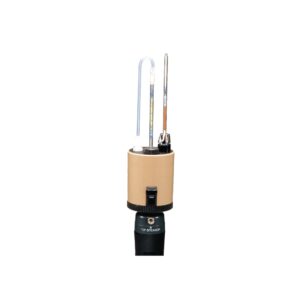
A dosimeter tube is worn in the Gastec No. 710 tube holder, which clips to a collar or lapel. It’s reusable and ordered separately.
Where It’s Used
Personal exposure monitoring against workplace exposure standards. Occupational hygiene surveys. Solvent exposure in workshops, paint shops and fabrication. Formaldehyde in laboratories and healthcare. Carbon monoxide around vehicles and plant. Hydrogen sulphide in wastewater and around organic decomposition. Ammonia in refrigeration and processing. Area monitoring over a full day to locate a source. Baseline assessment before a control is installed, and checking it afterwards.
Selecting a tube needs three things: the substance, the concentration range you expect, and the exposure standard you’re assessing against. Send us those and we’ll confirm the tube, or talk to our Technical Consultants if the atmosphere is a mixture.
Available Dosimeter Tubes
From Gastec’s Detector Tube List, 27th edition (November 2025). Shelf life is in months.
| Gas or vapour | Formula | Gastec tube | Range (ppm) | Time (hours) | Shelf life (months) | Note | ACGIH TLV (ppm) |
|---|---|---|---|---|---|---|---|
| Acetaldehyde | CH3CHO | 91D Formaldehyde | 0.1 to 20 | 1 to 10 | 12* | C 25 | |
| 151D Acetone | 4 to 1,200 | 1 to 10 | 24* | T | |||
| 152D Methyl ethyl ketone | 1.2 to 360 | 1 to 10 | 24* | T | |||
| Acetic acid | CH3CO2H | 81D Acetic acid | 0.5 to 100 | 1 to 10 | 36 | T | 10 |
| Acetic anhydride | (CH3CO)2O | 81D Acetic acid | 0.3 to 60 | 1 to 10 | 36 | T | 1 |
| Acetone | CH3COCH3 | 151D Acetone | 5 to 1,500 | 1 to 10 | 24* | T | 250 |
| 152D Methyl ethyl ketone | 1.4 to 420 | 1 to 10 | 24* | T | |||
| Ammonia | NH3 | 3D Ammonia | 2.5 to 1,000 | 0.5 to 10 | 36 | T | 25 |
| 3DL Ammonia | 0.1 to 10 | 1 to 10 | 24 | TH | |||
| Benzene | C6H6 | 122DL Toluene | 2.4 to 600 | 1 to 10 | 24 | 0.02 | |
| 1,3-Butadiene | CH2:CHCH:CH2 | 174D 1,3-Butadiene | 1.3 to 200 | 1 to 8 | 30 | T | 2 |
| Carbon dioxide | CO2 | 2D Carbon dioxide | 0.02 to 12% | 0.5 to 10 | 30 | T | 5,000 |
| Carbon monoxide | CO | 1D Carbon monoxide | 1.04 to 2,000 | 0.5 to 48 | 24 | 25 | |
| 1DL Carbon monoxide | 0.4 to 400 | 0.5 to 24 | 24* | ||||
| Chlorine | Cl2 | 8D Chlorine | 0.08 to 100 | 0.5 to 24 | 24 | 0.1 | |
| 132D Trichloroethylene | 2.4 to 240 | 1 to 8 | 15* | T | |||
| Cumene | C6H5CH(CH3)2 | 122DL Toluene | 3.4 to 850 | 1 to 10 | 24 | 5 | |
| trans-1,2-Dichloroethylene | ClCH:CHCl | 174D 1,3-Butadiene | 3.8 to 600 | 1 to 8 | 30 | T | 200 |
| 1,2-Dichloroethylene | ClCH:CHCl | 132D Trichloroethylene | 6 to 600 | 1 to 8 | 15* | T | 200 |
| Dimethylamine | (CH3)2NH | 3D Ammonia | 1.9 to 750 | 0.5 to 10 | 36 | T | 5 |
| 3DL Ammonia | 0.29 to 29 | 1 to 10 | 24 | TH | |||
| N,N-Dimethylethylamine | C2H5N(CH3)2 | 3D Ammonia | 4 to 1,600 | 0.5 to 10 | 36 | T | |
| Ethanol | C2H5OH | 112D Ethanol | 100 to 25,000 | 1 to 10 | 36 | STEL 1,000 | |
| Ethyl benzene | C6H5C2H5 | 122DL Toluene | 2.8 to 700 | 1 to 10 | 24 | 20 | |
| Ethylene | CH2:CH2 | 174D 1,3-Butadiene | 1.5 to 240 | 1 to 8 | 30 | T | 200 |
| Formaldehyde | HCHO | 91D Formaldehyde | 0.1 to 20 | 1 to 10 | 12* | 0.1 | |
| Formic acid | HCO2H | 81D Acetic acid | 0.55 to 110 | 1 to 10 | 36 | T | 5 |
| Furfural | C5H4O2 | 91D Formaldehyde | 0.3 to 60 | 1 to 10 | 12* | 0.2 | |
| Hydrazine | N2H4 | 3D Ammonia | 1.6 to 650 | 0.5 to 10 | 36 | T | 0.01 |
| Hydrogen chloride | HCl | 14D Hydrogen chloride | 1 to 100 | 1 to 10 | 36 | TH | C 2 |
| 132D Trichloroethylene | 1.8 to 180 | 1 to 8 | 15* | T | |||
| 17D Hydrogen fluoride | 0.4 to 40 | 1 to 10 | 36 | TH | |||
| Hydrogen cyanide | HCN | 12D Hydrogen cyanide | 1 to 200 | 1 to 10 | 24 | C 4.7 | |
| Hydrogen fluoride | HF | 17D Hydrogen fluoride | 1 to 100 | 1 to 10 | 36 | TH | 0.5 |
| 14D Hydrogen chloride | 2.5 to 250 | 1 to 10 | 36 | TH | |||
| Hydrogen peroxide | H2O2 | 32D Hydrogen peroxide | 0.5 to 40 | 1 to 10 | 36 | T | 1 |
| Hydrogen sulphide | H2S | 4D Hydrogen sulphide | 0.2 to 200 | 1 to 48 | 36 | 1 | |
| Isoprene | CH2:C(CH3)CH:CH2 | 174D 1,3-Butadiene | 2.5 to 400 | 1 to 8 | 30 | T | |
| Methylamine | CH3NH2 | 3DL Ammonia | 0.19 to 19 | 1 to 10 | 24 | TH | 5 |
| Methyl ethyl ketone | CH3COC2H5 | 152D Methyl ethyl ketone | 2 to 600 | 1 to 10 | 24* | T | 75 |
| 91D Formaldehyde | 0.125 to 25 | 1 to 10 | 12* | ||||
| 151D Acetone | 6.5 to 1,950 | 1 to 10 | 24* | T | |||
| Methyl isobutyl ketone | (CH3)2CHCH2COCH3 | 151D Acetone | 11.5 to 3,450 | 1 to 10 | 24* | T | 20 |
| 152D Methyl ethyl ketone | 4 to 1,200 | 1 to 10 | 24* | T | |||
| Nitric acid | HNO3 | 14D Hydrogen chloride | 0.8 to 80 | 1 to 10 | 36 | TH | 2 |
| 17D Hydrogen fluoride | 0.32 to 32 | 1 to 10 | 36 | TH | |||
| Nitrogen dioxide | NO2 | 9D Nitrogen dioxide | 0.1 to 30 | 1 to 10 | 12* | T | 0.2 |
| 9DL Nitrogen dioxide | 0.01 to 3.0 | 1 to 24 | 12* | ||||
| Styrene | C6H5CH:CH2 | 122DL Toluene | 26 to 6,500 | 1 to 10 | 24 | 10 | |
| Sulphur dioxide | SO2 | 5DH Sulphur dioxide | 10 to 600 | 1 to 5 | 36 | T | STEL 0.25 |
| 5D Sulphur dioxide | 0.2 to 100 | 1 to 10 | 36 | ||||
| Tetrachloroethylene | Cl2C:CCl2 | 133D Tetrachloroethylene | 3 to 150 | 1 to 8 | 15* | T | 25 |
| 132D Trichloroethylene | 1.5 to 150 | 1 to 8 | 15* | T | |||
| Toluene | C6H5CH3 | 122DL Toluene | 2 to 500 | 1 to 10 | 24 | 20 | |
| Trichloroethylene | Cl2C:CHCl | 132D Trichloroethylene | 3 to 300 | 1 to 8 | 15* | T | 10 |
| Triethylamine | (C2H5)3N | 3D Ammonia | 5.3 to 2,100 | 0.5 to 10 | 36 | T | 0.5 |
| Trimethylamine | (CH3)3N | 3DL Ammonia | 0.23 to 23 | 1 to 10 | 24 | TH | 5 |
| Vinyl chloride | CH2:CHCl | 174D 1,3-Butadiene | 1.5 to 240 | 1 to 8 | 30 | T | 1 |
| Xylene | C6H4(CH3)2 | 122DL Toluene | 3.4 to 850 | 1 to 10 | 24 | 20 |
T: temperature correction. H: humidity correction. *: refrigerated storage. C: ceiling limit. STEL: short term exposure limit.
Benefits
- Measures time weighted average exposure, which is what exposure standards are written against
- No pump required, since the gas diffuses naturally through the tube
- Sampling periods from 30 minutes to 48 hours, so it covers peaks and full shifts
- Read directly off the tube at the end, with no laboratory analysis
- About the size of a pen, clipped to a collar in the worker's breathing zone
- Also works stationary as an area monitor over a full day
- No power, no calibration and nothing to fail while it is being worn
- Each production lot independently tested and calibrated, with the lot number on the tube
- No correction needed for temperature, humidity or pressure on most tubes
- Numbered labels supplied for recording start and finish times
Product type
Single use passive diffusion dosimeter tubes
Measurement
Time weighted average gas concentration
Principle
Natural diffusion at a constant rate, set by tube internal diameter and an internal diffuser
Pump required
None
Substances covered
Around 40, listed in the table above
Sampling period
30 minutes to 48 hours, depending on tube
Reading
Direct from the printed scale, in parts per million hours
Calculation
TWA in ppm equals tube reading in ppm hours divided by actual sampling time in hours
Corrections
Temperature correction on most tubes, humidity correction on some
Deployment
Breathing zone using a tube holder and collar clip, or stationary as an area monitor
Tube holder
Gastec dosi-tube holder, part number 710, reusable, with built in tip breaker. Ordered separately
Quality control
Each production lot tested and calibrated independently, with the lot number printed on the tube
Shelf life
12 to 36 months, depending on the tube. Expiry date printed on the box
Storage
Dark and cool. Tubes marked with an asterisk require refrigeration at or below 10 °C
Supplied as
Boxes of ten tubes with instruction sheet and numbered peel off labels
- Aviation & Transportation
- Carpark & HVAC
- Chemical Manufacturing
- Confined Space & Compliance
- Energy (Oil & Gas)
- Food & Beverage
- Landfill & Remediation
- Marine & Maritime
- Medical & Healthcare
- Mining & Minerals
- Power Generation & BESS
- Technology & Semiconductor
- Water & Wastewater
A colorimetric tube measures the concentration at the moment you sample. A dosimeter tube measures accumulated exposure over time and gives a time weighted average, which is what exposure standards are written against.
No. Gas moves into the tube by natural diffusion at a constant rate, so there is nothing to pump and nothing to carry.
From 30 minutes to 48 hours, which covers a short peak assessment, a full shift, or a two day area measurement.
Read the value off the printed scale, which is in parts per million hours, and divide by the actual sampling time in hours. That gives the average concentration in parts per million.
Yes. Placed in a work area rather than worn, the same tube measures how concentration varies across a location over a day.
Conventional personal monitoring using a calibrated sampling pump with laboratory analysis afterwards. The tube removes the pump, the laboratory and the wait.
Trusted by









Contact Us
Can’t find what you’re looking for? Our team is happy to help.