
Monitoring Chronic Exposure, Particulate And Boundary Emissions
Gas detection and air quality monitoring answer different questions, and the difference is time.
A gas detector protects somebody from an atmosphere that could hurt them now. It watches for a concentration crossing a threshold and raises an alarm. Air quality monitoring measures what people breathe across a shift, a week or a year, at concentrations far below anything that would trigger an alarm. It also measures particulate, which a gas detector cannot see at all. The harm it addresses arrives after decades rather than minutes, which is exactly why nobody notices it happening.
One recent change makes this urgent rather than prudent. In January 2024, work health and safety ministers agreed to reduce the workplace exposure standard for welding fumes from an eight hour time weighted average of 5 milligrams per cubic metre to 1. All states and territories have now implemented it. That is a five fold reduction, and it followed the reclassification of welding fume as a Group 1 carcinogen. Research conducted before the change found that a majority of welding workplaces meeting the old limit were already operating above the new one. So controls that were adequate are now likely insufficient, and a workshop cannot know which side of the line it sits on without measuring. Aluminium welding fume dropped to the same limit in November 2025, and tighter limits for individual fume components including manganese, cadmium and nickel follow.
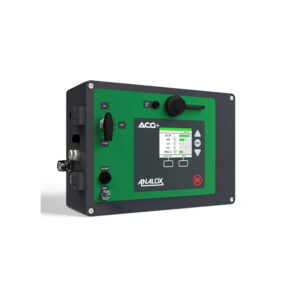
Indoor, the applications are fabrication and plant workshops. Welding, grinding, smelting and diesel engine operations generate both toxic gas and particulate, and diesel plant emits heavily at startup and under load testing. Welding fume itself is airborne dust made of fine dry solid matter. Processing fumes can contain lead oxide, iron oxide, nickel, manganese, copper, chromium, cadmium and zinc oxide, alongside nitrogen dioxide, carbon monoxide and ozone.
There is a second reason to monitor a workshop that has nothing to do with people. Nitrogen dioxide from diesel emissions and ozone from welding are both corrosive, and ozone in particular promotes rust and increases the corrosion rate of metals. On a large steel framed workshop or factory, especially in mining, the atmosphere degrading the workers is also degrading the building. That makes air quality monitoring an asset protection argument as well as a safety one.
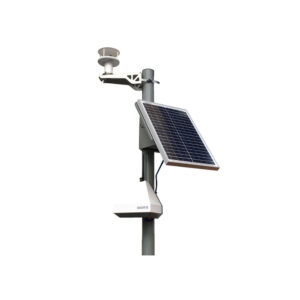
Outdoor, the question becomes what is leaving your site. Boundary and perimeter monitoring measures toxic gases, particulate and noise continuously, streaming to a cloud platform and triggering alerts on exceedance. The AQMesh pod measures carbon monoxide, nitrogen dioxide, sulphur dioxide, hydrogen sulphide, ozone, total volatile organic compounds and carbon dioxide. Particulate runs from PM1 to PM10 plus total particle count, with temperature, humidity, pressure, noise, wind speed and direction available as options. Combined with wind data, that allows a source to be identified by direction and approximate distance, which distinguishes pollution generated on your own site from pollution arriving from a neighbour.
The World Health Organisation Global Air Quality Guidelines are the international reference, naming carbon monoxide, ozone, nitrogen dioxide, sulphur dioxide, PM2.5 and PM10 as the highest risk pollutants. Enforcement sits with the EPA or with federal, state and local government. In Australia, AS/NZS 3580 governs air quality sampling methods.
Practical constraints matter more than the specification on an outdoor installation. Power, cloud connectivity, data retrieval, data security, extreme weather and both mechanical and malicious damage all decide whether a monitoring programme survives its first year. Our Technical Consultants work through those alongside the measurement, from WA, NSW and QLD.
Trusted by









Contact Us
Can’t find what you’re looking for? Our team is happy to help.