
Wireless Fixed Gas Detectors for Sites Where Cable Is Not Practical
The detector is rarely the expensive part of fixed gas detection. The cable is. Running armoured cable and conduit to a detection point across a live plant, through a wall, up a structure or across a yard routinely costs several times the price of the instrument at the end of it. On some sites the route does not exist at all, and on others the disruption of installing it is the reason a detection point never gets added.
Wireless fixed detection solves a different problem to wireless portables. Portables travel with a person. These are fixed points that happen not to need a cable, which makes them viable in situations a hard wired system cannot reach economically. Temporary monitoring through a shutdown or turnaround. Construction and commissioning before the permanent system exists. Remote wellheads and unmanned assets. Trialling a detection point before committing to a permanent install. Or simply covering a hazard that appeared after the plant was built.
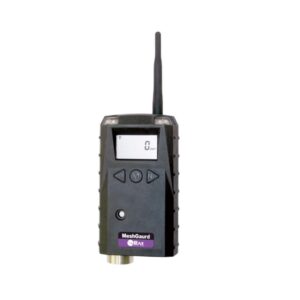
The MeshGuard from RAE Systems is the detector at the centre of this. It runs on battery power with field replaceable precision sensors for toxic and flammable gases, and it deploys in minutes with no cable, no conduit and no power supply to arrange. Its real advantage is the mesh network. Each monitor relays for the others, so coverage extends well beyond the range of a single radio link and the network reroutes itself if one node drops out. That is what allows a set of detectors to cover a large or awkward site without line of sight back to a single point.
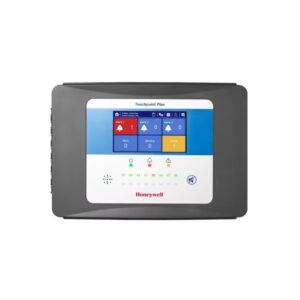
Two controller options gather the network. The FMC 2000 is a multi channel controller with a built in wireless modem, designed specifically for MeshGuard. It automatically links with the monitors, monitors up to 24 wireless detectors, carries built in safeguards against tampering, and provides five programmable relays to trigger external alarms or process controls. The Touchpoint Plus is a wall mounted control system supporting up to 16 gas detection channels through a colour touchscreen, and suits sites that want one panel handling wireless and hard wired detection together.
One thing worth being straight about. Battery powered wireless detection is about where you can put a detection point, not about replacing a permanent hard wired system in a safety instrumented function. Where a detector has to carry a SIL rating and drive a shutdown, a wired installation is still the right answer. Where the alternative is no detection at all because the cable cannot be justified, wireless is what gets the hazard covered.
Gastech engineering can work through which points suit wireless and which need wiring, and we support the installed system from WA, NSW and QLD.
Trusted by









Contact Us
Can’t find what you’re looking for? Our team is happy to help.