
Aspirating Smoke Detection For Very Early Warning
A conventional smoke detector waits for smoke to reach it. An aspirating detector goes looking for it.
That is the whole difference, and it changes what the system can do. A pipe network runs through the protected space with sampling holes along it, and an aspirator continuously draws air back to a single detector where light scattering technology looks for smoke particles. Because the air is being actively sampled rather than passively waited for, detection happens at concentrations far below what a point detector responds to. In practice that means an electrical fault heating up, a bearing running hot or insulation beginning to degrade can be detected before there is a flame at all.
The other advantage is where it works. Point detection depends on smoke rising to the ceiling and staying there, which fails in exactly the spaces that matter most. In a high ceilinged warehouse or atrium, smoke stratifies and may never reach the detector. In a data centre or a clean room, high airflow dilutes it below the detection threshold and moves it away from where it started. In a cold store, cold air holds smoke low. Aspirating detection puts the sampling holes where the air actually is rather than where the ceiling happens to be.
There is a maintenance argument that gets overlooked and often matters more than the detection performance. The detector sits at ground level while only the pipe network is at height. Servicing, filter changes and calibration are done standing on the floor. That removes the access equipment, the permits and the downtime that servicing point detectors in a twelve metre warehouse requires. Across the life of a building that is a substantial difference in cost.
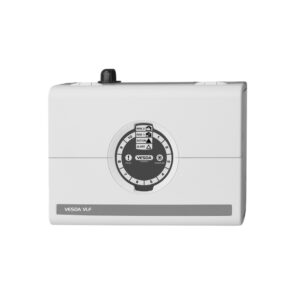
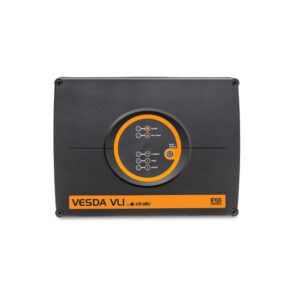
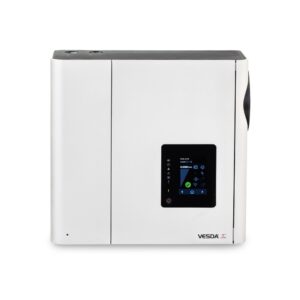
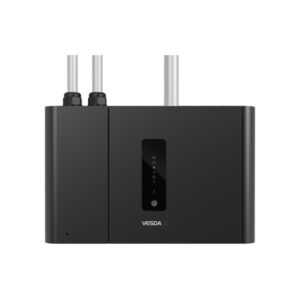
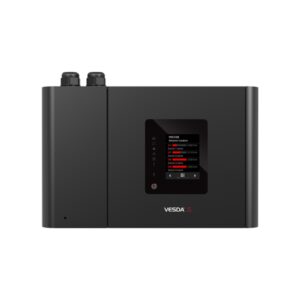
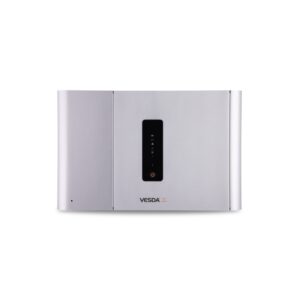
Gastech supplies the VESDA range from Honeywell. The VESDA-E VEU is the premium detector, protecting up to 2,000 square metres with an ultra wide sensitivity range and considerably longer pipe runs than earlier generations. The VESDA-E VEP comes in one and four pipe models with strong nuisance alarm rejection. The VESDA VLF-250 and VLF-500 suit small business critical spaces below 250 and 500 square metres. And the VESDA VLI is built for industrial and harsh environments. An IP66 enclosure and an intelligent filter with a clean air barrier protect the optics, which removes the need for an external enclosure on most dirty sites.
Aspirating detectors are classified under EN 54-20 as Class A, B or C, with Class A the most sensitive. Which class a system achieves depends on the pipe design and the number of sampling holes rather than on the detector alone, so the design and the detector have to be considered together. Australian fire detection systems follow AS 1670.1, and fire products are certified through the CSIRO ActivFire scheme.
Pipe network design is the part that decides whether a system performs, and it is modelled in software rather than estimated. Gastech’s Technical Consultants work through the layout, the class required and the detector selection against your building and its conditions, from WA, NSW and QLD.
Trusted by









Contact Us
Can’t find what you’re looking for? Our team is happy to help.