
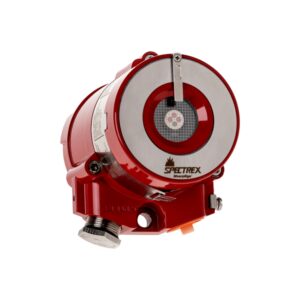
Long Range Infrared Flame Detection With High False Alarm Rejection
Multi-spectrum infrared detection, commonly called IR3, reaches further than any other optical flame detection technology and rejects more of what is not a fire. Both advantages come from the same design decision.
Hydrocarbon combustion produces carbon dioxide, and hot carbon dioxide emits strongly in a narrow infrared band around 4.3 micron. That emission is powerful, specific to combustion and travels well through air. An MSIR detector watches that band alongside additional channels positioned either side of it, then correlates them and analyses the flicker frequency. A real fire produces a strong signal on the combustion channel, comparatively little on the references, and the characteristic flicker of a flame. A hot exhaust, a heater or a sunlit surface produces broadly similar output across all channels and no flicker at all.
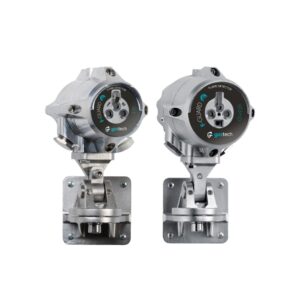
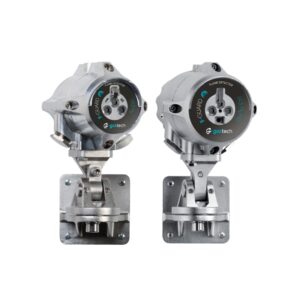
Requiring several views of the same phenomenon to agree is what allows detection at distance without the false alarms that distance would otherwise bring. The SharpEye 40/40D-I reaches 90 metres for a hydrocarbon pan fire, and the 40/40C-I reaches 65 metres, which is why MSIR is the default specification for large open process areas where detector count is driven by coverage.
There is one limitation worth understanding before specifying it. Hydrogen contains no carbon, so it burns to water vapour rather than carbon dioxide. A detector watching the carbon dioxide band is looking for a signature a hydrogen fire never produces, and will register nothing at all. That is not a sensitivity issue to be solved with a shorter mounting distance. Where hydrogen is part of the risk, the M variants are built for it, adding hydrogen detection alongside the hydrocarbon channels, with the 40/40D-M reaching 50 metres for hydrogen while retaining long range hydrocarbon coverage.
Metal and inorganic fires sit outside this technology entirely, since they do not produce the combustion emissions these channels look for. Those need the broad spectrum UV/IR detectors instead, and you trade some range and some immunity for the wider fuel coverage.
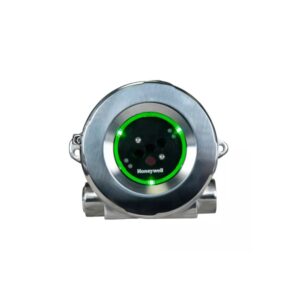
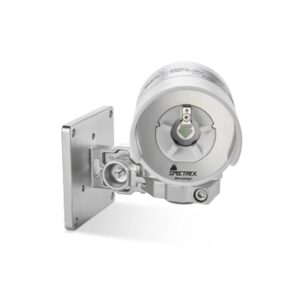
The 40/40 range covers four MSIR variants across two series, with the C-Series for standard industrial applications and the D-Series adding ultra fast response and extended range. All carry a heated window, HART output, a five year warranty, Zone 1 certification across FM, ATEX, IECEx and CSA, and independent performance approval to EN 54-10 as well as by FM and DNV.
Detection distance is only half a coverage calculation. Field of view, mounting geometry and the false alarm sources present all decide the final layout, and Gastech engineering works through that against your fire risk assessment. Support runs from WA, NSW and QLD.
Trusted by









Contact Us
Can’t find what you’re looking for? Our team is happy to help.