
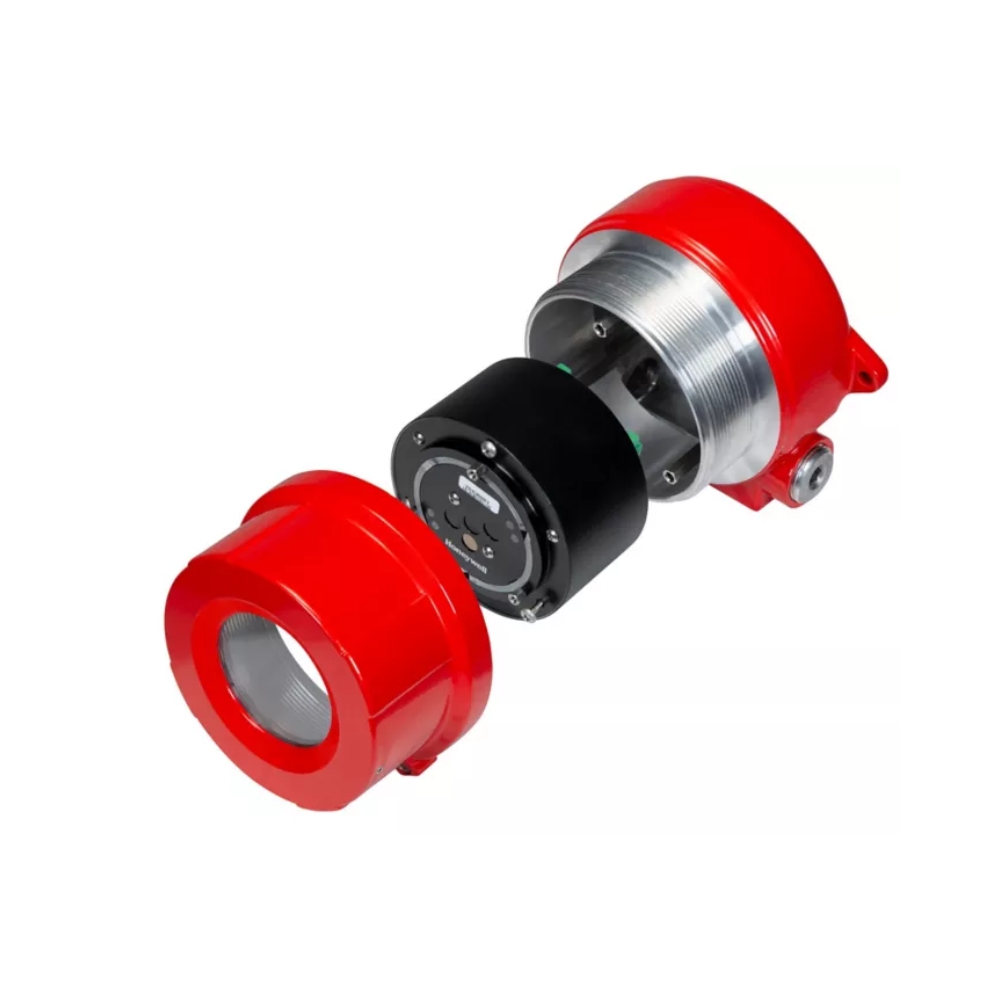
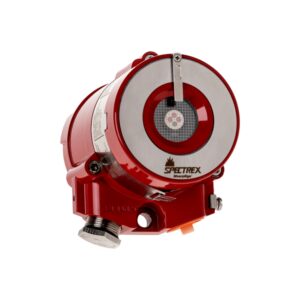
FS24X Plus
Triple IR Flame Detector
The FS24X Plus by Honeywell uses WideBand IR technology to detect hydrocarbon and hydrogen fires from one detector, and to see through rain, fog and smoke better than other technologies. It detects a 0.1 square metre n-heptane fire at up to 60 metres, responding typically in 5 seconds. A high visibility LED HALO ring shows detector status at a distance, and set up runs through the Flame Manager PC app and HART. It’s SIL 2 certified, with ATEX, IECEx, cFMus, FM 3260 and EN 54-10 approvals.
KEY BENEFITS
- WideBand IR sees through rain, fog and smoke, so it keeps detecting in poor visibility
- Detects hydrocarbon and hydrogen fires from one detector, with no separate model required
- 90° cone of vision, extending to 120° indoors at very high sensitivity
- Detects a 0.1 square metre n-heptane fire at up to 60 metres, with four sensitivity settings
- Test lamp allows quick functional testing from a distance, without climbing to the detector
+ more in the Description tab below
Real Fires Are Dirty
This is the argument the whole detector is built on, and it addresses a weakness in conventional infrared detection that most datasheets don’t mention.
Standard multi spectrum infrared detectors watch narrow bands, typically the emission from hot carbon dioxide around 4.3 microns. That works well on a clean test fire. Most real fires aren’t clean. They’re sooty and smoky, full of carbon based particles that absorb and scatter exactly the narrow band signal the detector depends on.
Honeywell’s answer is to widen the view. WideBand IR uses solid state, wide band sensors, so the detector isn’t relying on a single thin slice of the spectrum getting through. Honeywell says the FS24X Plus can see through rain, fog and smoke better than other technologies, so it keeps detecting in poor visibility.
Hydrogen Without a Second Detector
The FS24X Plus detects hydrocarbon and hydrogen fires from the same unit.
That’s worth noting against the alternatives. Most infrared detection needs a dedicated hydrogen model, because hydrogen burns to water vapour rather than carbon dioxide, and produces nothing on the usual bands. The FS24X Plus covers both.
Honeywell’s tested fuels include n-heptane, IPA, methane, butane, propane, ethanol, methanol, hydrogen, diesel, kerosene and JP-4. For a facility handling hydrogen alongside hydrocarbons, that removes a specification decision and keeps the spares holding to one detector type.
Range, Sensitivity and Field of View
Sensitivity is set in Flame Manager, with four levels for a 0.1 square metre n-heptane fire: low (15 m), medium (30 m), high (45 m) and very high (60 m). Response is typically 5 seconds, with a maximum of 10 seconds (FM witnessed).
The cone of vision is 90° for all standard mounts. Indoors, at very high sensitivity and 50% of the on axis distance, it can extend to 120°.
Detection distance is only half a coverage calculation. Field of view is the other half. A detector reaching further with a narrower cone can need more units than a shorter one with a wider cone, because coverage is a volume rather than a line. On a large area, that shows up directly in detector count, cabling and commissioning.
FirePic and Flame Manager
Set up and maintenance run through the Flame Manager PC app and HART, so configuration doesn’t need the housing opened on a detector mounted at height, and settings are recorded.
Flame Manager includes post event analysis with Honeywell’s FirePic tool. FirePic stores 30 seconds of pre alarm infrared signals for the 10 most recent alarm events, so after an incident you can see what the detector saw, rather than guessing.
Two Versions
| FS24X | FS24X Plus | |
|---|---|---|
| Detection distance | Over 60 m for a 0.1 m² heptane fire | Up to 60 m for a 0.1 m² n-heptane fire, four sensitivity settings |
| Field of view | 90° or 110° full cone | 90° cone of vision, up to 120° indoors at very high sensitivity |
| Configuration | Dip switches | Flame Manager PC app and HART |
| Status indication | Three LEDs | LED HALO ring, visible at a distance |
| Diagnostics | FirePic and real time graphing | FirePic post event analysis in Flame Manager, window clarity diagnostics |
| Testing | External flame simulator | Built in test lamp for testing at a distance |
| Functional safety | Contact us | SIL 2, certified by TÜV SÜD |
| Supplied with | Contact us | SM4 mount and sunshade |
The core WideBand detection approach carries across. The Plus modernises configuration, diagnostics, status indication and testing, and adds SIL 2 certification.
At a Glance Status and Simple Testing
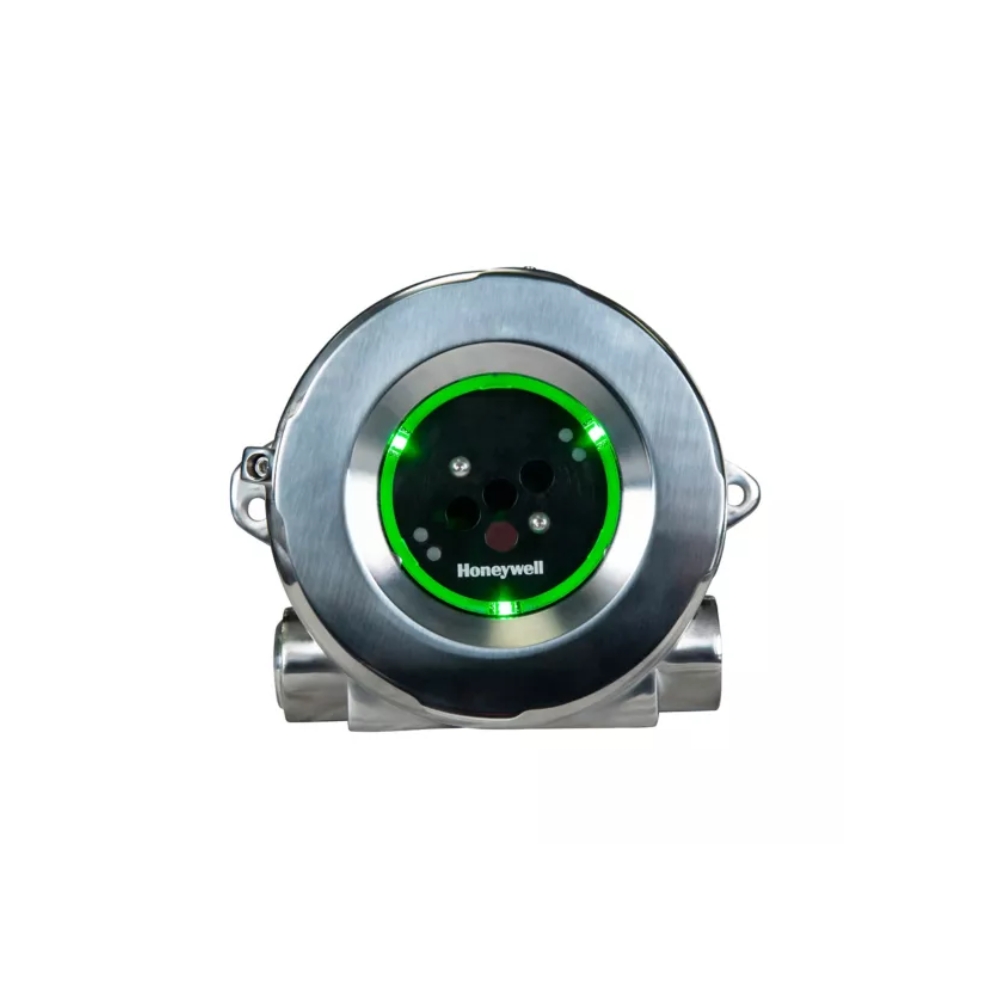
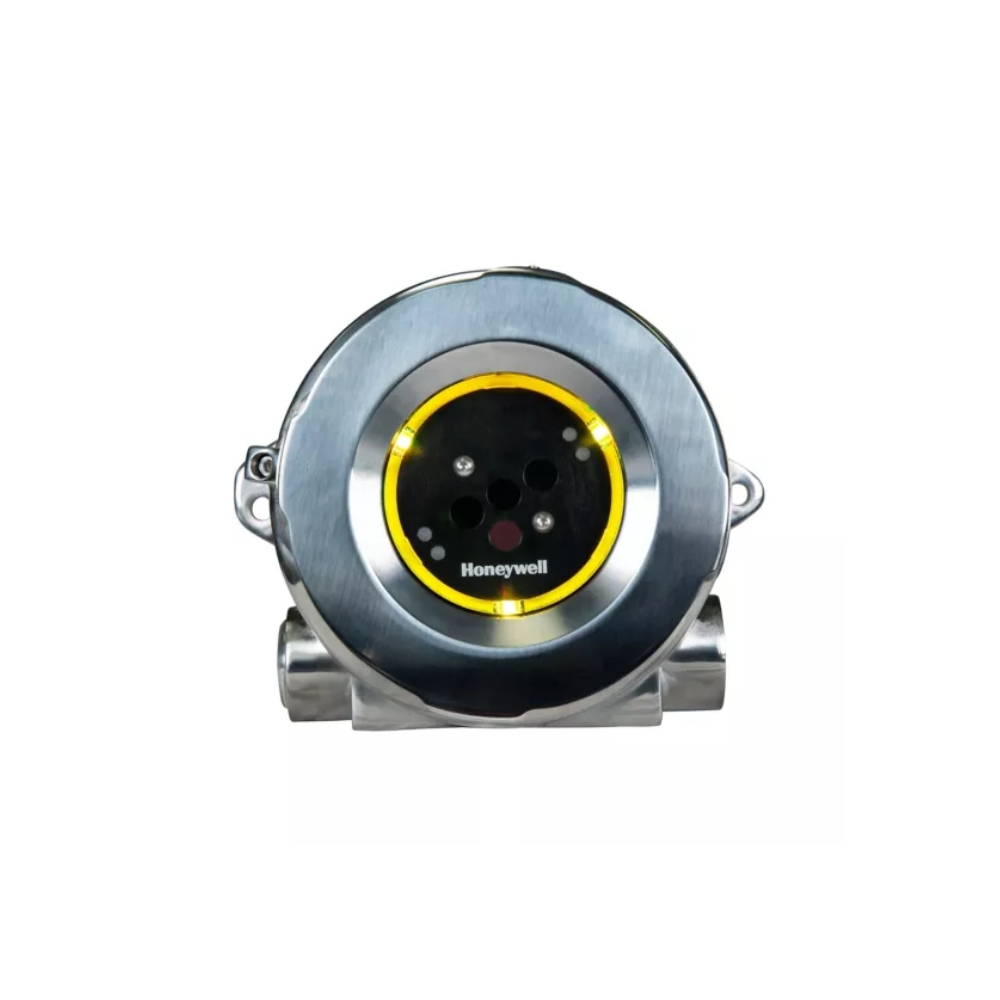
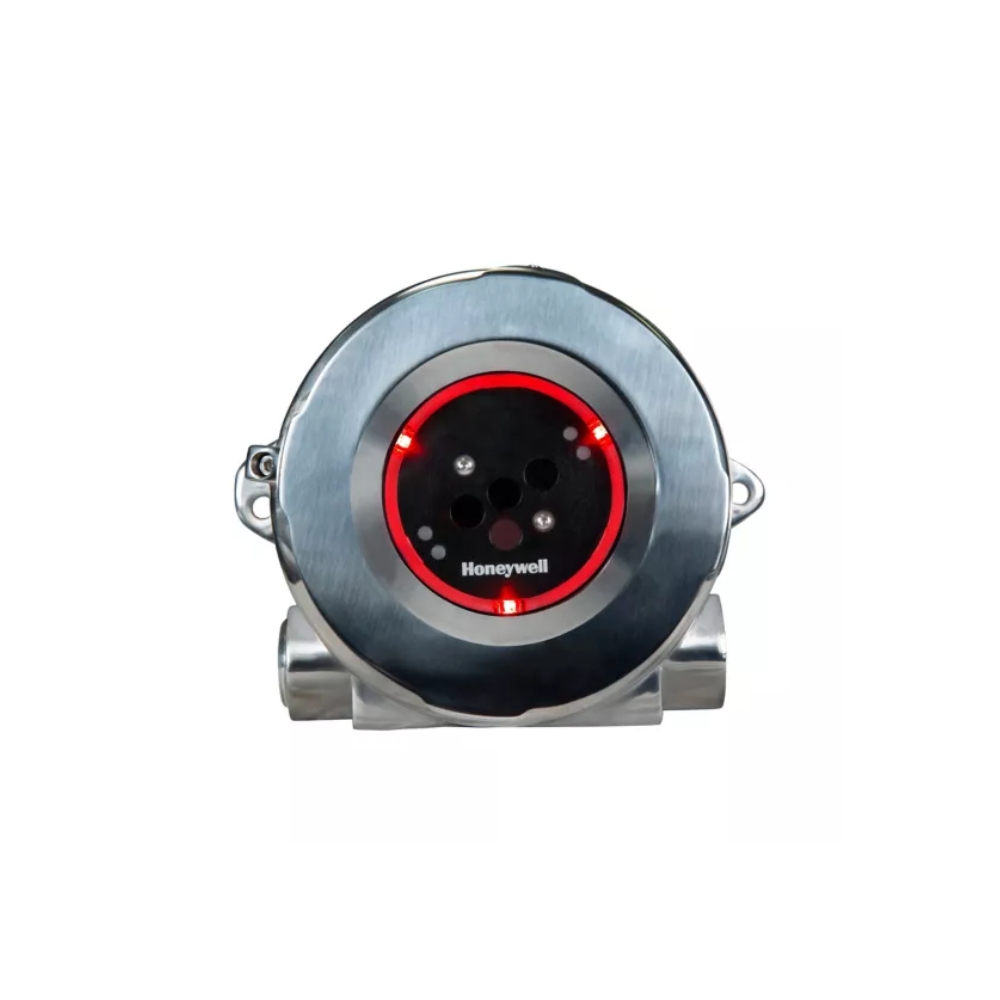
A high visibility LED HALO ring shows detector status at a distance: green for normal, yellow for fault or warning, and red for alarm. On a large site, that’s the difference between reading detector status from the ground and needing access equipment.
A simple test lamp allows quick functional testing at a distance, without climbing to the detector. Internal diagnostics, including window clarity, drive maintenance, and the internal electro optics module can be swapped quickly in the field if needed.
Outputs and Integration
Three relays cover alarm, fault and auxiliary, each SPDT, configurable as energised or de-energised and latching or non latching, rated 2 A at 32 VDC. The 4-20 mA output can be set as source, sink or isolated. Digital communications include HART, RS-485 with Modbus and FP2, and USB.
That range of outputs means the detector drops into an existing fire and gas system rather than needing one built around it.
Installation
The FS24X Plus comes with Honeywell’s SM4 graduated mount and a sunshade as standard, which makes mechanical installation straightforward. A marine version mount (SM4-M) is also available. Two cable entries (M25 or 3/4 inch NPT) and plug in connections simplify the electrical work.
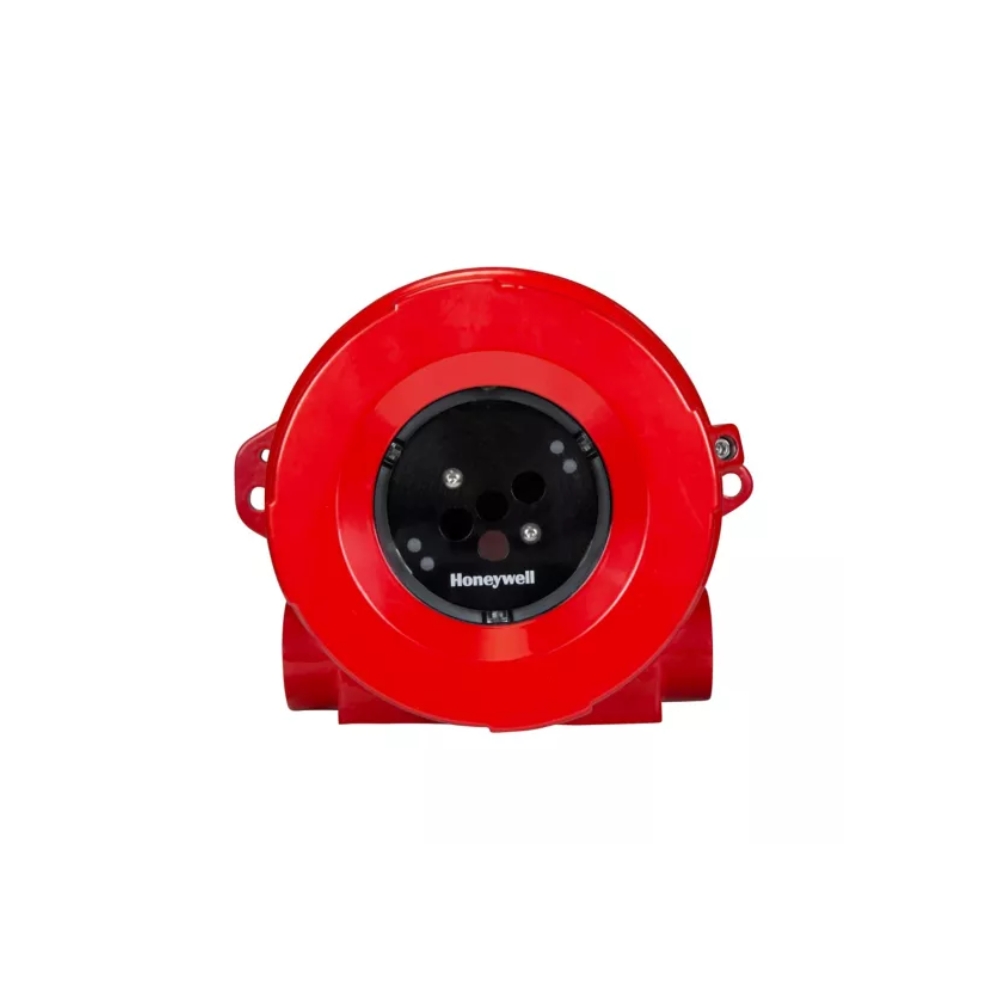
The enclosure is low copper aluminium with marine grade paint, or 316 stainless steel, rated IP66 and IP67 (Type 4X). It operates from -55°C to +75°C.
Certification
The FS24X Plus is ATEX and IECEx certified Ex db IIC T5 Gb, with Ex tb IIIC T135°C Db for dust areas. It holds cFMus approval for Class I, Division 1, Groups A, B, C and D, and Class II and III, Division 1, Groups E, F and G, plus INMETRO.
Performance is approved to FM 3260 and EN 54-10 (Class 1 at medium, high and very high sensitivity, Class 2 at low). It’s IEC 61508 SIL 2 certified by TÜV SÜD. Marine type approvals to ABS, Lloyd’s, BV and DNV are pending.
IECEx is the relevant scheme for Australian hazardous areas.
Where It’s Used
Refineries and petrochemical plant. Oil and gas processing and terminals. LNG facilities. Hydrogen production and handling. Offshore platforms and vessels. Turbine halls and enclosures. Aircraft hangars. Waste handling and recycling facilities, where fires are typically dirty. Warehousing and storage. Paint and coating facilities. Mine site fuel storage and processing.
Benefits
- WideBand IR sees through rain, fog and smoke, so it keeps detecting in poor visibility
- Detects hydrocarbon and hydrogen fires from one detector, with no separate model required
- 90° cone of vision, extending to 120° indoors at very high sensitivity
- Detects a 0.1 square metre n-heptane fire at up to 60 metres, with four sensitivity settings
- Test lamp allows quick functional testing from a distance, without climbing to the detector
- Field replaceable electro optics module keeps maintenance simple
- FirePic records pre-fire data to non volatile memory for post incident analysis
- FlameManager software replaces dip switch configuration and simplifies diagnostics
- LED HALO ring shows detector status from 15 metres away in bright daylight
- SIL 2 certified by TÜV SÜD, with ATEX, IECEx, cFMus, FM 3260 and EN 54-10 approvals
Detection principle
WideBand IR, solid state wide band sensors
Fires detected
Hydrocarbon and hydrogen
Tested fuels
n-heptane, IPA, methane, butane, propane, ethanol, methanol, hydrogen, diesel, kerosene, JP-4
Sensitivity (0.1 m² n-heptane)
Low 15 m, medium 30 m, high 45 m, very high 60 m. Configurable in Flame Manager
Response time
Typically 5 seconds, maximum 10 seconds (FM witnessed)
Field of view
90° cone of vision. Up to 120° indoors at very high sensitivity, at 50% of on axis distance
Status indication
LED HALO ring: green normal, yellow fault or warning, red alarm
Event data
FirePic: 30 seconds of pre alarm data for the 10 most recent alarms
Configuration
Flame Manager PC app and HART
Relays
Alarm, fault and auxiliary. SPDT, energised or de-energised, latching or non latching. 2 A at 32 VDC
Analogue output
4-20 mA, source, sink or isolated
Digital communications
HART. RS-485 (Modbus and FP2). USB (FP2)
Operating voltage
24 VDC nominal (18 to 32 VDC), regulated
Power consumption
1.8 W nominal. 2.4 W in alarm. 12 W maximum with heater on
Operating temperature
-55°C to +75°C (North America -50°C to +75°C)
Humidity
0 to 99% RH, or 100% condensing for short periods
Enclosure
Low copper aluminium with marine grade paint, or 316 stainless steel. IP66 and IP67, Type 4X
Cable entries
2 x M25 or 2 x 3/4 inch NPT
Mounting
SM4 graduated mount and sunshade as standard. SM4-M marine mount available
ATEX and IECEx
Ex db IIC T5 Gb. Ex tb IIIC T135°C Db IP66/67
cFMus
Class I, Division 1, Groups A, B, C and D. Class II and III, Division 1, Groups E, F and G. NEMA 4X
Other hazardous approvals
INMETRO
Performance approvals
FM 3260. EN 54-10: Class 1 (medium, high, very high), Class 2 (low)
Functional safety
IEC 61508 SIL 2, certified by TÜV SÜD
Marine
ABS, Lloyd's, BV and DNV type approval (pending)
Warranty
3 years from shipment
- Aviation & Transportation
- Chemical Manufacturing
- Energy (Oil & Gas)
- Landfill & Remediation
- Marine & Maritime
- Mining & Minerals
- Power Generation & BESS
- Technology & Semiconductor
- Water & Wastewater
It uses solid state, wide band sensors rather than narrow band ones, so the detector doesn't depend on a single thin slice of the spectrum getting through. Honeywell says it sees through rain, fog and smoke better than other technologies.
Yes, hydrocarbon and hydrogen fires from the same detector, without needing a separate hydrogen model.
Up to 60 metres for a 0.1 square metre n-heptane fire at the very high sensitivity setting. Four settings are available: 15, 30, 45 and 60 metres.
Because coverage is a volume rather than a line. The FS24X Plus has a 90° cone of vision, extending to 120° indoors at very high sensitivity, so a wider area is covered from one position.
The FS24X Plus adds Flame Manager software in place of dip switch configuration, the LED HALO status ring, a test lamp for testing at a distance, HART, and SIL 2 certification. If you have original FS24X detectors installed, talk to our Technical Consultants about the changeover.
Trusted by









Contact Us
Can’t find what you’re looking for? Our team is happy to help.