
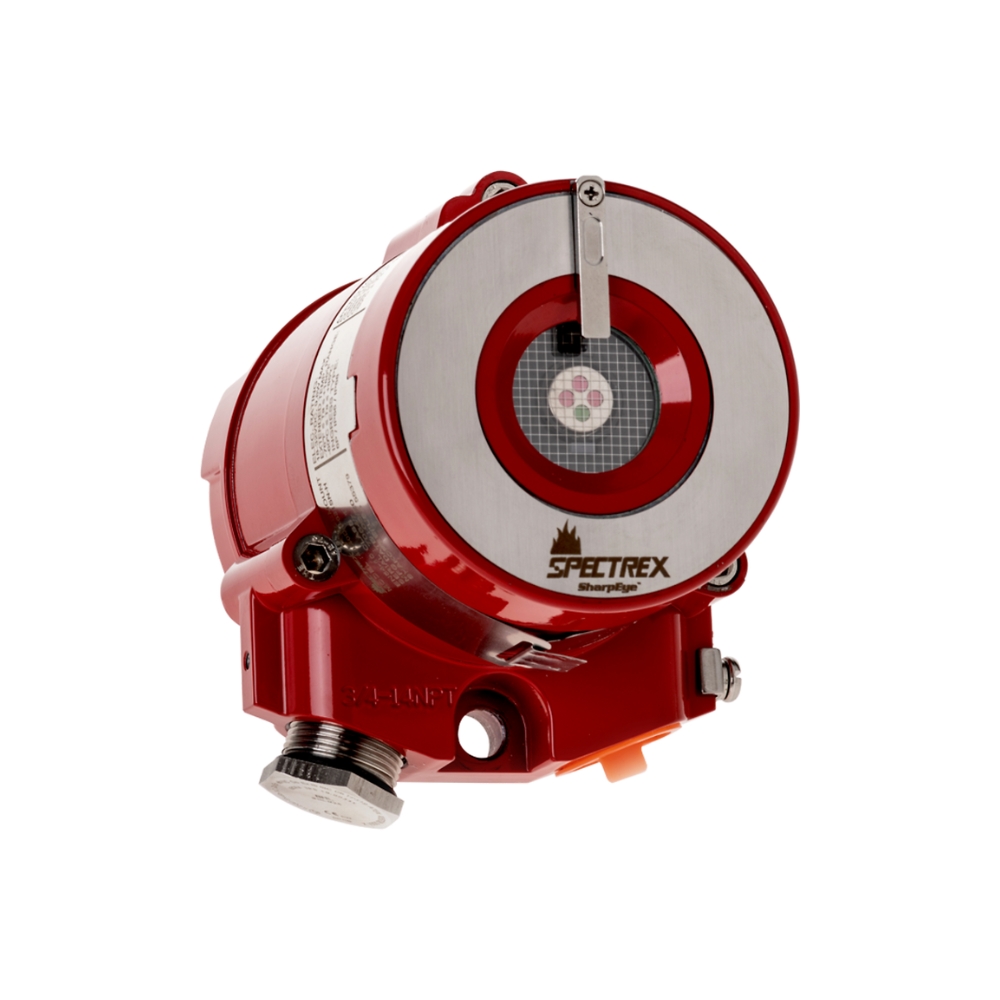
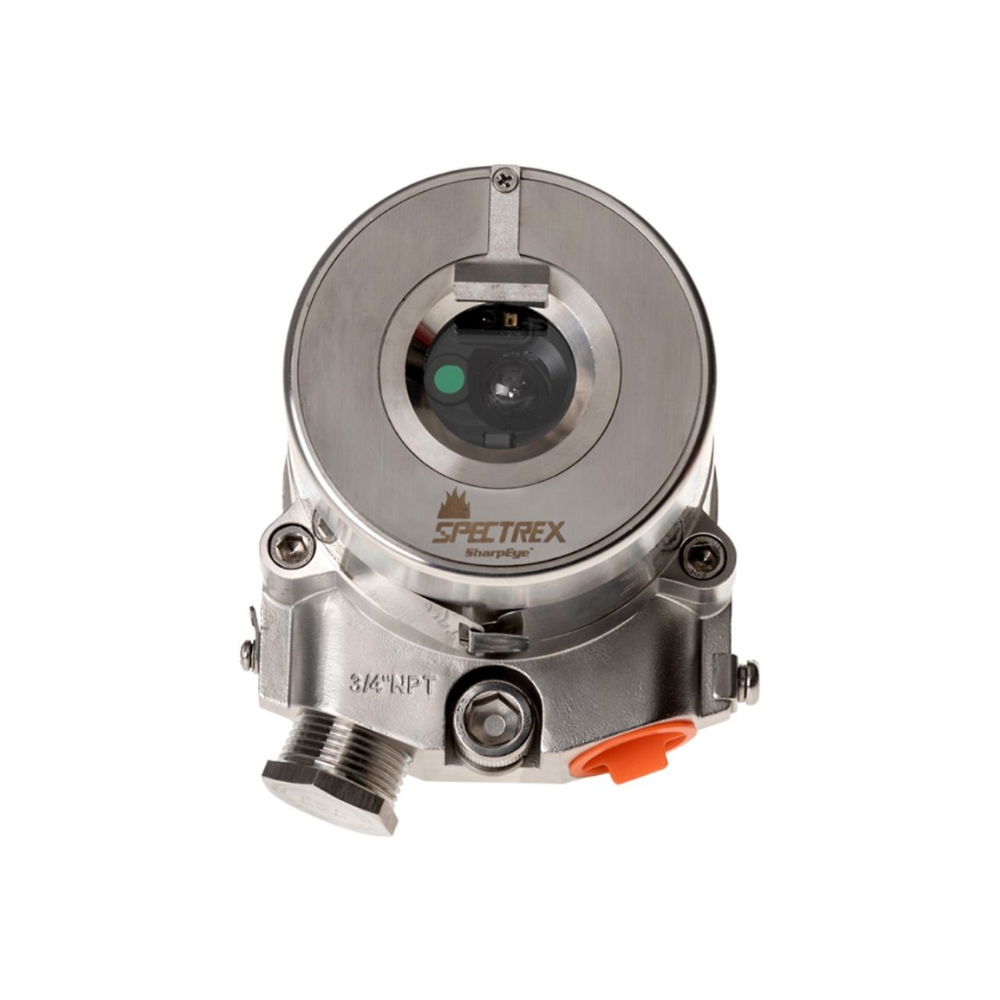
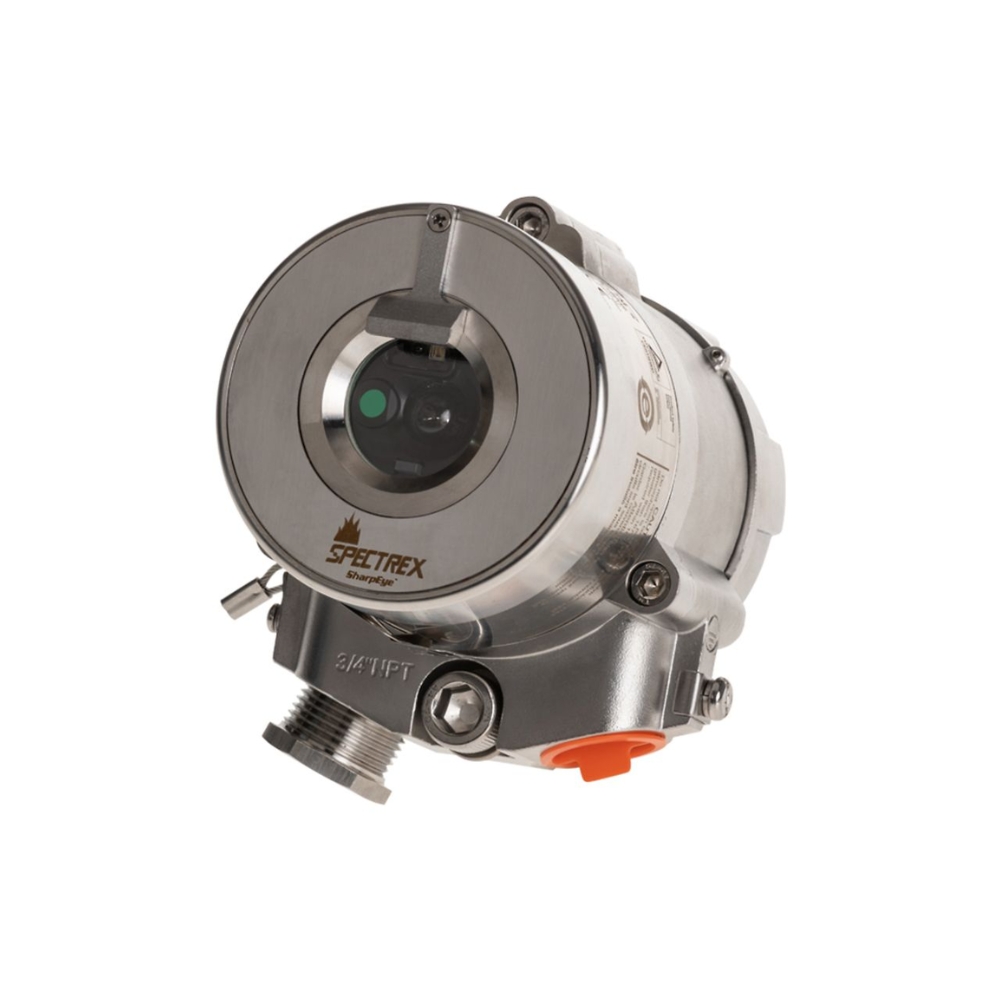
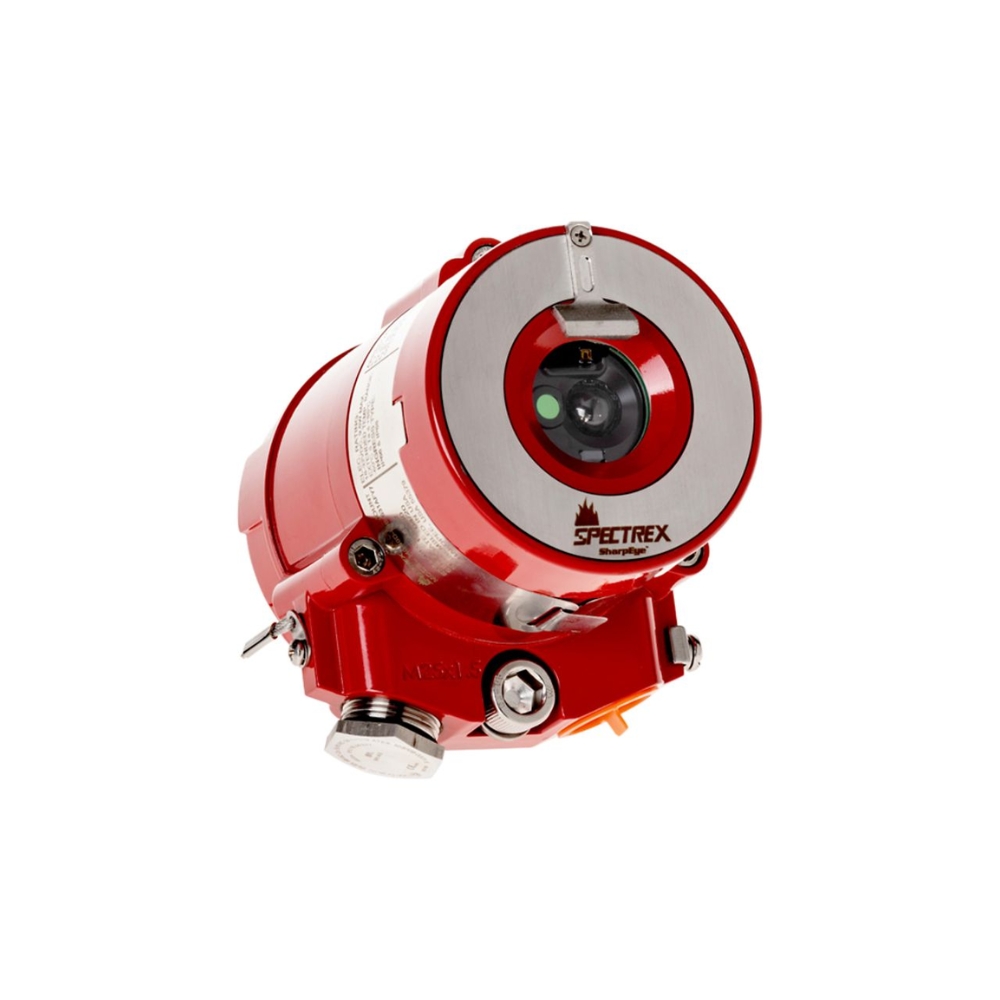
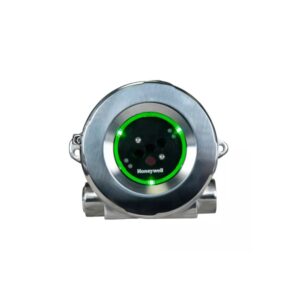
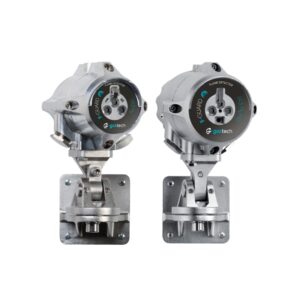
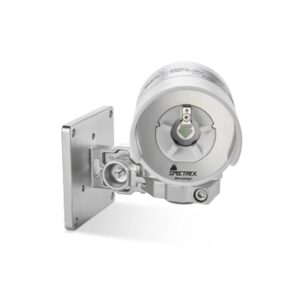
SharpEye 40/40 IR3
Multi-Spectrum Infrared Flame Detector
The SharpEye 40/40 IR3 from Spectrex uses multiple correlated infrared channels, giving very long detection range and strong false alarm immunity. The 40/40D-I reaches 90 metres for a hydrocarbon fire. The M variants detect hydrogen, which a standard IR3 detector physically can’t see, reaching 50 metres on the 40/40D-M. Four variants cover range, response speed and whether hydrogen is part of the risk.
KEY BENEFITS
- Very long reach, up to 90 metres for a hydrocarbon fire on the 40/40D-I
- Strong false alarm immunity, from correlating multiple infrared channels
- M variants add hydrogen detection, which a standard IR3 detector cannot see at all
- D-Series combines extended range with ultra fast response, down to 50 ms for an explosion
- Multiple channels correlated against each other, so a single hot object cannot trigger an alarm
+ more in the Description tab below
Four Variants, Three Questions
| Variant | Fuel coverage | Detection distance | Response |
|---|---|---|---|
| 40/40C-I | Hydrocarbon | Up to 65 m (n-heptane) | Typically under 5 seconds |
| 40/40C-M | Hydrocarbon and hydrogen | Up to 36 m for hydrogen | Typically under 5 seconds |
| 40/40D-I | Hydrocarbon | Up to 90 m (n-heptane) | Under 2 s at 40 m. Ultra fast under 1 s at 30 m. 50 ms explosion |
| 40/40D-M | Hydrocarbon and hydrogen | Up to 50 m for hydrogen | Ultra fast |
Three questions decide it. Is hydrogen part of the risk? That selects I or M. How far is the detector from the hazard? That sets the range you need. And does the risk develop or erupt? That selects C or D.
Why IR3 Reaches So Far
Hydrocarbon combustion produces carbon dioxide, and hot carbon dioxide gives off strongly in a narrow infrared band around 4.3 microns. That emission is powerful, specific to combustion, and travels well through air.
An IR3 detector watches that band along with other channels either side of it. A real fire produces a strong signal on the combustion channel and comparatively little on the reference channels, with the flicker frequency of a flame. A hot object produces broadly similar output across all channels, and no flicker.
Correlating the channels against each other delivers both advantages at once. The signature is strong enough to detect at a distance, and specific enough that hot exhausts, heaters, sunlight and welding arcs don’t look like it. Where UV/IR achieves immunity by requiring two different technologies to agree, IR3 achieves it by requiring several views of the same thing to agree.
That’s why the 40/40D-I reaches 90 metres, and why IR3 is the default specification for large open process areas.
Why a Standard IR3 Can’t See Hydrogen
This is the most important thing on the page, and it catches people out.
Hydrogen doesn’t contain carbon. Burning it produces water vapour, not carbon dioxide. So a detector watching the carbon dioxide band is looking for a signature a hydrogen fire never produces, and it will register a hydrogen fire as nothing at all.
That isn’t a sensitivity limit you can work around by mounting closer. The detector is blind to it.
The M variants exist for exactly this. They watch four infrared bands across a wider range, from 2 to 5 microns, adding detection of the hydrogen combustion signature. The 40/40D-M reaches 50 metres for hydrogen, and the 40/40C-M reaches 36 metres.
For any site with hydrogen, whether that’s a production facility, an electrolyser, a refuelling station, a battery room or a semiconductor process, the M variant is the specification, not the I.
Where IR3 Isn’t the Right Answer
It’s worth saying plainly, because it saves a wrong purchase.
IR3 detects fires through their combustion products. Metal fires such as magnesium, and inorganic fires generally, don’t produce the emissions these channels look for. No I or M variant will see them reliably.
Where metal or inorganic fires are part of the risk, the broad spectrum UV/IR variants are the right technology, specifically the 40/40C-LB and 40/40D-LB, which detect hydrocarbon, hydrogen, metal and inorganic fires. You give up some range in exchange for that coverage.
Range and Speed: C or D
The series decides several things together.
The C-Series is built for standard industrial applications. It responds in typically under 5 seconds, reaches 65 metres on the C-I, runs from -40°C to +75°C, and carries a 3 year warranty.
The D-Series adds ultra fast response and extends the range. The D-I reaches 90 metres, responds in under 2 seconds at 40 metres, under 1 second at 30 metres in ultra fast mode, and in 50 milliseconds to an explosion. It runs from -60°C to +85°C and carries a 5 year warranty.
Speed matters where the event is an ignition rather than a developing fire. A vapour cloud ignition doesn’t build over seconds, and a detector chosen for a growing pan fire will report the aftermath rather than the event. Where the detector sits in front of suppression that has to act before a fireball develops, the D-Series is the specification.
The Shared Platform
All four variants have heated optics, which stop condensation and ice from obscuring the window. An obscured optical detector is blind, not degraded, and in Australian conditions condensation is a more common problem than ice.
HART and RS-485 Modbus give real diagnostic information during installation and maintenance, so configuration and detector health can be read at commissioning rather than assumed. On detectors mounted at height across a large area, that turns a scheduled inspection programme into a targeted one.
Hazardous area certification covers ATEX, IECEx and UKCA, and FM and FMC, with CSA on stainless steel D-Series detectors, for Zone 1 installation. Both series are SIL 3 compatible.
Testing
The built in test confirms window cleanliness and detector operation, and a smart field of view integrity test checks the optical path. It doesn’t activate the alarm outputs, so it proves the detector can see, not what happens downstream.
Proving the relays, loop, wiring, panel, notification and any suppression release needs an external flame simulator. Spectrex lists the FS-1100 for the 40/40D-I and the FS-1400 for the M variants, and Gastech supplies them for purchase or hire.
Where It’s Used
Refineries and petrochemical plant. Oil and gas processing, wellheads and terminals. LNG production, storage and loading. Large open process areas where detection distance decides the detector count. Hydrogen production, storage and refuelling, using the M variants. Electrolyser halls. Offshore platforms and vessels. Turbine halls and enclosures. Aircraft hangars and fuel farms. Battery energy storage installations. Semiconductor facilities handling hydrogen. Compressor stations. Tank farms and loading racks.
Benefits
- Very long reach, up to 90 metres for a hydrocarbon fire on the 40/40D-I
- Strong false alarm immunity, from correlating multiple infrared channels
- M variants add hydrogen detection, which a standard IR3 detector cannot see at all
- D-Series combines extended range with ultra fast response, down to 50 ms for an explosion
- Multiple channels correlated against each other, so a single hot object cannot trigger an alarm
- Heated window prevents condensation and icing from obscuring the optics
- HART output provides real diagnostic information during installation and maintenance
- Five year warranty on the D-Series, three years on the C-Series
- Zone 1 approved, with ATEX, IECEx, UKCA, FM and FMC, plus CSA on stainless steel D-Series
- SIL 3 compatible, for use in safety instrumented systems
Detection principle
Multiple correlated infrared channels with flicker frequency analysis
Spectral response
I variants: four IR bands, 4 to 5 µm. M variants: four IR bands, 2 to 5 µm
Field of view
I variants: 100° horizontal, 95° vertical. M variants: hydrogen 90° x 90°, other fuels 80° x 80°
Window
Heated, to prevent condensation and icing
Built in test
Automatic, covering window cleanliness and overall detector operation. Smart field of view integrity test
Outputs
Alarm, fault and auxiliary relays, SPDT volt free, 2 A at 30 VDC. 0-20 mA (stepped) with HART. RS-485 Modbus
Operating voltage
24 VDC nominal (18 to 32 VDC)
Power consumption
60 mA (1.4 W) normal without heater. 280 mA (7.6 W) with heater and alarm
Cable entries
2 x 3/4 inch 14 NPT or 2 x M25 x 1.5
Operating temperature
C-Series: -40°C to +75°C. D-Series: -60°C to +85°C
Hazardous area approval
ATEX, IECEx, UKCA. FM and FMC. CSA US/C (stainless steel D-Series)
Safety integrity
SIL 3 compatible
Warranty
C-Series: 3 years. D-Series: 5 years
-
-
40/40C-I
Series
C, standard industrial
Hydrocarbon fires
Yes
Hydrogen fires
Yes
Metal and inorganic fires
No
Detection distance, hydrocarbon
Up to 65 m (n-heptane, gasoline)
Response
Typically under 5 seconds
-
-
40/40C-M
Series
C, standard industrial
Hydrocarbon fires
Yes
Hydrogen fires
Yes
Metal and inorganic fires
No
Detection distance, hydrogen
Up to 36 m
Response time
Typically under 5 seconds
-
-
40/40D-I
Series
D, ultra fast
Hydrocarbon fires
Yes
Hydrogen fires
No
Metal and inorganic fires
No
Detection distance, hydrocarbon
Up to 90 m (n-heptane, gasoline)
Response
Standard under 2 s at 40 m, 10 s at 90 m. Ultra fast under 1 s at 30 m. Explosion 50 ms
-
-
40/40D-M
Series
D, ultra fast
Hydrocarbon fires
Yes
Hydrogen fires
Yes
Metal and inorganic fires
No
Detection distance, hydrogen
Up to 50 m
Response
Ultra fast
- Aviation & Transportation
- Chemical Manufacturing
- Energy (Oil & Gas)
- Landfill & Remediation
- Marine & Maritime
- Mining & Minerals
- Power Generation & BESS
- Technology & Semiconductor
- Water & Wastewater
Because hot carbon dioxide from a hydrocarbon fire emits strongly in a narrow infrared band that travels well through air, and correlating several channels makes that signature both detectable at distance and hard to imitate.
No. Hydrogen burns to water vapour rather than carbon dioxide, so a detector watching the carbon dioxide band registers nothing. The M variants add hydrogen detection.
The I variants detect hydrocarbon fires at the longest range. The M variants detect hydrogen as well, reaching 36 metres on the 40/40C-M and 50 metres on the 40/40D-M.
Range, response speed, temperature range and warranty. The C-I reaches 65 metres with a response typically under 5 seconds, runs from -40°C to +75°C, and carries a three year warranty. The D-I reaches 90 metres, adds ultra fast and 50 ms explosion response, runs from -60°C to +85°C, and carries a five year warranty.
No. Metal and inorganic fires do not produce the combustion emissions these channels look for, so the broad spectrum UV/IR variants are the technology for those.
No, it confirms window cleanliness and detector operation only. Testing the relays, wiring, panel and notification needs an external flame simulator.
Trusted by









Contact Us
Can’t find what you’re looking for? Our team is happy to help.