
Automated Storage, Charging And Tracking For Gas Detectors
Compliance software tells you an instrument was calibrated. It does not tell you the instrument is charged, present, and in the hands of the person about to enter a confined space.
That gap is what this category exists to close, and it is a physical problem rather than a data one. A detector sitting flat in a drawer, or in the back of a ute belonging to somebody who finished on Friday, is protecting nobody regardless of how good its calibration record looks.
Three failures account for most of it, and all three are familiar on any site running detectors across shifts and contractors.
Instruments that do not come back. A monitor leaves with a worker at the end of a shift and nobody notices until somebody needs it. Instruments that are there but flat, so a shift starts with the wrong equipment or none. And instruments nobody can trace, which becomes a serious problem when an incident needs investigating and the question is who was carrying which unit.
Underneath those sits the administrative cost. Paper sign out sheets, spreadsheets, and somebody spending their week chasing staff for equipment rather than doing safety work.
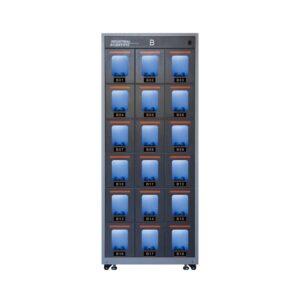
The Gas Detector Fleet Manager from Industrial Scientific answers it with a secure connected cabinet. Workers scan a detector out at the start of a shift and back in at the end, without supervision and without a sign out sheet. The system is available around the clock rather than when the store is open. The cabinet charges the instruments it holds, logs each transaction, and reports who has what, when and where. Alerts cover bump tests and calibrations falling due, along with units that have not come back.
Paired with iNet Exchange, it goes further. Device health is monitored and problems are addressed before they affect operations, with replacement units dispatched inside 48 hours, so a failing instrument is replaced rather than simply flagged.
Fleet utilisation reporting is the part most operations do not expect and frequently benefit from most. Knowing how many detectors are actually in use, how often, and by whom, usually reveals that a fleet is either larger than it needs to be or concentrated in the wrong place.
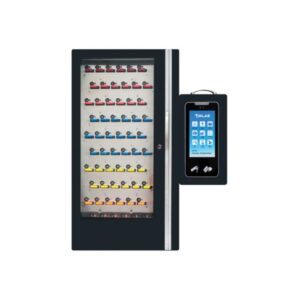
iKLAS applies the same principle to physical keys. Automated access control and real time monitoring replace a manual sign out process, which reduces risk, improves accountability and simplifies compliance across buildings and facilities.
Both systems scale across multiple sites, which matters for operations running several locations under one safety program.
Gastech also provides G-Manager, a portal into our own service records covering instruments purchased from or serviced by us, with automated service and calibration reminders.
Our Technical Consultants will work through fleet size, shift patterns and how equipment currently gets issued, from WA, NSW and QLD.
Trusted by









Contact Us
Can’t find what you’re looking for? Our team is happy to help.