
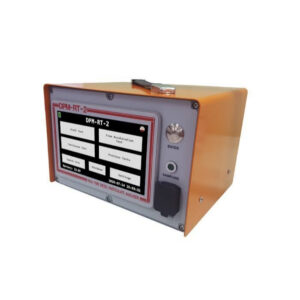
Diesel Particulate Matter Measurement
Diesel particulate matter is not a gas, and that is the first thing to understand about measuring it. A gas analyser measuring nitrogen oxides and carbon monoxide in a diesel exhaust tells you nothing about the DPM in it.
DPM is the solid part of diesel exhaust. Small carbon particles, with significant quantities of hydrocarbons from oils and lubricants absorbed onto them, plus metals from engine wear. Those particles agglomerate, meaning different particle types stick to each other and to larger airborne dust, and they then travel on the ventilation flow well away from the vehicle that produced them. Which is why measuring at the tailpipe and measuring in the workplace are two different exercises.
The size is what makes it dangerous, and it is measured across four bands. Coarse particulate runs from PM10 at under 10 micron down to PM5 at 5 micron. Fine particulate is PM2.5, under 2.5 micron and down to 100 nanometres. Ultrafine runs from 100 nanometres to 50. Nanoparticles are below 50 nanometres in diameter. At the ultrafine and nanoparticle end, particles penetrate deep into the respiratory system and enter the bloodstream.
The World Health Organisation declared DPM carcinogenic to humans in 2012 and placed it in its highest risk category, at the same risk level as asbestos. Symptoms may not appear for 10, 20 or even 30 years after exposure, which is the whole problem with managing it. Nobody feels the exposure that matters, so the only way to control it is to measure it.
Short term effects are eye, nose, mouth and skin irritation, dizziness and difficulty breathing. Long term exposure is associated with lung and bladder cancer, heart disease, stroke, bronchitis and respiratory infections, and it aggravates asthma.
Measurement runs on two scales, and which you need depends on what you are demonstrating. Mass concentration in milligrams per cubic metre is what exposure standards are written against. Particle count in the 15 to 70 nanometre range is what tells you about the ultrafine fraction that mass measurement understates, because a very large number of very small particles weighs almost nothing. A useful measurement programme covers both, alongside the PM10 to PM1 fractions.
Underground mining is the demanding case and it sets the equipment requirements. Ambient pressure changes with depth, humidity is high, exhaust temperatures are high, and lighting is poor enough that a local display has to be readable in the dark. Filters matter as much as the analyser, with water and HEPA filtration required, and in New South Wales filter compliance is addressed through MDG 29. Noise on a working level is loud enough that an audible indication alone is not sufficient.
Regulatory requirements vary between states, and mining safety in Australia is regulated at state level rather than federally, so a national operator will be working to different obligations on different sites. Our Technical Consultants will work through what your jurisdiction requires and what your measurement programme has to demonstrate, from WA, NSW and QLD.
Trusted by









Contact Us
Can’t find what you’re looking for? Our team is happy to help.