
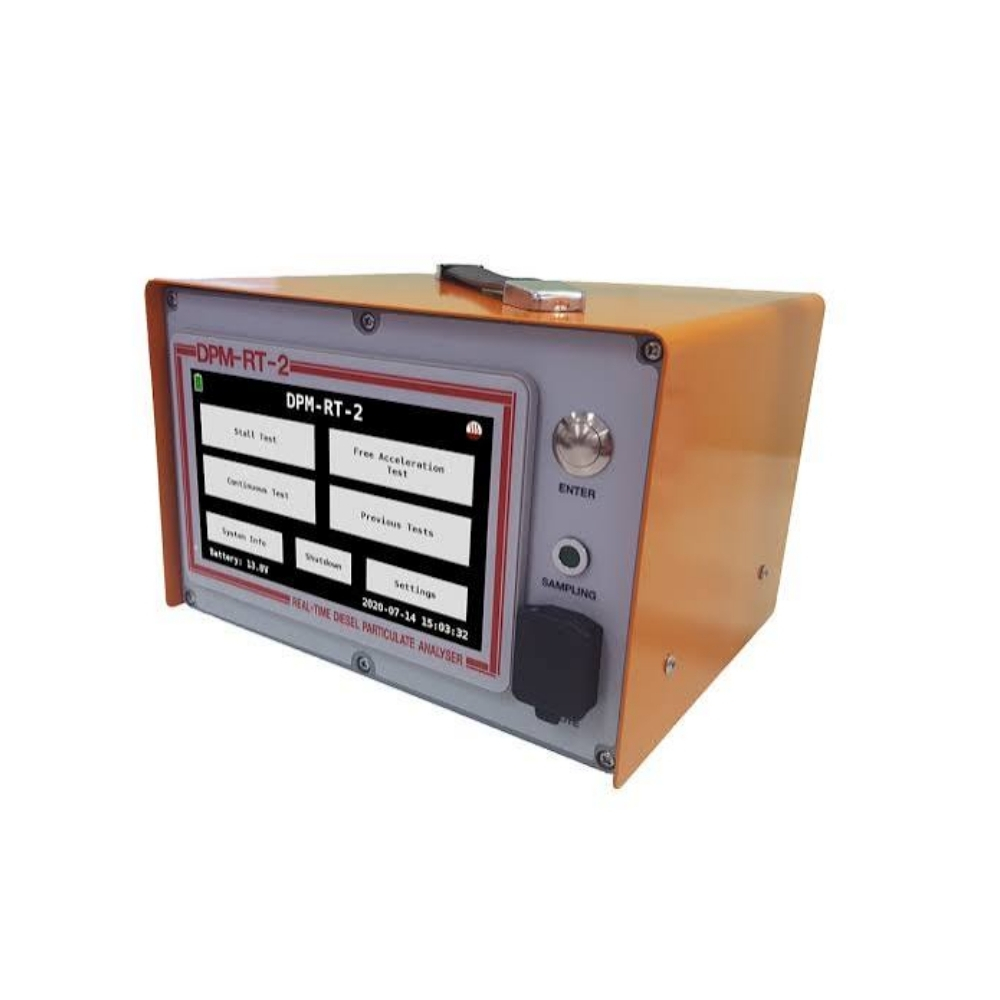
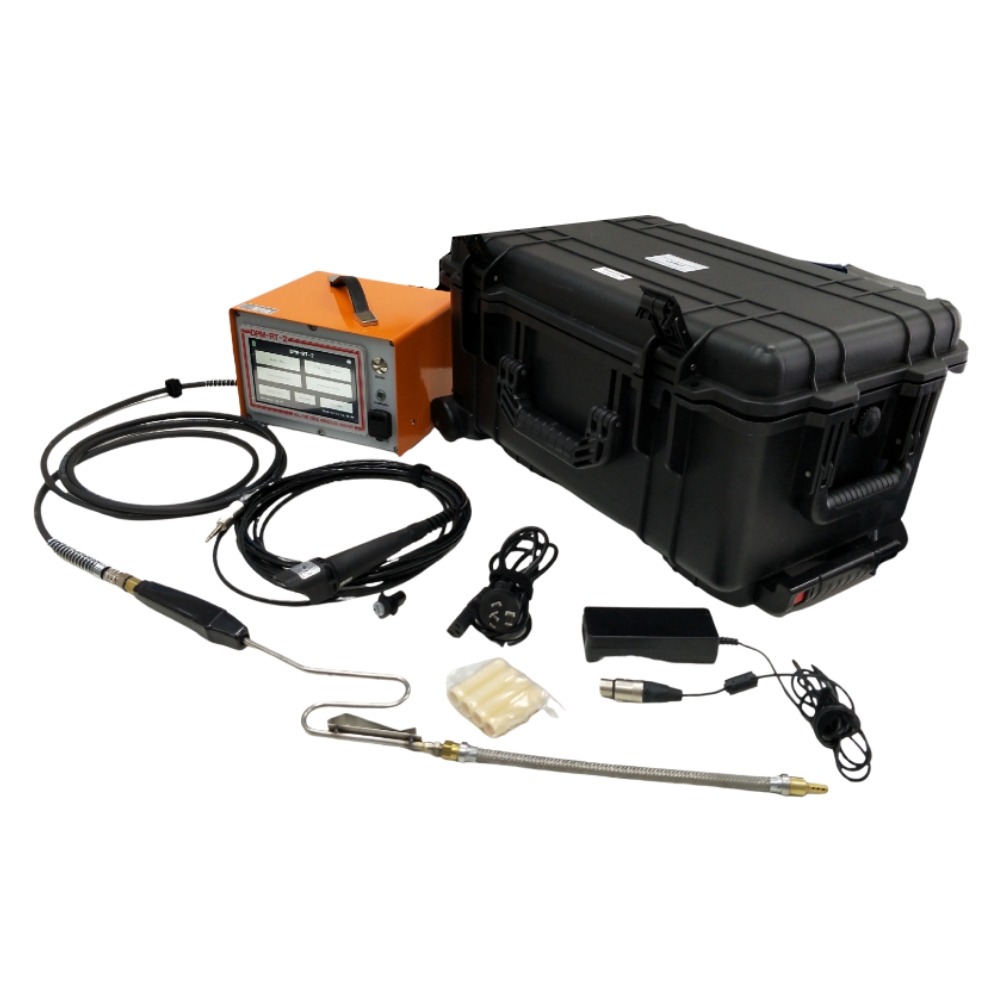
DPM-RT 2
Real Time Diesel Particulate Analyser
The DPM-RT 2 from Pacific Data Systems measures diesel particulate matter at the exhaust pipe, where it can actually be reduced. Laser light scattering gives a live concentration reading during the test and a result at the end of it, traceable to NIOSH 5040 elemental carbon. So a high emitting engine can be identified, and the repair confirmed, before the machine goes back into service.
KEY BENEFITS
- Measures at the tailpipe, where DPM can be reduced, rather than downstream where it can only be diluted
- Laser light scattering measurement, traceable to NIOSH 5040 elemental carbon
- Continuous concentration display during the test, with an immediate result at completion
- Identifies high polluting vehicles in a fleet and verifies the repair before release to service
- Three test modes: Stall Test, Free Acceleration Test and Continuous Measurement
+ more in the Description tab below
Measure Where It Can Be Fixed
Diesel particulate matter can be managed two ways: ventilate harder, or produce less of it.
Ventilation is expensive, it’s limited by the airflow a mine can physically move, and it dilutes the problem rather than removing it. Reducing the DPM leaving the engine deals with it at the source, and that needs measuring at the source.
That’s what separates the DPM-RT 2 from workplace and personal exposure monitoring. Ambient monitoring tells you the atmosphere is bad. Tailpipe measurement tells you which machine is making it bad, which is the information that leads to a fix.
Finding the Engines to Fix
Targeted engine maintenance can drastically reduce DPM emissions. The DPM-RT 2 is built as an everyday workshop tool for environmental, compliance, ventilation, maintenance and service technicians, so engines producing high DPM can be found and repaired as part of routine maintenance.
Laser Light Scattering
The DPM-RT 2 uses well established laser light scattering technology, widely accepted for measuring particle concentrations in laboratory and industrial applications. It measures elemental carbon from 0 to 420 mg/m³, with readings traceable to NIOSH 5040.
A HEPA grade filter removes over 99.9% of particles before the sample is released, and a second HEPA filter keeps a stream of clean ambient air over the optics, protecting them from soot and moisture.
An Answer Before the Machine Leaves
This is the workflow argument, and it’s the strongest thing about the instrument.
Many DPM measurement methods need off line analysis or manual interpretation, so the result arrives after the machine is already back in service. The DPM-RT 2 continuously displays DPM concentration during the test, and gives an immediate result at completion. A maintenance decision can be made without delay, and the effect of any repair can be confirmed before the equipment is released back to the workplace. Test, repair, test again, and know it worked, in one workshop visit.
Three Test Modes
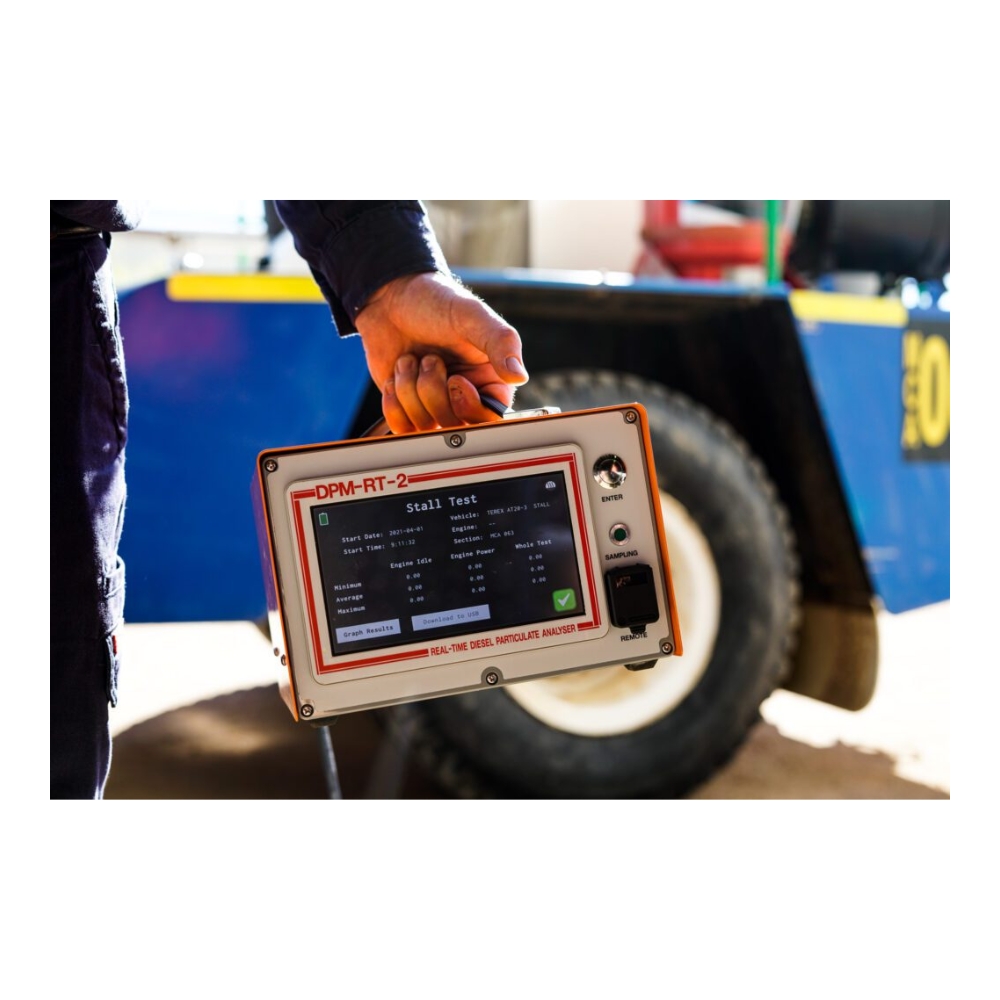
The DPM-RT 2 has three automated test modes: the Stall Test, the Free Acceleration Test and Continuous Measurement. The tests were developed in joint government and mining industry projects, and the manual includes the test procedures from NSW MDG 29, the guideline for managing diesel engine pollutants in underground environments.
The stall and free acceleration tests take as little as one minute. The operator watches the screen and controls the engine load, while the instrument handles the test.
Having standardised tests built in matters more than it sounds. A test done to a defined, recognised procedure gives a result you can compare: against a previous test on the same machine, against the rest of the fleet, and against what the guideline expects.
Building a Record
Vehicle and section details are recorded alongside each DPM result, building a repository of historical test data rather than a series of isolated readings.
That data is downloaded over USB, or through a web browser over WiFi. Moving away from manual note taking saves time and reduces the data integrity risk of copying results from a screen to a notebook to a spreadsheet.
The historical record is what turns individual tests into a programme. Trends on a single machine show a developing problem. Trends across a fleet show whether the maintenance strategy is working.
Simple to Use and Maintain
The DPM-RT 2 is highly automated, with a touch screen and simple one button operation, designed for maintenance staff to use after minimal training. It auto zeros before each test, and its calibration can be checked in the field in 5 minutes using the supplied calibration check plug. Routine maintenance is limited to checking and replacing one disposable filter, with no tools needed.
At about 5 kg including its internal battery, it’s self contained and designed for stand alone use. Around 3 hours of continuous testing per charge covers most operators for a shift. It can also run from a 12 to 36 V supply, with a vehicle charger lead available.
The DPM-RT 2 is built for the harsh conditions around mobile and stationary diesel engines. It must not be installed or operated in hazardous locations or wash bays.
Where It’s Used
Underground mining fleets. Surface mining and quarrying. Heavy vehicle workshops and maintenance facilities. Marine diesel engines. Industrial generators. Locomotives. Logistics fleets. Forklifts and heavy vehicles. Tunnelling and civil construction. Any operation running diesel plant where exposure has to be managed and the engines are the source.
Benefits
- Measures at the tailpipe, where DPM can be reduced, rather than downstream where it can only be diluted
- Laser light scattering measurement, traceable to NIOSH 5040 elemental carbon
- Continuous concentration display during the test, with an immediate result at completion
- Identifies high polluting vehicles in a fleet and verifies the repair before release to service
- Three test modes: Stall Test, Free Acceleration Test and Continuous Measurement
- Wide measurement range, from 0 to 420 mg/m³ elemental carbon
- Data logging against vehicle and section, building a historical testing repository
- Data accessed over USB or a web browser via WiFi, and reported as CSV or plotted graphs
- Around 5 kg including its internal battery, with roughly three hours of continuous testing per charge
- Auto zero before each test, and a 5 minute field calibration check with the supplied plug
Detector type
Portable real time diesel particulate analyser
Application
Tailpipe measurement of DPM emissions from heavy vehicles and stationary diesel engines
Measurement method
Laser light scattering photometry
Particle concentration range
0 to 420 mg/m³ elemental carbon
Result
Continuous display during test, with immediate result at completion
Test modes
Three: Stall Test, Free Acceleration Test, Continuous Measurement. Tests based on NSW MDG 29 procedures
Data logging
Vehicle and section details recorded with each result
Data access
USB, and web browser over WiFi
Reporting
CSV and plotted graphs
Weight
Approximately 5 kg including internal battery
Battery life
Approximately 3 hours of continuous testing per charge
Operation
Self contained, designed for stand alone use
Laser classification
Class 3B laser radiation when open. No user serviceable parts inside
Design environment
Harsh conditions associated with mobile and stationary diesel engines
Traceability
NIOSH 5040 elemental carbon. Custom response factor available
Zero and calibration check
Auto zero before each test. Field calibration check in 5 minutes with supplied plug
Filtration
HEPA grade sample filter (over 99.9% removal), tool free replacement. Second HEPA filter for optics protection, serviced annually
Interface
Touch screen, one button operation
Power
Internal rechargeable NiMH battery. 12 to 36 V external supply. DC plug pack supplied, vehicle charger lead available
Restrictions
Not for use in hazardous locations or wash bays
Manufacturer
Pacific Data Systems (Australia)
- Aviation & Transportation
- Marine & Maritime
- Mining & Minerals
- Power Generation & BESS
No, it measures at the exhaust pipe. Workplace and personal exposure monitoring is a separate measurement, and the two answer different questions. This one identifies which machine is producing the DPM.
Because that is where it can be reduced. Ventilation dilutes DPM, whereas repairing the engine producing it removes it.
Opacity measures how much light a plume blocks. The DPM-RT 2 uses laser light scattering to measure fine particulate concentration directly, traceable to NIOSH 5040 elemental carbon. MDG 29 also notes that a Bosch smoke meter can't be used for its tests, because it can't measure over a 60 second sampling period.
Concentration is displayed continuously during the test with a result at completion, so a repair can be verified before the machine returns to service.
Three: the Stall Test, the Free Acceleration Test and Continuous Measurement. The stall and free acceleration tests follow the procedures in NSW MDG 29, and take as little as one minute.
Vehicle and section details are logged with each result, accessed over USB or a web browser via WiFi, and reported as CSV or plotted graphs.
Trusted by









Contact Us
Can’t find what you’re looking for? Our team is happy to help.