
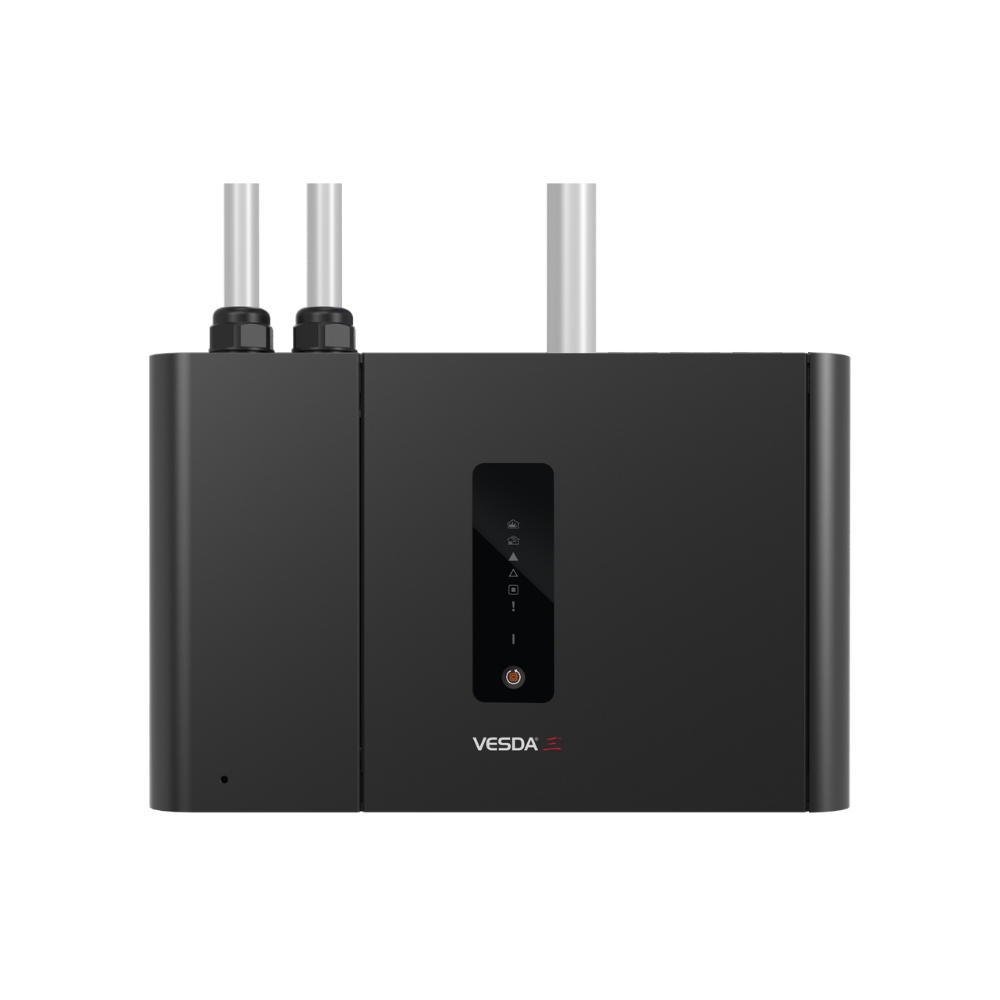
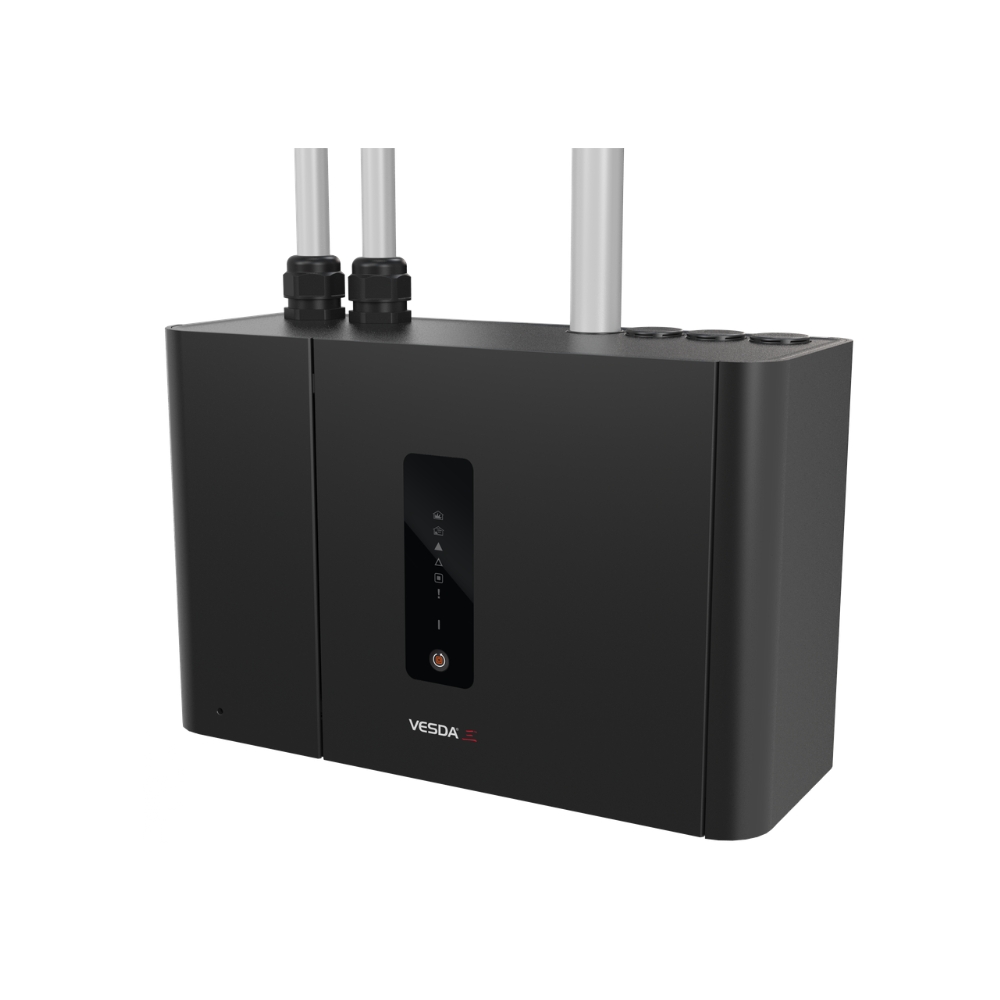
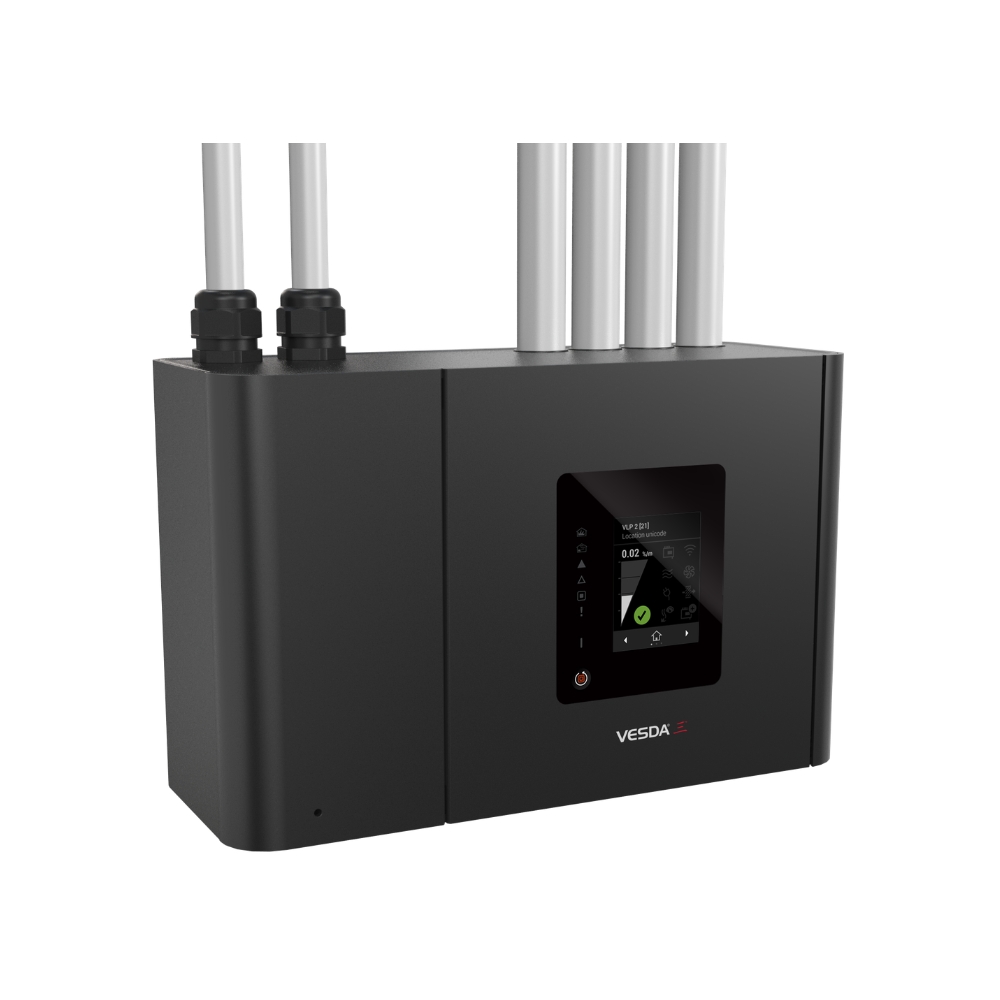
VESDA-E VEP
Aspirating Smoke Detector
The VESDA-E VEP brings the same Flair detection technology as the premium VEU to a wide range of applications. A one pipe model covers up to 1,000 square metres, and the four pipe models reach 2,000. Its sensitivity range runs from 0.005% to 20% obscuration per metre, with four alarm levels and seven programmable relays. It’s also suitable for Class 1 Division 2 applications, Groups A, B, C and D.
KEY BENEFITS
- Same Flair detection technology as the premium VEU, for very early warning with minimal nuisance alarms
- Single pipe model covers up to 1,000 square metres, four pipe models up to 2,000
- Sensitivity range of 0.005% to 20% obscuration per metre, with up to 40 Class A holes on four pipe models
- Approved for Class 1 Division 2 hazardous locations, Groups A, B, C and D
- Four alarm levels, so the response can escalate rather than being a single threshold
+ more in the Description tab below
The Same Detection, Less Capacity
The VEP shares the Flair detection chamber with the premium VEU, so the detection performance that matters isn’t compromised by choosing it.
Flair images the sampled particles directly, using a CMOS imager combined with multiple photodiodes, rather than only measuring how much light is scattered. That gives better detection and fewer nuisance alarms. Short wavelength laser based detection gives high sensitivity from small particle light scattering, and because the light is focused on the target with a low background, no drift compensation is needed. VEP detectors stay consistent over their lifetime through absolute calibration.
The VEP’s sensitivity range is 0.005% to 20% obscuration per metre. The VEU goes further, down to 0.001%.
What’s lower is the capacity. The four pipe VEP supports linear pipe lengths up to 280 metres and branched networks up to 560 metres, against 800 metres on the VEU. Area coverage is 1,000 square metres on the one pipe model and 2,000 on the four pipe models.
For many buildings, that’s more than enough, and it’s why the VEP is the detector most projects actually use.
Three Models
| Model | Pipes | User interface | Area coverage | Pipe length (linear / branched) | Holes (Class A / B / C) |
|---|---|---|---|---|---|
| VEP-A00-1P | One | LEDs | Up to 1,000 m² | 100 m / 130 m | 30 / 40 / 45 |
| VEP-A00-P | Four | LEDs | Up to 2,000 m² | 280 m / 560 m | 40 / 80 / 100 |
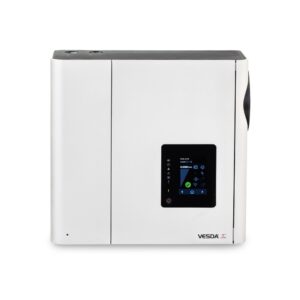
| VEP-A10-P | Four | 3.5 inch display | Up to 2,000 m² | 280 m / 560 m | 40 / 80 / 100 |
The one pipe model suits a defined space with one run. The four pipe models suit a building where the network has to reach several areas, or where different areas need their own flow monitoring.
The display option is worth thinking about, rather than defaulting to it. Where the detector is in a plant room a technician visits, the display is genuinely useful for reading status and diagnosing a fault on the spot. Where the detector is monitored remotely and rarely visited, the LED version does the same job for less.
Suitable for Class 1 Division 2
The VEP is suitable for Class 1 Division 2 applications, Groups A, B, C and D. That means it can be used where flammable gas or vapour may be present under abnormal conditions, which covers many industrial spaces where smoke detection would otherwise need a purpose built enclosure or a compromise.
For a site already running gas detection in classified areas, the VEP is an aspirating detector that fits the same environment.
Four Alarm Levels
The VEP provides four alarm levels: Alert, Action, Fire 1 and Fire 2. That allows a graduated response, from notifying a facilities team to investigate, through to starting ventilation, evacuation and suppression. Seven programmable relays, each latching or non latching, let each level drive the right action.
Flow Faults per Port
A four pipe detector draws from four different areas, and those areas rarely have the same airflow.
Flow fault thresholds are set per port, rather than across the whole detector. So a pipe serving a busy area and a pipe serving a still one are each monitored against what’s normal for them. Without that, either the still pipe generates faults, or the busy one hides a genuine blockage.
That sounds like a detail. On a four pipe system covering a mixed building, it’s the difference between a detector that reports real problems and one that gets its thresholds widened until it reports nothing.
Predictable Maintenance
The smart onboard filter keeps track of its dust count and remaining filter life, so maintenance can be planned rather than reacting to a flow fault. Multi stage filtration and clean air barriers protect the optics, keeping detection performance consistent over the detector’s life. Field replaceable sub assemblies mean faster service and maximum uptime.
An event log of up to 20,000 events, with time and date stamps, supports analysis after an incident and diagnosis of recurring nuisance alarms.
Commissioning and Connectivity
AutoConfig handles airflow normalisation, and AutoLearn Smoke and Flow sets alarm and flow fault thresholds by monitoring the actual conditions in the building, rather than relying on assumptions. Referencing takes account of external environmental conditions, which deals with the case where outside air is the source of a nuisance alarm.
Ethernet, USB and VESDAnet are standard. Ethernet connects the detector to Xtralis software for configuration, secondary monitoring and maintenance, and USB allows PC configuration and firmware upgrades from a memory stick. StaX expansion modules include a power supply option.
Two programmable general purpose inputs, one of them monitored, allow remote control of the detector from the fire system or a building management system.
Replacing a VLP
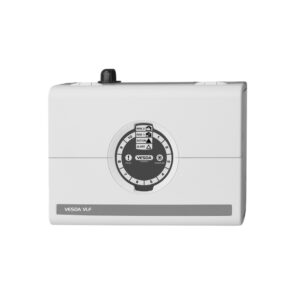
The VEP is backward compatible with existing VESDA installations. It uses the same mounting footprint, pipe, conduit and electrical connector positions as the VESDA VLP, and it works on existing VESDAnet installations alongside older detectors, monitored through VSC and VSM4.
Where It’s Used
Data centres and server rooms. Warehouses and distribution centres. Cold stores. Switchrooms and electrical infrastructure. Battery and UPS rooms. Manufacturing and process areas. Class 1 Division 2 industrial spaces. Clean rooms and laboratories. Archives, museums and high value storage. Heritage buildings where visible detection is unacceptable.
Benefits
- Same Flair detection technology as the premium VEU, for very early warning with minimal nuisance alarms
- Single pipe model covers up to 1,000 square metres, four pipe models up to 2,000
- Sensitivity range of 0.005% to 20% obscuration per metre, with up to 40 Class A holes on four pipe models
- Approved for Class 1 Division 2 hazardous locations, Groups A, B, C and D
- Four alarm levels, so the response can escalate rather than being a single threshold
- Flow fault thresholds per port, so varying airflow across pipes does not cause false faults
- 7 programmable relays, latching or non latching, rated 2 A at 30 VDC
- Field replaceable sub-assemblies keep the detector in service rather than off site
- Ethernet, USB and VESDAnet as standard, plus StaX expansion support
- Two programmable general purpose inputs for remote control
Detection technology
Flair detection chamber, direct particle imaging using a CMOS imager and multiple photodiodes
Sensitivity range
0.005 to 20% obscuration per metre
Class A sampling holes
Up to 40 (four pipe models). Up to 30 (one pipe model)
Alarm levels
Four
EN 54-20 classification
Class A, B or C, determined by the pipe design and hole count and calculated in ASPIRE
Pipe length, linear
One pipe model: 100 m. Four pipe models: 280 m
Pipe length, branched
One pipe model: 130 m. Four pipe models: 560 m
Flow fault thresholds
Per port
Filtration
Multi stage, with clean air barriers protecting the optics
Drift compensation
Not required
Supply voltage
18 to 30 V DC, 24 V nominal
Dimensions
350 x 225 x 135 mm
Ambient temperature
0°C to 38°C
Sampled air temperature
Minus 20°C to plus 60°C
Humidity
5% to 95% RH, non condensing
Hazardous location approval
Class 1 Division 2, Groups A, B, C and D
Connectivity
Ethernet, USB, VESDAnet
Expansion
StaX module support, including PSU
Inputs
Two programmable general purpose inputs, one monitored
Serviceability
Field replaceable sub-assemblies
Commissioning
AutoLearn smoke and flow, referencing
Software support
ASPIRE for pipe design, Xtralis VSC and VSM4
Threshold ranges
Alert and Action: 0.005% to 2.0% obs/m. Fire 1: 0.010% to 2.0% obs/m. Fire 2: 0.020% to 20% obs/m
Measurement range
0% to 32% obs/m
Relays
7 programmable relays, latching or non latching. Contacts rated 2 A at 30 VDC (resistive)
IP rating
IP40
Event log
Up to 20,000 events, with time and date stamp
Minimum airflow per pipe
15 L/min
Cable access
4 x 26 mm cable entries. Screw terminals 0.2 to 2.5 mm²
Approvals
CSFM, FM, VdS, NF-SSI, CE, UKCA, ActivFire, CCC. EN 54-20 and ISO 7240-20 (four pipe: Class A at 40 holes, Class B at 80 holes, Class C at 100 holes)
-
-
VEP-A00-1P
Pipes
One
User interface
LEDs
Area coverage
Up to 1,000 m²
Weight
4.4 kg
Power, quiescent
8.8 W
Power, in alarm
9.6 W
-
-
VEP-A00-P
Pipes
Four
User interface
LEDs
Area coverage
Up to 2,000 m²
Weight
4.4 kg
Power, quiescent
7.0 to 9.0 W depending on aspirator setting
Power, in alarm
7.8 to 9.8 W depending on aspirator setting
-
-
VEP-A10-P
Pipes
Four
User interface
3.5 inch display
Area coverage
Up to 2,000 m²
Weight
4.5 kg
Power, quiescent
8.0 to 10.0 W depending on aspirator setting
Power, in alarm
8.8 to 10.8 W depending on aspirator setting
- Aviation & Transportation
- Carpark & HVAC
- Chemical Manufacturing
- Energy (Oil & Gas)
- Food & Beverage
- Landfill & Remediation
- Medical & Healthcare
- Mining & Minerals
- Power Generation & BESS
- Technology & Semiconductor
- Water & Wastewater
Both use the same Flair detection technology. The VEU has a wider sensitivity range, down to 0.001% obs/m against 0.005% on the VEP, and more capacity: 800 metres of pipe and 6,500 square metres of coverage, against 560 metres and 2,000 square metres on the four pipe VEP.
One pipe suits a single defined area up to 1,000 square metres. Four pipes suit a building where the network reaches several areas, or where areas with different airflow each need their own flow monitoring.
It's suitable for Class 1 Division 2 applications, Groups A, B, C and D. For Australian hazardous area requirements, talk to our Technical Consultants.
Only if somebody attends the detector. Where it is monitored remotely, the LED version reports the same conditions for less.
That depends on the pipe design and the number of sampling holes rather than on the detector alone, and it is calculated in ASPIRE during design.
Trusted by









Contact Us
Can’t find what you’re looking for? Our team is happy to help.