
Colorimetric Tubes
Gas Detector Tubes
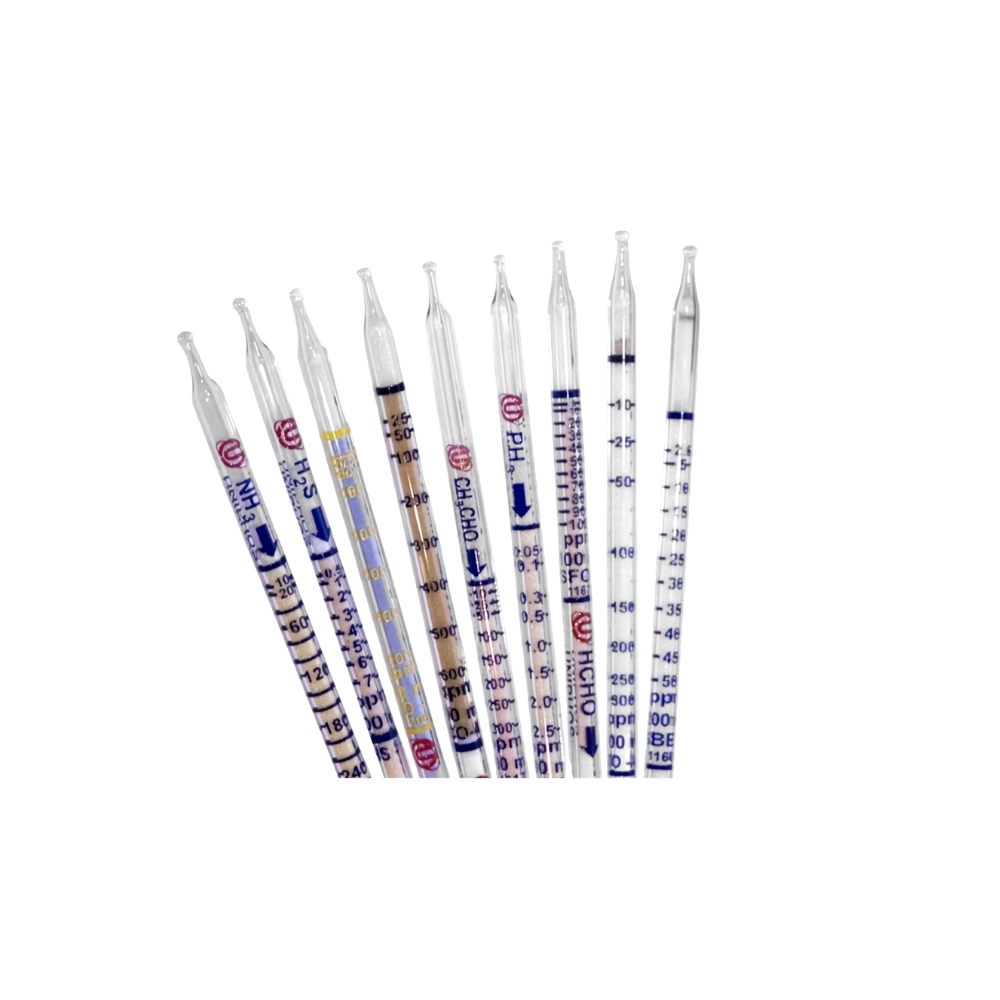
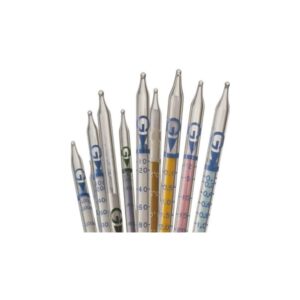
A colorimetric tube is a sealed glass tube of reagent that changes colour when the target gas passes through it, with the length of the colour change proportional to concentration. Draw a measured sample through it with a Gastec pump and read the answer off the scale printed on the glass. Tubes are available for more than 500 gases and vapours, which is considerably more than any electronic instrument covers.
KEY BENEFITS
- Available for more than 500 gases and vapours, including many with no electronic sensor
- Reading taken directly off the scale printed on the tube, in seconds
- Each production lot independently tested and calibrated, with the batch number printed on the tube
- Multiple ranges available for the same gas, so the range suits the situation
- Long shelf life, with many tubes rated at three years
+ more in the Description tab below
How a Tube Actually Works
It’s worth understanding, because it explains both the accuracy and the limitations.
A Gastec detector tube is a thin glass tube containing a particulate matrix, such as silica gel or alumina, which holds a highly stable reagent chosen to be especially sensitive to the target substance. Both ends are hermetically sealed until use.
Break the ends, fit the tube to a Gastec pump, and draw a measured volume of air through it. The reagent reacts with the target gas and produces a distinct layer of colour change. The length of that layer shows the concentration, read directly from the calibration scale printed on the glass.
Precision comes from Gastec’s quality control. Each production lot is tested and calibrated independently, and each tube has its own quality control number printed on it, so a result can be traced back to its batch.
Five Hundred Gases
This is why tubes are still widely used, and it isn’t just about cost.
Gastec tubes are available for more than 500 applications, far more substances than any portable electronic instrument covers. For many substances, a tube is the only practical portable method, not just the cheaper one.
That covers a lot of ground in Australian industry: solvents and process chemicals in manufacturing, fumigants in grain handling and quarantine, refrigerants, specialty gases in laboratories, acids and alkalis, and anything where a risk assessment has identified a specific substance rather than a general flammable or toxic hazard.
Pick the Range, Not Just the Gas
Tubes are made in several ranges for many gases, and choosing the right range matters as much as choosing the right gas. The measuring range can also be extended by adjusting the sample volume.
The selection question is three part: the gas, the concentration you expect, and what the measurement is for. A tube ranged for a fumigated space won’t resolve a low level exposure measurement, and one ranged for exposure monitoring won’t read a fumigation concentration.
Our Technical Consultants can help pick the right tube and range.
One Tube, One Gas
Each tube is made for a single substance, and is single use. That means the substance has to be known before the measurement.
Where it isn’t, Gastec Polytec tubes have several reaction layers that respond to different groups of gases, to help identify what’s present.
Other gases in the atmosphere can still interfere with the reagent in a tube, and the instruction sheet supplied with each box sets out which ones. It’s worth reading rather than filing, particularly on a site with a complex atmosphere.
Storage and Shelf Life
This is the one thing that will spoil a measurement, and it happens before the tube is used.
Tubes are hermetically sealed and the reagents are selected for long term stability, with many tubes rated at a three year shelf life. The use by date is printed on the box.
Two rules follow. Store tubes in a cool place, and refrigerate them where the tube’s instructions recommend it. And don’t use expired tubes, because the reagent degrades and the reading becomes unreliable in a way you can’t see.
Check each tube’s operating temperature and humidity limits on its instruction sheet. On an Australian site in summer, that’s a real consideration, not a formality.
You Need a Pump
This is stated plainly because it catches people out.
A colorimetric tube can’t be used on its own. The measurement depends on drawing an exact sample volume through it, which is what the Gastec sampling pump does. Ordering tubes without a pump means ordering glass.
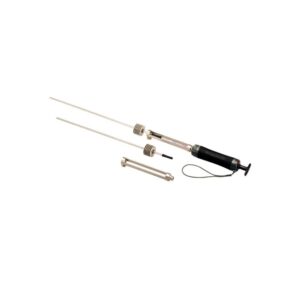
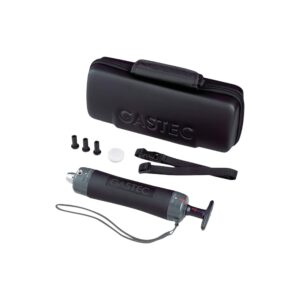
The GV-100 pump has an internal capacity of 100 mL and weighs 240 grams, and works with almost all Gastec short term detector tubes. It meets the leakage test of EN 1231, the standard for short term detector tube measurement systems, and has a non sparking design. A built in tip breaker opens tubes cleanly.
Where It’s Used
Occupational hygiene assessment of specific chemicals. Confined space entry where the hazard is an unusual solvent or process chemical. Grain and container fumigation. Quarantine clearance. Manufacturing and process plant. Laboratories. Refrigeration and air conditioning leak investigation. Emergency response. Compressed breathing air testing. Any measurement where the substance is known and no electronic sensor suits it.
Benefits
- Available for more than 500 gases and vapours, including many with no electronic sensor
- Reading taken directly off the scale printed on the tube, in seconds
- Each production lot independently tested and calibrated, with the batch number printed on the tube
- Multiple ranges available for the same gas, so the range suits the situation
- Long shelf life, with many tubes rated at three years
- No power, no calibration and nothing to drift between uses
- Non sparking Gastec sampling pump, with no power needed for the measurement
- Each tube is made for one substance, with interferences set out on the instruction sheet
- Supplied in boxes of ten with an instruction sheet and numbered labels
- Usable with minimal training, so testing does not depend on one person
Product type
Single use colorimetric gas detector tubes
Gases covered
More than 500 applications
Measurement principle
Reagent colour change, with the length of the changed layer proportional to concentration
Reading
Direct, from the calibration scale printed on the tube
Reagent
Particulate matrix (for example silica gel or alumina) holding a reagent selected for the target substance
Quality control
Each production lot tested and calibrated independently. Quality control number printed on each tube
Ranges
Multiple ranges available for many gases
Shelf life
Long, with many tubes rated at three years. Use by date printed on the box
Storage
Cool place or refrigerated. Expired tubes should not be used
Operating temperature
Varies by tube. Refer to the instruction sheet
Operating humidity
Varies by tube. Refer to the instruction sheet
Supplied as
Boxes of tubes of one type, with instruction sheet (confirm box quantity with Gastech)
Pump required
Yes. Gastec GV-100 or GV-110 sampling pump
Sample volume
50 mL half stroke or 100 mL full stroke, typically one to three strokes
Pump standard
GV-100 and GV-110 meet the leakage test of EN 1231
- Aviation & Transportation
- Carpark & HVAC
- Chemical Manufacturing
- Confined Space & Compliance
- Energy (Oil & Gas)
- Food & Beverage
- Landfill & Remediation
- Marine & Maritime
- Medical & Healthcare
- Mining & Minerals
- Power Generation & BESS
- Technology & Semiconductor
- Water & Wastewater
A reagent inside the tube changes colour when the target gas passes through it, and the length of the colour change is proportional to the concentration. The scale is printed on the tube, so the reading is direct.
Gastec tubes are available for more than 500 applications, far more than any portable electronic instrument covers.
Yes. The measurement depends on drawing an exact sample volume through the tube, so a Gastec pump is required. Tubes on their own cannot be used.
Many are rated at a three year shelf life, with the use by date printed on the box. Store them cool or refrigerated, and do not use them past that date.
No. Each tube is made for a single substance and is single use. Other gases can still interfere with the reagent, and the instruction sheet in each box sets out which ones.
Polytec tubes contain several reagent layers reacting to different gas groups, which helps identify what is there before a specific measurement is made.
Trusted by









Contact Us
Can’t find what you’re looking for? Our team is happy to help.