
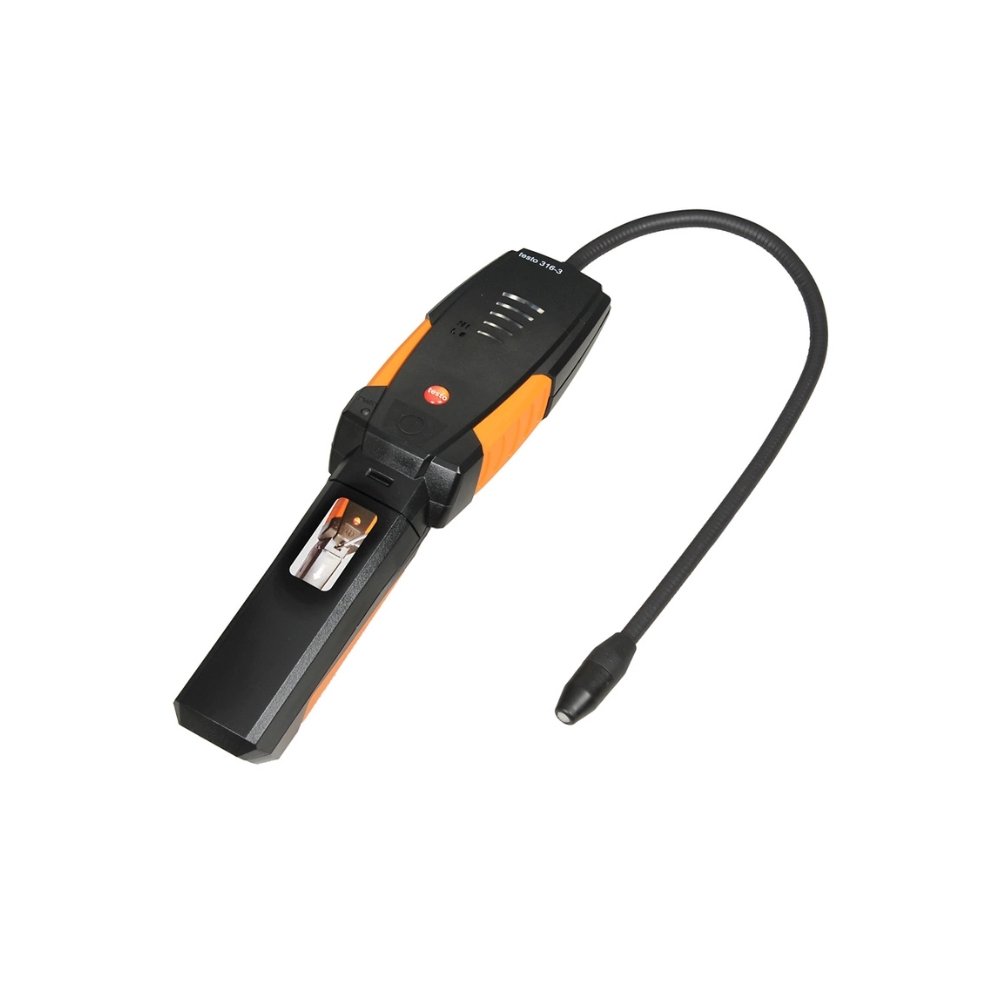
Testo 316-3
Refrigerant Leak Detector
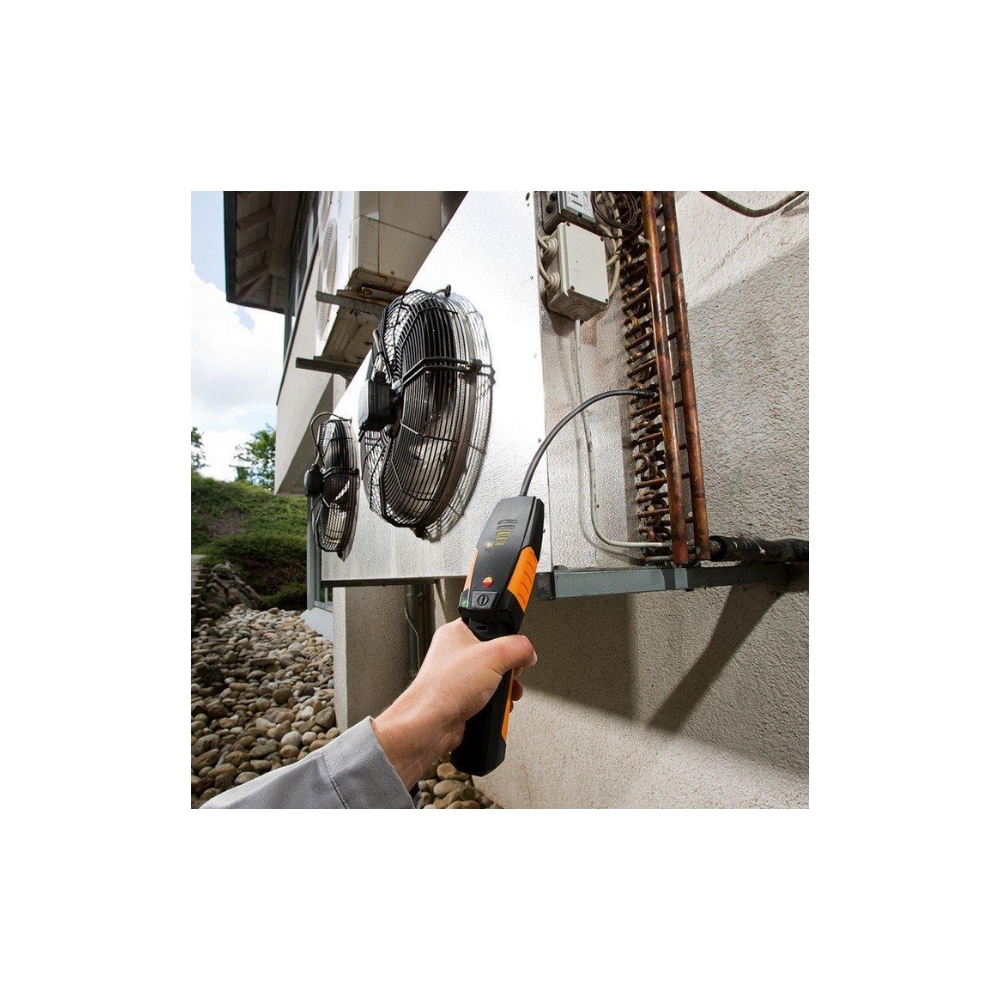
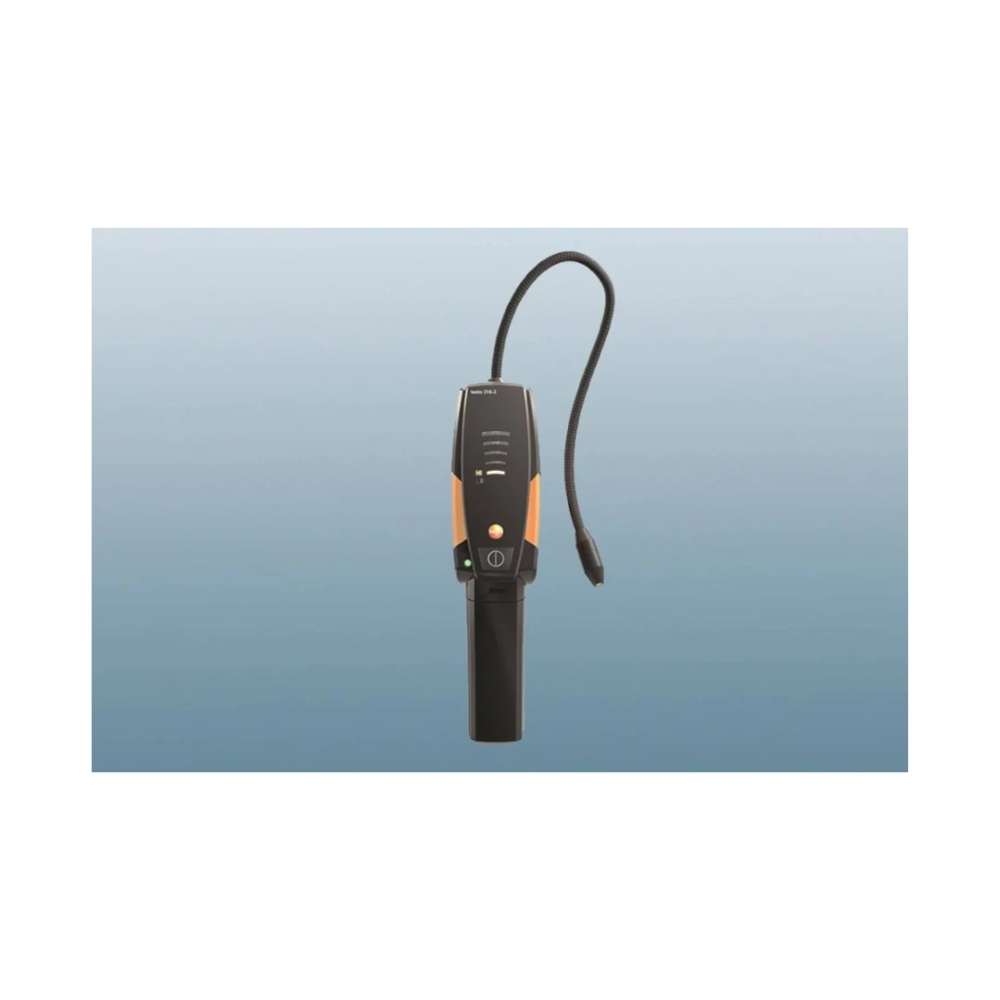
The Testo 316-3 is a rugged, reliable refrigerant leak detector using a patented heated diode sensor for excellent sensitivity down to 4 g/a (0.15 oz/year). Covering all common CFCs, HFCs and HCFCs including R-22, R-134a, R-404A, R-410A, R-507 and R-438A as well as A2L refrigerant blends, the 316-3 is ready to use the moment it is switched on with automatic zeroing for immediate detection even in previously contaminated areas. One-button operation, a replaceable sensor head, 16 hours of battery life and compliance with EN 14624:2012 and SAE J1627 make the 316-3 the practical everyday leak detector for HVAC technicians and refrigeration engineers.
KEY BENEFITS
- Patented heated diode sensor with sensitivity down to 4 g/a (0.15 oz/year) for reliable detection of small refrigerant leaks
- Automatic zeroing compensates for background refrigerant build-up so the instrument can be used immediately in previously contaminated areas
- A2L compliant, covering new refrigerant blends alongside traditional CFCs, HFCs and HCFCs
- High and low sensitivity adjustment for flexibility across different leak sizes and application types
- One-button operation, turn on and start detecting immediately with no warm-up or configuration required
+ more in the Description tab below
Reliable Refrigerant Leak Detection for HVAC and Refrigeration
Refrigerant leaks reduce system efficiency, raise running costs and harm the environment. Depending on the refrigerant, they can also create safety risks for building occupants and service technicians. Finding and fixing leaks quickly is a practical necessity, and part of meeting Australia’s refrigerant handling requirements.
The Testo 316-3 is built for that job. Its patented heated diode sensor detects leaks down to 4 g/a (0.15 oz/year), sensitive enough to find small leaks while staying practical for field use.
Automatic zeroing compensates for refrigerant that has already built up in the area. The 316-3 detects new leaks against the background level, instead of alarming on refrigerant that’s already there, so it can be used straight away in previously contaminated areas.
A2L Compliant for New Refrigerant Blends
The refrigerant landscape is changing. Older high GWP HFCs are being phased down, and lower GWP alternatives, including mildly flammable A2L refrigerants, are increasingly used in new equipment.
The Testo 316-3 is A2L compliant and covers new refrigerant blends alongside traditional CFCs, HFCs and HCFCs. One instrument serves both older systems and new installations.
Simple to Use, Simple to Maintain
One button operation means any technician can use it without special training. Turn it on and start detecting, with no warm up and no presets to choose. High and low sensitivity settings help pinpoint the source: start on high to find the leak, then switch to low to narrow it down.
The sensor lasts about 80 to 100 hours of use, which is roughly a year of typical service. The sensor head can then be replaced in seconds without tools. Replacement heads are available from Gastech, so there’s no need to send the instrument away.
The 316-3 meets EN 14624:2012 and SAE J1627, and its rugged, oil resistant housing is built for daily use.
Benefits
- Patented heated diode sensor with sensitivity down to 4 g/a (0.15 oz/year) for reliable detection of small refrigerant leaks
- Automatic zeroing compensates for background refrigerant build-up so the instrument can be used immediately in previously contaminated areas
- A2L compliant, covering new refrigerant blends alongside traditional CFCs, HFCs and HCFCs
- High and low sensitivity adjustment for flexibility across different leak sizes and application types
- One-button operation, turn on and start detecting immediately with no warm-up or configuration required
- User-replaceable sensor head changes in seconds, no downtime waiting for service
- LED indicator and audible alarm for immediate leak notification
- 16-hour battery life on 2 x D batteries for a full working day without battery changes
- Meets EN 14624:2012 and SAE J1627 standards for refrigerant leak detectors
- Rugged, oil-resistant housing built for daily use in HVAC and refrigeration environments
Detection principle
Heated diode sensor (patented)
Sensitivity
4 g/a (0.15 oz/year)
Sensitivity adjustment
High and low
Automatic zeroing
Yes
Detectable refrigerants
R-22, R-134a, R-404A, R-410A, R-438A, R-507 and all common CFCs, HFCs and HCFCs. A2L compliant for new refrigerant blends
Sensor life
Approximately 80 to 100 hours (approximately 1 year typical use)
Sensor replacement
User replaceable sensor head
Display
LED indicator
Alarms
Audible alarm and LED indicator
Battery
2 x D alkaline batteries
Battery life
16 hours continuous operation
Operating temperature
-18°C to 50°C
Storage temperature
0°C to 50°C
Humidity
20 to 80% RH
Dimensions
270 x 60 x 61 mm
Weight
500 g including batteries
Standards
EN 14624:2012, SAE J1627
EMC
2004/108/EG
- Carpark & HVAC
- Chemical Manufacturing
- Food & Beverage
- Marine & Maritime
- Power Generation & BESS
The Testo 316-3 detects R-22, R-134a, R-404A, R-410A, R-507, R-438A and all common CFCs, HFCs and HCFCs. It is also A2L compliant, covering the latest low GWP refrigerant blends increasingly used in new HVAC and refrigeration equipment.
The heated diode sensor lasts about 80 to 100 hours of use, which is roughly a year of typical field service. The sensor head can be replaced in seconds, and replacement heads are available from Gastech.
Yes. Automatic zeroing compensates for background refrigerant concentration already present at the measurement site, allowing the instrument to detect new leaks relative to the ambient baseline without triggering continuous false alarms from accumulated refrigerant.
The Testo 316-3 has two sensitivity levels, high and low. Use high to find a leak, then low to pinpoint the source.
The Testo 316-3 meets EN 14624:2012 (European standard for refrigerant leak detectors) and SAE J1627 (US automotive refrigerant leak detector standard).
The instrument is supplied with the sensor head, transport case, calibration certificate, two D-size alkaline batteries and a filter.
Trusted by









Contact Us
Can’t find what you’re looking for? Our team is happy to help.