
Selecting Optical Flame Detection For Your Site
Gas detection prevents a fire. Flame detection responds to one. They are different jobs and a site that takes fire seriously needs both, because gas detection cannot see a fire that started from something other than a gas release, and it cannot see one that has already started.
The problem with flame detection is not sensitivity, it is false alarms. Sunlight, arc welding, hot surfaces, flare stacks, lightning, halogen lamps and hot exhausts all put radiation into a detector’s field of view, and a detector that cries wolf gets bypassed or ignored. A bypassed detector protects nothing at all, which makes false alarm immunity the specification that matters most.
That is why the technology is chosen by what is going to fool the detector rather than by detection distance. Spectrex are explicit about it. Each of their detector families is recommended only for specific applications, and which one suits is usually determined by evaluating the extent to which false alarms could create problems on that site.
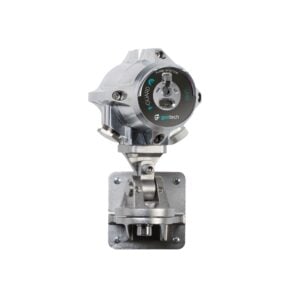
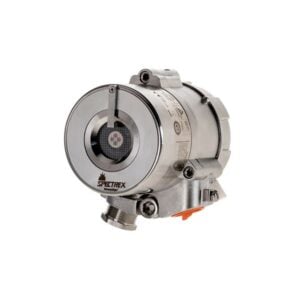
The 40/40 SharpEye range covers the options. The 40/40L combines UV and IR sensors and analyses both signals for frequency, intensity and duration, alarming only when both agree, with a logic circuit in the UV sensor specifically to reject solar radiation. It sees hydrocarbon fuel and gas fires, hydroxyl and hydrogen fires, and metal and inorganic fires. The 40/40L4 is the same detector with the IR sensor at 4.5 micron, suited to hydrocarbon fires only. The 40/40I triple IR gives the longest range and the highest immunity to false alarms, detecting a 0.1 square metre gasoline pan fire at 65 metres in under 5 seconds. The 40/40M multi IR is built for hydrocarbon and hydrogen flames together, which matters as hydrogen projects move from proposal to construction in Western Australia, because a hydrogen flame is close to invisible and emits very little in the bands a standard IR detector watches.
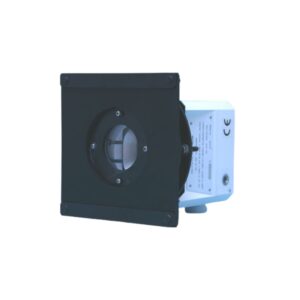
Where the area is smaller or the power budget is tight, the 20/20 Series and the Mini IR3 and Mini UV/IR detectors offer the same detection principles at lower cost and lower power draw.
All 40/40 models carry heated optics, HART and meet SIL 2 requirements. Heated optics are not a luxury in Australian conditions, since condensation or frost on a lens blinds a detector as effectively as paint. Approvals across the range include IECEx, ATEX, FM, EN 54-10, CSA, DNV, DNV MED and ABS.
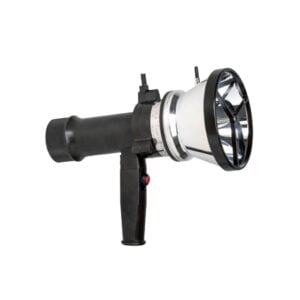
One thing worth knowing about testing. The automatic self-test in these detectors runs at 15 minute intervals and confirms window cleanliness and sensor operation, but it deliberately does not activate the alarm outputs. So it proves the detector sees, not that anything happens when it does. Only an external flame simulator tests the whole chain, the relay contacts, the 4 to 20 mA output, Modbus and HART, the wiring and terminations, the fire alarm panel, the notification and, if you choose, the suppression release itself. Spectrex flame simulators are ATEX and IECEx approved for Zones 1, 2, 21 and 22, run at least 50 tests on a charge, and Gastech supplies them for purchase or hire.
Choosing between the families is a site specific decision. The SharpEye selection guide sets out typical detection distances by model and by fuel, and Gastech engineering will work through it against your fire risk assessment, false alarm sources and mounting geometry. Support runs from WA, NSW and QLD.
Trusted by









Contact Us
Can’t find what you’re looking for? Our team is happy to help.