
The Guide to Gas Detection for Water & Wastewater Facilities
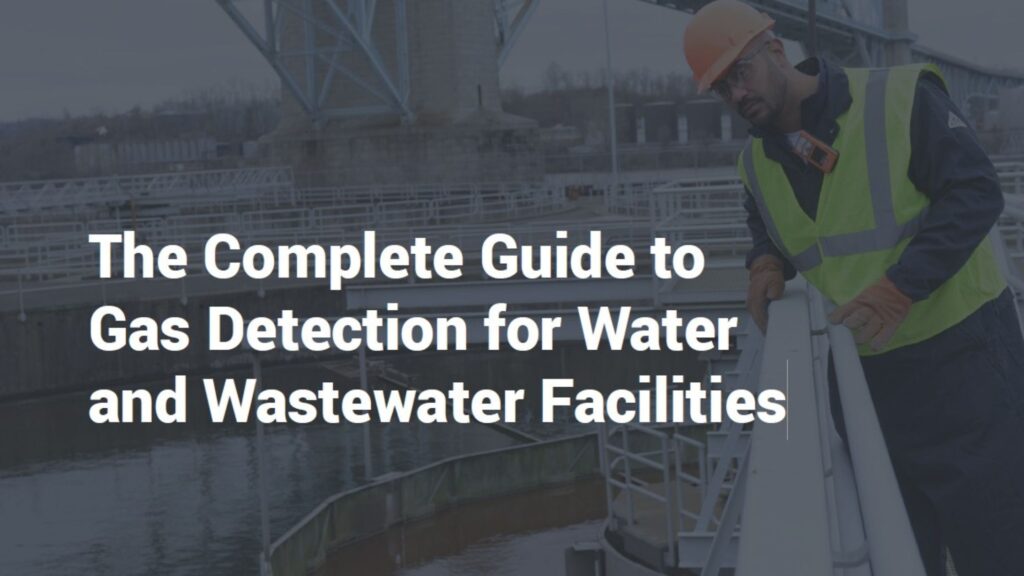
When people think about hazards in a water or wastewater treatment plant, they usually picture slips, trips, machinery or chemicals.
The reality is that some of the biggest risks are the ones you can’t see.
Hydrogen sulphide. Chlorine. Carbon monoxide. Methane. Oxygen deficient atmospheres.
These hazards don’t announce themselves. They don’t always have an odour. They don’t wait until a convenient time.
That’s why a well-designed gas detection program isn’t simply another compliance requirement. It’s one of the most important investments you can make in protecting your people.
Start with the hazard, not the detector
One of the biggest mistakes organisations make is choosing a gas detector before they’ve identified the risk.
Every facility is different.
A chlorine dosing station has different hazards to a pumping station. A wet well presents different risks to a digester. A maintenance crew entering a confined space has different monitoring requirements to an operator carrying out routine inspections.
Before selecting equipment, ask a simple question.
What gases could our people be exposed to while performing this task?
Once you know the answer, choosing the right detector becomes much easier.
The danger isn’t always where you expect it
Many facilities rely on fixed gas detection systems to protect critical areas.
Fixed systems are an essential part of site safety, but they only monitor the locations where they’ve been installed.
Gas hazards aren’t confined to one room or one process. Workers often move between pump stations, manholes, trenches, chemical storage areas, reservoirs, treatment plants and remote assets throughout the day.
That’s why personal gas monitors play such an important role. They protect the worker, not just the workplace.
Confined spaces demand respect
Few environments present greater atmospheric risk than a confined space.
Industrial Scientific highlights a statistic that every safety professional should know.
Around 60% of confined space fatalities involve would-be rescuers who attempted to help a colleague, only to be overcome by the same atmosphere.
It’s a powerful reminder that confined space safety is about preparation, not reaction.
Pre-entry testing, sampling at different heights, continuous monitoring during entry and following established rescue procedures all work together to prevent incidents before they occur.
Technology has changed what good looks like
Gas detectors have come a long way.
Today’s instruments can do far more than measure gas concentrations.
Connected devices can share alarms with nearby workers, notify supervisors, provide location information, trigger panic alerts and detect when someone has stopped moving.
For organisations with lone workers or large treatment facilities, that extra visibility can dramatically improve emergency response.
Data is becoming one of your most valuable safety tools
Every gas alarm tells a story.
One alarm might indicate a leaking process.
Repeated alarms in the same location might identify a maintenance issue.
Exposure trends across months or years can reveal risks that would otherwise remain hidden.
Automated data collection gives safety managers far greater visibility than manual reporting and helps drive better decisions across an entire operation.
Your gas detector needs looking after too
Even the most advanced gas detector can’t protect anyone if it isn’t working correctly.
Routine bump testing confirms the sensors respond as expected.
Regular calibration ensures readings remain accurate.
Both are essential if you expect workers to trust the instrument they’re wearing.
The best gas detection programs have one thing in common
They don’t start with products.
They start with people.
They understand the hazards.
They choose equipment based on risk.
They maintain their instruments properly.
They train their teams.
And they continually review the data to improve safety over time.
Technology plays an important role, but it’s only one part of building a stronger safety culture.
If you’d like to review your current gas detection program or discuss the right Industrial Scientific solution for your water or wastewater facility, speak with one of the Technical Consultants at Gastech.