
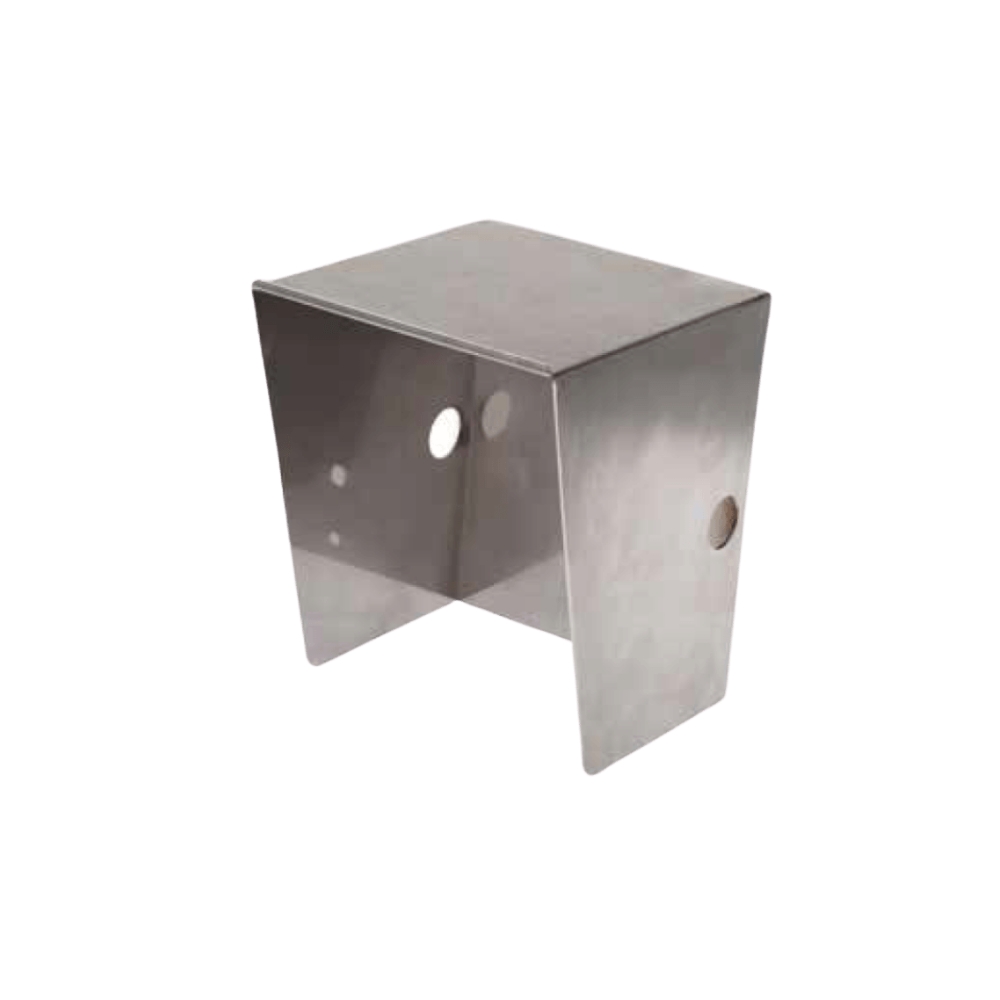
Weather Shield
Weather Protection for Fixed Detectors
A weather shield fits over the sensor head and keeps driving rain, direct sun and windblown dust off it, while still letting gas diffuse through to the sensor. It is a small part that decides how long an outdoor detector lasts and how often it alarms for the wrong reason. On an exposed installation in WA, QLD or NT it is not an optional extra.
KEY BENEFITS
- Keeps driving rain and windblown dust off the sensor without blocking gas diffusion
- Shades the sensor head from direct sun, reducing heat load and drift
- Extends sensor life on exposed outdoor and coastal installations
- Cuts nuisance alarms and fault calls caused by water sitting on a sensor face
- Retrofittable to detectors already installed, so a problem position can be fixed without changing the detector
+ more in the Description tab below
Sizing Is Not Just Adding Up the Nameplates
This is where power supplies for gas detection get specified wrong, and the mistake usually shows up on a cold morning or at the far end of a long cable run.
Detector current draw is not fixed. On many detectors it rises substantially as temperature falls, because heated optics and sensors draw more to hold temperature. A detector rated at under 4 watts in warm conditions can draw three times that below freezing. Sizing a supply against the warm figure works until the weather changes.
Cable run matters just as much. A supply delivering a clean 24 volts at the panel is not delivering 24 volts at a detector 300 metres away, and detectors have a minimum operating voltage below which they stop working correctly rather than simply reading low. What matters is the voltage arriving at the far end of the longest run, which depends on conductor size, run length and the current being drawn.
Add both together and the supply has to be sized for the worst case combination, which is the coldest expected temperature at the end of the longest cable. That calculation is worth doing properly once rather than discovering it during commissioning.
What Happens When the Power Goes Off
A gas hazard does not stop when the mains does. A refrigerant leak continues. A fermenting cellar keeps producing carbon dioxide. Ammonia in a plant room does not care about the switchboard.
Battery backup is worth specifying wherever the hazard persists through an outage, which is most of them. It is also worth specifying where the detection system drives a ventilation or shutdown response, because that response is needed most when other things have already gone wrong.
When You Do Not Need One
Worth saying plainly. If your system is a MicroRack, the power supply is already inside it. The MicroRack includes a 100 watt supply accepting 240 or 110 volts AC, so there is nothing further to specify.
A separate supply is needed where 4100R cards are installed in a nineteen inch rack or panel mounted without an enclosure supply, where detectors are wired back to a third party panel, or where the detector count has grown beyond what the original supply was sized for.
Send Gastech the detector schedule, the cable type and the longest run length, and we will size it.
Benefits
- Keeps driving rain and windblown dust off the sensor without blocking gas diffusion
- Shades the sensor head from direct sun, reducing heat load and drift
- Extends sensor life on exposed outdoor and coastal installations
- Cuts nuisance alarms and fault calls caused by water sitting on a sensor face
- Retrofittable to detectors already installed, so a problem position can be fixed without changing the detector
Trusted by









Contact Us
Can’t find what you’re looking for? Our team is happy to help.