
testo 440
Air Velocity and IAQ Instrument
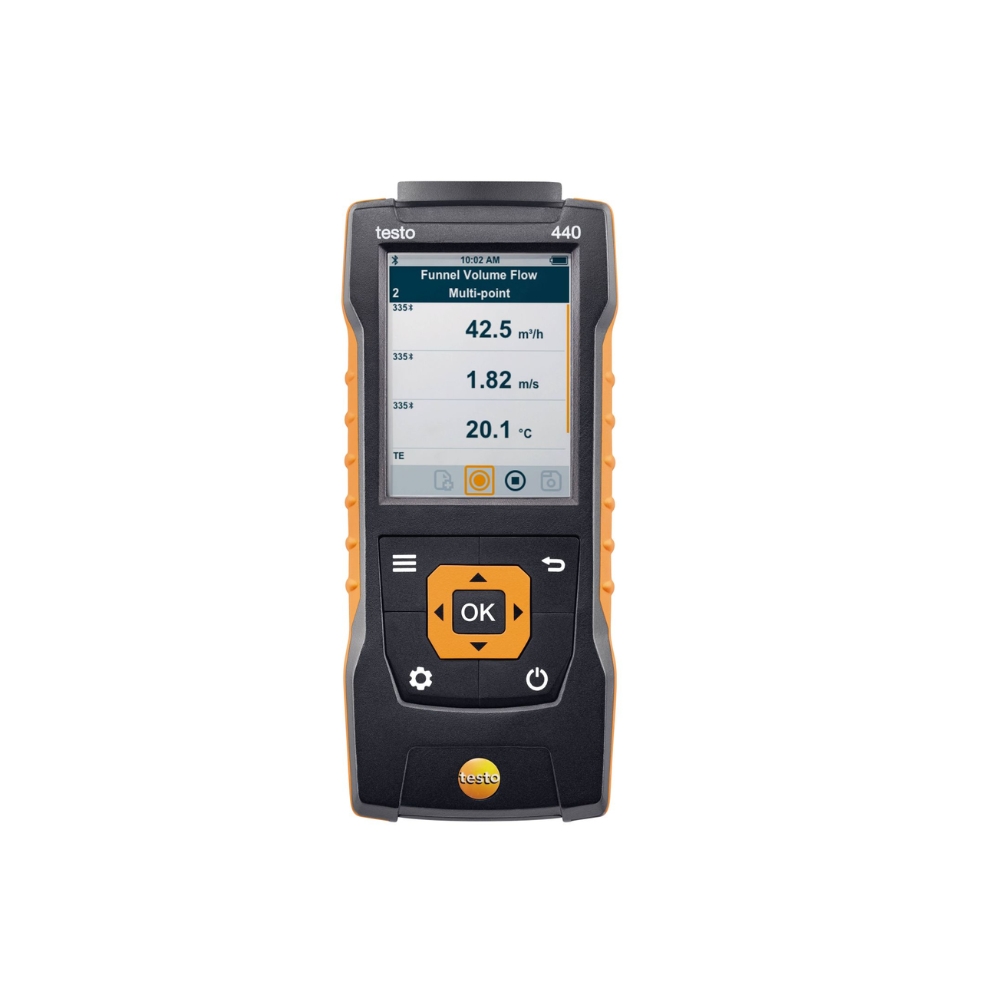
The Testo 440 connects three probes at the same time, one over Bluetooth, one by cable and one thermocouple. So a single instrument reads air velocity, carbon dioxide and temperature together rather than in sequence. It detects each probe automatically, and the dP version adds integrated differential pressure. Between them, that covers the whole ventilation verification check in one instrument.
KEY BENEFITS
- Three probes connected at once: one Bluetooth, one wired and one Type K thermocouple
- Automatic probe detection, so changing a probe does not mean resetting the instrument
- The dP version adds integrated differential pressure for room overpressure measurement
- Turbulence probe calculates draught rate to DIN EN 13779 or DIN EN ISO 7730
- Stores up to 7,500 measurement protocols, with Excel export over USB or printing on site
+ more in the Description tab below
Three Probes at the Same Time
This is the capability that separates the testo 440 from a single parameter meter, and it changes how a job is done.
The instrument takes three probes at once: one Bluetooth probe (a digital Bluetooth probe or a testo Smart Probe), one wired digital or NTC probe, and one Type K thermocouple. Three readings are displayed side by side.
That matters because ventilation measurements are related. Air velocity on its own tells you a fan is moving air. Air velocity alongside temperature and CO2 tells you whether it’s moving the right air to the right place. Measuring them one at a time means conditions have shifted between readings, so the numbers describe slightly different moments.
Measurement Menus for the Job
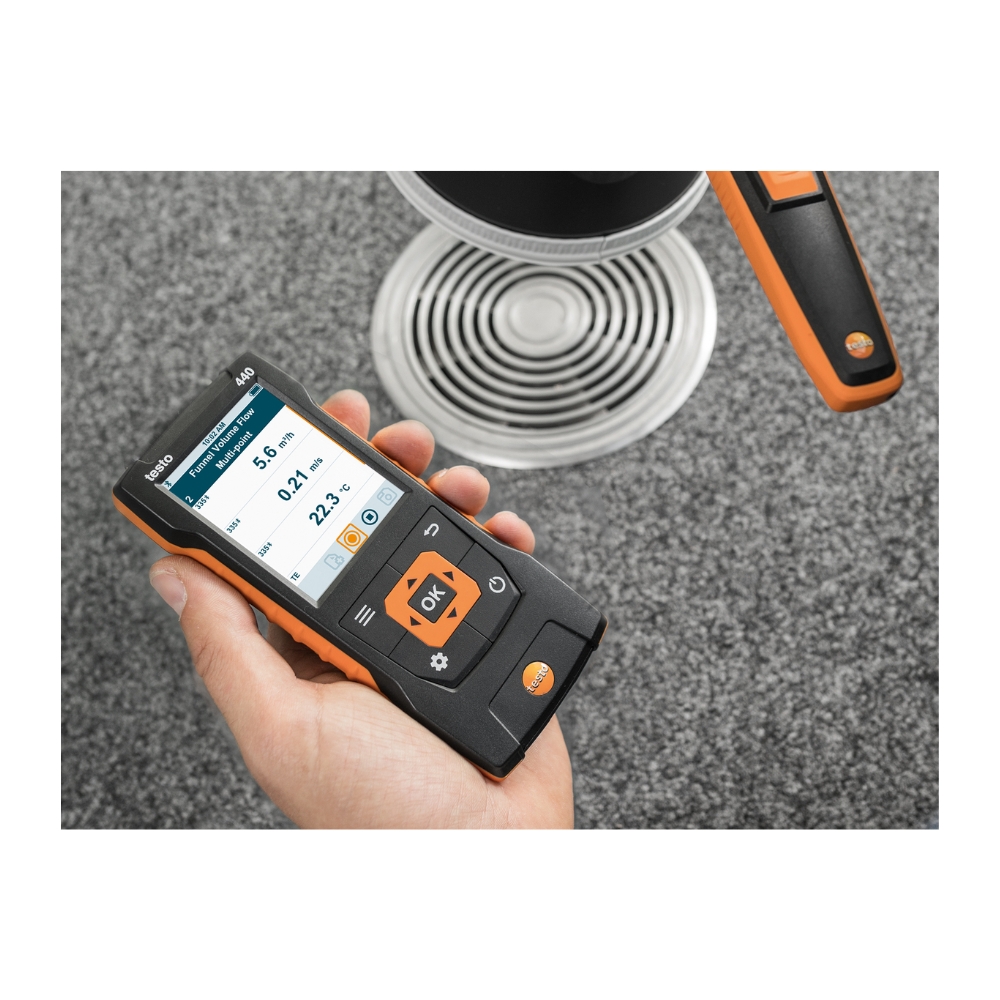
Clearly structured measurement menus for the most common HVAC tasks are stored on the instrument. They cover volume flow in ducts and at outlets, K-factor, degree of turbulence, cooling and heating load, mould indication and a logging mode for longer term measurement.
That means you get through each measuring task more quickly and reliably, without setting up calculations by hand.
Probe Identification
The instrument identifies each probe as it’s connected. Compatible Bluetooth probes connect automatically.
That removes a specific error: a reading taken while the instrument is still set up for the previous probe. That’s worse than an obvious fault, because the reading looks plausible and nobody questions it.
Draught Isn’t Subjective
The most useful measurement on this instrument is the one many people don’t know exists.
Draught complaints are the classic facilities argument. Someone says an area is draughty, someone else sits in the same spot and says it’s fine, and there’s no way to settle it, because it feels like a matter of opinion.
It isn’t. Draught rate can be calculated, from air velocity, the turbulence of that air and the air temperature. The testo 440’s draught rate menu, with the turbulence probe, calculates it in accordance with DIN EN 13779 or DIN EN ISO 7730, and shows the result as green (0 to 20%), yellow (21 to 30%) or red (31 to 100%).
So a complaint becomes a figure, which can be compared against a requirement and used to justify a change. For open plan offices, meeting rooms, laboratories and anywhere thermal comfort is contested, that turns an argument into an assessment.
The dP Version
Two versions are available: the standard testo 440, and the testo 440 dP with an integrated differential pressure sensor.
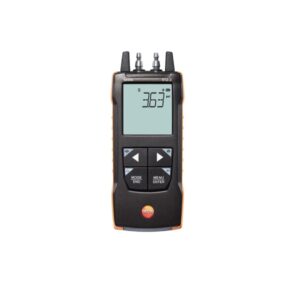
The differential pressure sensor measures from -150 to +150 hPa. It makes measurements at filters possible, as well as Pitot tube and K-factor measurements. In a cleanroom, an isolation room, a switchroom or a paint booth, the pressure relationship between spaces is the control, not a side effect.
If the work involves pressure at all, specify the dP version. The sensor is integrated, so it can’t be added later.
Probes and Kits
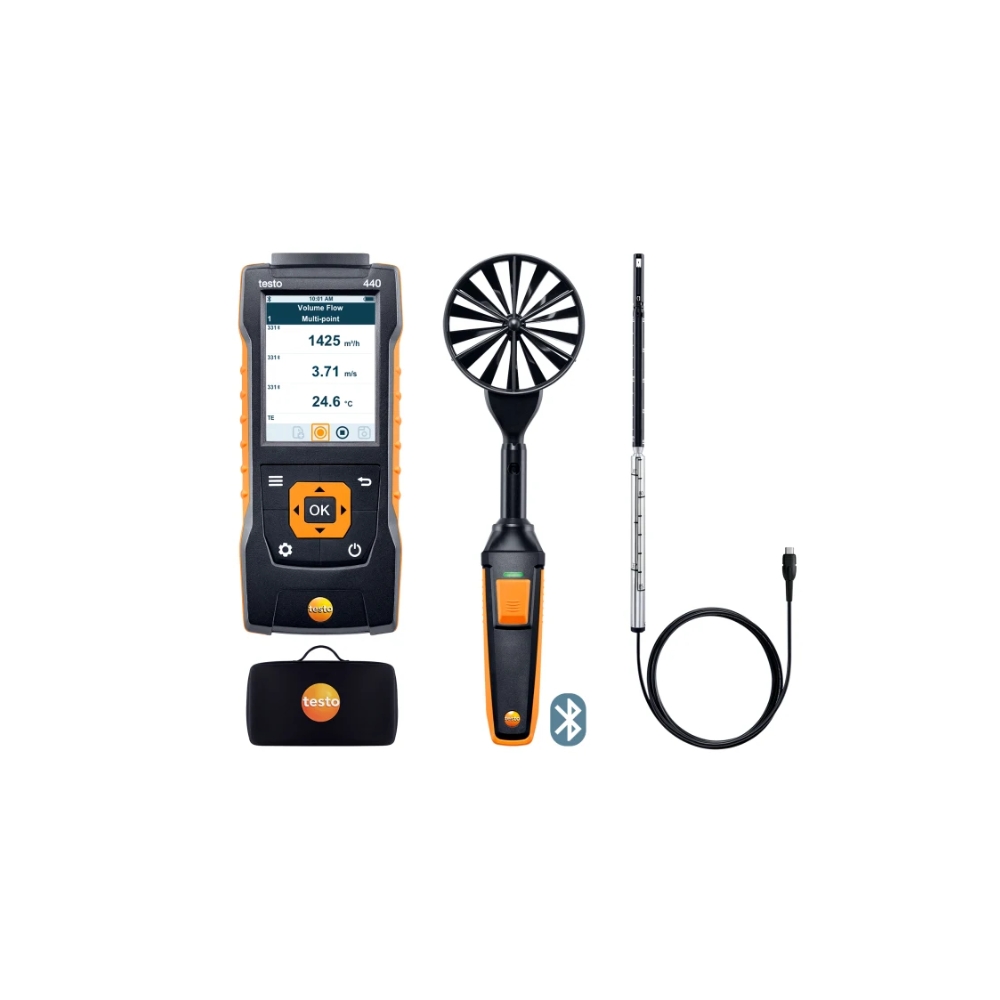
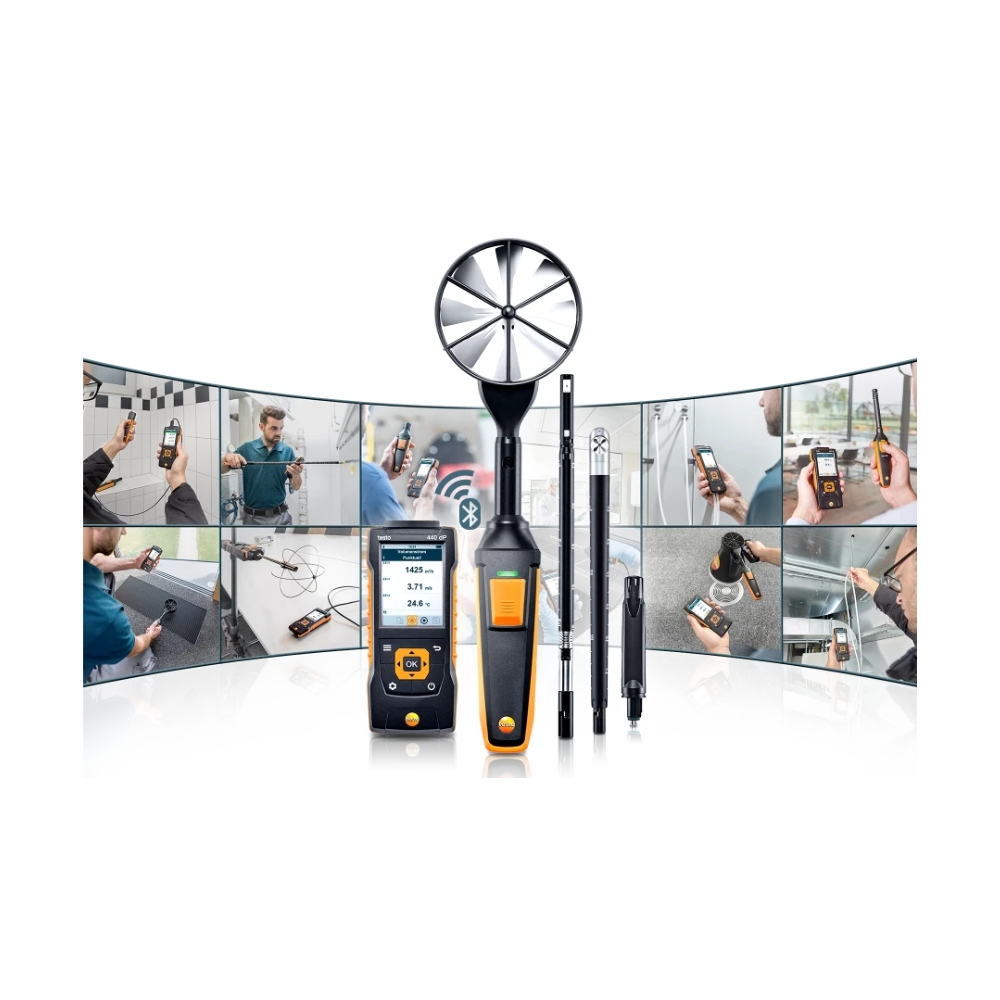
Probes are ordered separately or as a kit set up for an application. The range covers air velocity by hot wire, vane and thermal probe, CO2 with humidity and temperature, CO, humidity and temperature, high precision humidity, turbulence and lux, plus Testo’s temperature probes.
The high precision humidity and temperature probe is worth noting on its own. At ±(0.6% RH + 0.7% of reading) from 0 to 90% RH, it suits work where humidity needs to be measured very accurately.
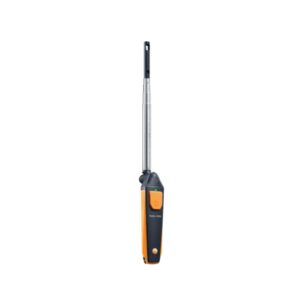
A universal handle takes interchangeable probe heads, so the measurement range can grow without buying another instrument. A telescope extends the air velocity probes, to reach ceiling outlets from the floor.
Data and Reporting
The testo 440 stores up to 7,500 measurement protocols. Reports can be exported as Excel files over USB, or printed on site with Testo’s Bluetooth printer.
Where It Sits Against the testo 400
Both are multifunction air velocity and IAQ instruments, and the overlap is real.
The testo 440 covers three probes at once and the measurement menus needed for most HVAC commissioning, fault finding and IAQ work. For a technician doing that work regularly, it’s the right instrument.
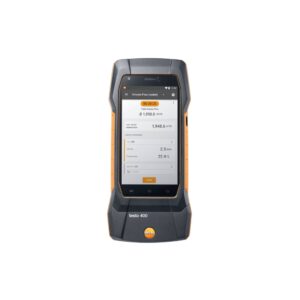
The testo 400 sits above it, and is the choice where more channels, more extensive reporting or larger measurement programmes are needed.
Our Technical Consultants will work through which parameters your assessment has to show before recommending either, since the probe selection matters more than the instrument choice.
Where It’s Used
HVAC commissioning and balancing. Ventilation checks and defect investigation. Indoor air quality assessment in offices, schools and healthcare. Thermal comfort and draught complaint investigation. Laboratory checks. Carpark ventilation checks. Commercial kitchen and laundry ventilation. Data centre airflow. Isolation and negative pressure rooms (dP version). Building tuning and energy optimisation.
Benefits
- Three probes connected at once: one Bluetooth, one wired and one Type K thermocouple
- Automatic probe detection, so changing a probe does not mean resetting the instrument
- The dP version adds integrated differential pressure for room overpressure measurement
- Turbulence probe calculates draught rate to DIN EN 13779 or DIN EN ISO 7730
- Stores up to 7,500 measurement protocols, with Excel export over USB or printing on site
- IAQ menu logs carbon dioxide, humidity and temperature over a set period and cycle
- High precision humidity probe, accurate to ±(0.6% RH + 0.7% of reading)
- Extendable telescope reaches air outlets and duct positions without a ladder
- Universal handle takes interchangeable probe heads, so the range grows without a new instrument
- Runs on three AA batteries, for about 12 hours of vane measurement
Instrument type
Multifunction air velocity and indoor air quality measuring instrument
Versions
Testo 440, and Testo 440 dP with integrated differential pressure sensor
Simultaneous probes
Three. One Bluetooth probe (digital Bluetooth probe or testo Smart Probe), one wired digital or NTC probe, and one Type K thermocouple
Probe detection
Probe identification. Compatible Bluetooth probes connect automatically
Measured parameters
Air velocity, volume flow, carbon dioxide, carbon monoxide, humidity, temperature, turbulence, and differential pressure on the dP version
Calculated values
Volume flow, K-factor, degree of turbulence and draught rate (to DIN EN 13779 or DIN EN ISO 7730), cooling and heating load, mould indication
Logging mode
Long term measurement with defined measurement time and measuring cycle
High precision humidity probe
±0.6 percent RH plus 0.7 percent of measured value, across 0 to 90 percent RH
Probe options
Hot wire, vane and thermal air velocity, carbon dioxide with humidity and temperature, carbon monoxide, humidity and temperature, high precision humidity, turbulence
Accessories
Universal handle for interchangeable probe heads, extendable telescope for air velocity probes
Power
3 AA batteries. About 12 hours (typical vane measurement)
Connectivity
USB (Excel export). Bluetooth for probes and printer
Memory
Up to 7,500 measurement protocols
Temperature (NTC)
-40 to +150°C. ±0.3°C (-25 to +74.9°C)
Temperature (Type K)
-200 to +1,370°C. ±(0.3°C + 0.3% of reading)
Differential pressure (440 dP only)
-150 to +150 hPa. ±0.05 hPa (0 to 1.00 hPa), ±(0.2 hPa + 1.5% of reading) above. Resolution 0.01 hPa
Weight and dimensions
250 g. 154 x 65 x 32 mm
Operating temperature
-20 to +50°C
Carbon Monoxide
CO
Carbon Dioxide
CO2
- Aviation & Transportation
- Carpark & HVAC
- Chemical Manufacturing
- Energy (Oil & Gas)
- Food & Beverage
- Marine & Maritime
- Medical & Healthcare
- Mining & Minerals
- Power Generation & BESS
- Technology & Semiconductor
- Water & Wastewater
Three. One Bluetooth probe, one wired probe and one Type K thermocouple probe, all reading and displaying together.
If the work involves differential pressure or room overpressure, yes. The sensor is integrated so it cannot be added later.
A calculated value based on air velocity, turbulence and air temperature. With the turbulence probe, the testo 440 calculates draught rate in accordance with DIN EN 13779 or DIN EN ISO 7730, turning a comfort complaint into a figure.
No. The instrument detects each probe automatically and configures itself, which removes the error where a reading is taken with the instrument still set for the previous probe.
The 400 sits above it, for more channels, more extensive reporting and larger measurement programmes. The 440 covers most HVAC commissioning, fault finding and IAQ work.
Trusted by









Contact Us
Can’t find what you’re looking for? Our team is happy to help.