
testo Smart Probes
Wireless HVAC and Refrigeration Probes
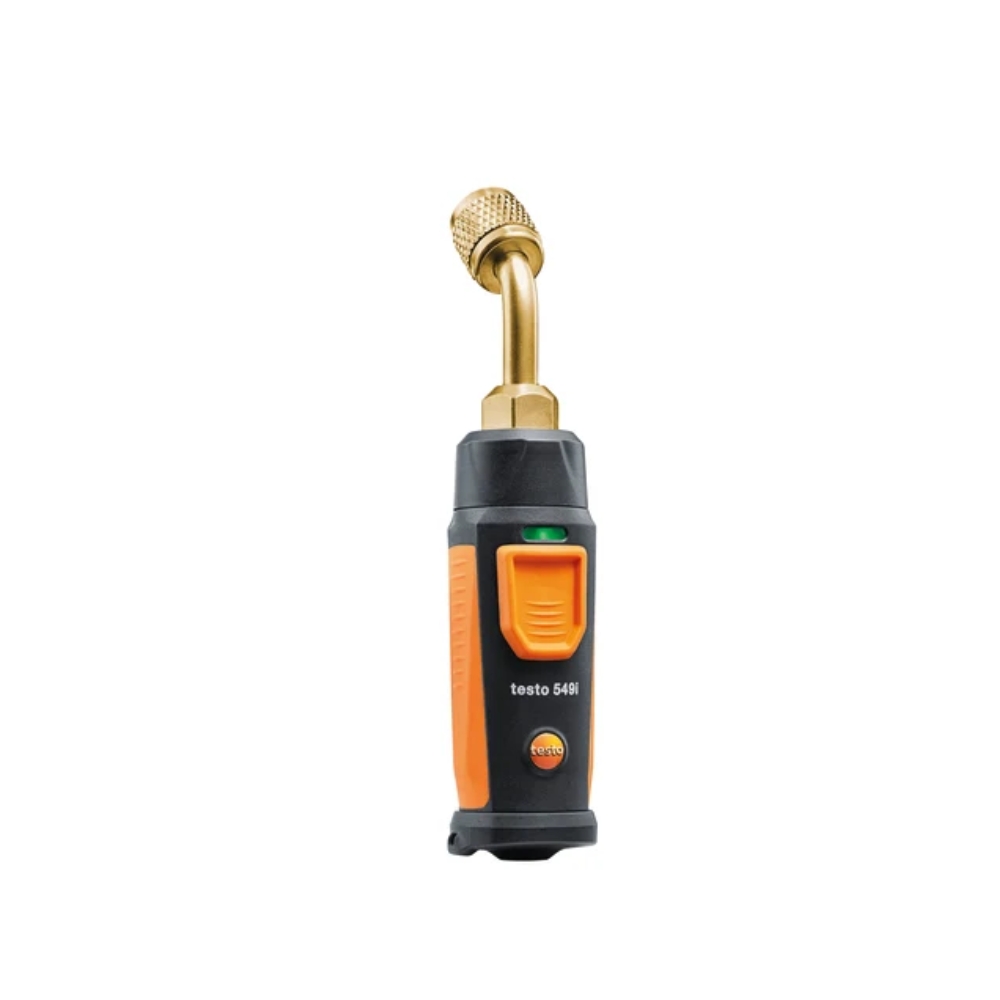
A Smart Probe has no screen, no buttons and no display. Your phone is the instrument, reading several probes at once. That changes what’s practical on a refrigeration or HVAC job, because pressure at the outdoor unit and temperature at the indoor coil appear on one screen, without anyone walking between them. The 549i connects straight to the service port with no hoses, so little or no refrigerant is lost.
KEY BENEFITS
- Several probes read at the same time on one phone screen
- Bluetooth range up to 100 m on the 115i, 549i and 605i, and 150 m on the 552i
- No hoses on the 549i pressure probe, so little or no refrigerant is lost
- Superheat and subcooling calculated automatically rather than worked out by hand
- Readings display as values, tables or graphs, and save as PDF or Excel
+ more in the Description tab below
The Phone Is the Instrument
All the Smart Probes work the same way. There’s no display on the probe itself. It measures and transmits over Bluetooth, and the testo Smart App does the reading, the calculating and the reporting.
That’s not just a cost saving. It’s what makes reading several probes at once possible. A conventional instrument shows you what one sensor is doing in one place. Several probes on one screen show you what a whole system is doing at the same moment.
On a refrigeration system, that matters because the numbers that describe it are taken in different places: suction pressure at one point, liquid line temperature at another, discharge pressure somewhere else, and ambient and return air somewhere else again. Measured one at a time with one instrument, they describe four different moments of a system that has moved in between.
The Bluetooth range reaches up to 100 metres on the 115i, 549i and 605i, and 150 metres on the 552i. That covers an outdoor condensing unit and an indoor air handler, without anyone walking between them.
No Hoses, Less Refrigerant Lost
This is the best argument in the range, and it adds up over a year.
The 549i high pressure probe connects directly to the service port, with a 7/16 inch UNF connection. There’s no manifold, no hoses and no gauge set. Testo says that because no hoses are needed, no refrigerant is lost, or only very little.
A conventional manifold loses a small amount of refrigerant at each connection and disconnection, and the hoses hold a charge that goes to atmosphere when they come off. It’s a small loss per job, but a substantial one across a year, and with refrigerant costs and phase down schedules, it’s no longer a rounding error.
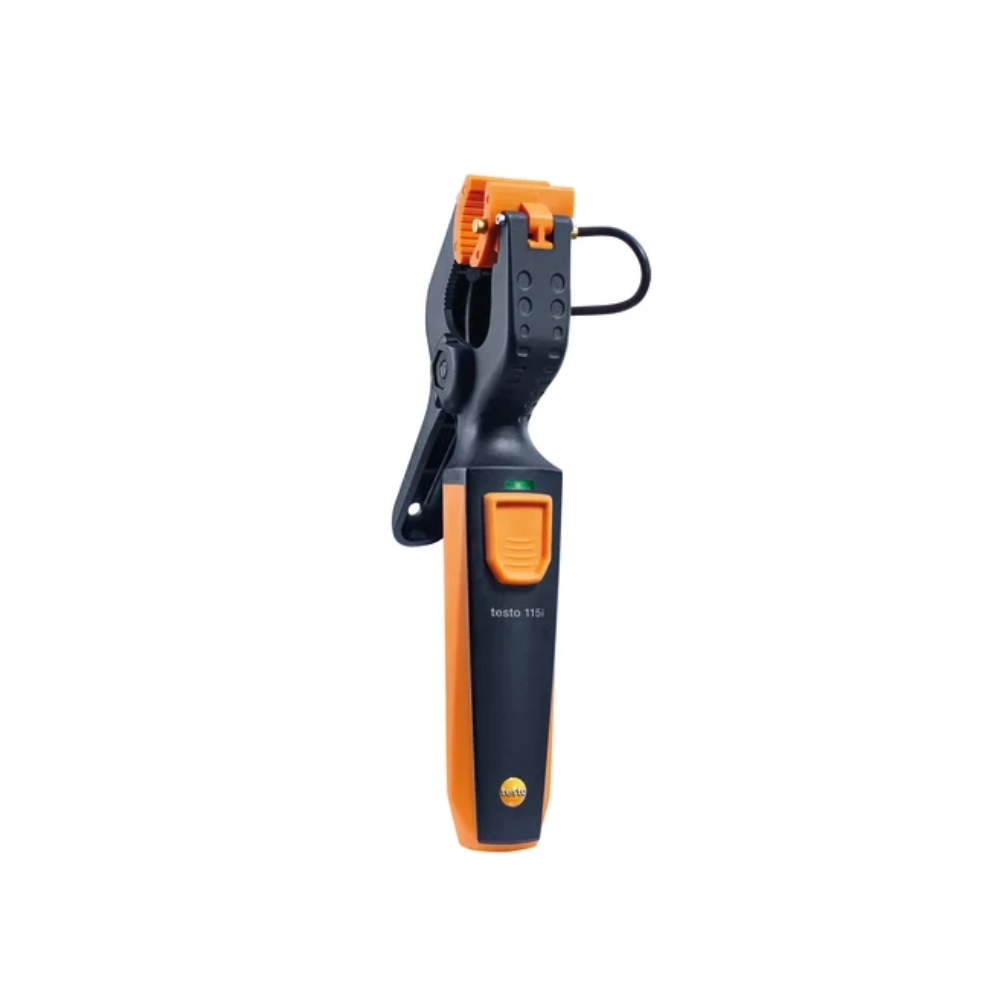
Two 549i probes with two 115i pipe clamp thermometers give superheat and subcooling on both sides of a system, calculated by the app rather than worked out from a pressure temperature chart.
The Range
| Probe | Measures | Range | Typically used for |
|---|---|---|---|
| 115i | Temperature, pipe clamp | -40 to +150°C | Line temperatures for superheat and subcooling |
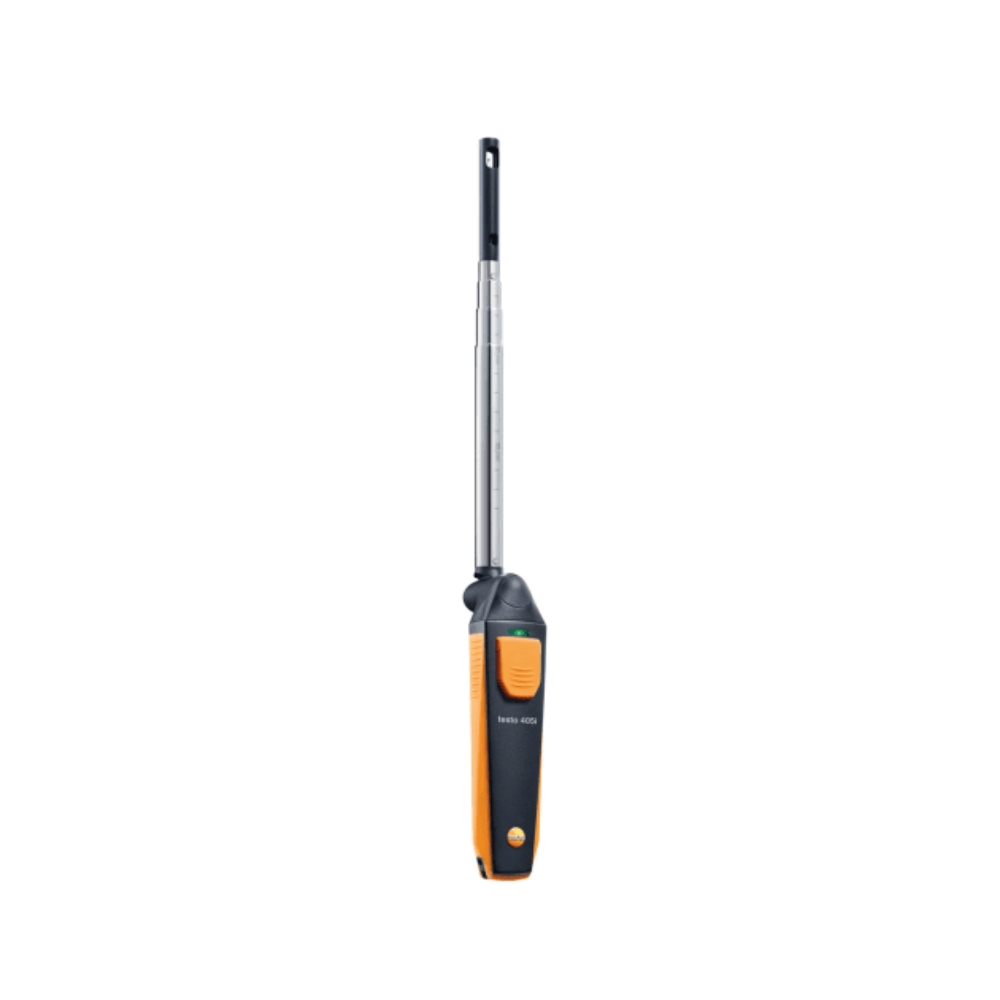
| 405i | Air velocity, volume flow, temperature, hot wire | 0 to 30 m/s, -20 to +60°C | Duct traverse and low velocity work |
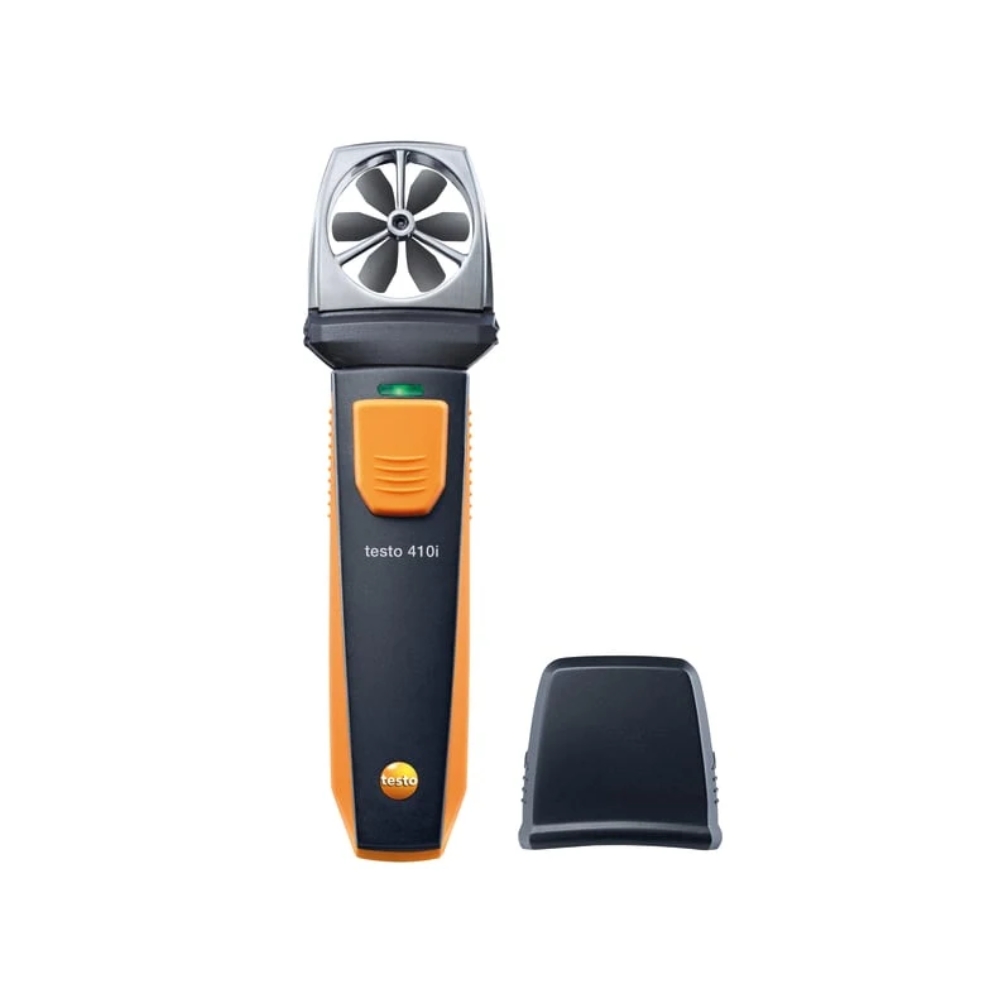
| 410i | Air velocity, volume flow, temperature, vane | 0.4 to 30 m/s, -20 to +60°C | Grille and diffuser measurement, balancing |
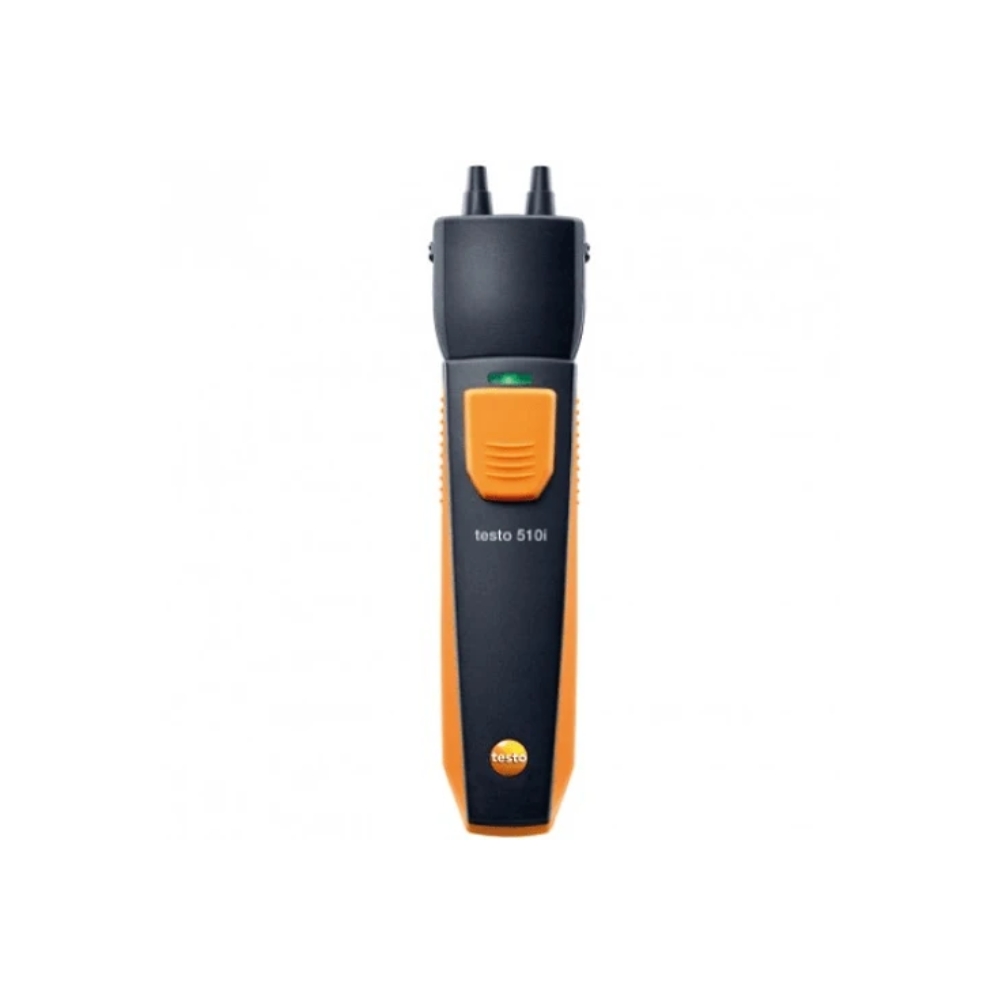
| 510i | Differential pressure | -150 to +150 hPa | Filter checks, duct pressure, gas flow pressure |
| 549i | High pressure | -1 to 60 bar | Refrigerant pressure, both sides of a system |
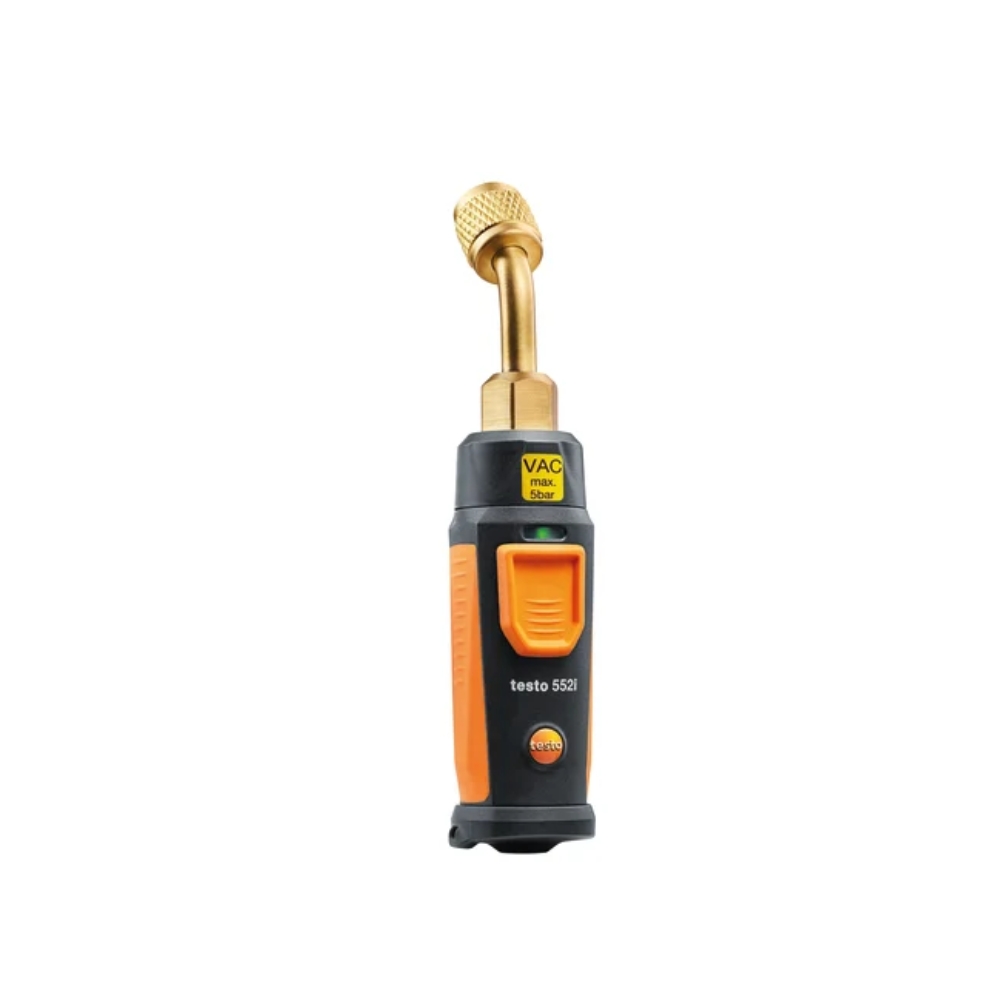
| 552i | Vacuum | 0 to 20,000 microns | Evacuation to a verified level |
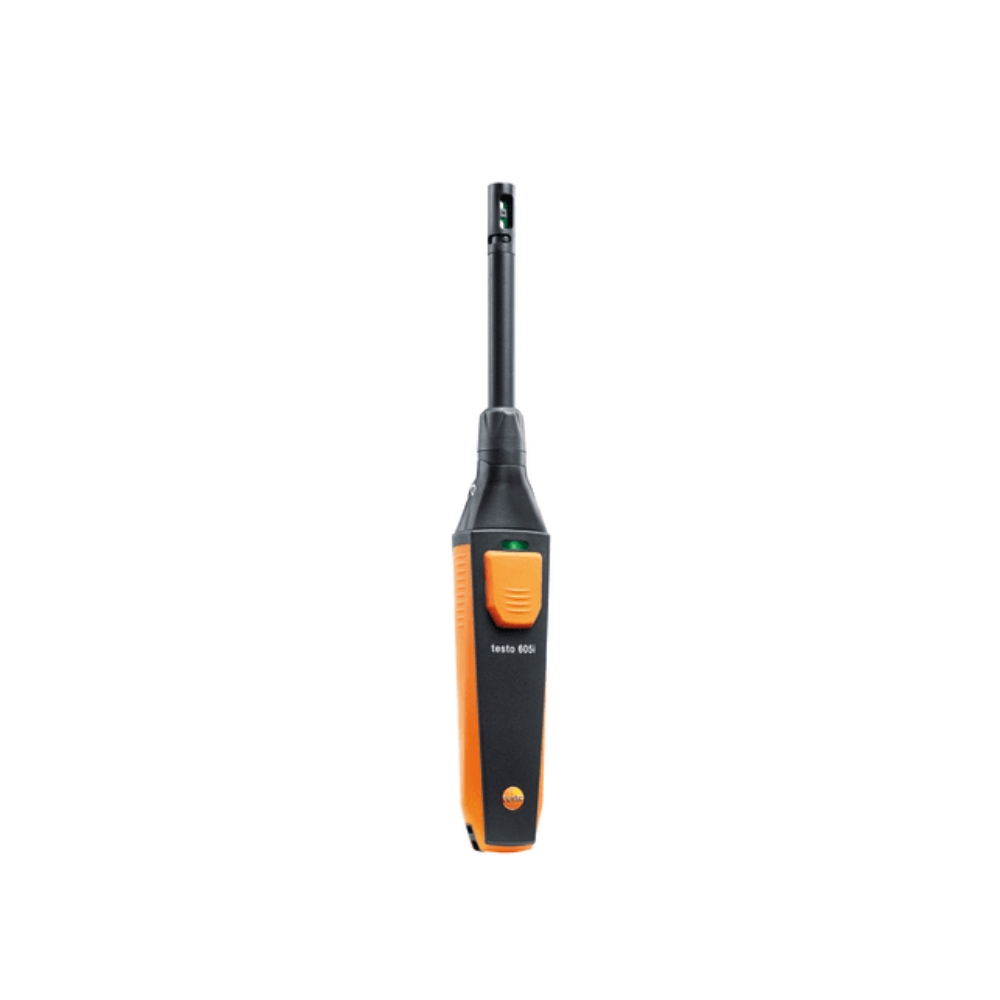
| 605i | Humidity and temperature | 0 to 100% RH, -20 to +60°C | Ambient conditions, dew point, wet bulb, heating and cooling output |
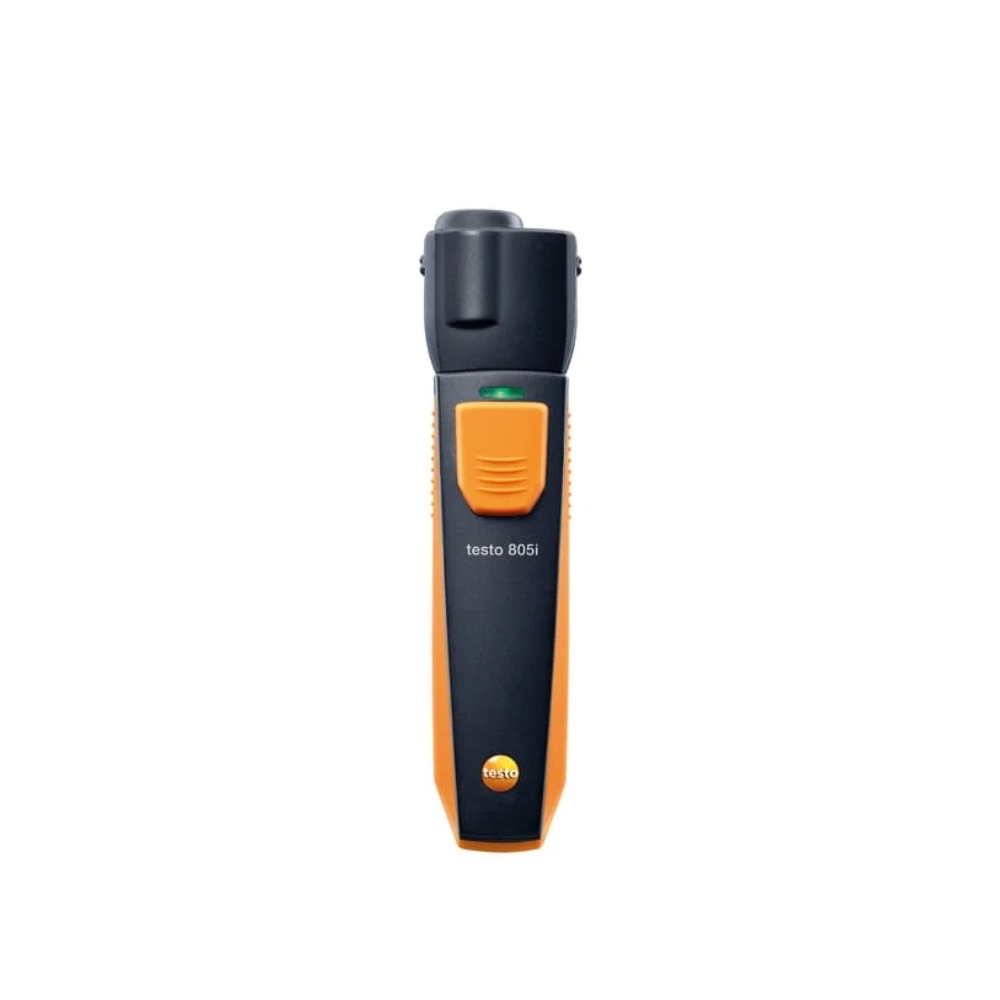
| 805i | Infrared temperature, non contact | -30 to +250°C | Surface temperature where a probe can’t reach |
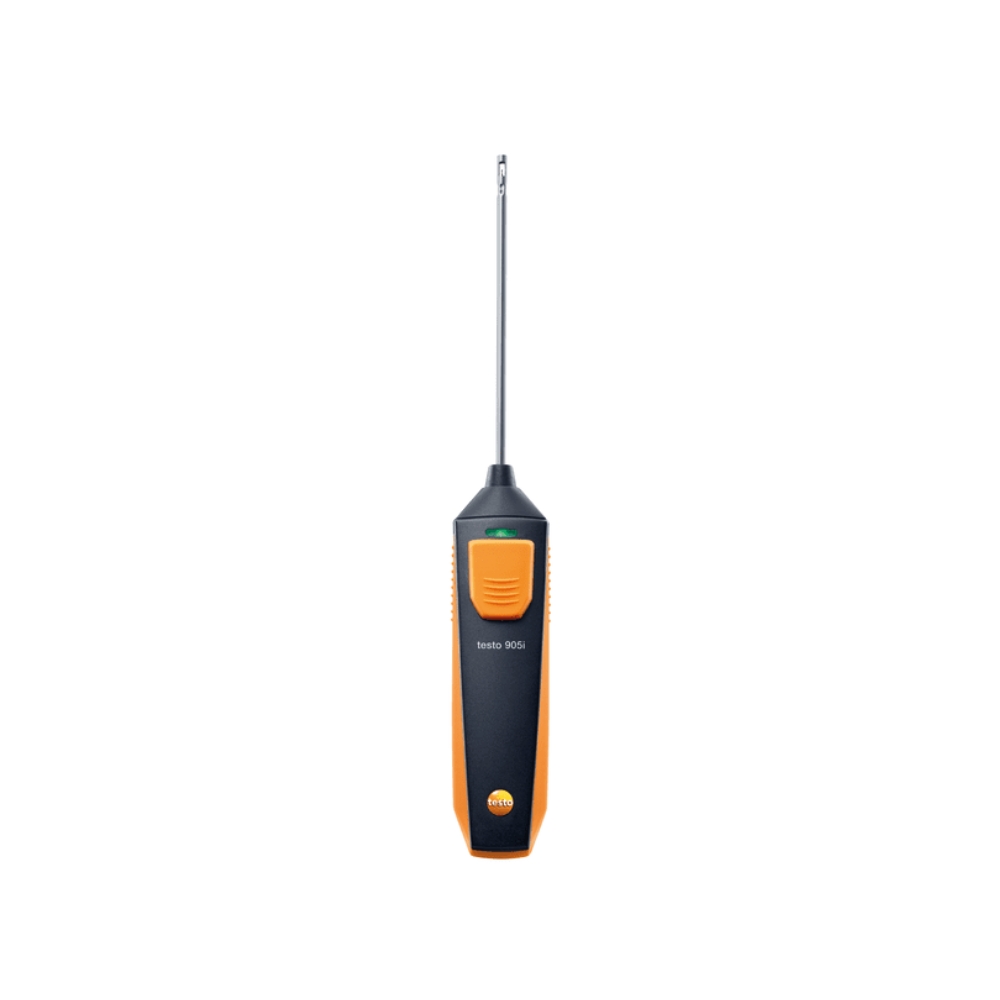
| 905i | Temperature, immersion and penetration | -50 to +150°C | General temperature measurement |
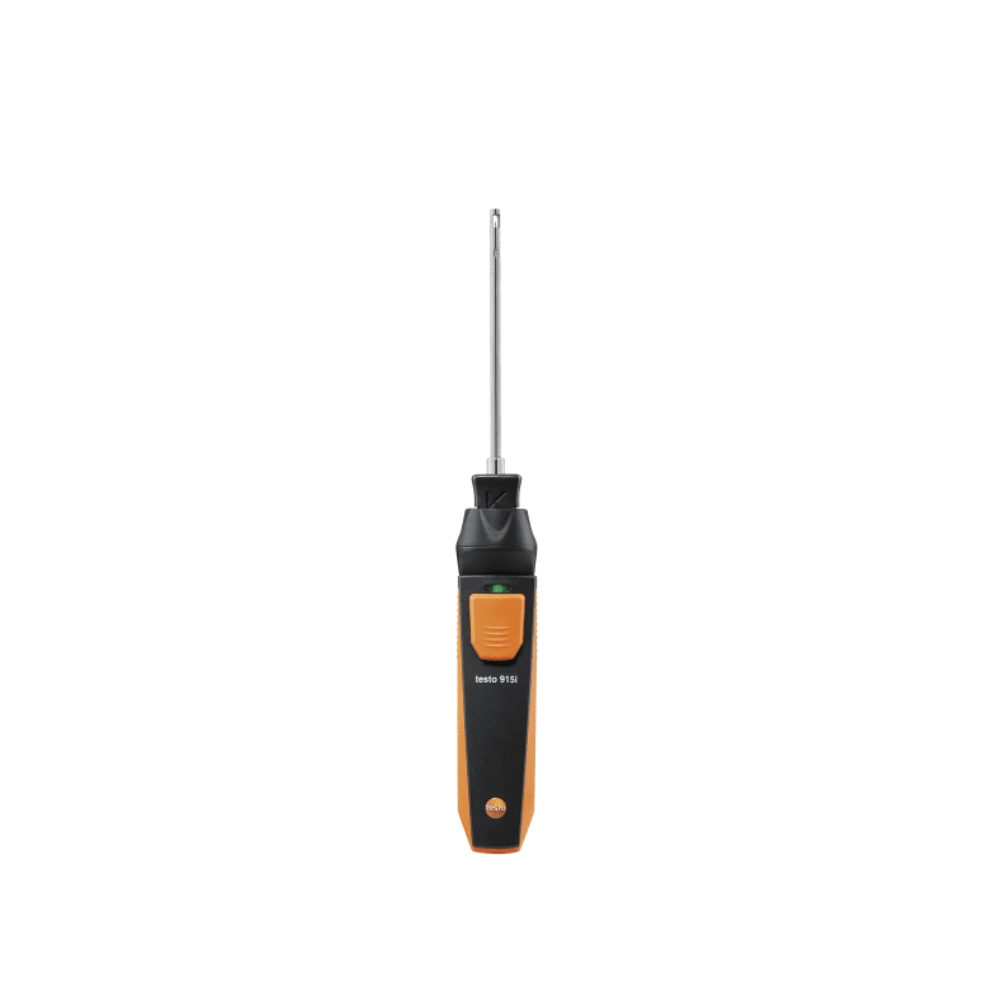
| 915i | Temperature, interchangeable Type K probes | -50 to +400°C (depending on probe) | Four probe types from one handle |
Two combinations do most of the work. The 549i with the 115i gives superheat and subcooling. The 405i or 410i with the 605i gives heating and cooling output, because air volume, plus the temperature and humidity change across a coil, are what capacity is calculated from.
That second one is worth noting. Capacity is a calculation, not a measurement, and it needs airflow, temperature and humidity together. Two probes and the app produce it. Doing it any other way means three instruments and some arithmetic.
The 552i also connects to Testo’s testo 550s and testo 557s digital manifolds, as well as the app.
Reporting Without Going Back to the Office
The app displays readings as values, tables or graphs, and saves them as PDF or Excel files.
Measurement reports, with photos and comments, are created in the app and emailed from site, so the commissioning record or service report leaves before the van does. Measurement data is stored and can be retrieved, so a return visit starts with what was found last time.
For a contractor whose deliverable is a certificate rather than a repair, that’s the difference between a job finishing on site and finishing on a Friday evening.
Which Probes to Start With
The range is modular, so the sensible approach is to buy the two or three that match your work, and add more later.
For refrigeration and air conditioning service, two 549i and two 115i cover the core of it, and that’s what the testo Smart Case (refrigeration) is built to hold. Add a 605i for ambient conditions, and a 552i for evacuation.
For HVAC commissioning and airflow, the 410i for grilles and diffusers, the 405i for duct traverse, and the 510i for differential pressure are the starting three. The testo Smart Case (VAC) holds the 405i, 410i, 510i, 605i, 805i and 905i.
For heating work, the testo Smart Case (heating) holds the 115i, 410i, 510i, 549i and 805i.
For general service work where temperature is the main measurement, the 905i, 805i and 915i cover contact, non contact and probe based measurement.
Where They Sit Against the Bigger Instruments
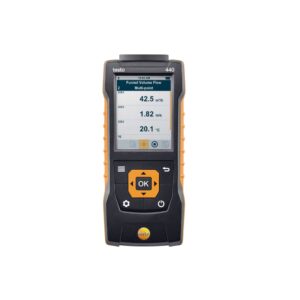
Smart Probes aren’t a cheaper version of the testo 440 or testo 400. They’re a different approach.
The 440 and 400 are single instruments taking several probes, with built in measurement programmes, defined methods and formal reporting. That suits commissioning work where the output is a survey against a standard.
Smart Probes are individual sensors that live in a pocket and appear on a phone. That suits service, fault finding, and daily work where the question is what this system is doing right now.
ting. That suits commissioning work where the output is a survey against a standard.
Smart Probes are individual sensors that live in a pocket and appear on a phone. That suits service, fault finding and the daily work where the question is what is this system doing right now.
Benefits
- Several probes read at the same time on one phone screen
- Bluetooth range up to 100 m on the 115i, 549i and 605i, and 150 m on the 552i
- No hoses on the 549i pressure probe, so little or no refrigerant is lost
- Superheat and subcooling calculated automatically rather than worked out by hand
- Readings display as values, tables or graphs, and save as PDF or Excel
- Reports built and emailed from the phone on site
- Each probe is small enough to live in a pocket rather than a case
- Telescopic extension on the 405i reaches 400 millimetres into a duct
- Runs on standard AAA batteries, with up to 150 hours of battery life
- One app covers the whole range, so adding a probe adds no learning
Detector type
Wireless Bluetooth measuring probes operated by smartphone or tablet
Display
None on the probe. Smartphone or tablet running the Testo Smart App
Simultaneous probes
Several probes read at the same time in the app
Bluetooth range
Up to 100 m (115i, 549i, 605i, 915i). 150 m (552i)
App platforms
iOS and Android
Data display
Values, tables or graphs
Export
PDF and Excel, with custom reports emailed from the app
Data storage
Measurements stored and retrieved in the app
Power
3 AAA batteries. Battery life from 15 hours (405i) to 150 hours (115i, 510i, 605i, 905i)
Probe range
115i, 405i, 410i, 510i, 549i, 552i, 605i, 805i, 905i and 915i
Operating temperature
-20 to +50°C (805i and 552i: -10 to +50°C)
Connection, pressure and vacuum probes
7/16 inch UNF (549i and 552i)
Carry cases
testo Smart Case (refrigeration): 2 x 115i and 2 x 549i. testo Smart Case (heating): 115i, 410i, 510i, 549i and 805i. testo Smart Case (VAC): 405i, 410i, 510i, 605i, 805i and 905i
- Carpark & HVAC
- Food & Beverage
No. The probe measures and transmits over Bluetooth, and your phone or tablet running the Testo Smart App is the display, the control and the reporting tool.
Several probes can be read at the same time on one screen in the testo Smart App. Talk to our Technical Consultants about the combination that suits your work.
Up to 100 metres on the 115i, 549i and 605i, and 150 metres on the 552i. That covers an outdoor unit and an indoor air handler without walking between them.
Because a conventional manifold loses refrigerant at each connection and disconnection, and the hoses hold a charge that vents when they come off. The 549i connects straight to the service port, so little or no refrigerant is lost.
Yes, automatically. Two 549i pressure probes with two 115i pipe clamp thermometers give both sides of a system, calculated in the app rather than read from a chart.
Two 549i and two 115i for refrigeration service, which is what the Smart Case (refrigeration) holds. A 410i, 405i and 510i for HVAC airflow and commissioning. Talk to us about the work you do.
Trusted by









Contact Us
Can’t find what you’re looking for? Our team is happy to help.