
Gas Detection for Water Treatment
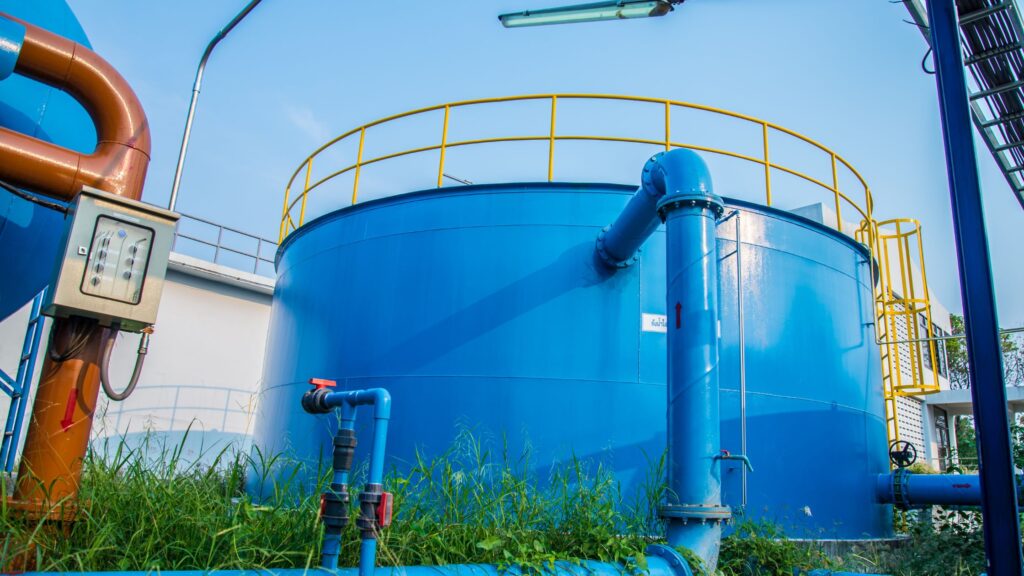
The evolution of gas detectors has seen many technological advances, including more sophisticated and sensitive sensors, improved data logging and communication capabilities, and smaller, more portable instruments. Yet despite these advances, gas detection remains a critical part of water treatment.
Treating water and wastewater releases gases as part of the process. When those gases build up to unsafe levels, they pose a serious threat to the people working on site.
H₂S: The Most Common Hazardous Gas in Water Treatment
Hydrogen sulphide is the most common hazardous gas found in water treatment. It is a colourless, flammable gas with a distinct rotten egg odour, produced naturally when organic matter breaks down in the absence of oxygen.
In water treatment, H₂S forms when sewage and wastewater turn septic, as bacteria break down organic matter without oxygen. It builds up in sewers, wet wells, inlet works and sludge handling areas, and is also found in groundwater and surface water contaminated with sewage or industrial waste. Chlorination is one of the ways plants reduce it. The concentration varies depending on the treatment process. Gas-stripping methods, for example, can remove up to 99% of H₂S from water.
H₂S is hazardous because it can be fatal at high concentrations. Inhalation can cause immediate effects including nausea, headaches and dizziness. At high concentrations it can lead to loss of consciousness and death. If you suspect high levels of H₂S in your facility, evacuate immediately and seek medical assistance.
Many types of hazardous gases can be found in water treatment beyond H₂S, including chlorine and ammonia. A properly designed gas detector system will monitor for all relevant gases present at your facility.
Looking for H₂S gas detectors for your water treatment site? View our range of fixed gas detectors or get in touch with our team.
Why Gas Detectors Are Essential in Water Treatment
Gas detectors are designed to constantly monitor the air for hazardous gas concentrations. If the concentration exceeds a preset threshold, an alarm is triggered to warn workers of the danger.
There are two types of gas detectors used in water treatment: portable and fixed.
Portable gas detectors are small, handheld devices worn by workers. They are less expensive and easier to install but only provide detection for a small area. Fixed gas detectors are permanently installed and monitored remotely. They cover a larger area and provide continuous monitoring around the clock.
Both types must be regularly calibrated to ensure accuracy. No matter which type you choose, calibration is non-negotiable and forms part of your ongoing compliance obligations.
Not sure whether portable or fixed suits your site? Talk to a Gastech technical consultant and we will help you work it out.
Choosing the Right Gas Detector for Your Water Treatment Facility
There are several factors to consider when selecting a gas detection system for a water treatment facility.
The type of gas you need to detect is the starting point. H₂S is the most common, but chlorine and ammonia are also present in many water treatment environments. Make sure your system covers all hazardous gases present at your site, not just the most obvious one.
The size of the area you need to monitor matters too. Gas detectors come in various configurations and a large facility will require a system with broader coverage than a smaller treatment plant. Getting the coverage right from the start avoids gaps in your detection strategy.
Budget is always a consideration. Portable gas detectors are generally less expensive than fixed systems but they do not provide the same level of continuous coverage. It is worth considering the long-term cost of inadequate detection against the upfront investment in the right system.
Finally, consider the risk profile of your facility. Some water treatment environments are more hazardous than others. Higher-risk sites may require more sensitive instruments, redundant sensors or a greater number of detection points across the facility.
Protecting Your Team Starts With the Right Gas Detector
Water treatment is essential infrastructure, and the people who operate it deserve the best possible protection. Gas detectors are not a regulatory checkbox. They are a genuine safeguard against hazards that can cause serious harm with very little warning.
Whether you are reviewing an existing system, planning a new installation or simply trying to understand what your site needs, Gastech can help. Our team works with water treatment operators across Australia and internationally to design and supply gas detection solutions that are practical, compliant and built to perform in demanding environments.
For workplace exposure limits applicable to water treatment environments, refer to Safe Work Australia.
Contact Gastech to discuss your water treatment gas detection requirements, or explore our water and wastewater industry page for more information.