
3D Gas and Flame Mapping Available from Gastech
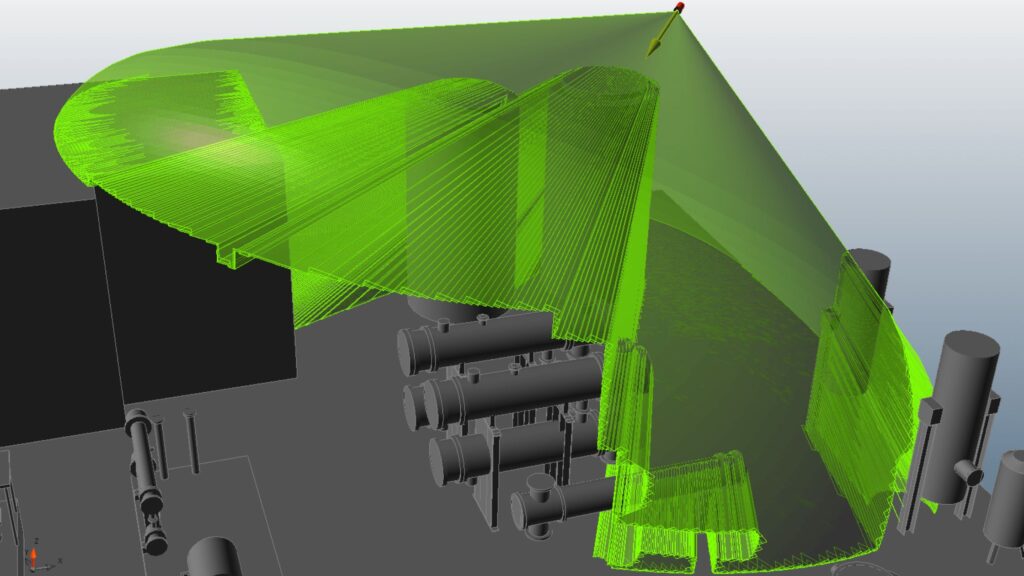
Gastech offers 3D gas and flame mapping through hazmap3D, a powerful software platform that models gas and fire hazards across a whole site, with a level of accuracy and visual clarity that sets it apart from conventional approaches.
hazmap3D is a 3D site wide mapping tool designed for engineers and safety professionals working in environments where gas and fire hazards need to be clearly defined and managed. The software models three key areas: fire hazard analysis, gas dispersion and consequences, and toxic and combustible gas hazards across an entire site.
The result is a clear, three dimensional picture of where hazards exist, how they behave under different conditions, and where gas detectors and flame detectors need to be positioned to provide effective coverage.
hazmap3D isn’t only critical at the FEED (Front End Engineering and Design) stage of a new project. It’s also used heavily for retrospective verification: confirming that an existing installation will perform as intended, and finding gaps in detector coverage before they become a safety issue.
For sites that have been built without formal gas and flame mapping, a retrospective study using hazmap3D can show whether detectors are correctly positioned, and whether the number of devices is adequate for the risk profile of the site.
Combined with Gastech’s project engineering capability, hazmap3D makes Gastech a complete engineering solution for the resources and chemical manufacturing sectors.
Gastech’s Engineering Capability
Gastech has a dedicated engineering division that supports projects of all scales, from small building management systems through to large scale FPSO construction. Our involvement spans the full project lifecycle, from FEED through to FAT (Factory Acceptance Testing), commissioning and ongoing maintenance.
If your site could benefit from 3D gas and flame mapping, or you have a broader project engineering requirement, contact our team to start the conversation.
For current standards and regulatory guidance on gas and flame detection system design, refer to Standards Australia.