
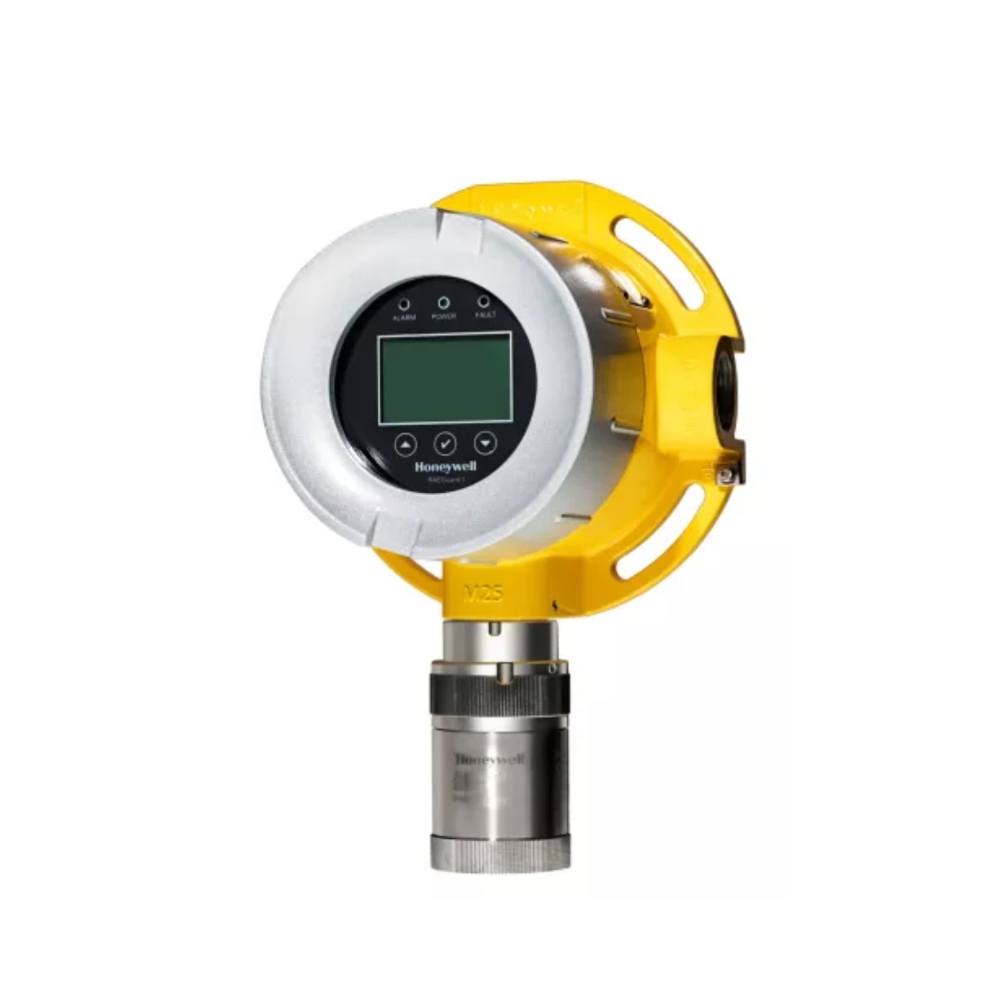
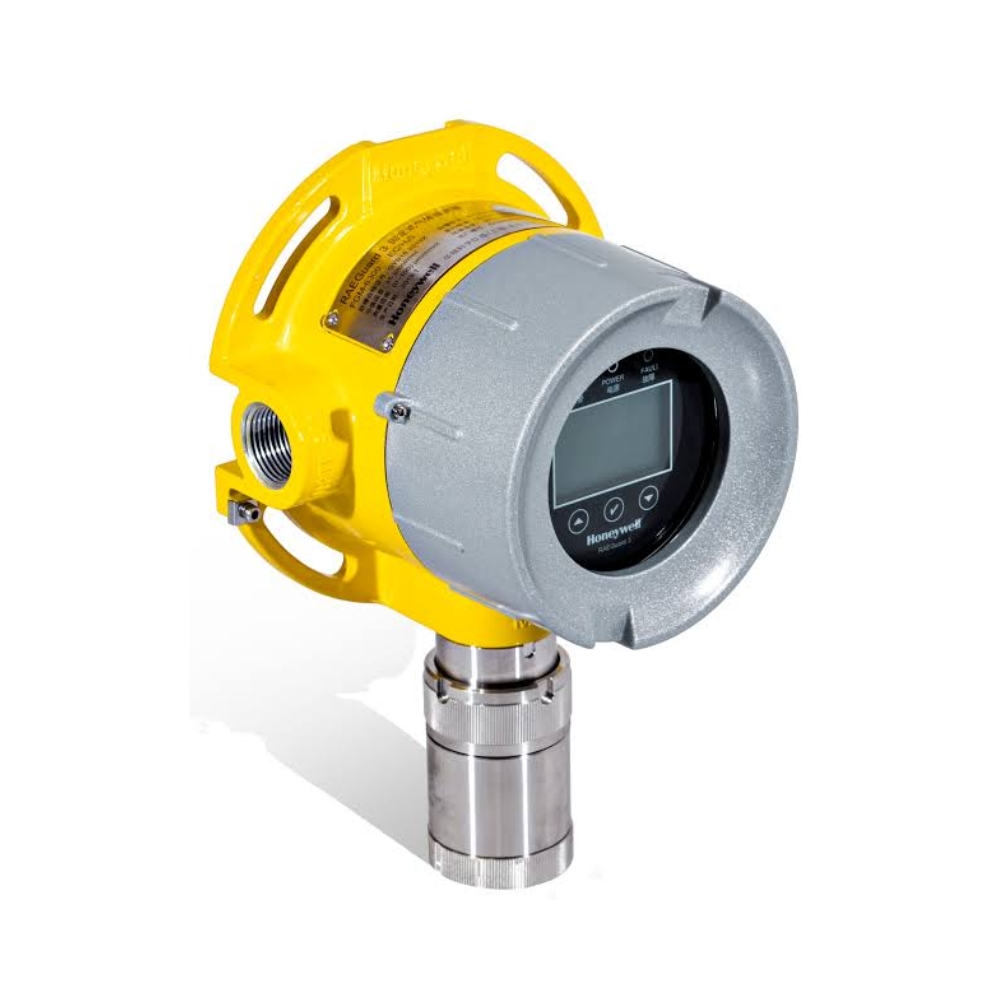
RAEGuard 3
Fixed Gas Detector
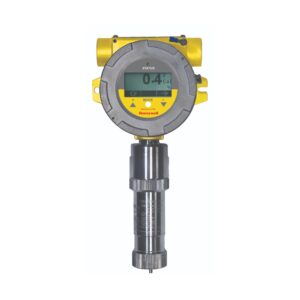
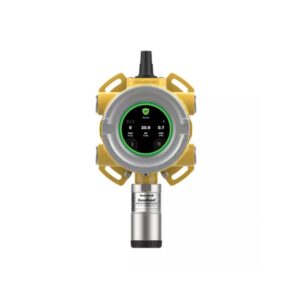
The Honeywell RAEGuard 3 is a fixed gas transmitter for continuous monitoring of flammable, toxic and oxygen gases in indoor and outdoor hazardous areas. It’s the step up from the RAEGuard Lite, with long life anti poisoning catalytic sensors, oxygen free NDIR detection for methane, a redundant design built to prevent false alarms, and hot swappable toxic and oxygen sensor modules. Available in aluminium alloy or 316 stainless steel housings, it connects to SCADA, DCS and PLC systems through 4-20 mA, RS485 Modbus RTU and optional HART 7.2.
KEY BENEFITS
- Long-life catalytic combustion sensors rated over 5 years with high anti-poisoning technology for combustible gas detection in demanding environments
- Oxygen free NDIR detection measures methane in inert or oxygen depleted atmospheres
- Redundant design built to prevent false alarms, increasing confidence in alarm events
- TUV SIL2 assessed to IEC 61508 for safety instrumented systems (confirm certificate availability)
- Hot swappable toxic and oxygen sensor modules can be replaced on site
+ more in the Description tab below
The Next Step Up in Fixed Gas Detection
The RAEGuard 3 sits above the RAEGuard Lite in Honeywell’s RAE fixed gas detection range. Both monitor flammable, toxic and oxygen gases, output 4-20 mA and RS485 Modbus, and use magnetic tools for non intrusive configuration.
The RAEGuard 3 goes further. It adds TUV SIL2 assessment, an NDIR option for oxygen free methane detection, a redundant design built to prevent false alarms, hot swappable toxic and oxygen sensor modules, and a wider choice of housings and options. Where functional safety documentation is needed, or the gas environment is more demanding, the RAEGuard 3 is the better fit.
Sensors Built for Demanding Sites
The combustible gas detector uses catalytic sensors with a long life of more than 5 years and high resistance to poisoning. Toxic and oxygen detectors use compensated electrochemical sensors, and the oxygen detector doesn’t need a nitrogen zero calibration.
Catalytic sensors need oxygen to read accurately. In inert or oxygen depleted atmospheres, they can read falsely low. The NDIR option detects methane without needing oxygen, with long life and resistance to poisoning, so the RAEGuard 3 can be used in harsher gas detection environments.
Detectable gases include methane and flammable gases, oxygen, hydrogen sulphide, carbon monoxide, ammonia, chlorine, sulphur dioxide and vinyl chloride.
Self Management and Clear Alarms
The RAEGuard 3 keeps track of itself. It gives reminders when the sensor life or calibration period is due to expire, flags alarms, STEL and TWA events, faults and warnings, and shows fault codes. It inhibits outputs automatically during maintenance.
Three highly visible LED status indicators and a backlit LCD with text, bar graph, digits and icons show detector status clearly. An optional integrated visual and audible alarm makes sure alarms aren’t missed.
Integration and Installation
The 3 wire 4-20 mA output can be fine tuned to avoid signal loss caused by long cable runs. RS485 Modbus RTU supports multi drop networking and real time remote monitoring, and optional HART 7.2 adds remote diagnostics and configuration. Three relays (2 A at 30 VDC) can be set as normally open or closed, energised or de-energised, and latching or non latching.
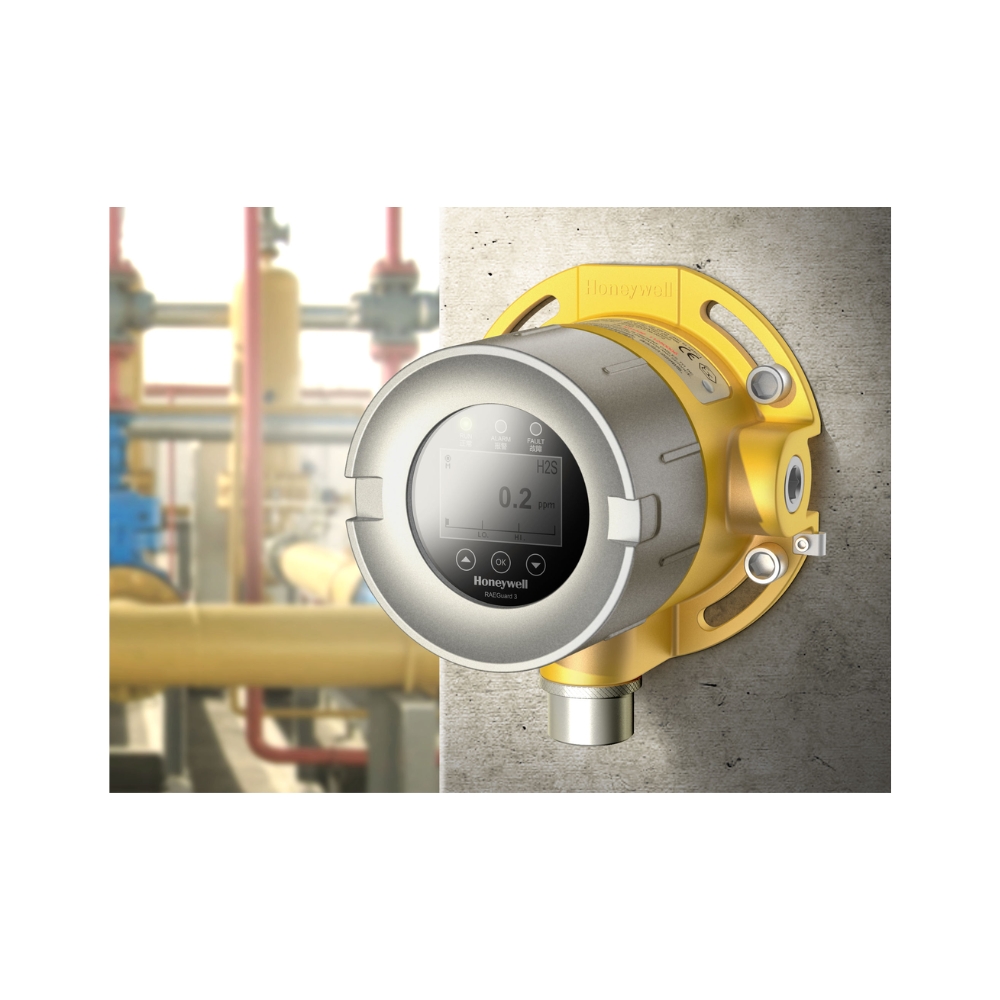
The sensor can be mounted locally or remotely. The RAEGuard 3 mounts on a wall, a vertical or horizontal pipe, or a duct, and a range of cable gland sizes is available. A flip up PCB block gives easy access to the plug in terminal blocks. An optional surge protection device adds protection for outdoor installations.
Benefits
- Long-life catalytic combustion sensors rated over 5 years with high anti-poisoning technology for combustible gas detection in demanding environments
- Oxygen free NDIR detection measures methane in inert or oxygen depleted atmospheres
- Redundant design built to prevent false alarms, increasing confidence in alarm events
- TUV SIL2 assessed to IEC 61508 for safety instrumented systems (confirm certificate availability)
- Hot swappable toxic and oxygen sensor modules can be replaced on site
- Two housing options: aluminium alloy for standard industrial applications and 316 stainless steel for corrosive environments
- Optional built in visual and audible alarm and surge protection for outdoor installations
- Calibration and service life expiration reminders reduce the risk of compliance gaps
- Magnetic tool access for non-intrusive calibration and configuration in hazardous areas
- Remote sensor option available for installations requiring separation between the transmitter and the sampling point
Input voltage
16 to 32 VDC (24 VDC nominal)
Power consumption
Maximum 5.5 W (electrochemical). Maximum 7.5 W (catalytic or NDIR)
Output
4-20 mA source type, optional HART 7.2
Communications
RS485 Modbus RTU. Optional HART 7.2. Bluetooth listed as a future option (contact Honeywell for availability)
Terminals
5 terminals standard (14 with relay module), wire diameter 0.5 to 2.5 sq mm
Relays
3 x 2 A at 30 VDC. Selectable normally open or normally closed, energised or de-energised, latching or non latching
Sensor housing
316 stainless steel
Transmitter housing
Aluminium alloy or 316 stainless steel
Weight
Aluminium alloy: 3.0 kg. Stainless steel: 5.0 kg
Mounting
Integral mounting plate with 4 x M8 holes for wall or pipe
Cable entries
2 x 3/4-inch NPT, 1 x M25 sensor entry, 1 x plug included to maintain IP rating
Repeatability
Less than 2%
IP rating
LEL/NDIR: IP66. Toxic and oxygen: IP66/67
Operating temperature
Catalytic and NDIR: -40°C to +70°C continuous. Toxic and oxygen: -20°C to +55°C continuous, -40°C to +70°C intermittent
Humidity
LEL/NDIR: 0 to 95% RH non-condensing. Toxic and oxygen: 15 to 95% RH non-condensing
Current output states
1 mA fault, 2 mA inhibit, 3 mA warning, 4 to 20 mA normal, 22 mA over range
Operating pressure
90 to 110 kPa
Display
Backlit LCD with text, bar graph, digits and icons. 3 LED status indicators
Storage conditions
-20°C to +50°C, 45 to 75% RH non-condensing, in clean air
Sensor technologies
Catalytic combustion (LEL), NDIR (CH4), electrochemical (toxic and oxygen)
ATEX certification
LEL/NDIR: CE2460 II 2G Ex db IIC T6 Gb, Ta -40°C to +65°C. Toxic and oxygen: CE2460 II 2G Ex db ia IIC T6 Gb, Ta -20°C to +55°C
IECEx certification
LEL/NDIR: Ex db IIC T6 Gb, -40°C to +65°C. Toxic and oxygen: Ex db ia IIC T6 Gb, -20°C to +55°C
Other certifications
ATEX, IECEx, TUV SIL2, EN50270:2015, EU CE EMC, IEC 61000-4-5, China Ex, CPA, CCCF
Functional safety
IEC 61508 SIL assessment, SIL2 (contact Honeywell for certificate availability)
Options
Integrated visual and audible alarm, surge protection device, remote sensor, sunshade/deluge guard, collecting cone, gas flow adapter, mounting plate kit
Performance standard
IEC60079-29-1
EMC compliance
EN50270:2015
Methane
CH4
Chlorine
Cl2
Carbon Monoxide
CO
Hydrogen Sulphide
H2S
Combustible Gas
LEL
Ammonia
NH3
Oxygen
O2
Sulphur Dioxide
SO2
- Aviation & Transportation
- Carpark & HVAC
- Chemical Manufacturing
- Confined Space & Compliance
- Energy (Oil & Gas)
- Food & Beverage
- Landfill & Remediation
- Marine & Maritime
- Medical & Healthcare
- Mining & Minerals
- Power Generation & BESS
- Technology & Semiconductor
- Water & Wastewater
Both monitor flammable, toxic and oxygen gases and share 4-20 mA and Modbus RTU outputs. The RAEGuard 3 adds TUV SIL2 assessment, an NDIR option for oxygen free methane detection, a redundant design built to prevent false alarms, hot swappable toxic and oxygen sensor modules, a stainless steel housing option and a wider gas range. For SIL applications or more demanding sites, the RAEGuard 3 is the better fit.
SIL2 (Safety Integrity Level 2) certification means the RAEGuard 3 has been independently assessed by TUV against IEC 61508 functional safety requirements and confirmed suitable for use in safety instrumented systems at Safety Integrity Level 2. This is required documentation for many process safety management programs and formal HAZOP/SIL assessments in oil and gas, chemical and other process industries.
Yes, with the NDIR sensor. It detects methane without needing oxygen, so it suits inert environments and nitrogen blanketed vessels where catalytic sensors can read falsely low.
The RAEGuard 3 has a 4-20 mA output and RS485 Modbus RTU as standard, with optional HART 7.2. Bluetooth is listed by Honeywell as a future option. Talk to our Technical Consultants about current availability.
Yes. A remote sensor configuration is available for installations requiring separation between the transmitter housing and the sampling point.
Magnetic switches allow full configuration and calibration through the sealed housing by one person. Toxic and oxygen sensor modules can be hot swapped on site, and the RAEGuard 3 inhibits its outputs automatically during maintenance. It gives reminders when calibration or sensor life is due.
Trusted by









Contact Us
Can’t find what you’re looking for? Our team is happy to help.