

Li-ion Tamer
Lithium-Ion Battery Off-Gas Detection System
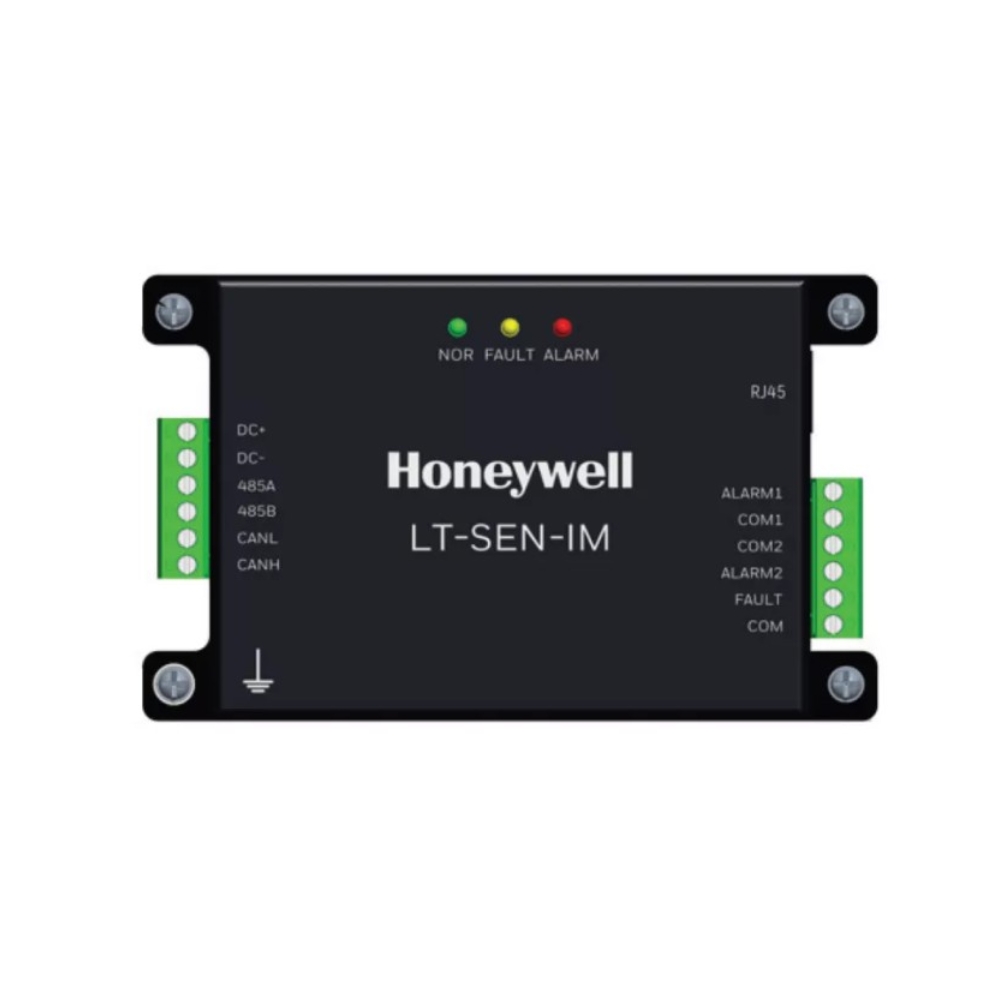
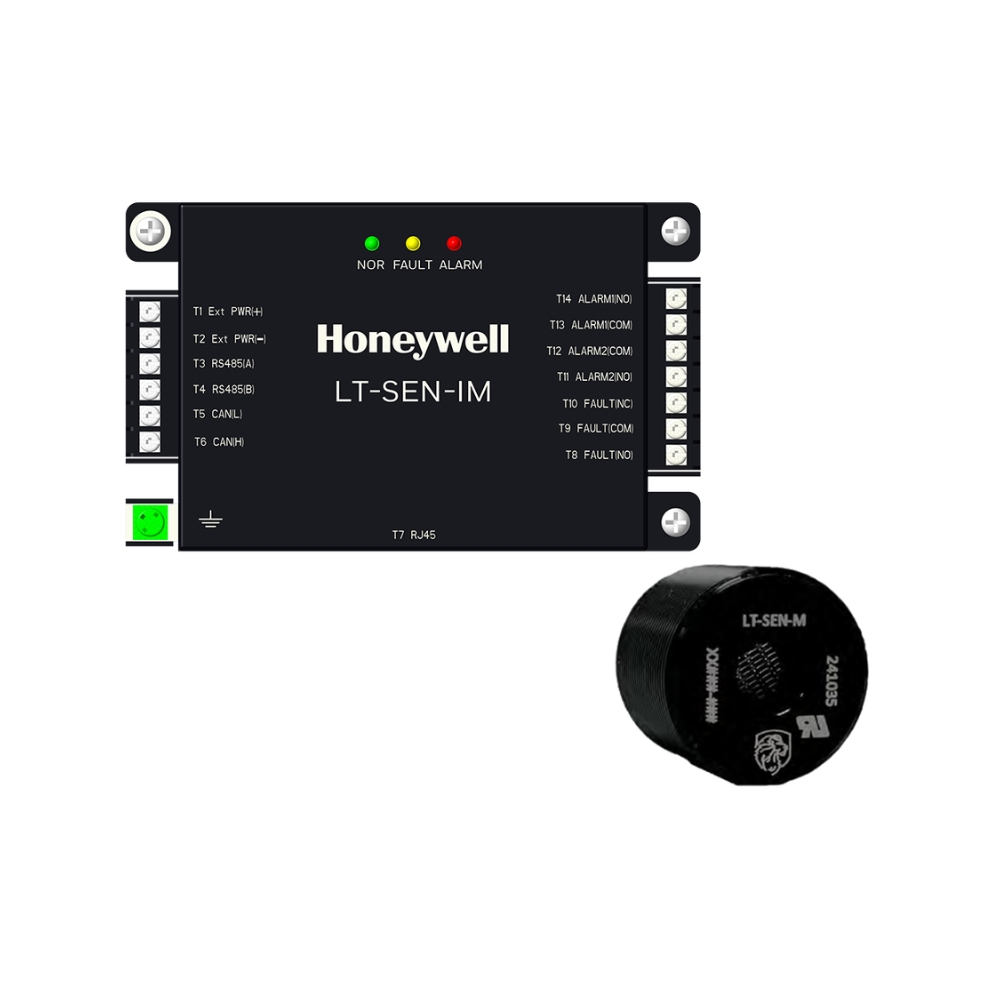
Li-ion Tamer by Honeywell detects the electrolyte solvent vapour a lithium-ion cell releases when it starts to fail. This off-gas event happens early in the failure, before thermal runaway, which gives time to isolate the battery and take mitigating action. Two configurations are available. Gen 3 sensors network to hubs and a controller with relay and Modbus TCP/IP outputs, for multi point installations. The Multi Output Solution pairs one sensor with an interface module, with relay, Modbus and CANbus outputs, and also detects hydrogen.
KEY BENEFITS
- Detects electrolyte off-gas early in a cell failure, before thermal runaway
- Responds in as little as 5 seconds once electrolyte vapour reaches a sensor
- Calibration free by design, with a simple bump test to confirm sensor response
- Sensor lifetime beyond 10 years, matched to the battery system it protects
- Multi Output Solution also detects hydrogen, warning of flammable gas build up during thermal runaway
+ more in the Description tab below
Smoke Detection Is Already Too Late
A lithium-ion cell in thermal runaway isn’t a fire you fight. It’s an exothermic reaction inside a sealed cell, generating its own heat and spreading to the cell beside it. Water won’t stop it, and neither will suppression gas. Once it starts, the goal shifts from saving the asset to stopping the spread and getting people clear.
Smoke, heat and flame detection all trigger after that point. They report a fire you can no longer prevent.
Off-gas comes first, before smoke and before flame. It’s the signal that reaches you while the outcome is still open.
The Three Stages of a Battery Failure
Honeywell describes lithium-ion failure in three stages, and they explain exactly where detection has to sit.
Stage 1 is abuse. Electrical abuse from over charging or over discharging, or an internal manufacturing defect. Thermal abuse from external heating, or running the battery outside its rated temperature. Mechanical abuse from physical damage to the cell.
Stage 2 is initial cell venting. The electrolyte turns to gas, internal pressure rises, and the cell vents through its pressure relief or by rupturing. Honeywell is clear that this gas release is different from the gases released at thermal runaway, and that it often happens several minutes earlier.
Stage 3 is thermal runaway. Pressure and temperature keep climbing, the separator melts and ruptures, smoke is released and the electrolyte solvent can ignite. Failure then spreads to nearby cells.
Smoke, heat and flame detection all belong to stage three. Li-ion Tamer works in stage two. That one distinction is the whole product.
What Happens When It Alarms
Detection is only worth having if something useful follows it.
The primary action is to isolate the affected parts of the energy storage system, or otherwise put it in a safe condition. Doing that during the off-gas window puts a barrier in front of thermal runaway, instead of reacting to it.
Other actions depend on the system: more cooling, local alarms, remote alarms, or ventilation to clear flammable gas before it builds to an ignitable level.
Honeywell is clear that Li-ion Tamer doesn’t prevent fires or thermal runaway on its own. It’s not a standalone safety device, and it needs to be part of a properly designed safety system. Which mitigating actions make sense is a design decision, best settled at the engineering stage. Our team can work through the options with you.
Two Configurations, Two Different Jobs
Replace the existing comparison table with:
| Gen 3 System | Multi Output Solution | |
|---|---|---|
| Architecture | Sensors, hubs, switches and controller | One sensor with an interface module |
| Detects | Electrolyte solvent vapours | Electrolyte solvent vapours and hydrogen |
| Additional measurement | Temperature and humidity at each node | None |
| Outputs | Controller: 16 SPDT relays, Modbus TCP/IP | 3 relays (2 alarm, 1 fault), Modbus RS485 or CANbus |
| Detection threshold | Under 1 ppm/s | Under 1 ppm/s (electrolyte), 10 ppm/s (hydrogen) |
| Response time | 5 seconds | 5 seconds |
| Sensors | Up to 100 per controller | 1 per interface module |
| Operating temperature | Sensors and hubs -10°C to +50°C. Controller 0°C to +40°C | Sensor -40°C to +50°C |
| Humidity | 10 to 90% RH | 5 to 90% RH |
| Sensor lifetime | Over 10 years | Over 10 years |
| Suits | Racks, rooms and containers with many points | Small cabinets, enclosures and local protection |
The short version: choose Gen 3 where many sensors need to report to one place, with temperature and humidity data alongside. Choose the Multi Output Solution where one sensor needs to trigger something directly, with no hub in the middle.
Gen 3: Scalable Monitoring Across Many Points
Gen 3 sensors detect electrolyte solvent vapour, and also report the temperature and humidity of the space around them. That’s more useful than it first sounds, because heat and moisture are the conditions that push cells toward failure.
Sensing nodes connect through hubs and switches to the controller, which manages and monitors the whole system. The controller handles up to 100 sensors and has 16 relays and Modbus TCP/IP outputs to the BMS or other control systems. Reference sensors at air inlets monitor the ambient environment, to prevent false positives.
Sensors can sit at module, rack, cabinet or room level, depending on how much detail the design calls for.
Multi Output Solution: Detection That Acts On Its Own
The Multi Output Solution pairs an off-gas sensor with an interface module, so the outputs are built in rather than provided by a hub later.
Three relays, two alarm and one fault, drive an alarm, a shutdown signal or automatic mitigation directly. Modbus RS485 or CANbus connects it to a battery management system or industrial control platform.
It also detects hydrogen. Hydrogen is generated during thermal runaway, so the hydrogen signal helps manage flammable gas build up and avoid explosive conditions. The electrolyte vapour signal remains the early warning.
No Calibration, and That’s the Point
Conventional gas detection comes with a calibration programme: someone visits with a bottle of test gas, on a schedule, for the life of the installation.
For a battery energy storage system, that doesn’t work. Racks are energised, densely packed and often inside a sealed container. Getting in for routine calibration is difficult, sometimes unsafe, and always disruptive.
Li-ion Tamer is designed to be calibration free, with a sensor life of more than 10 years, comparable to the battery system it protects. Sensor response can be confirmed with a simple bump test, using a bottle of battery off-gas compound (diethyl carbonate) supplied by Honeywell.
Chemistry Agnostic by Design
Battery chemistry describes the anode and cathode: LFP, NMC and others. These chemistries behave and fail differently.
Li-ion Tamer avoids the problem by targeting electrolyte solvent vapour, which is common to lithium-ion batteries regardless of chemistry or form factor. One detection approach covers a BESS container and a UPS room with different chemistries, and a future battery replacement won’t make the detection obsolete.
Because Li-ion Tamer watches cells from the outside, without electrical or mechanical contact, it gives an independent view of battery health alongside the battery management system. When the BMS is the thing that has failed, that independence matters.
Approvals
The Gen 2 sensor (LT-SEN-M) is FM approved to FM 6540 as a lithium-ion battery off-gas rate of rise detector. Gen 3 is ETL listed to UL 61010 and CSA 22.2 No. 61010. The Multi Output sensor is a UL 2075 recognised component and ETL listed to UL 61010, and its interface module is certified to UL 864.
Australian Context
Battery system installations in Australia are covered by AS/NZS 5139, for the safety of battery systems used with power conversion equipment. Internationally, NFPA 855 is the standard most often referenced for energy storage installations, and off-gas detection features in current fire safety design for BESS.
What applies depends on installation size, location, enclosure type and the authority having jurisdiction. Our engineering team can work through it with you, and we support the system from WA, NSW and QLD.
Where It’s Used
Grid scale battery energy storage, containerised and modular BESS, data centre UPS and battery rooms, EV charging infrastructure and carparks, battery electric vehicle charging bays in mining, electric ferries and marine battery systems, battery manufacturing, vehicle test facilities, battery abuse testing laboratories, post manufacturing and transport storage, telecom facilities, and hospital and critical facility UPS.
Benefits
- Detects electrolyte off-gas early in a cell failure, before thermal runaway
- Responds in as little as 5 seconds once electrolyte vapour reaches a sensor
- Calibration free by design, with a simple bump test to confirm sensor response
- Sensor lifetime beyond 10 years, matched to the battery system it protects
- Multi Output Solution also detects hydrogen, warning of flammable gas build up during thermal runaway
- Multi Output Solution has three relays (two alarm, one fault), plus Modbus RS485 or CANbus, with no hub needed
- Gen 3 sensors add temperature and humidity monitoring at each node
- Compatible with different lithium-ion chemistries, capacities and form factors
- Monitors regardless of the battery's operational state, so idle storage and transport are covered too
- Gen 3 scales to 100 sensors per controller, with 16 relays and Modbus TCP/IP outputs
Multi Output System
Gases detected
Lithium-ion battery electrolyte solvent vapours and hydrogen gas
Sensing technology
MOX
System type
G2+ sensor and interface module assembly
Response time
5 seconds minimum
Minimum sensitivity
Under 1 ppm/s (electrolyte solvent vapours). 10 ppm/s (hydrogen)
Operating temperature
Sensor: -40°C to +50°C
Operating humidity
5 to 90% RH, non condensing
Outputs
3 relays (alarm 1, alarm 2, fault), 30 VDC 2 A or 125 VAC 0.5 A
Communication
Modbus RS485 and CANbus, selectable
Sensor lifetime
Greater than 10 years
Compliance
Sensor: UL 2075 recognised component (hydrogen provisional), ETL listed to UL 61010 and CSA 22.2 No. 61010. Interface module: UL 864. CE, UKCA, FCC
Input power
15 to 32 VDC, 24 VDC typical. Up to 1.56 W
-
-
Gen 3 Gas Sensors
Detection threshold
Under 1 ppm/s
Operating temperature
Sensors and hubs: -10°C to +50°C. Controller: 0°C to +40°C
Controller outputs
16 SPDT relays, Modbus TCP/IP. Up to 100 sensors per controller
Compliance
ETL listed to UL 61010 and CSA 22.2 No. 61010, EN 61326-1, RoHS 3, UKCA
Humidity
10 to 90% RH, non condensing
Gases detected
Lithium-ion battery electrolyte solvent vapours
Additional measurements
Temperature and humidity of the space
Sensing technology
MOX
Response time
As little as 5 seconds
Communication
CANbus to the Li-ion Tamer Hub
Sensor lifetime
Greater than 10 years
Calibration
Not required. Response verified with a bump test using diethyl carbonate (DEC)
Integration points
Module, rack, cabinet and room level
System components
Sensors, hub, controller, power switch, network switch
Hydrogen
H2
Volatile Organic Compounds
VOC
- Aviation & Transportation
- Carpark & HVAC
- Chemical Manufacturing
- Confined Space & Compliance
- Energy (Oil & Gas)
- Marine & Maritime
- Power Generation & BESS
- Technology & Semiconductor
Because both trigger after thermal runaway has started, at which point the reaction is self-sustaining and cannot realistically be extinguished.
Li-ion Tamer detects electrolyte off-gas during initial cell venting, which often happens several minutes before thermal runaway. The exact time depends on how severe the abuse causing the failure is.
Gen 3 sensors network over CANbus to a hub and add temperature and humidity monitoring, while the Multi Output System is a standalone assembly with relay, Modbus and CANbus outputs built in.
The Multi Output Solution detects both electrolyte solvent vapours and hydrogen. Hydrogen is generated during thermal runaway, so it helps manage flammable gas build up, while the electrolyte vapour signal gives the early warning.
No. It's calibration free by design, with a sensor life of more than 10 years. Sensor response can be confirmed with a simple bump test using a bottle of diethyl carbonate supplied by Honeywell.
Yes, it targets electrolyte solvent vapour which is common to lithium-ion batteries regardless of chemistry, capacity or cell form factor.
Yes. The Multi Output Solution has relay outputs plus Modbus RS485 or CANbus. The Gen 3 controller has 16 relays and Modbus TCP/IP. Both connect to a BMS, fire panel or control platform.
Trusted by









Contact Us
Can’t find what you’re looking for? Our team is happy to help.