
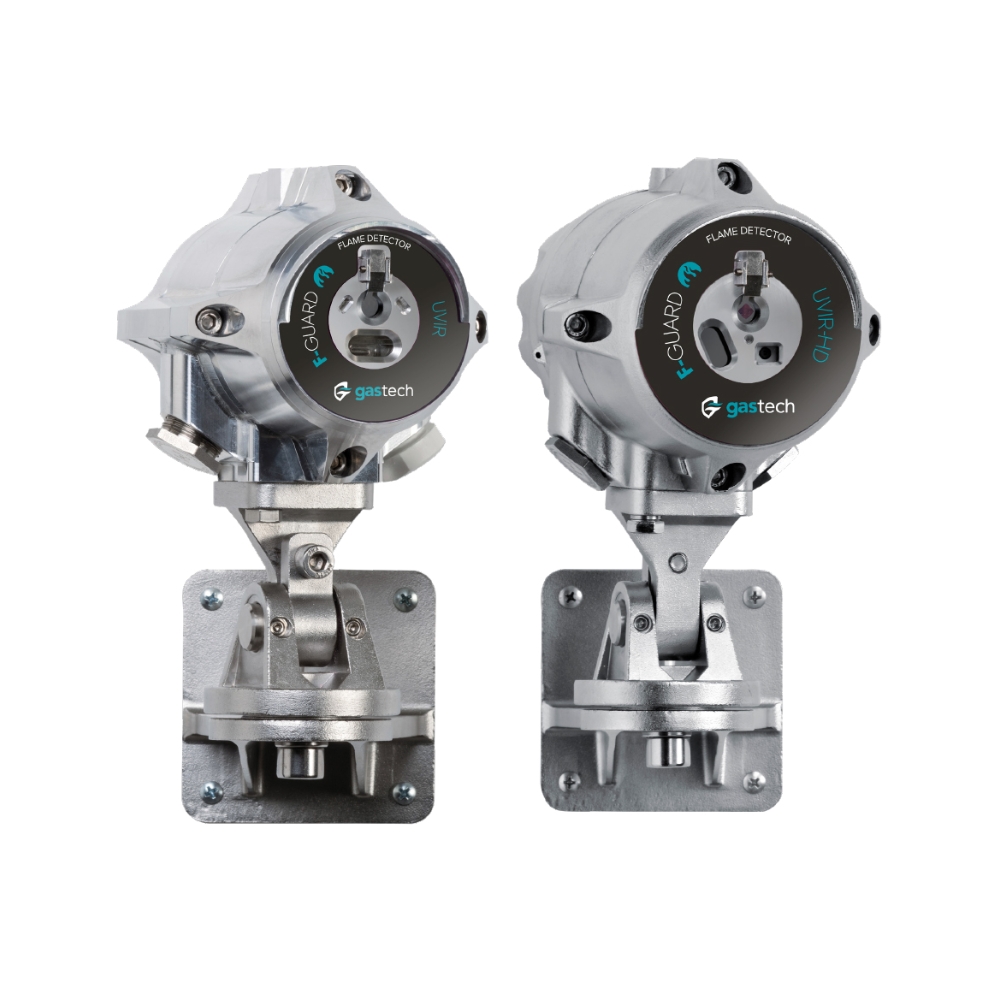
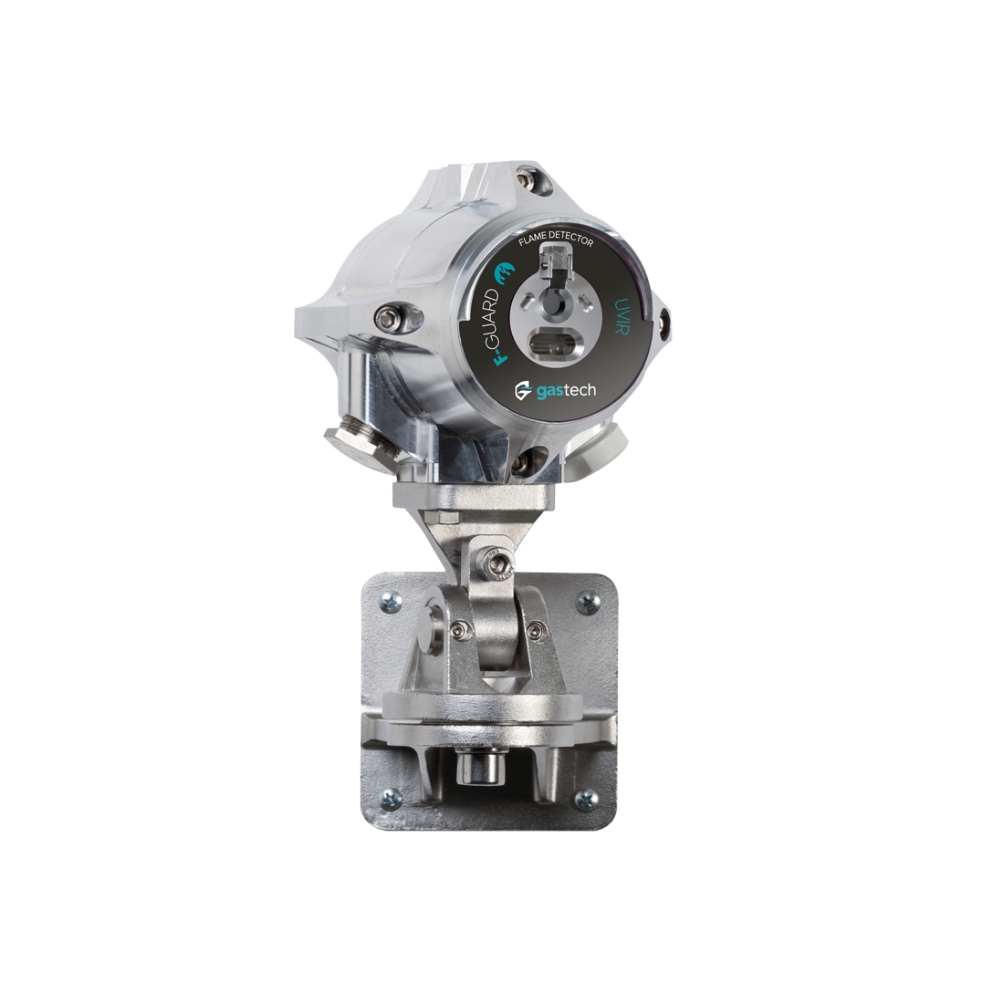
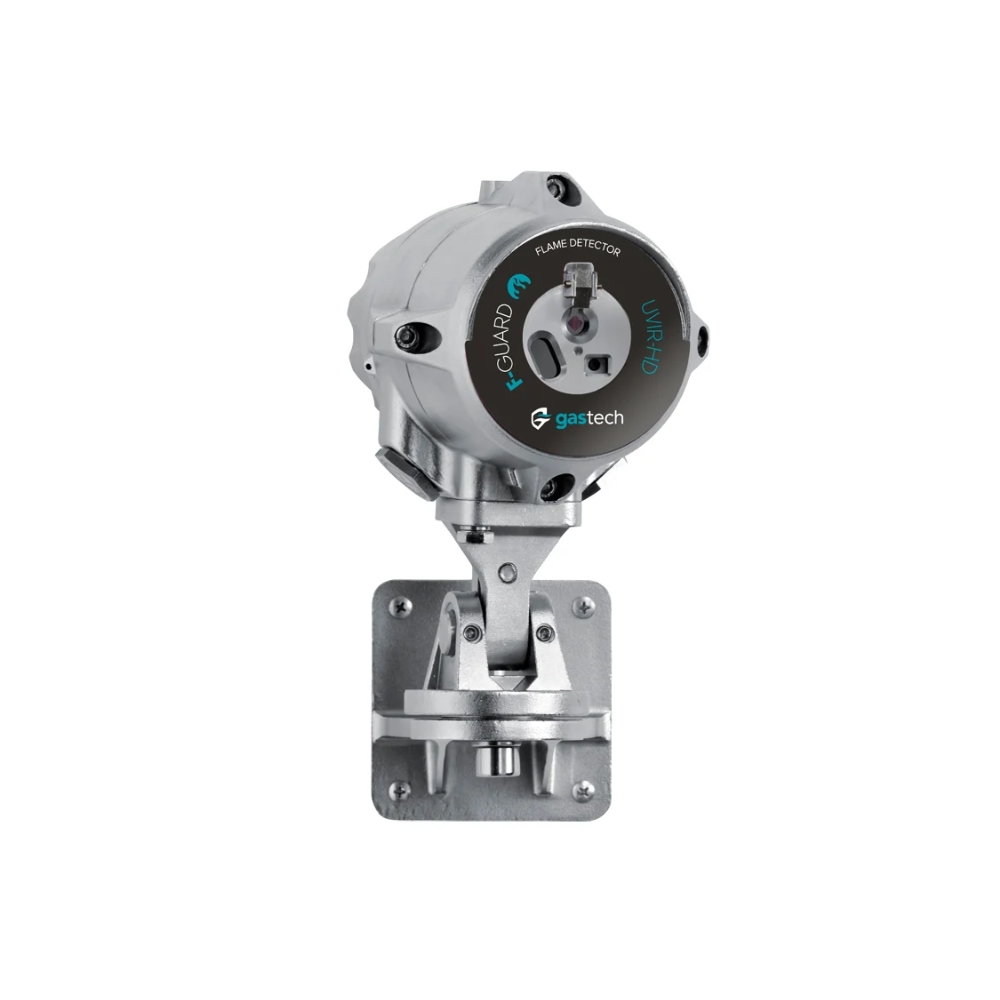
F-Guard UV/IR
UV/IR Flame Detector
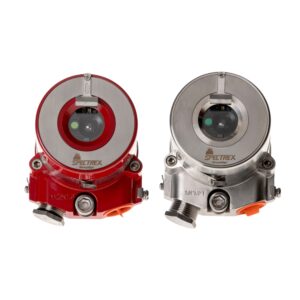
The F-Guard UV/IR is Gastech’s own flame detector, built for fast and reliable detection of hydrogen and hydrocarbon fires, including flames the eye cannot see. An ultra fast mode responds to a fireball or explosion in 5 milliseconds, and the detector reaches 30 metres for a 0.1 square metre n-heptane pan fire. The HD version adds a high definition camera, streaming live video of the scene and recording the event automatically so responders know what they are entering before they get there.
KEY BENEFITS
- Detects hydrogen and hydrocarbon fires, including flames that are invisible to the eye
- Ultra fast mode responds to a fireball or explosion within 5 milliseconds
- Reaches 30 metres for a 0.1 square metre n-heptane pan fire
- HD version streams live video, so responders see the scene before entering the area
- HD version records the event automatically, one minute before and three minutes after
+ more in the Description tab below
Two Versions, and the Choice Isn’t Only About Video
| F-Guard UV/IR | F-Guard UV/IR HD | |
|---|---|---|
| HD video output | No | Yes, clear imaging of fire and personnel at 30 m |
| Automatic event recording | No | 1 minute before, up to 3 minutes after |
| Video integration | Not applicable | ONVIF Profile S over IP network, IEEE 802.3 10Base-T |
| Field of view | 90° horizontal, 90° vertical | 90° horizontal, 75° vertical |
| Response, 0 to 15 m | 1 second | 1.5 seconds |
| Response, 15 to 30 m | Up to 7 seconds | Up to 3 seconds |
| Explosion or fireball | 5 milliseconds | 5 milliseconds |
| Size | 140 x 90 x 90 mm | 200 x 130 x 130 mm |
| Weight | 3.0 kg | 4.4 kg |
| Indication | Dual colour LED | Tri colour LED |
Two things in that table matter more than the video.
The HD version has a narrower vertical field of view, 75 degrees against 90. On a detector mounted high, looking down across a process area, that changes the coverage footprint, and may change how many detectors a site needs. Check it against the mounting geometry, rather than assuming the HD is the same detector with a camera added.
The response times also cross over. The standard version is quicker inside 15 metres, while the HD is considerably quicker beyond it. So the better choice depends on how far the detector sits from the risk it’s watching.
Hydrogen as Well as Hydrocarbon
Most flame detectors are built around hydrocarbon fires, which make up most of the risk on most sites. Hydrogen is the harder problem.
A hydrogen flame is close to invisible. It gives off very little in the visible spectrum, and very little in the infrared bands a hydrocarbon detector watches. A detector tuned for a diesel fire can look straight at a hydrogen fire and see nothing.
The F-Guard UV/IR detects both, along with visible and non visible hydrocarbon fires. As hydrogen projects in Western Australia move from proposal into construction, that’s becoming a specification requirement rather than a nice to have.
Five Milliseconds
The detector handles two very different fire behaviours.
Slow growing fires are the conventional case, and the detector responds in about a second at close range. Fast eruptions are the other case. An ultra fast detection mode responds to a fireball or an explosion within 5 milliseconds.
Those are different events needing different logic. A detector optimised only for a growing pan fire will be too slow for a vapour cloud ignition. One optimised only for speed will alarm on things that aren’t fires. Having both modes is what lets the detector cover both risks.
What the Video Actually Changes
The HD version streams high definition video of the monitored area, with clear imaging of a fire and of personnel at up to 30 metres.
The value isn’t the picture. It’s that someone responding to an alarm can see the situation before entering the hazardous area: whether the fire is where the detector says it is, whether anyone is in there, and how far it has developed. Those are decisions currently made by walking in and looking.
It also records automatically, capturing one minute before the alarm and up to three minutes after. For an incident investigation, that’s the difference between reconstructing events from a log file and watching them.
Video integrates over ONVIF Profile S on a standard IP network, so it goes into an existing security or control room video platform rather than needing its own. A composite video output (NTSC or PAL) is also available.
Configurable Detection Mode
The detector can be configured to run as UV/IR, UV alone or IR alone.
That flexibility matters, because the right mode depends on what else is in the field of view. UV/IR gives the best false alarm rejection, because both sensors have to agree. UV alone is faster where false alarm sources are absent or controlled. IR alone suits installations where ultraviolet sources, such as arc welding, are routine.
Because the mode can be changed on site, a detector can be re-tuned when an area changes use.
Heated Optics and Self Test
A window heater stops condensation and ice forming on the optics. A blinded detector isn’t a partly working detector. It’s a non working one. In Australian conditions, the problem is more often condensation on a cool morning than ice.
The built in test runs automatically and can be triggered manually. It checks window cleanliness and the overall operation of the detector, across both the UV and IR channels.
It’s worth understanding what the self test doesn’t do. It confirms the detector can see, but it doesn’t activate the alarm outputs. Proving the relays, loop, panel and notification needs an external flame simulator, which Gastech supplies for purchase or hire.
Integration
Outputs cover 4-20 mA in three wire and four wire isolated configurations, sink or source, with HART 7, Modbus RTU over RS-485, and Ethernet. Relays are volt free contacts rated 2 A at 30 VDC, with alarm available normally open or normally closed, and fault normally closed.
An alarm delay of 0 to 30 seconds is configurable. Alarms, faults and other relevant events are written to non volatile memory, so the detector holds its own history rather than relying on the panel to log it.
Built for Harsh Sites
The housing is 316 stainless steel, rated IP66 and IP67, and NEMA 250 4X and 6P. It operates from -55°C to +75°C as standard, with a high temperature option to +85°C. The tilt mounting bracket fits above or below the detector. Both versions carry a 5 year warranty.
Where It’s Used
Hydrogen production, storage and refuelling. Oil and gas processing and terminals. LNG facilities. Turbine halls and enclosures. Refineries and petrochemical plant. Offshore platforms and vessels. Fuel storage and loading. Aircraft hangars and fuel farms. Semiconductor facilities handling hydrogen and silane. Battery energy storage installations. Compressor stations. Mine site fuel storage and workshops.
Benefits
- Detects hydrogen and hydrocarbon fires, including flames that are invisible to the eye
- Ultra fast mode responds to a fireball or explosion within 5 milliseconds
- Reaches 30 metres for a 0.1 square metre n-heptane pan fire
- HD version streams live video, so responders see the scene before entering the area
- HD version records the event automatically, one minute before and three minutes after
- Configurable detection mode runs UV/IR, UV alone or IR alone to suit the installation
- Window heater prevents condensation and icing from obscuring the optics
- Built in test checks window cleanliness and both UV and IR channels, automatically or on demand
- Ethernet, HART 7, 4-20 mA and Modbus, so it fits modern and legacy systems
- 316 stainless steel housing, rated IP66 and IP67, with a 5 year warranty
Detection principle
Combined ultraviolet and infrared
Fires detected
Hydrocarbon fires, visible and non visible, and hydrogen fires
Ultra fast mode
5 milliseconds for a fast burst or explosion
Configurable detection mode
UV/IR, UV only or IR only
Time delay
0 to 30 seconds
Built in test
Automatic and manual, covering window cleanliness and both UV and IR channels
Window heater
Fitted, to prevent condensation and icing
Event logging
Alarms, faults and other events written to non volatile memory
Operating voltage
24 V DC nominal, 18 to 32 V DC
Wiring
12 to 20 AWG, 2.5 to 0.35 mm²
Relays
Volt free contacts rated 2 A at 30 V DC. Alarm normally open or normally closed, fault normally closed
Current output
0-20 mA (stepped) in three wire and four wire isolated configurations, sink or source. HART 7
Modbus
RTU compatible over RS-485
Ethernet
Fitted
Housing material
316 stainless steel
Mounting
Tilt bracket, mountable above or below the detector
Humidity
Up to 99% RH, non-condensing
Ingress protection
IP66 and IP67, NEMA 250 4X and 6P
Current consumption
Standby 180 mA. Maximum 200 mA with all systems operating, including window heater
Electrical entries
2 x 3/4 inch 14 NPT or M25 x 1.5
Operating temperature
-55°C to +75°C. High temperature option: -55°C to +85°C
Certification
IECEx, FM United States, FM Canada, EUTEC. Standard version certified db for gas. See certificates for details by version.
Warranty
5 years
-
-
F-Guard UV/IR
Size
140 x 90 x 90 mm
Weight
detector 3.0 kg, tilt mount 1.5 kg
Indication
dual colour LED
Detection time, 0 to 15 m
1 second for a 0.1 m² n-heptane pan fire
Detection time, 15 to 30 m
Up to 7 seconds
Field of view
90° horizontal, 90° vertical
HD video
Not fitted
Video recording of alarm event
Not fitted
Video integration protocol
Not applicable
Digital video connection
Not applicable
-
-
F-Guard UV/IR HD
Size
200 x 130 x 130 mm
Weight
detector 4.4 kg, tilt mount 2.4 kg
Indication
tri colour LED
Composite video
NTSC or PAL
Detection time, 0 to 15 m
1.5 seconds for a 0.1 m² pan fire
Detection time, 15 to 30 m
Up to 3 seconds
Field of view
90° horizontal, 75° vertical
HD video
Clear imaging of fire and personnel at 30 m
Video recording of alarm event
1 minute pre-event, 3 minutes post-event
Video integration protocol
ONVIF Profile S
Digital video connection
IP network, IEEE 802.3 10Base-T
- Aviation & Transportation
- Chemical Manufacturing
- Energy (Oil & Gas)
- Landfill & Remediation
- Marine & Maritime
- Mining & Minerals
- Power Generation & BESS
- Technology & Semiconductor
- Water & Wastewater
The HD adds a high definition camera streaming live video and recording alarm events, but it has a narrower vertical field of view at 75 degrees against 90.
Yes, it detects hydrogen fires as well as hydrocarbon fires, which matters because a hydrogen flame is close to invisible and emits little in the bands a hydrocarbon detector watches.
Within 5 milliseconds in ultra fast mode, and in about a second for a developing pan fire at close range.
One minute before the alarm and up to three minutes after, automatically, which gives an incident investigation actual footage rather than a log file.
Yes, it is configurable to run as UV/IR, UV only or IR only, so a detector can be re-tuned if an area changes use.
No, it confirms window cleanliness and sensor operation only. Testing the relays, wiring, panel and notification needs an external flame simulator.
Trusted by









Contact Us
Can’t find what you’re looking for? Our team is happy to help.