
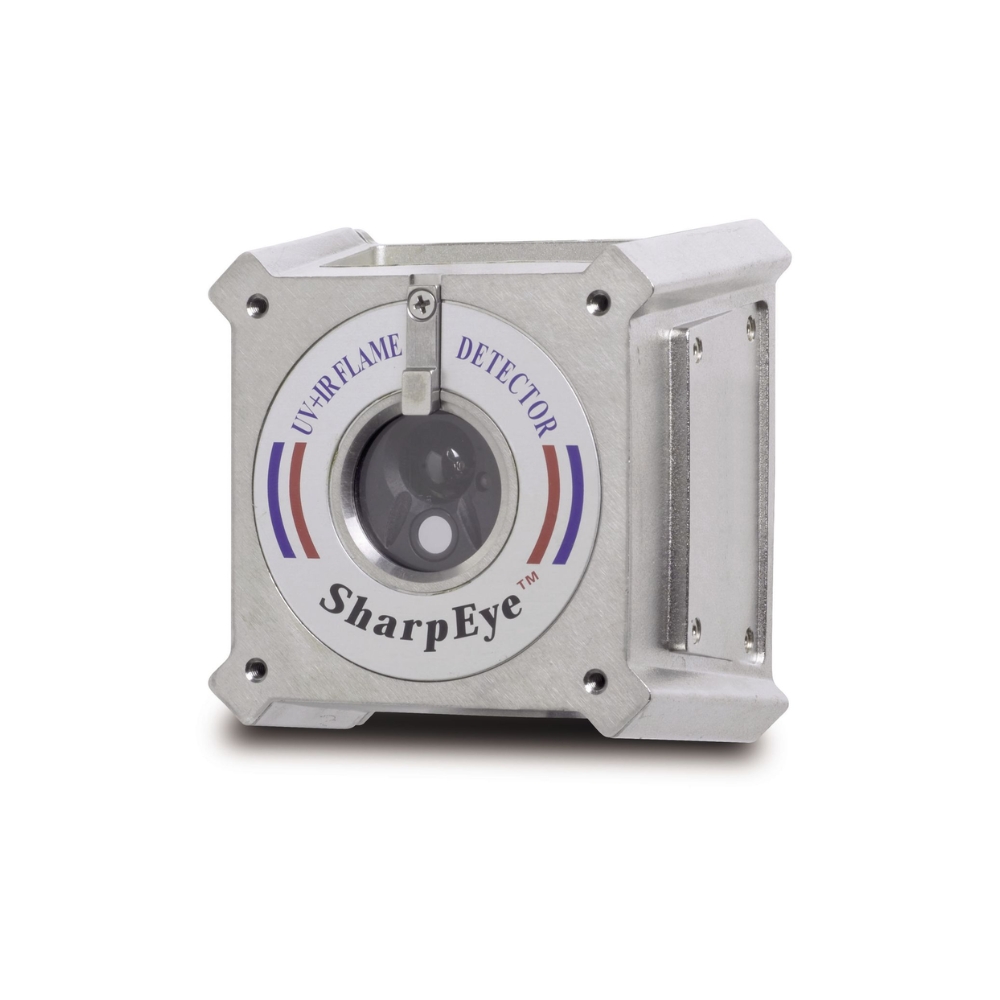
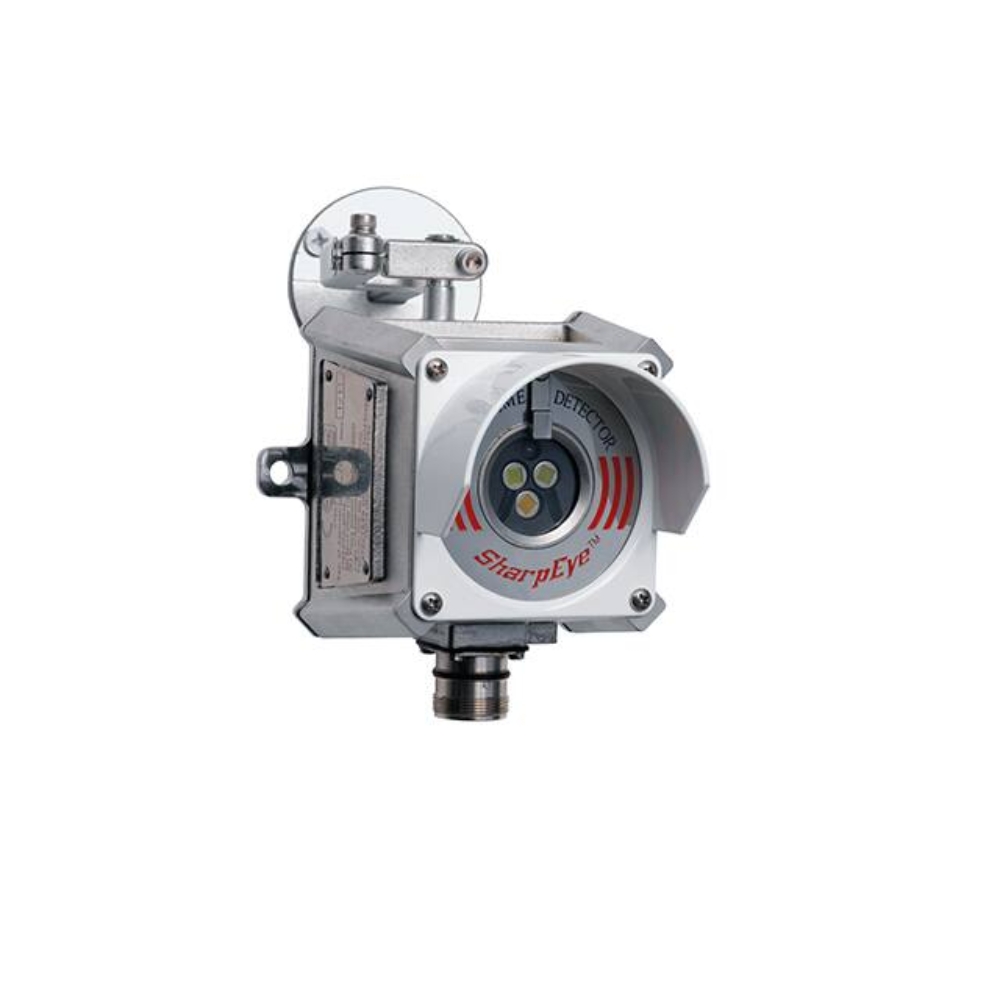
SharpEye 20/20 ML
Mini UV/IR Flame Detector
i
This product has been discontinued and is no longer available. In many cases we can still service and calibrate it. Talk to our team about spares or alternatives.
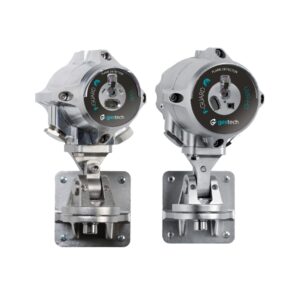
The 20/20ML is a compact, lightweight UV/IR flame detector for areas where a full size detector is more than the risk needs. It combines ultraviolet and infrared sensors and alarms only when both agree, detecting hydrocarbon fuel and gas fires, hydroxyl and hydrogen fires, and metal and inorganic fires at up to 15 metres. A 100 degree field of view in both planes gives it wide coverage for its size, and it responds to a saturated signal in 50 milliseconds.
KEY BENEFITS
- Compact and lightweight, for areas where a full size detector is more than the risk requires
- Detects hydrocarbon, hydroxyl, hydrogen, metal and inorganic fires
- 100 degree field of view in both horizontal and vertical planes
- Responds to a saturated signal in 50 milliseconds
- Both sensors must agree before alarming, which rejects welding arcs and hot surfaces
+ more in the Description tab below
A Smaller Detector For A Smaller Risk
Not every protected area needs 65 metres of detection range. A pump skid, a small process enclosure, a generator room, a storage cabinet or a laboratory bay is a defined space with a defined hazard, and specifying a long range detector for it means paying for reach that has nowhere to go.
The 20/20ML covers up to 15 metres, which suits that class of installation. It is compact and lightweight, so mounting is simpler and the structure required is lighter.
What it does not compromise on is the detection principle. It carries the same combined ultraviolet and infrared sensing as the larger detectors, so the fuel coverage and the false alarm rejection come across intact.
Wide Coverage For Its Size
The field of view is 100 degrees horizontally and 100 degrees vertically.
That is unusually wide, and on a short range detector it matters more than it would on a long range one. In a confined area a detector is mounted close to the hazard, so a narrow cone leaves blind spots directly beneath and beside it. A 100 degree field in both planes means a single detector can cover a small room or skid from one corner rather than needing two.
Range and field of view work together, and on this detector the field of view is doing most of the work.
Both Sensors Have To Agree
An ultraviolet sensor and an infrared sensor watch the protected area independently, and an alarm is raised only when both detect radiant energy simultaneously.
That requirement is what makes the detector usable in a real workshop or plant room. Ultraviolet detection alone responds to welding arcs and lightning. Infrared detection alone responds to hot surfaces and modulated blackbody sources. Requiring agreement cancels most of each weakness.
The ultraviolet channel carries a dedicated logic circuit specifically to prevent false alarms caused by solar radiation, which is what makes the detector solar blind.
Fuel Coverage
The 20/20ML detects hydrocarbon based fuel and gas fires, hydroxyl and hydrogen fires, and metal and inorganic fires.
That is the broad spectrum coverage, and it is worth noting because it is wider than multi-spectrum infrared detectors manage at any size. Hydrogen burns to water vapour rather than carbon dioxide, so an infrared detector watching the carbon dioxide band registers nothing at all. Metal fires produce neither signature. The combined ultraviolet and infrared approach sees all of them.
For a small area containing hydrogen, or a workshop where metals are cut or welded, this is the relevant capability.
Speed
Response to a saturated signal is 50 milliseconds.
At short range, speed matters more than it might appear. A detector 10 metres from a hazard has no travel time to absorb, so the detection time is the response time. Where the detector drives suppression rather than only an alarm, 50 milliseconds is what allows the system to act before an incipient fire develops.
Configuration And Integration
Functions are user programmable through software from a PC or a handheld device, so sensitivity and behaviour are set to suit the area rather than accepted as shipped.
Connection is a standard four wire arrangement, with 4 to 20 mA available in three and four wire source configurations and RS-485 Modbus for digital integration. Built in test runs automatically and can be triggered manually.
Mean time between failures is quoted at a minimum of 100,000 hours, with a three year warranty.
Where It Is Used
Pump and compressor skids. Small process enclosures and cabinets. Generator and plant rooms. Laboratory bays and fume enclosures. Fuel dispensing and small storage areas. Workshops and welding bays. Battery and charging rooms. Turbine enclosures. Sample and analyser houses. Machinery spaces on vessels. Small hydrogen storage and handling areas.
Benefits
- Compact and lightweight, for areas where a full size detector is more than the risk requires
- Detects hydrocarbon, hydroxyl, hydrogen, metal and inorganic fires
- 100 degree field of view in both horizontal and vertical planes
- Responds to a saturated signal in 50 milliseconds
- Both sensors must agree before alarming, which rejects welding arcs and hot surfaces
- Solar blind, with dedicated logic in the ultraviolet channel to reject sunlight
- User programmable from a PC or handheld device, so behaviour is set to suit the area
- Mean time between failures of at least 100,000 hours
- Standard four wire connection with 4 to 20 mA and RS-485 Modbus
- Three year warranty
Detection principle
Combined ultraviolet and infrared, alarm on simultaneous detection by both sensors
Fires detected
Hydrocarbon fuel and gas fires, hydroxyl and hydrogen fires, metal and inorganic fires
Detection distance
Up to 15 m
Field of view
100° horizontal, 100° vertical
Response time
50 milliseconds to a saturated signal
Solar rejection
Solar blind, with dedicated logic circuit in the ultraviolet channel
Configuration
User programmable functions, set via software from a PC or handheld device
Built in test
Automatic and manual
Connection
Standard 4 wire
Analogue output
4 to 20 mA source, 3 and 4 wire configurations
Digital output
RS-485 Modbus compatible
MTBF
Minimum 100,000 hours
Approvals
FM functional approval
Warranty
3 years
- Aviation & Transportation
- Chemical Manufacturing
- Confined Space & Compliance
- Energy (Oil & Gas)
- Food & Beverage
- Landfill & Remediation
- Marine & Maritime
- Mining & Minerals
- Power Generation & BESS
- Technology & Semiconductor
- Water & Wastewater
Up to 15 metres, which suits a defined area such as a skid, an enclosure or a plant room rather than an open process area.
Yes. The combined ultraviolet and infrared approach detects hydroxyl and hydrogen fires, which multi-spectrum infrared detectors cannot see.
100 degrees in both the horizontal and vertical planes, which is wide enough for one detector to cover a small room or skid from a corner.
No, the detector is solar blind, with a dedicated logic circuit in the ultraviolet channel specifically to reject solar radiation.
Yes, functions are user programmable through software from a PC or handheld device.
Range and size. The 20/20ML covers 15 metres in a compact housing, while the 40/40 range reaches considerably further for large open areas.
Trusted by









Contact Us
Can’t find what you’re looking for? Our team is happy to help.