
testo 300
Heating Flue Gas Analyser
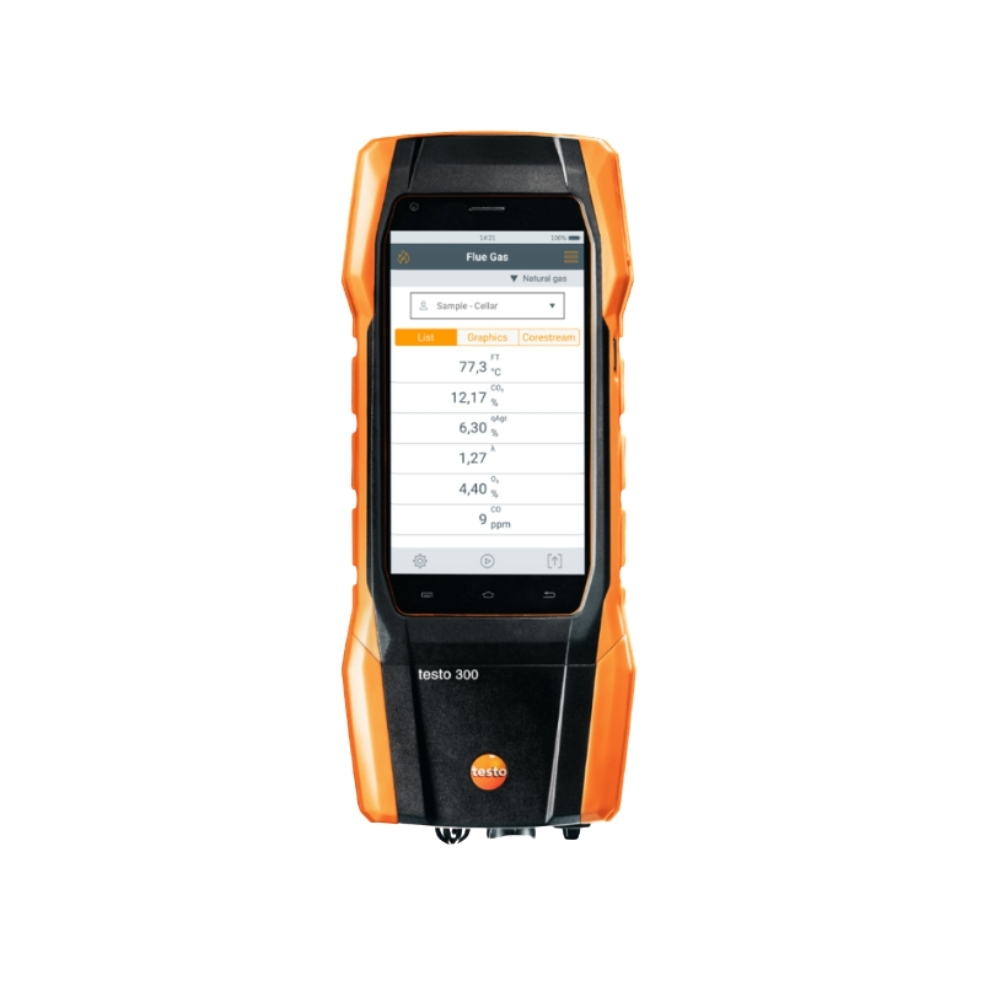
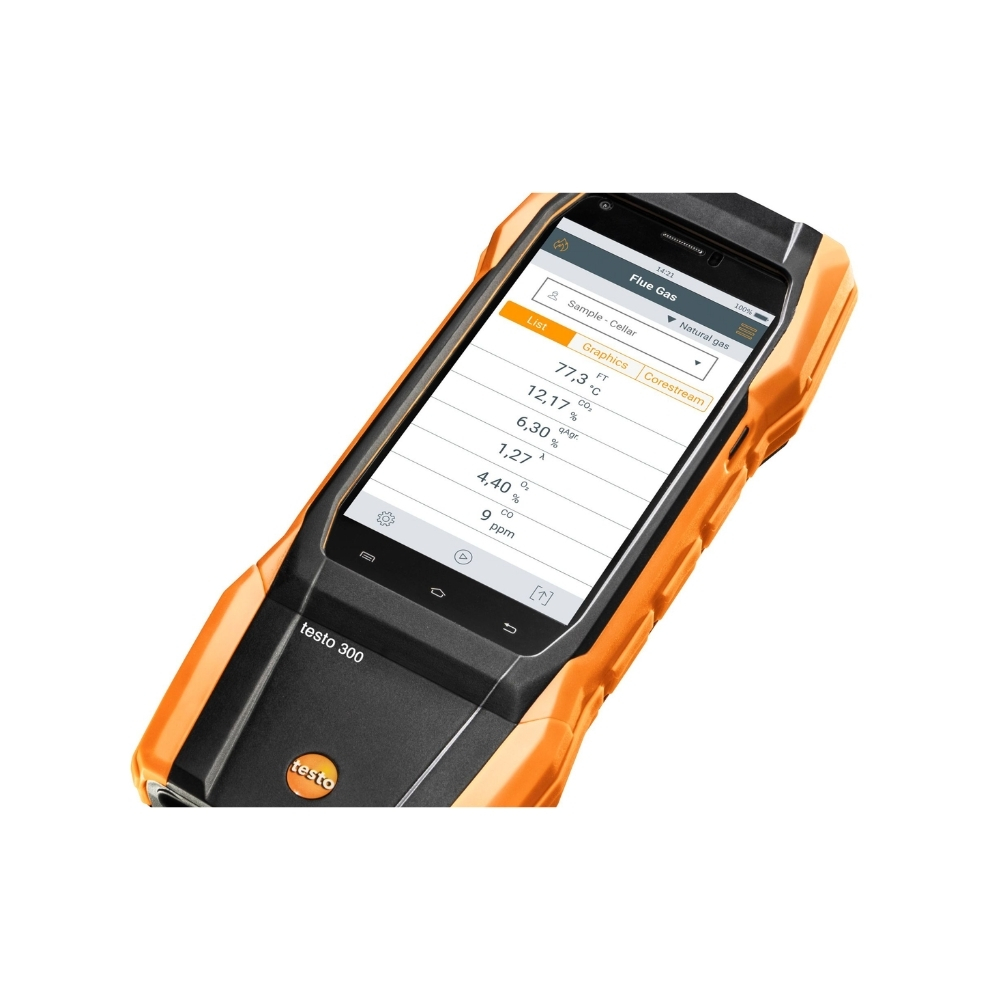
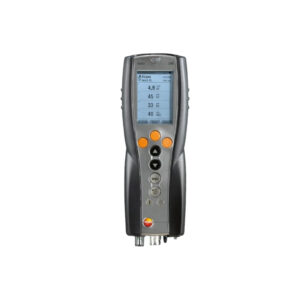
The testo 300 is built for technicians doing several heating system jobs a day. A 5 inch HD touchscreen shows all values at a glance, it’s ready to measure from standby at the touch of a button, and reports are created on site and emailed straight away over WiFi. Longlife models have sensors that last up to six years, and the top Longlife models zero draught and gas with the probe still in the flue.
KEY BENEFITS
- Top Longlife models zero draught and gas with the probe still in the flue
- Standby mode means it is ready to measure at a button press with no zeroing wait
- Longlife models have O2, CO and NO sensors that last up to six years
- Five inch HD touchscreen shows all measured values at once, without scrolling
- CO measurement from 4,000 up to 30,000 ppm, depending on model, with fresh air dilution on the higher ranges
+ more in the Description tab below
Built for a Day of Service Calls
The testo 300 is designed for technicians doing heating system work several times a day. Everything about it is aimed at getting through jobs faster, from the moment it comes out of the case to the moment the report is sent.
In standby mode, it’s ready to measure at the touch of a button, with no waiting before the first reading of the next job. The 5 inch HD touchscreen responds like a smartphone and shows all the system’s values straight away, and clearly structured menus for heating applications guide you through each job.
Zeroing Without Pulling the Probe
A flue gas analyser has to zero its sensors before it can measure. On most instruments, that means removing the probe from the flue, waiting for zeroing to finish, then putting it back. On a job with several measurements, it happens repeatedly.
The top testo 300 Longlife models, with 15,000 ppm and 30,000 ppm CO sensors, zero with the probe still in the flue gas. The probe stays where it is, and the measurement continues sooner. On a day with six or eight service calls, that adds up to real time.
The Models
| Model | Longlife sensors | CO range | NO sensor | Zeroing with probe in flue |
|---|---|---|---|---|
| testo 300 | No | 0 to 4,000 ppm | No | No |
| testo 300 | No | 0 to 8,000 ppm (H2 compensated) | No | No |
| testo 300 Longlife | Yes | 0 to 4,000 ppm | Can be retrofitted | No |
| testo 300 Longlife | Yes | 0 to 8,000 ppm (H2 compensated) | Can be retrofitted | No |
| testo 300 Longlife | Yes | 0 to 15,000 ppm (with dilution) | Can be retrofitted | Yes |
| testo 300 Longlife | Yes | 0 to 30,000 ppm (H2 compensated, with dilution) | Can be retrofitted | Yes |
The practical differences are the CO range, whether the sensors are Longlife, whether an NO sensor can be added for NOx measurement, and whether zeroing works with the probe in the flue.
Carbon Monoxide Range, and What Thirty Thousand Means
The CO sensor options run from 0 to 4,000 ppm, through 8,000 and 15,000, up to 0 to 30,000 ppm.
Hydrogen compensation is worth understanding. CO sensors respond to hydrogen as well as carbon monoxide, and incomplete combustion produces both. An uncompensated sensor reads high because it counts hydrogen as CO, which on a poorly burning appliance can be a significant error. A compensated sensor corrects for it.
The 15,000 and 30,000 ppm ranges use integrated fresh air dilution. That lets the instrument measure a high concentration without exposing the sensor to it, extending sensor life on appliances that run dirty. Automatic CO and NO sensor protection adds to that.
Six Year Sensors
Longlife sensors have a service life of up to six years, depending on the load, and are designed for intensive use several times a day. Testo says at least one sensor replacement is saved over a normal working life.
That’s a cost of ownership argument rather than a performance one, and for a contractor doing this work daily, it’s what justifies the Longlife models. Sensor warranties of 2 or 4 years are available, depending on the sensor chosen.
Documentation on Site
A heating service visit generates paperwork, and the traditional route is a reading written on a pad, typed up later and emailed the next day.
The testo 300 creates the documentation on site. Measurement reports include readings, customer and heating system details, comments, the customer’s signature and your company logo, and are emailed straight away over WiFi. All PDF reports are saved in the instrument too. A Bluetooth printer is available where a customer wants a printout, and testo EasyHeat software handles records on a PC.
The value isn’t just convenience. The number in the report is the number the instrument measured, without a copying step where errors creep in.
Probes
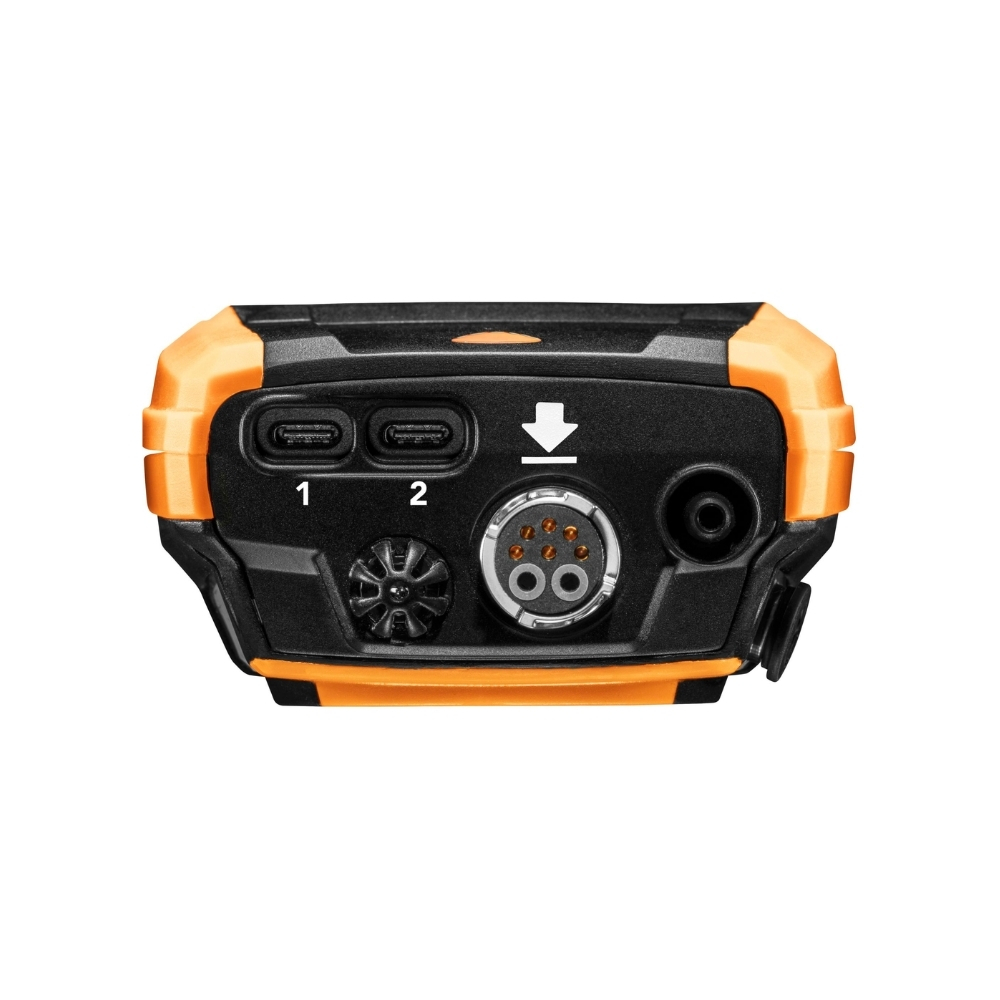
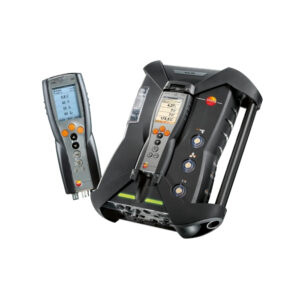
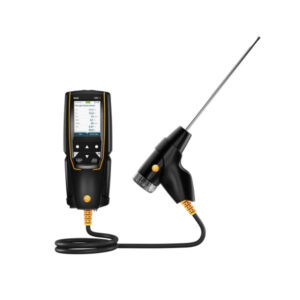
One multi function handle takes a range of probe shafts, connected through a universal plug. Probes from the testo 320, testo 330 and testo 330 LL can be used with the testo 300 as well, and new probes with USB-C connection are available for flow and return temperature and ambient CO measurement.
Where It Sits in the Range
The testo 310 II is the simpler instrument, with two sensors and a 7 line display rather than a touchscreen. For occasional boiler work, it’s enough, and it costs less.
The testo 300 is for technicians doing this work daily. The touchscreen, standby readiness, on site documentation and, on the Longlife models, the six year sensors and in flue zeroing are all aimed at getting more jobs done.
The testo 340 is the industrial instrument, adding nitrogen dioxide and sulphur dioxide, dilution of all sensors and mass emission calculation. If the work is engine tuning or emissions reporting rather than heating systems, that’s the tier.
Where It’s Used
Domestic and commercial boiler servicing. Heating system commissioning. Hot water plant. Apartment and residential building plant rooms. Hospitals, aged care and hotel heating plant. Schools and universities. Commercial kitchens and laundries. Swimming pool and leisure centre heating. Gas appliance servicing. Boiler room ambient CO checks.
Benefits
- Top Longlife models zero draught and gas with the probe still in the flue
- Standby mode means it is ready to measure at a button press with no zeroing wait
- Longlife models have O2, CO and NO sensors that last up to six years
- Five inch HD touchscreen shows all measured values at once, without scrolling
- CO measurement from 4,000 up to 30,000 ppm, depending on model, with fresh air dilution on the higher ranges
- Longlife models are ready for an NO sensor, fitted at purchase or retrofitted later
- Automatic sensor protection extends sensor service life
- Reports created on site and emailed straight away over WiFi
- Bluetooth printer option for an immediate printout on site
- 10 hour rechargeable battery, and one multi function handle for a range of probe shafts
Instrument type
Portable flue gas analyser for heating systems
Display
Five inch HD Smart-Touch touchscreen, all values visible without scrolling
Sensors
O2 and CO standard. NO sensor can be retrofitted on Longlife models
Longlife sensors
Longlife models only. O2, CO and NO sensor life up to 72 months, depending on load
Sensor protection
Automatic, extending service life
Zeroing
Integrated draught and gas zeroing with the probe in the flue, on Longlife 15,000 ppm and 30,000 ppm CO models
Readiness
Standby mode, ready to measure at a button press
Measured parameters
Flue gas, draught, pressure, ambient carbon monoxide, differential temperature
Battery
Rechargeable 3.6 V, 3.5 Ah. About 10 hours. Over 1,000 charging cycles
Connectivity
WiFi (WLAN) for emailing reports. Bluetooth for the printer
Documentation
Created on site, emailed directly. EasyHeat software for PC records
Probes
Quick change shafts via a multi-functional handle, ordered separately
Testing
TÜV tested to EN 50379 Parts 1 to 3 (1st BImSchV)
Housing
Robust construction
Memory
1 million readings
Display
5 inch touch display, HD 1280 x 720 pixels
Weight and dimensions
About 800 g. 244 x 98 x 59 mm
Protection and operating conditions
IP40. Operating temperature -5 to +45°C. Humidity 15% to 90% RH, non condensing
Mounting
4 strong magnets with rubber coating
Sensor warranty
2 or 4 years, depending on sensor
Carbon Monoxide
CO
Carbon Dioxide
CO2
Nitric Oxide
NO
Oxygen
O2
- Aviation & Transportation
- Carpark & HVAC
- Chemical Manufacturing
- Energy (Oil & Gas)
- Food & Beverage
- Marine & Maritime
- Medical & Healthcare
- Power Generation & BESS
- Technology & Semiconductor
- Water & Wastewater
The CO range, whether the sensors are Longlife, whether an NO sensor can be added, and whether zeroing works with the probe in the flue. The standard models have 4,000 or 8,000 ppm CO. The Longlife models add six year sensors and NO readiness, and the 15,000 and 30,000 ppm Longlife models also zero with the probe in the flue.
Yes, on the Longlife models. The NO sensor can be fitted at purchase or retrofitted later.
On the Longlife 15,000 ppm and 30,000 ppm CO models, no. Integrated draught and gas zeroing works with the probe still in the flue. On the other models, the probe needs to be in fresh air for zeroing.
Carbon monoxide sensors also respond to hydrogen, and incomplete combustion produces both. A compensated sensor corrects for that rather than reading high.
On the Longlife models, the O2, CO and NO sensors last up to six years, depending on the load. Testo says that saves at least one sensor replacement over a normal working life.
The 340 is the industrial instrument, adding nitrogen dioxide and sulphur dioxide, dilution of all sensors and mass emission calculation. The 300 is aimed at heating systems.
Trusted by









Contact Us
Can’t find what you’re looking for? Our team is happy to help.