
testo 310 II
Boiler Flue Gas Analyser
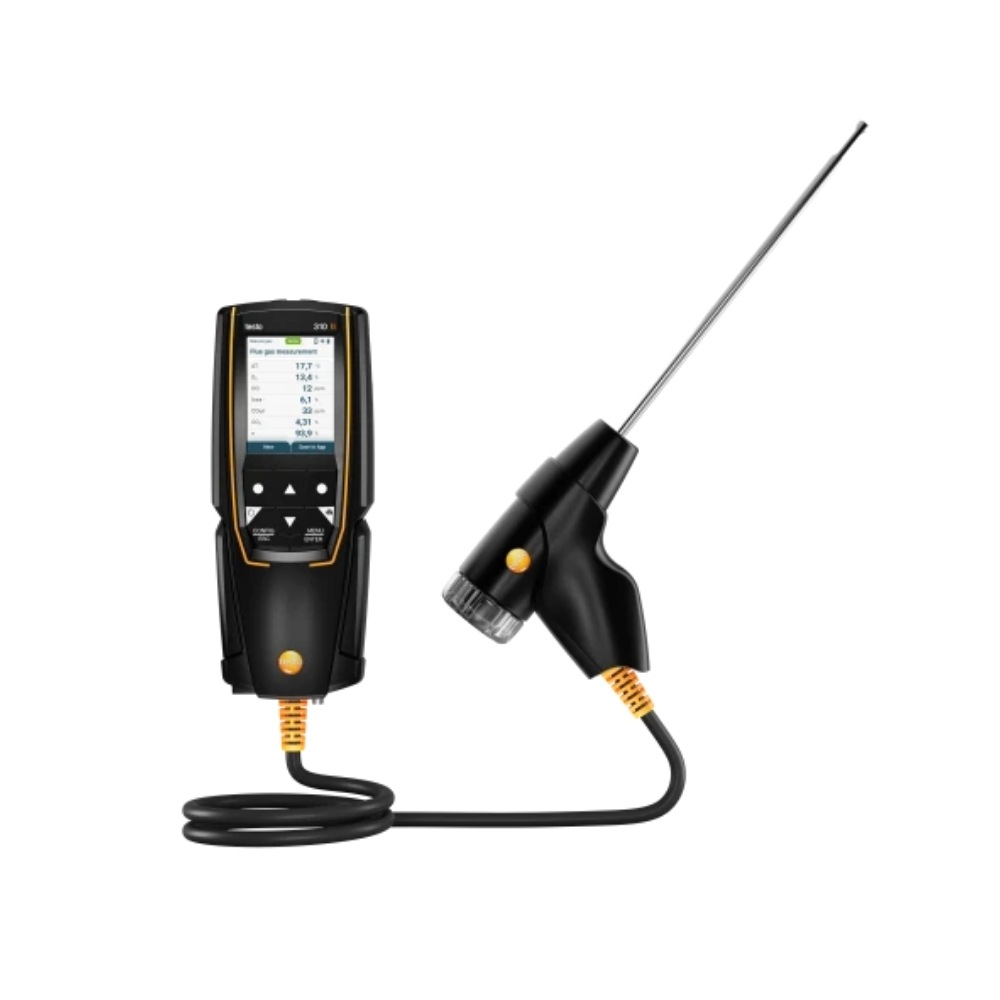
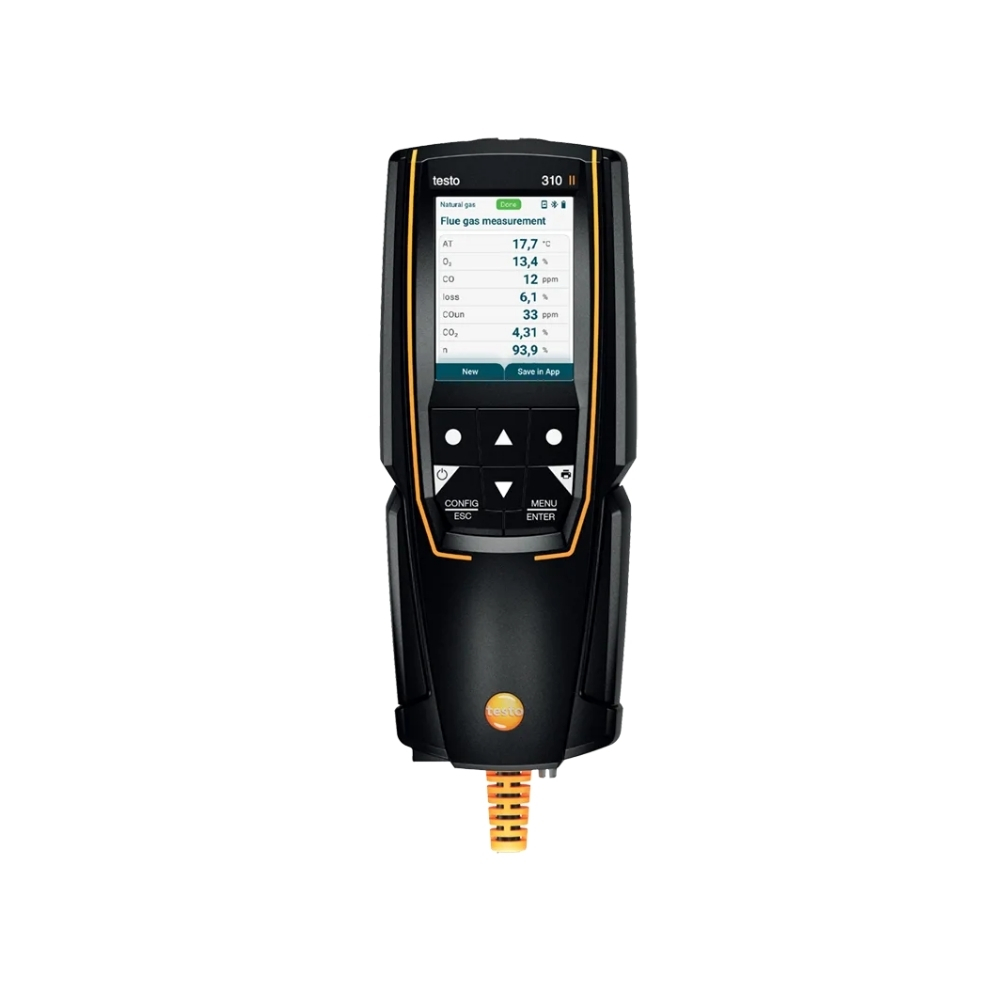
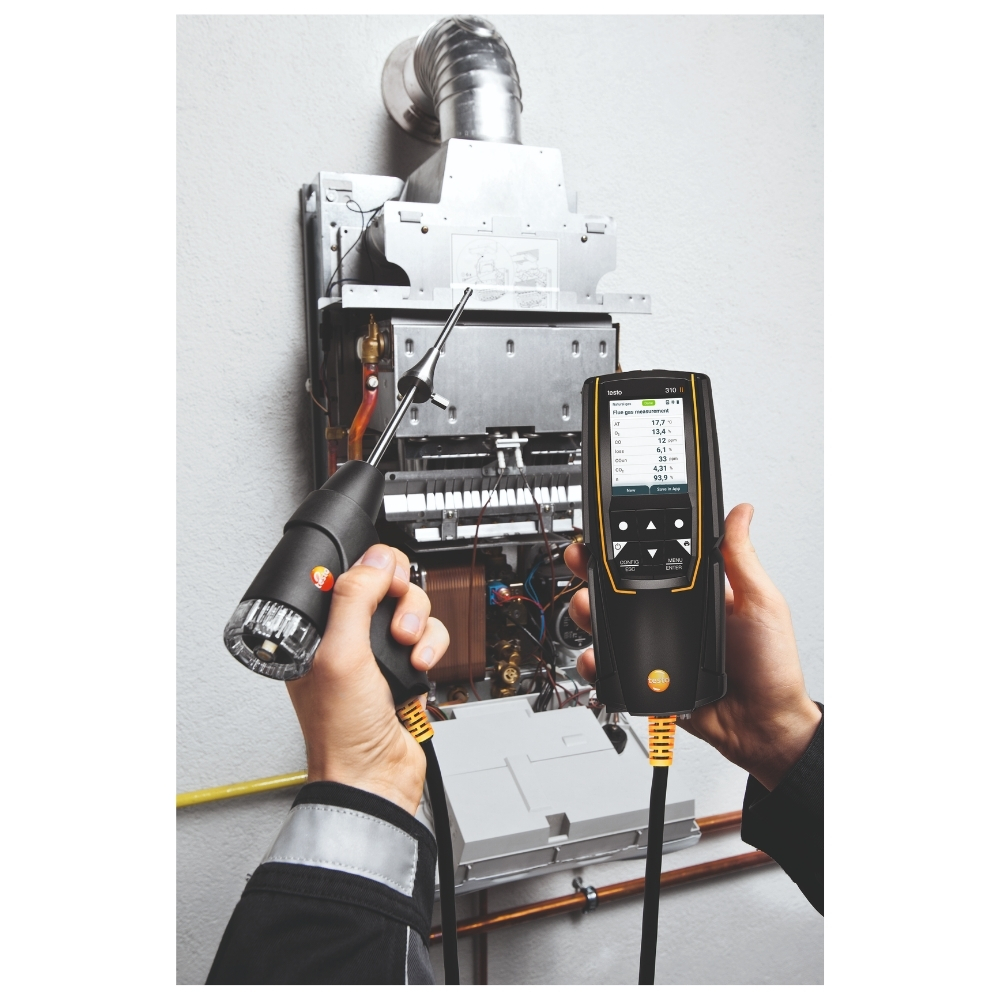
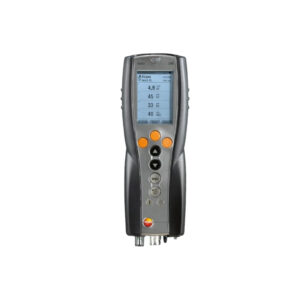
The testo 310 II is the entry point to flue gas analysis, built for commissioning and servicing boilers, hot water systems and gas heating plant. Two measurement cells cover oxygen and carbon monoxide, with a temperature sensor in the probe, and the instrument calculates efficiency and flue gas loss from those. Four measurement menus, thirty second sensor zeroing and eight hours of battery make it a straightforward instrument to actually use.
KEY BENEFITS
- Measures oxygen and carbon monoxide directly, with carbon dioxide, efficiency and flue gas loss calculated from them
- Four measurement menus covering flue gas, draught, ambient carbon monoxide and pressure
- Sensor zeroing in 30 seconds, so the instrument is ready almost immediately
- Over eight hours of operation from the rechargeable lithium battery
- Magnets on the back hold it to the burner or plant, leaving both hands free
+ more in the Description tab below
What It Measures and What It Works Out
The testo 310 II has two measurement cells, one for oxygen and one for carbon monoxide, plus a temperature sensor built into the flue gas probe.
From those, it works out the rest. Carbon dioxide, combustion efficiency and flue gas loss are calculated. Ambient temperature, ambient carbon monoxide, draught and pressure are measured alongside, and all of it can be shown at the same time on the display.
That’s the full set of parameters a boiler commissioning or service visit needs, which is the point of the instrument. It isn’t trying to be an industrial emissions analyser.
Draught, and Why It’s on the Instrument
Draught is the measurement most often skipped, and it explains more faults than any other reading here.
Technically, it’s a differential pressure measurement. A temperature difference between two areas creates a flow to balance it, and in a flue gas system, that pressure difference is what carries combustion products up the chimney. It’s measured between the flue gas and the ambient air, at the measurement point in the core of the flue gas flow. Boilers working at low pressure depend on it to move flue gases safely.
Getting it wrong causes a chain of problems, not a single fault. If draught is permanently too low, combustion is starved of oxygen. That produces soot and carbon monoxide, and lowers the efficiency of the system. So a boiler burning dirty and running expensively is often a draught problem rather than a burner problem, and measuring it tells you which.
The testo 310 II measures draught from -20 to +20 hPa, with a resolution of 0.01 hPa.
Ambient Carbon Monoxide Is a Separate Check
The ambient carbon monoxide menu measures the air in the plant room, rather than the gas in the flue, and it answers a different question.
Carbon monoxide is colourless, odourless and tasteless, produced by incomplete combustion of fuels containing carbon. Once in the bloodstream, it binds to haemoglobin and stops oxygen being carried. A leaking appliance in an occupied space is dangerous well before anyone notices anything.
Checking the flue tells you the appliance is burning correctly. Checking the room tells you whether what it’s producing is staying in the flue.
Designed for Easy Use
Small design decisions decide whether an instrument is pleasant to work with, and this one has several.
Magnets on the back of the housing hold it to a metal surface such as the burner, so a technician can take a reading without holding the instrument. Sensor zeroing takes 30 seconds. The rechargeable 1500 mAh lithium battery runs for more than eight hours, so it lasts a working day, and it charges over USB. The probe filter is quick to change and the condensate trap empties quickly, which matters, because they’re the two things that need attention most often.
At about 660 grams with the probe, it’s robust and light enough for daily use, even in rough and dirty surroundings.
App Connection
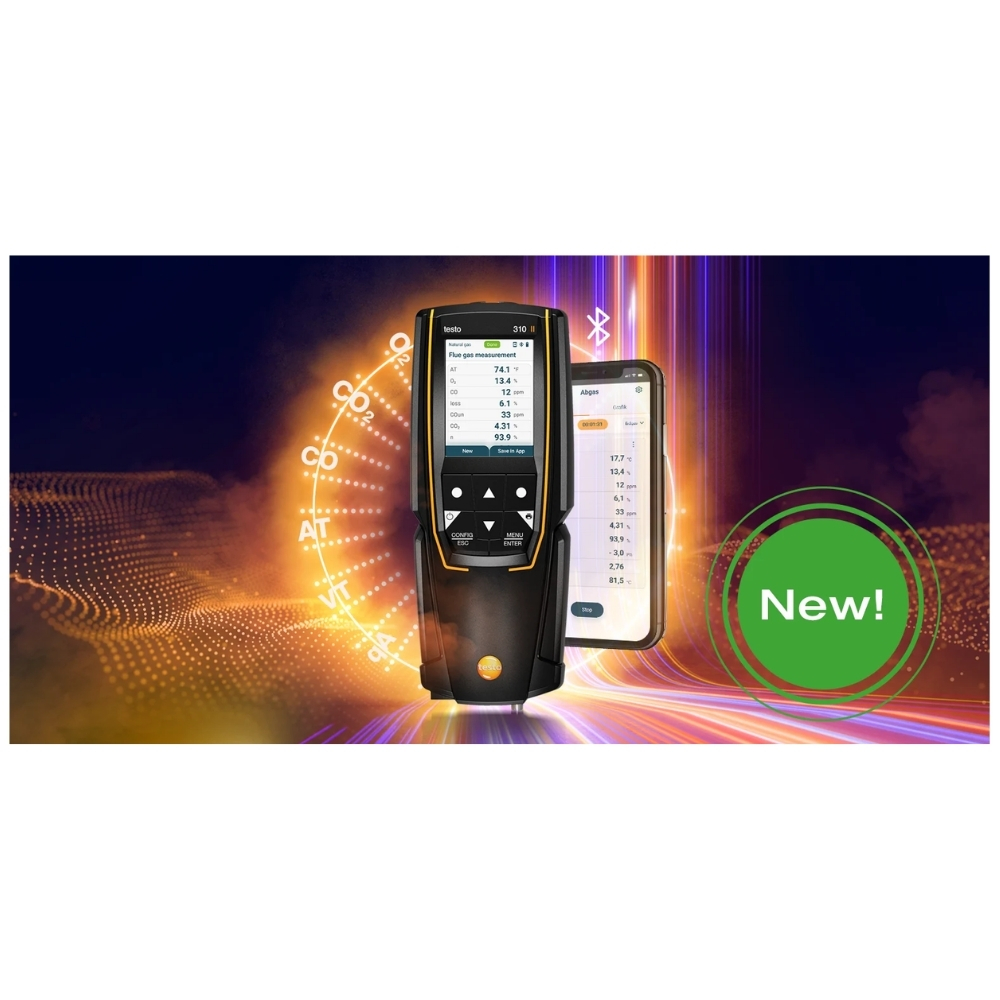
Bluetooth connects the instrument to the testo Smart App, which does three useful things.
It configures the 7 line display, so the parameters you care about are the ones shown. It adds simultaneous measurements the instrument doesn’t take on its own, such as gas flow pressure and flow and return temperature. And it documents the result, sending it digitally, with customer data managed in the app rather than copied from a screen into a notebook and then into a report.
That last one removes the step where errors creep in, which on compliance paperwork is worth more than it sounds. A version with a Bluetooth and IrDA printer is also available, for printing reports on site.
Where It Sits in the Range
It’s worth being direct, because specifying the wrong tier wastes money either way.
The testo 310 II covers boilers, hot water systems and gas heating plant. That’s most of the combustion equipment in a commercial or institutional building, and for that work, a more capable instrument adds cost without adding anything useful.
Where the application is industrial, such as gas turbines, engines, process plant or emissions compliance, the testo 340 and testo 350 add more gas sensors and higher measuring ranges. Talk to our Technical Consultants about the right instrument for industrial work.
Where It’s Used
Commercial and institutional plant rooms. Hospitals and aged care facilities. Hotels and accommodation. Schools and universities. Food processing plant with hot water systems. Commercial kitchens and laundries. Apartment and residential building plant. Swimming pool and leisure centre heating. Small industrial boilers. Gas water heaters and low temperature boilers. Marine and vessel hot water plant.
Benefits
- Measures oxygen and carbon monoxide directly, with carbon dioxide, efficiency and flue gas loss calculated from them
- Four measurement menus covering flue gas, draught, ambient carbon monoxide and pressure
- Sensor zeroing in 30 seconds, so the instrument is ready almost immediately
- Over eight hours of operation from the rechargeable lithium battery
- Magnets on the back hold it to the burner or plant, leaving both hands free
- High resolution display, configurable through the Testo Smart App
- Additional simultaneous measurements through the app, including gas flow pressure and flow and return temperature
- Results documented and sent digitally rather than written down and retyped
- Replaceable probe filter and a condensate trap that empties quickly
- Robust construction for harsh and dirty plant room conditions
Instrument type
Portable flue gas analyser
Measurement cells
Two. Oxygen and carbon monoxide
Temperature sensing
Integrated in the flue gas probe
Measured parameters
Oxygen, carbon monoxide, flue gas temperature, ambient temperature, ambient carbon monoxide, draught, differential pressure
Calculated parameters
Carbon dioxide, combustion efficiency, flue gas loss
Carbon monoxide range
0 to 4,000 ppm (without H2 compensation). Accuracy ±20 ppm (0 to 400 ppm), ±5% of reading (401 to 2,000 ppm), ±10% of reading (2,001 to 4,000 ppm). Resolution 1 ppm
Oxygen range
0 to 21 vol %. Accuracy ±0.2 vol %. Resolution 0.1 vol %
Ambient temperature
-20 to +100°C. Accuracy ±1°C
Draught
-20 to +20 hPa. Accuracy ±0.03 hPa (-3 to +3 hPa), ±1.5% of reading (remaining range). Resolution 0.01 hPa
Ambient carbon monoxide
0 to 4,000 ppm
Efficiency and flue gas loss
Efficiency 0 to 120%. Flue gas loss 0 to 99.9%. Resolution 0.1%
Weight and dimensions
About 660 g with probe. 201 x 83 x 44 mm
Operating and storage temperature
Operating -5 to +45°C. Storage -20 to +50°C
Pressure
-40 to +40 hPa. Accuracy ±0.5 hPa
Flue gas temperature
0 to +400°C. Accuracy ±1°C (0 to +100°C), ±1.5% of reading (above +100°C)
Measurement menus
Four. Flue gas, draught, ambient carbon monoxide, pressure
Display
Graphic 7 line display, configurable via the testo Smart App
Sensor zeroing
30 seconds
Battery
Rechargeable lithium, 1500 mAh, over 8 hours of operation. Charges via USB (5 V, 1 A)
Connectivity
Bluetooth 5.0 to the Testo Smart App
App functions
Display configuration, additional simultaneous measurements, digital documentation and customer data management
Mounting
Magnets on the rear housing for attachment to metal surfaces
Probe
180 mm with cone
Consumables
Replaceable probe filter, quick empty condensate trap
Printer version
Available with Bluetooth and IrDA printer and thermal paper
Construction
Robust, for harsh and dirty environments
Carbon Monoxide
CO
Carbon Dioxide
CO2
Oxygen
O2
- Carpark & HVAC
- Food & Beverage
- Marine & Maritime
- Medical & Healthcare
Oxygen and carbon monoxide directly, plus flue gas and ambient temperature, ambient carbon monoxide, draught and pressure. Carbon dioxide, efficiency and flue gas loss are calculated from those.
Because low draught starves combustion of oxygen, which produces soot and carbon monoxide and drops efficiency. A boiler burning dirty is often a draught problem rather than a burner problem.
Flue gas carbon monoxide tells you whether the appliance is burning correctly. Ambient carbon monoxide tells you whether what it produces is staying in the flue.
Sensor zeroing takes 30 seconds, and the battery runs over eight hours on a charge.
It's built for boilers, hot water systems and gas heating plant. For gas turbines, engines, process plant or emissions compliance, the testo 340 or testo 350 is the right instrument, with more gas sensors and higher measuring ranges.
Yes, through the Testo Smart App, which documents the result digitally and manages customer data rather than requiring results to be written down and retyped.
Trusted by









Contact Us
Can’t find what you’re looking for? Our team is happy to help.