
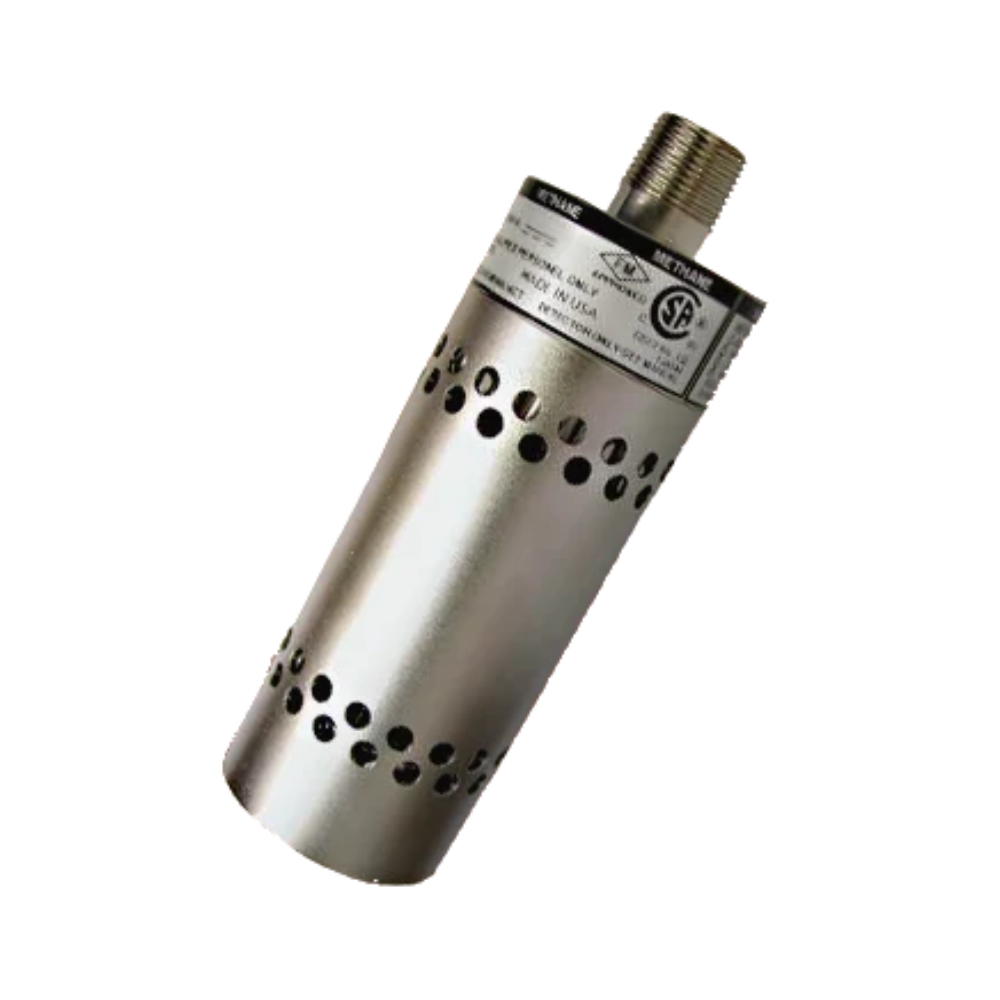
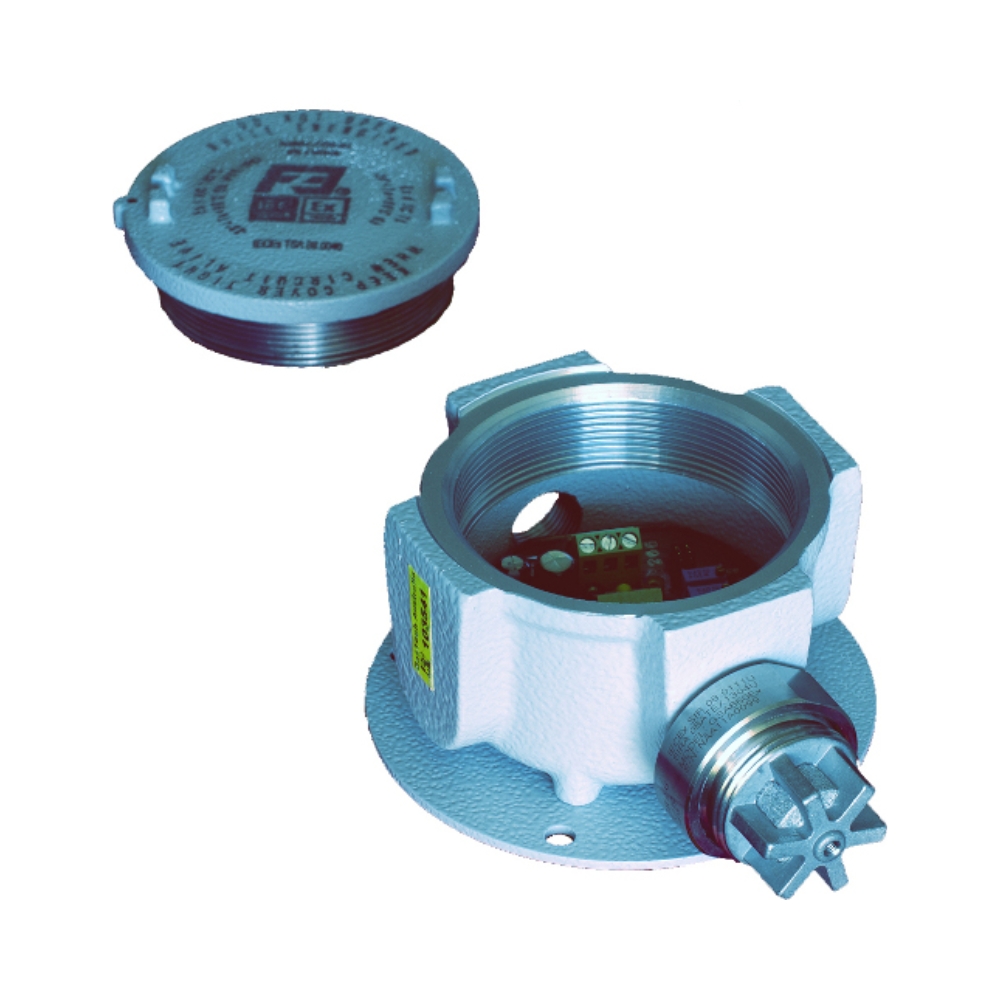
B-Guard
Fixed Combustible and CO2 Gas Detector
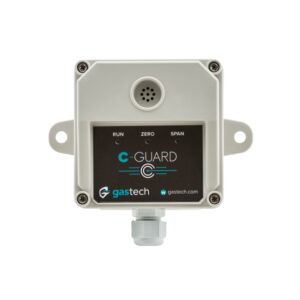
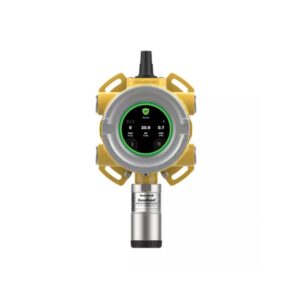
The B-Guard is Gastech’s fixed detector range for combustible gases and carbon dioxide. The Millennium variants use single source dual wavelength infrared, which needs no routine calibration, can’t be poisoned, and holds a stable reading in atmospheres that defeat conventional sensors. The Catalytic variant is the simple workhorse, with ppm level sensitivity that infrared can’t reach. All three have a 4-20 mA output and are built for hazardous area installation.
KEY BENEFITS
- Millennium infrared needs no routine calibration, removing the largest recurring cost of fixed detection
- Infrared sensing is immune to poisoning and etching, so silicones and sulphur compounds will not kill it
- Operates in anaerobic atmospheres, where catalytic sensing cannot function at all
- Holds a stable reading in a constant hydrocarbon background instead of drifting
- Over five years operating life on the infrared variants, with no moving parts to wear
+ more in the Description tab below
A Detector You Don’t Have to Calibrate
Most of what a fixed gas detector costs isn’t the purchase price. It’s the technician standing in front of it twice a year with a bottle of gas, for the next ten years.
The B-Guard Millennium changes that. Gastech’s documentation states that routine calibrations aren’t required. The optical bench is self compensating, so the sensing and reference elements correct for optical integrity and other signal inhibitors without intervention.
Across a site with twenty detection points, removing the routine calibration visit saves more than anything the purchase price will.
Calibration is still available when you want to prove the instrument, using a smart calibration routine rather than a manual zero and span. We can manage it under a service agreement if your procedures call for periodic verification.
Atmospheres That Defeat Other Detectors
Three conditions defeat conventional combustible gas detection, and the Millennium handles all three.
Poisoning. Catalytic bead sensors lose sensitivity when exposed to silicones, sulphur compounds or lead. The failure is silent, which is the dangerous part. Infrared sensing has nothing to poison, and the Millennium is immune to poisoning and etching.
No oxygen. A catalytic bead works by burning gas on a heated element, so it needs oxygen. Inside a nitrogen blanketed vessel, an inerted tank or a purged enclosure, it can’t work. The Millennium operates in anaerobic atmospheres.
Constant background gas. Where a low level of hydrocarbon is always present, a catalytic detector drifts and eventually reads nothing useful. The Millennium operates in a constant hydrocarbon background and still picks up a change.
Add a heated optical chamber to keep condensation off the optics, and no moving parts to wear, and you have a detector built for the places that wear out instruments.
Where the Catalytic Variant Still Wins
Infrared isn’t automatically the better choice. There are two clear cases where the Catalytic variant is the right call.
Parts per million detection. Infrared works well at percent LEL, but can’t resolve ppm levels. The Catalytic variant uses set gain control for extra low sensitivity, so it reads combustible gas at ppm as well as LEL. If your requirement is a trace level, infrared won’t do it.
Zone certification. The Catalytic variant is certified to the Zone system, with the enclosure marked Ex db or eb T6 to T3 IIC Gb and the sensor Ex db IIC Gb. That’s the system Australian hazardous area installations are assessed against. See the certification section below.
It’s also a very stable instrument. The amplifier can be set as a 4-20 mA source or sink by moving two jumpers. Head voltage runs from 1.4 to 14 VDC, to suit both low and high voltage sensors. Advanced calibration minimises interference between the zero and span adjustments, making calibration quicker and more accurate. Accuracy is ±2% of full scale, and repeatability is better than 1% of applied gas.
Certification Differs Across the Range
This is the most important thing to understand before specifying a B-Guard.
| Variant | Hazardous area approval | Scheme |
|---|---|---|
| B-Guard Catalytic | Ex db or eb T6 to T3 IIC Gb, sensor Ex db IIC Gb | Zone system |
| B-Guard Millennium LEL | Class 1, Division 1, Groups B, C and D | CSA and FM, North American |
| B-Guard Millennium CO2 | Class 1, Division 1, Groups B, C and D | CSA and FM, North American |
Australian hazardous area installations are assessed under the Zone system, using IECEx or ANZEx certification. The North American Division system is a different framework, and a CSA or FM Division 1 approval isn’t automatically accepted here.
A certificate of compliance is held for the Millennium variants, and our engineering team can confirm what it covers for your installation. If you’re specifying against an Australian hazardous area classification, raise it at quote stage, not at commissioning.
The Variants
| Variant | Sensing | Detects | Range |
|---|---|---|---|
| B-Guard Catalytic | Catalytic bead, low power switch mode | Combustible gases | LEL and ppm levels |
| B-Guard Millennium LEL | Infrared, single source dual wavelength | Methane, propane, butane, other hydrocarbons on request | 0 to 100% LEL |
| B-Guard Millennium CO2 | Infrared, single source dual wavelength | Carbon dioxide | 0 to 5% volume standard, other ranges available |
The Millennium hydrocarbon detectors are designed as a direct alternative in the same applications where catalytic bead sensors have traditionally been used.
Networking Multiple Points
The Millennium variants have a sourced 4-20 mA output, and can be coupled with an SEC 2000 transmitter for network applications. An RS-485 communication link is available, along with an optional digital display.
That gives three build levels: a single detector reporting 4-20 mA to an existing panel, a detector with a local digital display for a walk up reading, or a networked installation over RS-485, reporting multiple points back to a control system.
Temperature and Environment
The Millennium variants run from -40°C to +70°C at 0 to 99% humidity, non condensing. The housing is copper free, non corrosive, nickel plated aluminium and stainless steel, with a full stainless steel option, and is rated IP66. Mounting is 3/4 inch NPT and the unit weighs about 0.9 kg, so it goes up without a bracket fabrication exercise.
The Catalytic variant runs from -20°C to +60°C at 10 to 95% humidity, non condensing, and is rated IP66 and IP67. The powder coated case resists RFI and EMI, construction is tamper proof, and the electronics have a quoted MTBF of 10 years.
Where It’s Used
Refineries and petrochemical plant, gas turbines and compressor stations, drilling and production platforms, chemical plant, fuel loading facilities and terminals, oil well logging, wastewater treatment and digesters, LNG and LPG processing and storage, landfill gas systems, transport depots and fuel handling, and nitrogen blanketed and inerted vessels.
For carbon dioxide: gas storage, injection oil recovery, breweries and wineries, bottling plants, food processing and packaging, greenhouses, laboratories, environmental chambers, HVAC demand controlled ventilation and engine test cells.
Benefits
- Millennium infrared needs no routine calibration, removing the largest recurring cost of fixed detection
- Infrared sensing is immune to poisoning and etching, so silicones and sulphur compounds will not kill it
- Operates in anaerobic atmospheres, where catalytic sensing cannot function at all
- Holds a stable reading in a constant hydrocarbon background instead of drifting
- Over five years operating life on the infrared variants, with no moving parts to wear
- Fast response on the infrared variants: T90 under 5 seconds for CO2 and under 10 seconds for LEL
- Catalytic variant adds ppm level sensitivity alongside LEL, which infrared cannot reach
- Catalytic variant certified Ex db or eb IIC Gb, with a five year sensor life
- Fault indications for all failure states, so a failed detector reports itself
- RS-485 and SEC 2000 coupling for networked multi point installations
B-Guard Millennium, LEL and CO2
Sensing method
Infrared, single source dual wavelength
Operating voltage
LEL: 24 VDC, range 18 to 32 VDC. CO2: 18 to 36 VDC
Current draw
210 mA average, 400 mA peak
Power consumption
LEL: 5 W maximum. CO2: 4 W at 24 VDC
Analogue output
4 to 20 mA, sourced
Digital communication
RS-485 link available. Can be coupled with an SEC 2000 transmitter
Ingress protection
IP66
EMI protection
Operates correctly with a 5 W walkie talkie keyed at about 1 m
Range
±3% from 0 to 50% full scale, ±5% from 51 to 100% full scale
Display
Optional digital display
Range, LEL variant
0 to 100% LEL
Gases, LEL variant
Methane, propane and butane. Other hydrocarbon gases available
Accuracy, LEL variant
Plus or minus 3% from 0 to 50% LFL, plus or minus 5% from 51 to 100% LFL
Response time
LEL: T50 under 5 seconds, T90 under 10 seconds. CO2: T50 under 3 seconds, T90 under 5 seconds (with standard weather protection)
Operating temperature
Minus 40°C to plus 70°C
Humidity
0 to 99%, non-condensing
Housing
Nickel plated aluminium and stainless steel. Optional full stainless steel model
Approvals
CSA and FM Performance Approved
Classification
Class 1, Division 1, Groups B, C and D
Mounting
Three quarter inch NPT
Weight
0.9 kg
Operating life
Over five years
Calibration
Routine calibration not required. Smart calibration available
Fault reporting
Fault indications for all failure states
-
-
B-Guard Catalytic
Sensing method
Catalytic bead, low power switch mode
Analogue output
4 to 20 mA, configurable as source or sink by moving two jumpers
Input supply voltage
10 to 30 V DC
Head supply voltage
1.4 to 14 V DC, covering low and high voltage sensors
Detection levels
LEL and ppm, with set gain control for low sensitivity ppm work
Response time
90% of full response in under 40 seconds
Operating temperature
Minus 20°C to plus 60°C
Humidity range
10 to 95% RH, non-condensing
Accuracy
Plus or minus 2% of full scale
Repeatability
Better than 1% of applied gas
Drift
Under 5% signal loss per year
Enclosure certification
Ex db or eb T6 to T3 IIC Gb
Sensor certification
Ex db IIC Gb
Ingress protection
IP66 and IP67
Enclosure
Powder coated protective case, RFI and EMI resistant, tamper proof
MTBF, electronics
10 years
Sensor life
5 years
Weight
1,200 g
Enclosure certification
Ex db or eb T6 to T3 IIC Gb. Confirm certificate with Gastech
Dimensions
160 x 110 x 80 mm
Warranty
2 years on electronics, 1 year on the sensor
Propane
C3H8
Butane
C4H10
Methane
CH4
Carbon Dioxide
CO2
- Aviation & Transportation
- Chemical Manufacturing
- Confined Space & Compliance
- Energy (Oil & Gas)
- Food & Beverage
- Landfill & Remediation
- Marine & Maritime
- Medical & Healthcare
- Mining & Minerals
- Power Generation & BESS
- Technology & Semiconductor
- Water & Wastewater
No, Gastech documentation states routine calibration is not required, because the optical bench self compensates for optical integrity and signal inhibitors.
Yes, the Millennium infrared variants operate in anaerobic atmospheres, where a catalytic bead sensor cannot function at all.
The Catalytic variant, because infrared works at percent LEL but cannot resolve ppm levels.
The Catalytic variant is certified to the Zone system (Ex db or eb IIC Gb). The Millennium variants carry North American CSA and FM Class 1, Division 1 approval, which isn't automatically accepted in Australia. Confirm acceptance with our engineering team before specifying.
Not on the infrared variants, since hydrogen does not absorb infrared. Hydrogen detection needs the Catalytic variant.
Millennium variants can be coupled with an SEC 2000 transmitter and support an RS-485 link for multi point networked installations.
Trusted by









Contact Us
Can’t find what you’re looking for? Our team is happy to help.