
D-Guard²R
Fixed Gas Detector with Relays
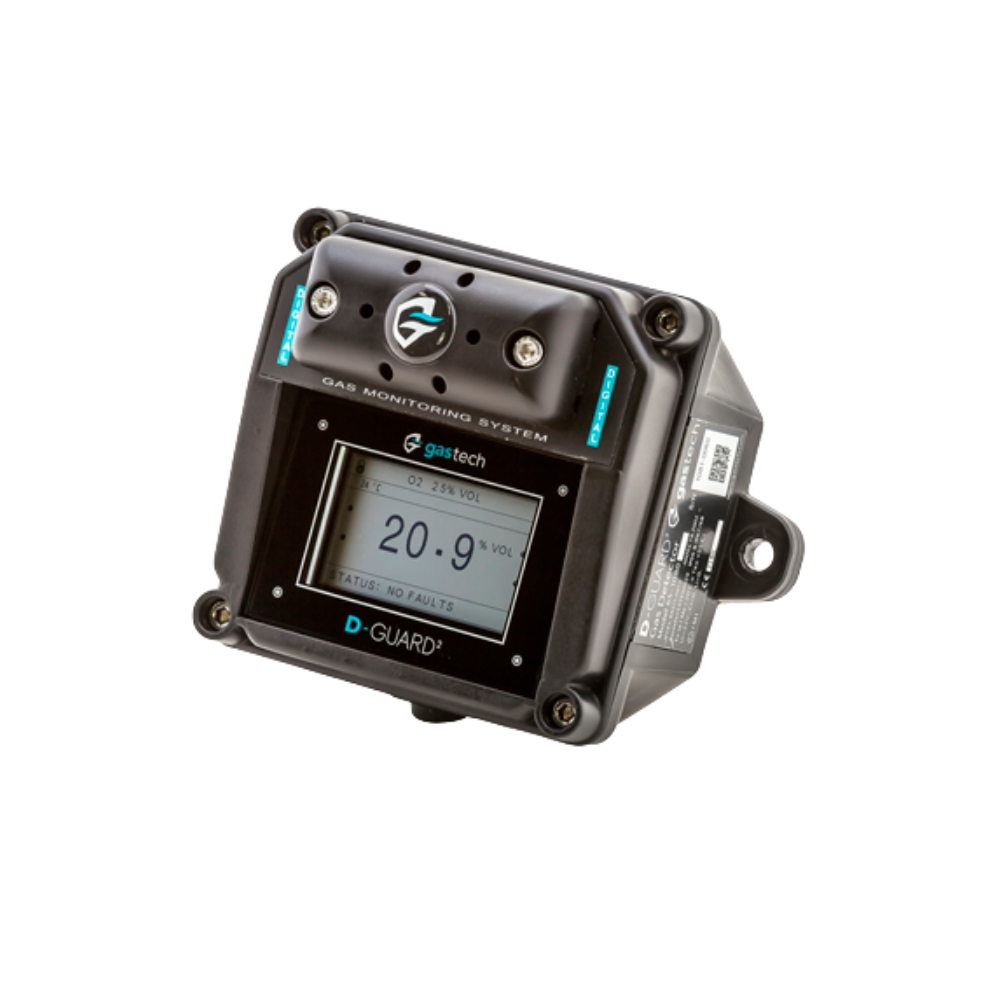
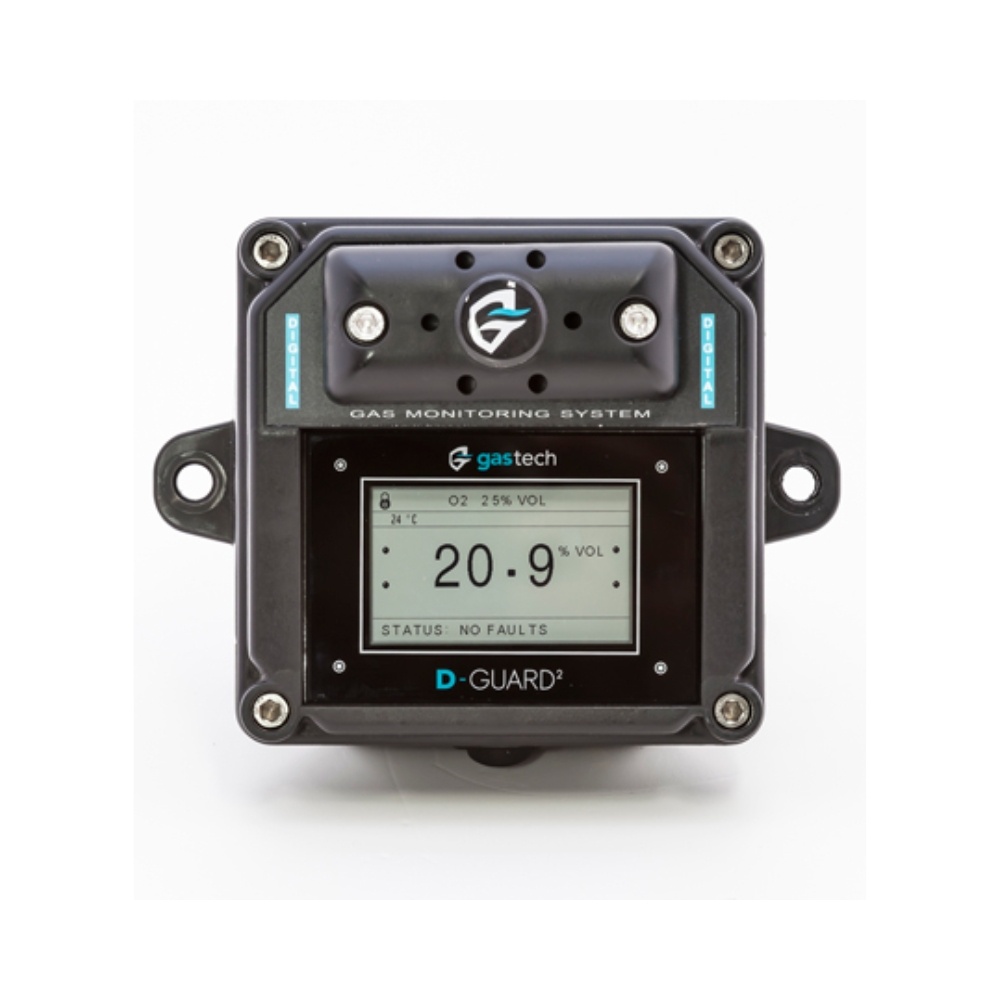
The D-Guard²R is Gastech’s own fixed gas detector with a built in three relay board. Low alarm, high alarm and fault each have their own relay, so the detector can drive extraction, trip a solenoid or signal a building management system without a separate controller. It keeps the full IP66, IP67 and IP68 housing, which makes it the choice for outdoor, washdown and flood prone locations. It is a general purpose detector for non-hazardous areas.
KEY BENEFITS
- Built in three relay board drives fans, solenoids or interlocks without a separate controller
- Full IP66, IP67 and IP68 protection, so it suits outdoor and washdown locations
- NDIR methane in %Vol and %LEL, plus propane LEL, alongside the toxic gas range
- Fault relay is normally energised, so a power failure shows up as a fault
- Optional side mounted HART port gives access without opening the housing
+ more in the Description tab below
Automatic Response Without a Siren
Not all gas detection should make a noise.
In an unmanned plant room, a siren alarms nobody. In a carpark, the right response is to start the fans, not startle the public. On a dosing skid, the right response is to close a valve. In a building with an existing fire and alarm system, a second independent siren creates confusion rather than safety.
Those installations need a detector that acts. The D-Guard²R has three relays built in, so it can start extraction, trip a solenoid, drive a remote beacon or signal a building management system on its own. There’s no controller, and no extra relay board wired in alongside it.
Where a local audible warning is what you want, the D-Guard²S adds a sounder strobe to the same relay board.
What the Relays Do
| Relay | Function | Type |
|---|---|---|
| 1 | Low alarm | Single pole double throw |
| 2 | High alarm | Single pole double throw |
| 3 | Fault | Normally energised |
The low and high alarm relays are changeover contacts, which gives you two stages to work with. Start extraction on low and shut the supply off on high, or signal a BMS on low and trip a plant interlock on high. Both alarm relays can be set as energised or de-energised, to suit your control logic.
The fault relay is normally energised, and that detail matters. Because it’s energised in normal operation, a power loss, cut wire or dead board drops the relay and reports a fault. A normally open fault relay would stay silent in exactly the situation you most need to hear about.
Full Ingress Protection
This is the specification that separates the D-Guard²R from the D-Guard²S, and it decides which one suits the location.
The D-Guard²R is rated IP66, IP67 and IP68, with an IP68 rated M20 nylon cable gland supplied as standard. The D-Guard²S, with its sounder opening, drops to IP65.
In practice, the D-Guard²R can go outdoors, into washdown areas, into pits and wet wells that occasionally flood, and into coastal and tropical installations.
The housing is a highly impact resistant, non conductive acetal plastic that’s anti static, UV stable and chemically resistant.
Methane and Flammable Gas
The D-Guard²R supports NDIR methane detection, in 0 to 5% volume and 0 to 100% LEL ranges, plus propane at 0 to 100% LEL.
NDIR sensing gives long sensor life, with no risk of poisoning from silicones or sulphur compounds, which is the usual failure mode for catalytic sensors on landfill and wastewater sites.
Combined with the relays, that makes it a straightforward choice for landfill gas extraction control, digester plant and pump stations, where methane and hydrogen sulphide both need watching.
HART, With an Optional Side Port
Optional HART 7.0 runs alongside the 4-20 mA output. It carries real time readings, diagnostics, remote sensor testing and current loop rescaling.
The D-Guard²R can also be fitted with an optional HART port on the side of the unit. That gives a technician HART access without opening the enclosure, which is quicker and keeps the ingress rating intact while working.
18 Gases, One Board
A single electronics board covers toxic gases, oxygen, flammable gases and carbon dioxide, with 4 series plug in sensors and configuration through the interface. Hydrogen tolerant CO sensors are also available.
For a maintenance team, that means one detector type to learn and one spares line to hold, whether the point is hydrogen sulphide at a wet well, methane at a landfill, chlorine at a dosing plant or carbon dioxide in a plant room.
Calibrate It Without Opening It
Calibration and configuration use a service tool with a built in magnetic stylus, used against the closed housing. Nothing is unscrewed or exposed.
On screen prompts guide the process, which reduces mistakes by someone who calibrates a detector twice a year rather than twice a day. A detector isolate feature takes a point out of service for maintenance. Drift is less than 3% signal loss per year, which keeps calibration intervals long and predictable.
It Tells You When It Has Failed
A detector that has quietly failed is worse than no detector, because the site believes it’s protected.
A sensor self test runs on a timer, or on demand over HART, and operating conditions are monitored continuously. Response time testing is built in, giving a real measurement of dynamic performance rather than an assumption. As standards begin to require this kind of testing, the detector is already equipped for it.
Important: Not a Hazardous Area Detector
The D-Guard²R is a general purpose detector and carries no Ex certification. Gastech’s documentation states that it must not be used in applications that need certified equipment.
Classified hazardous areas need the D-Guard², which carries IECEx, ATEX and ANZEx certification across Group I and Group II. The certified D-Guard² doesn’t have relays, so a certified installation that needs relay outputs uses a controller.
If you’re not sure how your area is classified, our engineering team can work through it with you. Getting this wrong is a safety issue, not a paperwork one.
Choosing Across the Range
| D-Guard² | D-Guard²R | D-Guard²S | |
|---|---|---|---|
| Hazardous area certification | IECEx, ATEX, ANZEx, Group I and II | None | None |
| Relays | No | 3 | 3 |
| Sounder strobe | No | No | 98 dB, flashing red |
| Methane and LEL | Yes | Yes | Not listed |
| IP rating | IP66, IP67, IP68 | IP66, IP67, IP68 | IP65 |
| Power | Two wire loop | 13 to 28 VDC | 13 to 26 VDC |
Where It’s Used
Landfill gas extraction and monitoring, wastewater pump stations and wet wells, digester and biogas plant, carpark ventilation control, outdoor and rooftop plant, washdown areas in food processing, chemical dosing skids with automatic shut off, unmanned plant and boiler rooms, coastal and tropical installations, buildings with an existing central alarm system, and mineral processing and surface plant in non classified areas.
Benefits
- Built in three relay board drives fans, solenoids or interlocks without a separate controller
- Full IP66, IP67 and IP68 protection, so it suits outdoor and washdown locations
- NDIR methane in %Vol and %LEL, plus propane LEL, alongside the toxic gas range
- Fault relay is normally energised, so a power failure shows up as a fault
- Optional side mounted HART port gives access without opening the housing
- IP68 rated 20 mm nylon gland supplied as standard
- Non-intrusive magnetic stylus calibration needs no enclosure opening
- Integrated response testing measures real performance, not assumed performance
- Sensor self test runs on a timer or over HART, so a failed cell reports itself
- Alarm relays can be set energised or de-energised to suit the control logic
Analogue output
4-20 mA. Loop error signals: 3.5 mA (isolated or fault), 21 mA (over range)
Digital communication
HART 7.0 on selected models. Optional side mounted HART port
Indication
2.7 inch (68.6 mm) monochrome LCD
Relay output 1 and 2
Low alarm and high alarm, single pole double throw. Energised or de-energised, user selectable
Relay output 3
Fault, normally energised
Input power
13 to 28 VDC, 200 mA minimum supply current
Wiring
3 wire connection when using the relay and sounder functions
Response time
T90 typically under 40 seconds for toxic gases and under 10 seconds for methane, cell dependent
Operating temperature
-20°C to +55°C
Humidity range
15 to 90% non-condensing
Sensor style
4 series plug in sensors
Calibration
Non-intrusive, service tool with built in magnetic stylus
Sensor self test
Timed or HART triggered, with continuous operating condition monitoring
Response testing
Integrated dynamic response testing
Drift
Less than 3% signal loss per year
Dimensions
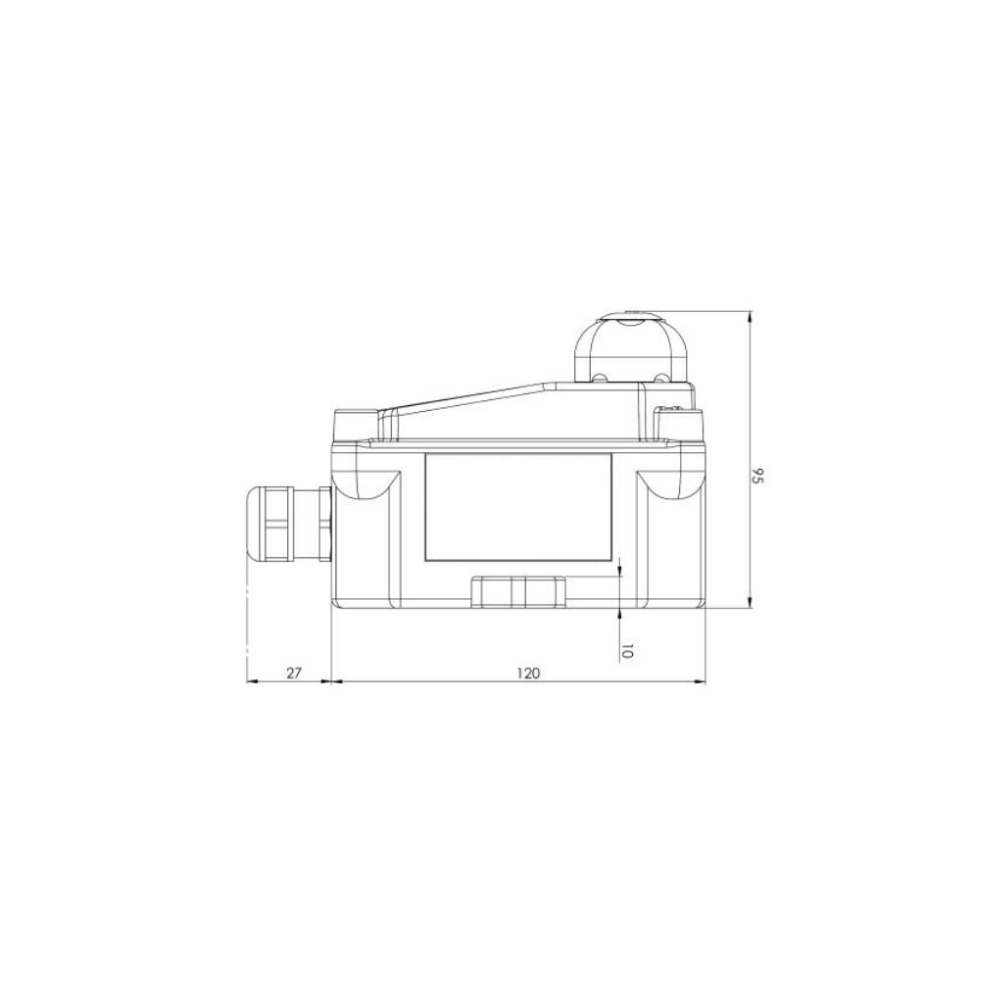
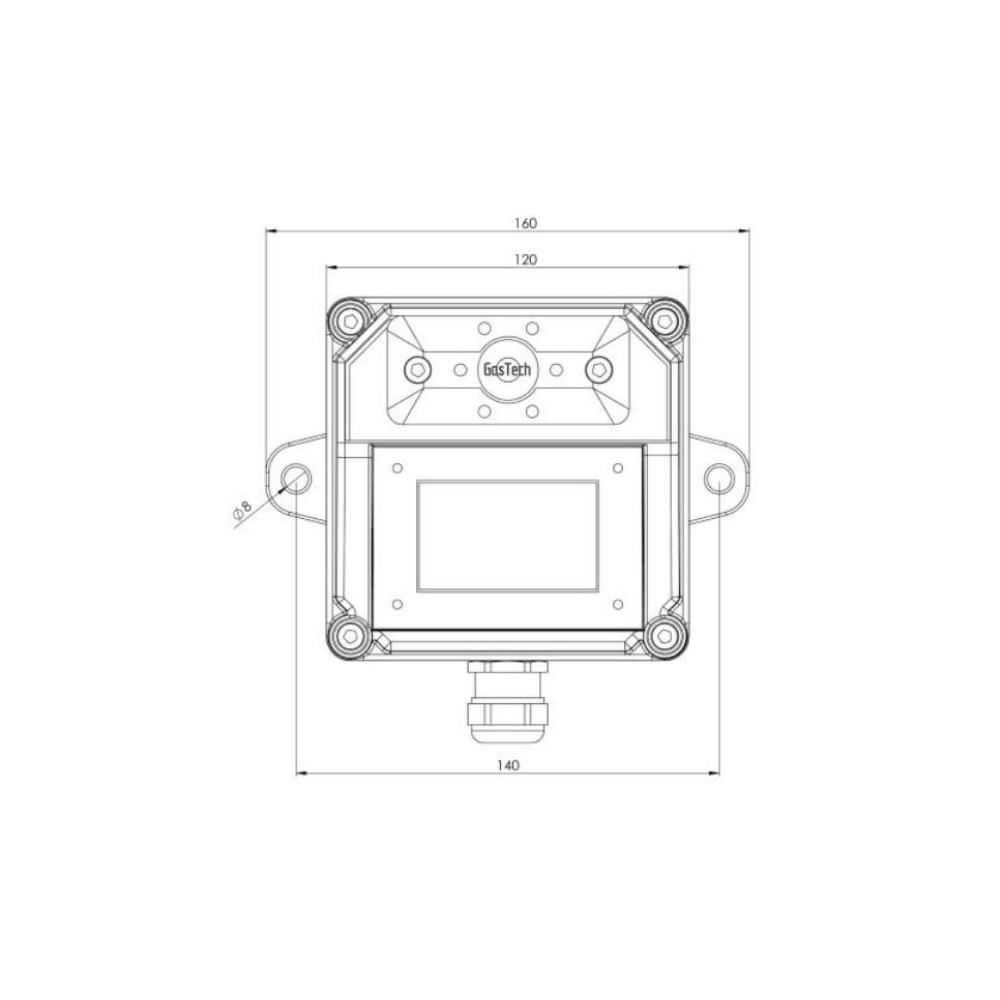
120 x 120 x 95 mm
Enclosure
Highly impact resistant, non conductive, anti static, UV stable, chemically resistant acetal plastic
IP rating
IP66, IP67 to 1 metre for 30 minutes, IP68 to 1.2 metres for 90 minutes
Gland
M20 nylon cable gland, IP68 rated. Cable outside diameter 10 to 14 mm, circular section
Certification
General purpose, non-certified. Not for use in hazardous areas
Warranty
2 years on the instrument. Sensor warranty varies by cell
Ethylene Oxide
C2H4O
Propane
C3H8
Methane
CH4
Chlorine
Cl2
Carbon Monoxide
CO
Carbon Dioxide
CO2
Hydrogen Sulphide
H2S
Hydrogen Chloride
HCl
Hydrogen Cyanide
HCN
Hydrogen Fluoride
HF
Ammonia
NH3
Nitric Oxide
NO
Nitrogen Dioxide
NO2
Oxygen
O2
Ozone
O3
Phosphine
PH3
Sulphur Dioxide
SO2
- Aviation & Transportation
- Carpark & HVAC
- Chemical Manufacturing
- Confined Space & Compliance
- Energy (Oil & Gas)
- Food & Beverage
- Landfill & Remediation
- Marine & Maritime
- Medical & Healthcare
- Mining & Minerals
- Power Generation & BESS
- Technology & Semiconductor
- Water & Wastewater
Drive extraction fans, trip a solenoid valve, run a remote beacon or signal a building management system, all without a separate controller.
The R has the relay board without a local alarm and keeps the full IP68 housing, while the S adds a 98 dB sounder strobe but drops to IP65.
So a power failure or cut wire drops the relay and reports a fault, rather than sitting silent when you most need to know.
Yes. NDIR methane sensing is available in 0 to 5% volume and 0 to 100% LEL ranges, with no poisoning risk from silicones or sulphur. Propane is also available at 0 to 100% LEL.
No, it is a general purpose non-certified detector. Classified areas need the D-Guard², which carries IECEx, ATEX and ANZEx certification.
Yes, it is rated IP66, IP67 and IP68 with an IP68 rated gland, so outdoor, washdown and flood prone locations are within scope.
Trusted by









Contact Us
Can’t find what you’re looking for? Our team is happy to help.