
S-Guard
Fixed Toxic and Combustible Gas Detector
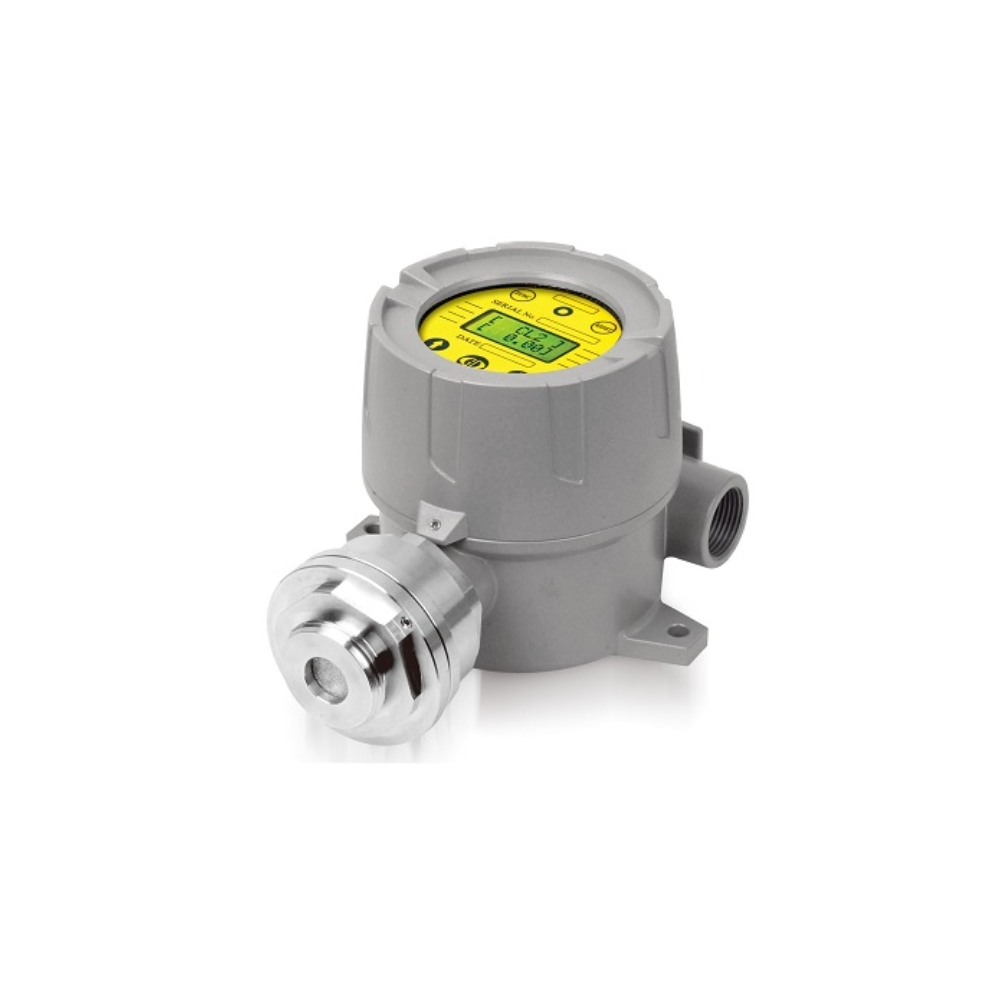
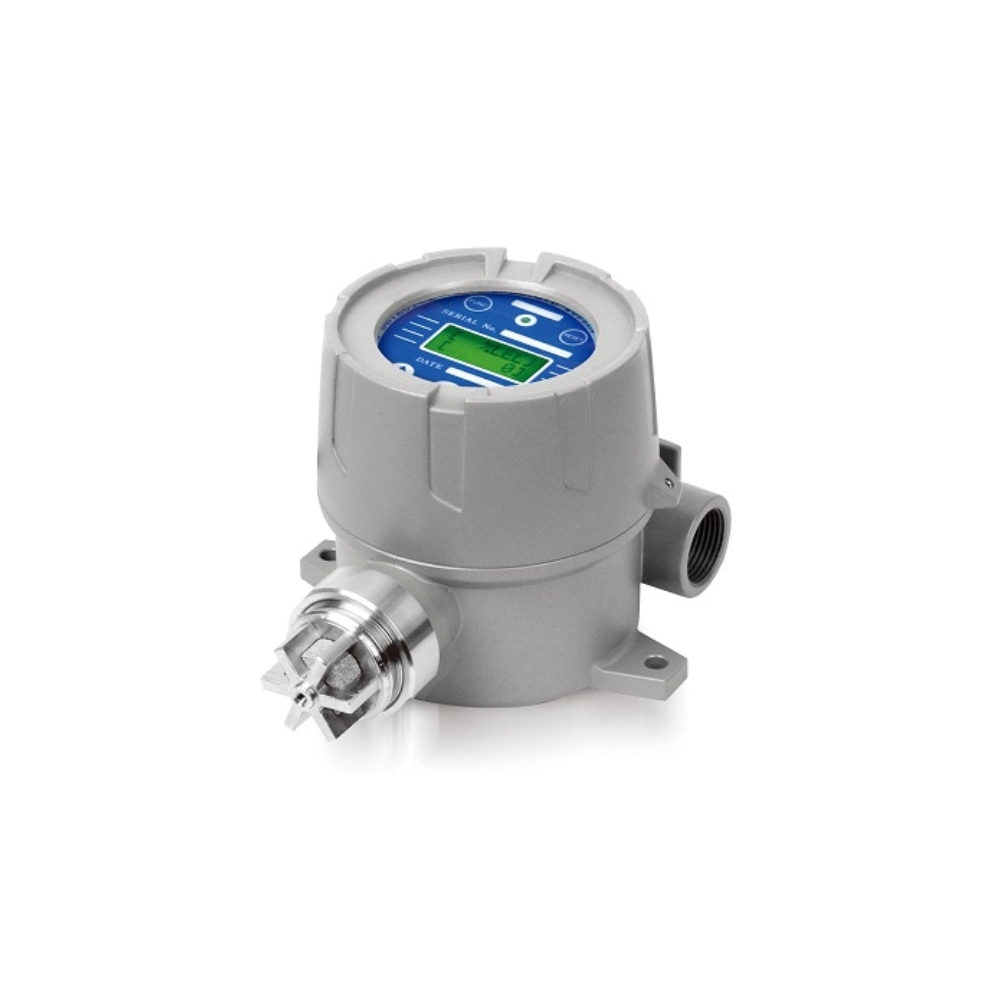
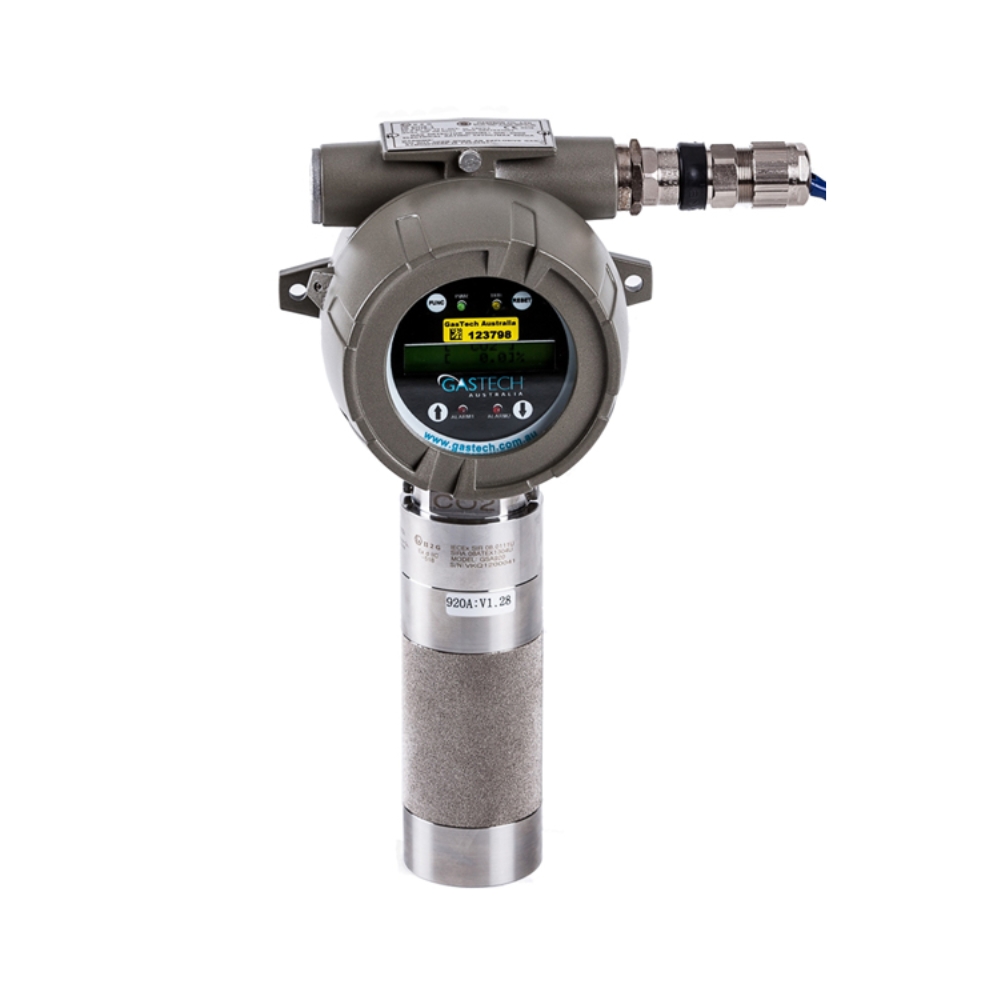
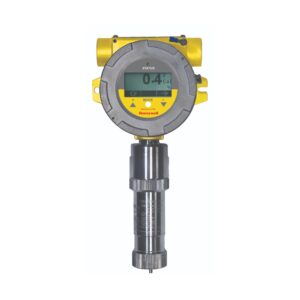
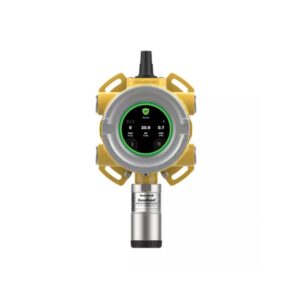
The S-Guard is Gastech’s smart transmitter series for hazardous area gas detection. Three variants share one platform, covering toxic gases and oxygen, catalytic combustible gas detection, and infrared detection of hydrocarbons, carbon monoxide and carbon dioxide. All three sit in an Ex d IIC T6 flameproof housing certified to ATEX and IECEx, and all three are set up and calibrated with a magnet bar through the closed enclosure. The Tx variant covers more than 50 toxic gases, including semiconductor specialty gases.
KEY BENEFITS
- Three sensing technologies on one platform, so toxic, combustible and infrared detection share a series
- Ex d IIC T6 flameproof housing certified to ATEX and IECEx for classified areas
- Tx variant covers more than 50 toxic gases, from H2S and CO to arsine, silane and phosphine
- ABS type approval and MED approval on the Tx variant for marine and offshore work
- Power and signal over 3 wire cable runs of up to 500 metres
+ more in the Description tab below
Three Variants, One Platform
| Variant | Sensing method | What it detects |
|---|---|---|
| S-Guard Tx | Electrochemical, diffusion | Toxic gases and oxygen, more than 50 target gases available |
| S-Guard Ex | Catalytic, with semiconductor and thermal conductivity options | Combustible gases, 0 to 2,000 ppm or 0 to 100% LEL |
| S-Guard Ir | Infrared, single source dual wavelength | Hydrocarbons including LNG, LPG, methane and propane, plus carbon monoxide and carbon dioxide |
Sharing a platform means one housing style, one configuration method and one calibration procedure across a site running all three. For a maintenance team, that’s the difference between learning one detector and learning three.
Catalytic or Infrared for Hydrocarbons
This is the decision that matters most when specifying flammable gas detection, and the answer depends on the atmosphere rather than the budget.
Catalytic sensing, in the S-Guard Ex, burns the gas on a heated bead and measures the temperature change. It responds to a wide range of hydrocarbons, it’s proven over decades, and it costs less. It needs oxygen to work, and it can be poisoned by silicones, sulphur compounds and lead. Long exposure to high concentrations can also damage the bead.
Infrared sensing, in the S-Guard Ir, measures how much infrared light the gas absorbs. Nothing is consumed and nothing burns. It works in oxygen free and inert atmospheres, it can’t be poisoned, and high concentrations don’t harm it. In exchange, it’s gas specific rather than broad, and it can’t detect hydrogen at all.
The practical rule: choose infrared for nitrogen blanketed vessels, inert atmospheres, or anywhere silicones and sulphur compounds are present. Choose catalytic where the atmosphere is normal air and the target gas mix is broad. For hydrogen, the Ex variant’s thermal conductivity option, or the Tx variant’s hydrogen sensor (0 to 2,000 ppm), are the routes to look at.
Our engineering team can work through the choice against your actual gas mix.
The Toxic Variant Reaches Gases Most Detectors Can’t
The S-Guard Tx covers the usual industrial toxics: hydrogen sulphide, carbon monoxide, chlorine, ammonia, sulphur dioxide, nitrogen dioxide and oxygen deficiency.
It also covers specialty gases that very few fixed detectors handle, including arsine, diborane, silane, disilane, germane, dichlorosilane, phosphine, boron trifluoride, boron trichloride, chlorine trifluoride, fluorine and bromine.
That list is the semiconductor and electronics industry’s hazard register: dopant gases, etchants and cleaning agents, many of them acutely toxic at fractions of a part per million. For a fab, a solar plant or a specialty gas facility, having those gases on the same detector platform as general plant monitoring is a real simplification. The full list is in the Measuring Range download.
Certified for Hazardous Areas and Marine Use
All three variants use an Ex d flameproof enclosure, certified to ATEX and IECEx at Ex d IIC T6.
The Tx variant also carries ABS type approval and MED approval, for shipboard and offshore installations where classification society approval isn’t optional.
For Australian projects, confirm the certification against your area classification before ordering. Our engineering team can review it with you.
Configure It Without Opening It
Setup, calibration, maintenance and alarm settings are done with a magnet bar against the closed housing, and read on the built in backlit display.
That makes it a one person job, with no need to open the enclosure. Auto calibration handles the routine, and a self diagnosis function with a built in microprocessor reports internal faults rather than failing quietly.
Integration
All three variants output 4-20 mA DC. The Tx adds optional Modbus RTU (RS485) and HART, and the Ir adds optional RS485 Modbus. The Ir also has three relays (two alarm, one trouble) and four status LEDs, for local control without a separate panel.
Power and signal run over a 3 wire cable of 1.5 mm2 or larger, up to 500 metres. That means a remote detection point can be served from a central supply, rather than needing power brought to it.
The series is designed to fit into existing systems, including installations built around other manufacturers’ detectors, so a staged replacement doesn’t mean replacing the control layer at the same time.
Where It’s Used
Refineries and petrochemical plant, gas turbines, LNG and LPG storage and handling, offshore platforms and vessels, semiconductor and solar manufacturing, specialty gas facilities, chemical manufacturing and storage, mining and mineral processing, wastewater treatment and digesters, landfill gas systems, power generation, and sterilisation facilities.
Benefits
- Three sensing technologies on one platform, so toxic, combustible and infrared detection share a series
- Ex d IIC T6 flameproof housing certified to ATEX and IECEx for classified areas
- Tx variant covers more than 50 toxic gases, from H2S and CO to arsine, silane and phosphine
- ABS type approval and MED approval on the Tx variant for marine and offshore work
- Power and signal over 3 wire cable runs of up to 500 metres
- Configuration and calibration by magnet bar through the closed housing
- Ir variant includes two alarm relays and a trouble relay for local control
- Infrared variant works in oxygen free and inert atmospheres where catalytic sensing fails
- HART option adds diagnostics and remote configuration over the existing loop
- Aluminium housing as standard, with a stainless steel upgrade for corrosive areas
Function
Smart transmitter with local display
Measuring type
Diffusion
Analogue output
4 to 20 mA DC, full scale
Digital communication
Tx: Modbus RTU (RS485) and HART, optional. Ir: RS485 Modbus, optional
Display
Backlit 2 line LCD (OLED on some Tx models)
Configuration and calibration
Non-intrusive, magnet bar against the closed housing, with auto calibration
Self diagnosis
Built in microprocessor with fault reporting
Operating power
18 to 31 V DC, nominally 24 V DC
Enclosure type
Ex d flameproof
Housing material
Aluminium standard, stainless steel option
Certification
ATEX and IECEx, Ex d IIC T6
Ingress protection
IP66
Weight
Tx: 1.7 kg. Ex: 1.5 kg. Ir: 2.5 kg
Operating temperature
Tx and Ex: -20°C to +60°C. Ir: -20°C to +50°C
Cable and distance
3 wire power and signal cable, 1.5 mm2 or larger, up to 500 m
EMC
Complies with EN 50270
-
-
S-Guard Tx
Sensing method
Electrochemical cell
Target gases
Toxic gases and oxygen
Additional approvals
SIL 2, MED, ABS, DNV, BV, KR
Reference compensation
Not applicable
Additional approvals
ABS type approval, MED
-
-
S-Guard Ex
Sensing method
Catalytic, hot wire semiconductor or thermal conductivity cell
Power
18 to 31 VDC (24 VDC nominal), 300 mA maximum
Target gases
Combustible and flammable gases
Reference compensation
Temperature self compensating sensing and reference elements
Measuring range
0 to 2,000 ppm and 0 to 100% LEL
-
-
S-Guard Ir
Sensing method
Infrared, single source dual wavelength
Measuring range
0 to 10,000 ppm, 0 to 100% LEL or 0 to 100% volume
Power
18 to 31 VDC (24 VDC nominal), 300 mA maximum
Relays
3 SPST, 250 V 1 A (2 alarm, 1 trouble)
Target gases
Hydrocarbons (LNG, LPG, methane, propane), carbon monoxide, carbon dioxide
Reference compensation
Optically self compensating sensing and reference elements
Arsine
AsH3
Ethylene Oxide
C2H4O
Propane
C3H8
Butane
C4H10
Methane
CH4
Chlorine
Cl2
Carbon Monoxide
CO
Carbon Dioxide
CO2
Hydrogen
H2
Hydrogen Sulphide
H2S
Hydrogen Chloride
HCl
Hydrogen Cyanide
HCN
Ammonia
NH3
Nitrogen Dioxide
NO2
Oxygen
O2
Phosphine
PH3
Silane
SiH4
Sulphur Dioxide
SO2
- Aviation & Transportation
- Chemical Manufacturing
- Confined Space & Compliance
- Energy (Oil & Gas)
- Food & Beverage
- Landfill & Remediation
- Marine & Maritime
- Medical & Healthcare
- Mining & Minerals
- Power Generation & BESS
- Technology & Semiconductor
- Water & Wastewater
Tx uses an electrochemical cell for toxic gases and oxygen, Ex uses catalytic sensing for combustible gases, and Ir uses infrared for carbon dioxide and hydrocarbons.
Infrared for inert or oxygen free atmospheres and where silicones or sulphur compounds are present, catalytic for normal air and a broad target gas mix.
Yes. Setup and calibration are done with a magnet bar against the closed enclosure, which makes it a one person job without opening the housing.
Yes. All three variants use an Ex d flameproof enclosure certified to ATEX and IECEx, rated Ex d IIC T6.
Yes. The Tx variant covers arsine, diborane, silane, disilane, germane, dichlorosilane, phosphine, boron trifluoride, chlorine trifluoride and fluorine, among more than 50 gases.
Yes. The Tx variant carries ABS type approval and MED approval for marine and offshore installation.
Trusted by









Contact Us
Can’t find what you’re looking for? Our team is happy to help.