
Cub PID
Personal PID Gas Monitor
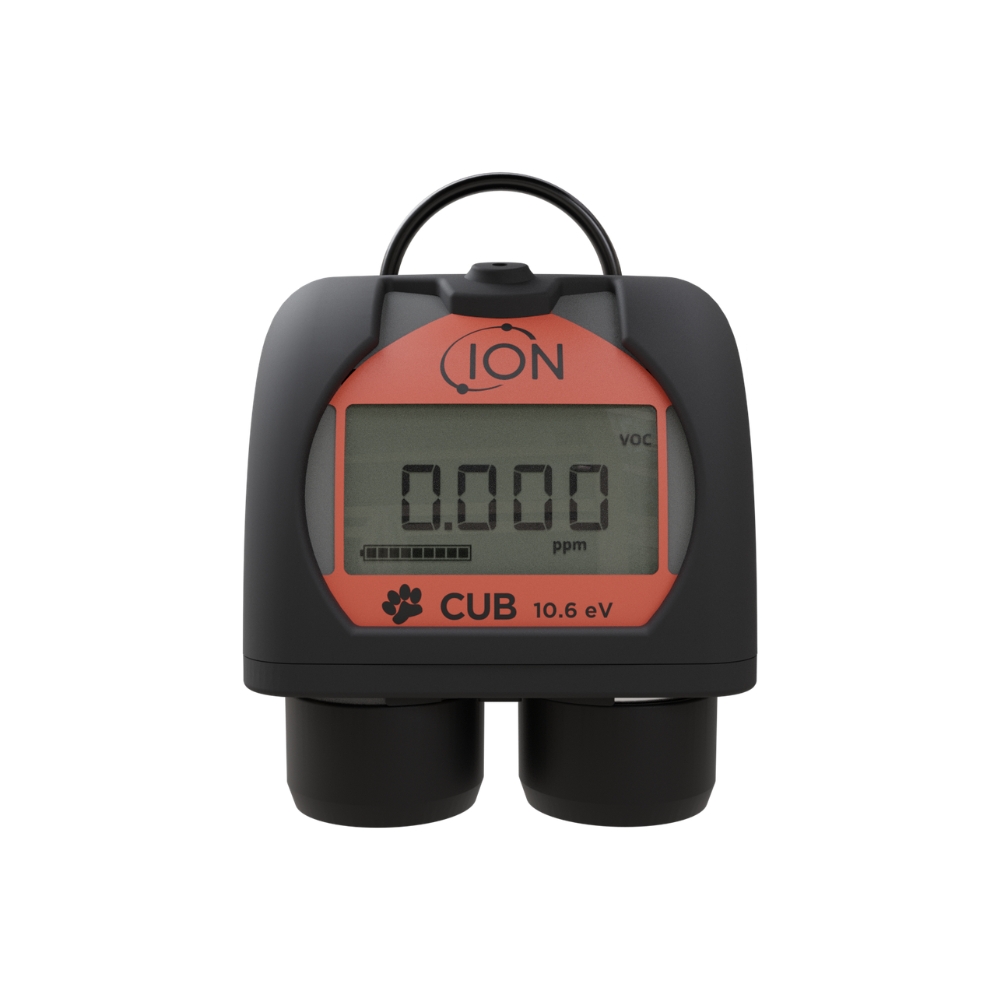
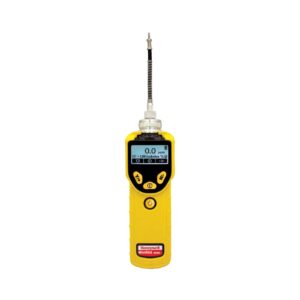
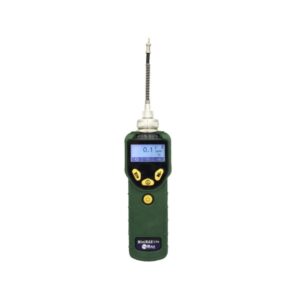
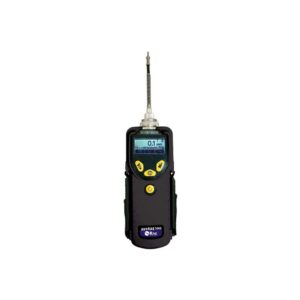
The Cub by ION Science is the world’s smallest, lightest personal PID monitor for accurate detection of volatile organic compounds, total aromatic compounds and benzene. At 111 g, it’s worn in the breathing zone throughout a full shift. ION Science’s patented PID technology, with humidity resistance and an anti contamination design, keeps it reliable in demanding conditions. It comes in three lamp versions, offers ppb sensitivity and measures up to 480 selectable compounds with single button simplicity.
KEY BENEFITS
- World's smallest and lightest personal PID monitor at 111g: worn in the breathing zone all shift without fatigue
- Patented Fence Electrode Technology independently verified as best-performing PID sensor for humidity resistance and contamination rejection
- Three lamp variants covering general VOC detection, benzene and TAC monitoring, and high ionisation energy gases
- ppb sensitivity available on the 10.6 eV model through a software upgrade, with no factory return
- 480 selectable compounds on the 10.6 eV model for broad VOC coverage
+ more in the Description tab below
The World’s Smallest Personal PID Monitor
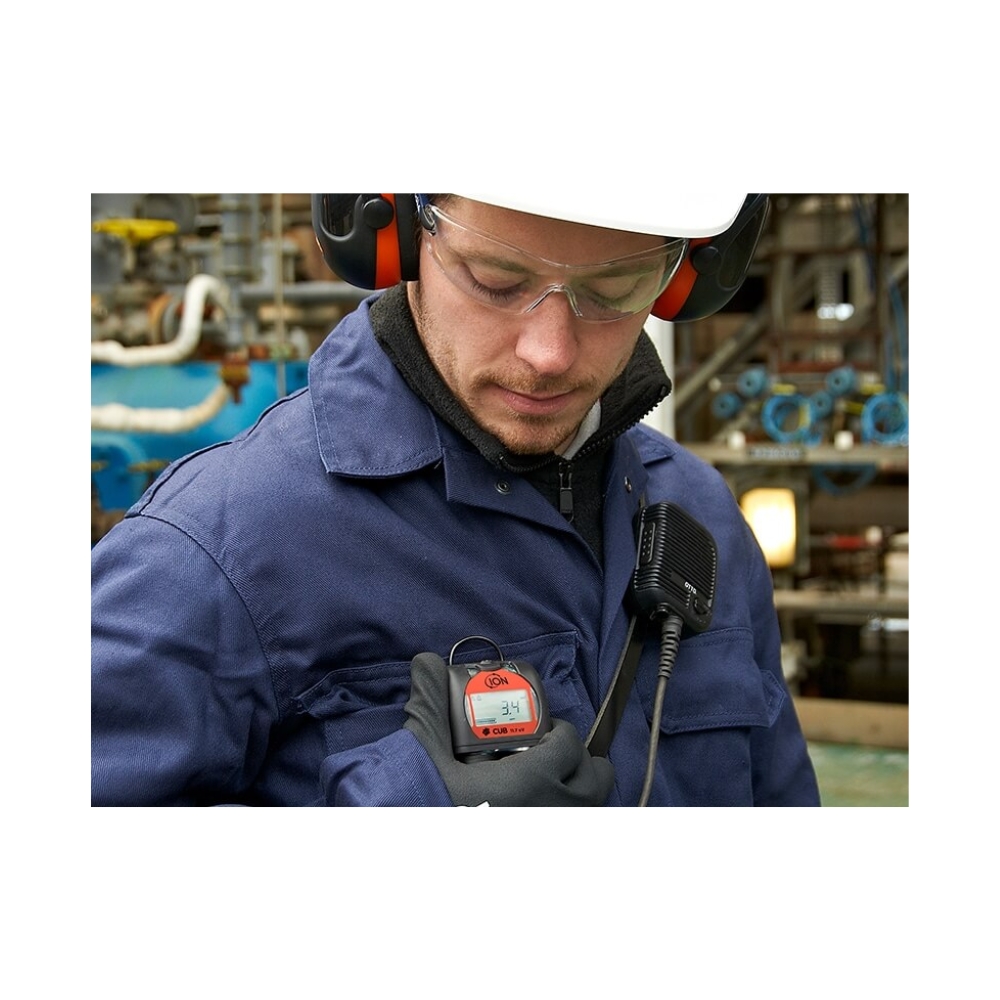
Most PID instruments are handheld sampling tools. The Cub is different. At 111 g and 61 x 66 x 59 mm, it’s small and light enough to wear all day in the breathing zone, the area around the nose and mouth where personal exposure is measured most accurately.
Handheld instruments are used for area surveys and spot checks. The Cub monitors the wearer continuously through the shift and alarms as soon as gas levels pass the pre set limits.
ION Science says the Cub’s patented PID sensor technology has been independently verified as best performing for speed, accuracy and humidity resistant operation. It’s the same approach used in the larger Tiger range, built into a wearable instrument.
Choosing Your Cub
There are three Cub versions, each with a different PID lamp. Choosing the right lamp for your application is the key decision.
Cub 10.6 eV is the standard model for general VOC detection. It measures up to 480 selectable compounds and comes in ppm or ppb versions. The ppm model can be upgraded to ppb through CubPC software, without a factory return. It suits general industrial hygiene, fugitive emissions, confined space work and broad VOC screening.
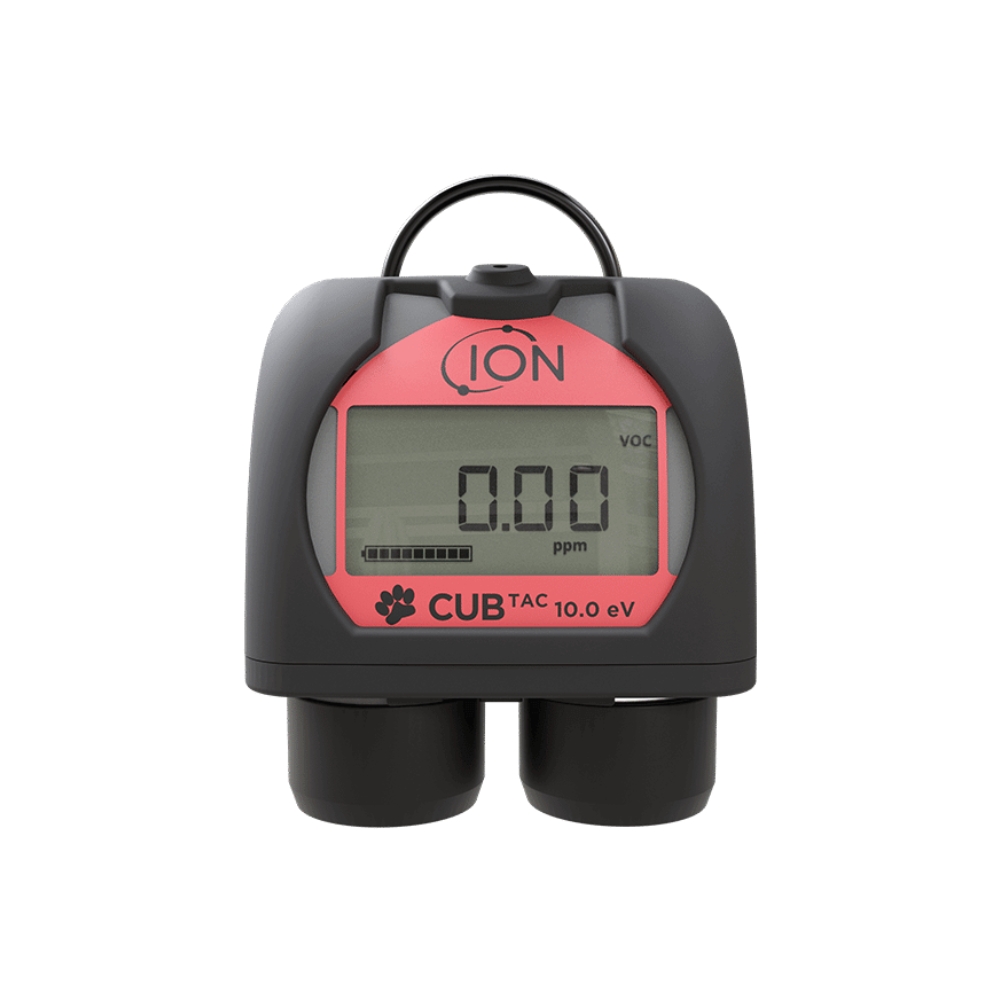
Cub TAC 10.0 eV uses a 10.0 eV lamp for detection of total aromatic compounds (TACs) and benzene, down to ppb levels. Benzene is a known carcinogen, so continuous personal monitoring through the shift is a strong extra layer of protection. It suits petrochemical, downstream oil and gas, laboratory and chemical manufacturing work where aromatics are the main concern.
Cub 11.7 eV uses a higher energy lamp to detect gases the 10.6 eV lamp can’t, including acetylene, methanol, formaldehyde, methylene chloride and chloroform. ION Science has developed a more robust 11.7 eV lamp, with an average life of one year and resistance to extreme temperatures and humidity. It measures from 0.5 ppm to 5,000 ppm and runs for up to 12 hours.
CubDoc Docking Stations
Three CubDoc docking options are available. The charge only dock keeps the Cub ready for the next shift. The charge and USB dock adds data download and setup through CubPC software. The full calibration dock adds calibration capability for fleet management.
Built for All Day Wear
The Cub 10.6 eV and Cub TAC run for up to 16 hours from a 4 hour charge, more than a full shift. Single button operation means very little training.
Audible, visual and vibrating alarms go off as soon as gas levels pass the pre set limits. TWA and STEL values are pre programmed, and up to 30,000 readings are stored on board for download through CubPC.
Benefits
- World's smallest and lightest personal PID monitor at 111g: worn in the breathing zone all shift without fatigue
- Patented Fence Electrode Technology independently verified as best-performing PID sensor for humidity resistance and contamination rejection
- Three lamp variants covering general VOC detection, benzene and TAC monitoring, and high ionisation energy gases
- ppb sensitivity available on the 10.6 eV model through a software upgrade, with no factory return
- 480 selectable compounds on the 10.6 eV model for broad VOC coverage
- Up to 16 hours battery life on the 10.6 eV and TAC models, from a 4 hour charge
- Single-button operation with audible, visual and vibration alarms
- TWA and STEL monitoring with work exposure alarm levels on all models
- CubDoc docking station available for charging, USB communication and calibration
- Register online within one month of purchase to extend warranty to 2 years
Dimensions
61 x 66 x 59 mm
Weight
111 g
Detection principle
Photoionisation detection (PID) with patented Fence Electrode Technology
PID lamp options
10.6 eV krypton (standard VOC), 10.0 eV (TAC and benzene), 11.7 eV (high ionisation energy gases)
Sensitivity
10.6 eV ppb model: 0.001 ppm. 10.6 eV ppm model: 0.1 ppm. 10.0 eV (TAC): 0.01 ppm. 11.7 eV: 0.5 ppm
Range
ppm model: 0.1 to 5,000 ppm. ppb model: 0.001 to 5,000 ppm. TAC model: 0.01 to 5,000 ppm. 11.7 eV model: 0.5 to 5,000 ppm
Response time
T90 under 13 seconds
Accuracy
±5% of display reading plus one digit (10.6 eV). ±12% of display reading (11.7 eV)
Battery
Li-ion. Up to 16 hours (10.6 eV and TAC). Up to 12 hours (11.7 eV). 4 hour charge time
Display
Backlit multi-colour LCD
Keypad
Single button operation
Alarms
LED (amber low, red high), 95 dB sounder at 300 mm, vibration. Pre-programmed TWA and STEL
Data logging
30,000 readings
Communication
USB 2.0 via CubDoc docking station
Flow rate
Diffusion, no pump
IP rating
IP65 with PTFE filter fitted. IP64 without PTFE filter
Operating temperature
-20°C to 55°C
Humidity
0 to 99% RH non-condensing via Fence Electrode Technology
Docking station options
Charge only. Charge and USB communication. Charge, USB and calibration
Software
CubPC
PPB upgrade
Available on 10.6 eV ppm model via CubPC software. No factory return required
Service interval
Annual factory service and calibration recommended
Certifications
ATEX II 1G Ex ia IIC T4 Ga. IECEx Ex ia IIC T4. US and Canada: Class I, II and III, Division 1 hazardous locations (11.7 eV model). Confirm North American approval for the 10.6 eV and TAC models with ION Science
Warranty
2 years via online registration within one month of purchase
Benzene
C6H6
Toluene (Methylbenzene)
C7H8
Xylene
C8H10
Volatile Organic Compounds
VOC
- Aviation & Transportation
- Chemical Manufacturing
- Confined Space & Compliance
- Energy (Oil & Gas)
- Food & Beverage
- Landfill & Remediation
- Marine & Maritime
- Medical & Healthcare
- Mining & Minerals
- Power Generation & BESS
- Technology & Semiconductor
- Water & Wastewater
The Cub 10.6 eV uses a standard krypton lamp for general VOC detection, measuring up to 480 selectable compounds in ppm or ppb. The Cub TAC 10.0 eV detects total aromatic compounds and benzene down to ppb levels. The Cub 11.7 eV detects gases the 10.6 eV lamp can't, such as acetylene, methanol and formaldehyde. All three share the same compact housing, with up to 16 hours battery life on the 10.6 eV and TAC models and up to 12 hours on the 11.7 eV.
Yes. The ppb sensitivity upgrade is available for the 10.6 eV ppm model via CubPC software without returning the instrument to the factory.
The Cub 10.6 eV detects benzene as part of its broad VOC range. The Cub TAC uses a 10.0 eV lamp that targets aromatic compounds, giving a more focused reading of TACs and benzene down to ppb levels. For dedicated personal benzene and TAC monitoring, the Cub TAC is the better choice.
ION Science has developed a refined manufacturing method for the 11.7 eV lamp that gives it an average lifespan of one year, with resistance to extreme temperatures and humidity. This addresses the historical reliability issues associated with 11.7 eV detection.
No. The Cub is a diffusion instrument. It detects gases in the air immediately surrounding the worker wearing it. It is designed for personal wearable monitoring in the breathing zone, not for remote sampling or confined space pre-entry testing.
Data is downloaded via USB 2.0 using a CubDoc docking station and CubPC software. The charge and USB communication dock, or the full calibration dock, supports data download and instrument configuration.
ION Science recommends annual factory service and calibration. Filter replacement frequency depends on the application and environment.
Trusted by









Contact Us
Can’t find what you’re looking for? Our team is happy to help.