
mPlatoon
Wireless Gas Detection System
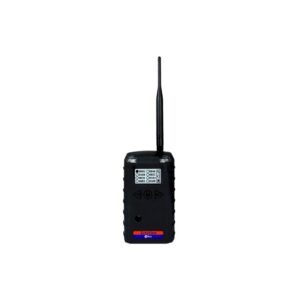
The mPlatoon by M-Power is a rapidly deployable wireless gas detection system that links POLI multi gas monitors into a live team monitoring network. It comes in three configurations, mSquad, mSquad Pro and mPlatoon, scaling from one team of up to 8 monitors to up to 32 remote monitors with GPS mapping and central command software. Set up in minutes, it gives safety managers live visibility of each worker’s gas readings, alarms, Man Down events and location from outside the hazard zone.
KEY BENEFITS
- Deployable in minutes with no fixed infrastructure required
- Scales from 8 monitors in a single mSquad to 32 monitors across multiple teams in a full mPlatoon deployment
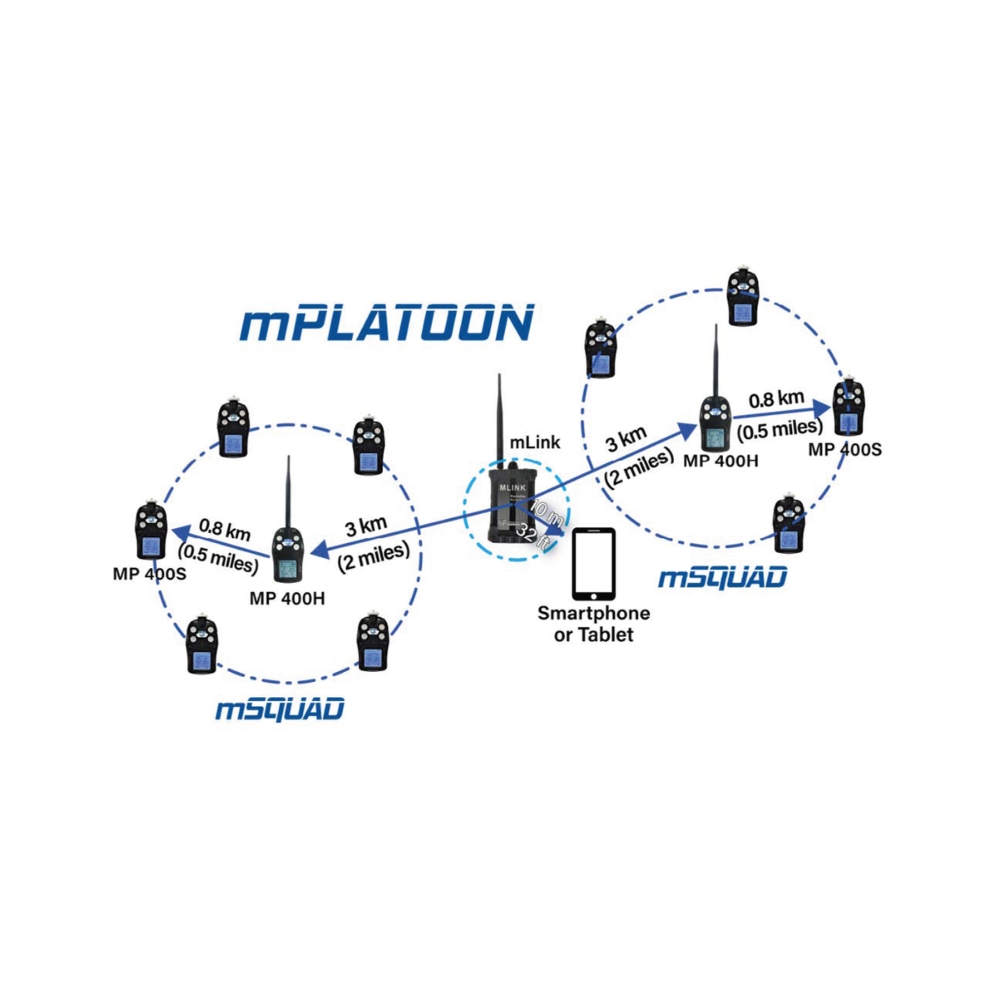
- Up to 3 km (2 miles) line-of-sight wireless range from mLink modem to MP400H head monitor
- When any one unit alarms, all units in the mSquad alarm simultaneously for immediate team-wide warning
- Man Down and Panic alarms broadcast wirelessly to the command station and all team monitors in real time
+ more in the Description tab below
Real Time Wireless Gas Detection for Teams
Many wireless gas detection systems need fixed infrastructure, such as Wi-Fi access points, repeaters or cellular coverage, before they can be used. The mPlatoon works differently. It uses its own self contained, battery powered radio network, so it’s fully mobile.
All the equipment needed for live team gas monitoring can be carried to site and running within minutes. Monitors can be worn on the body or mounted magnetically onto steel surfaces for quick placement.
How the System Fits Together
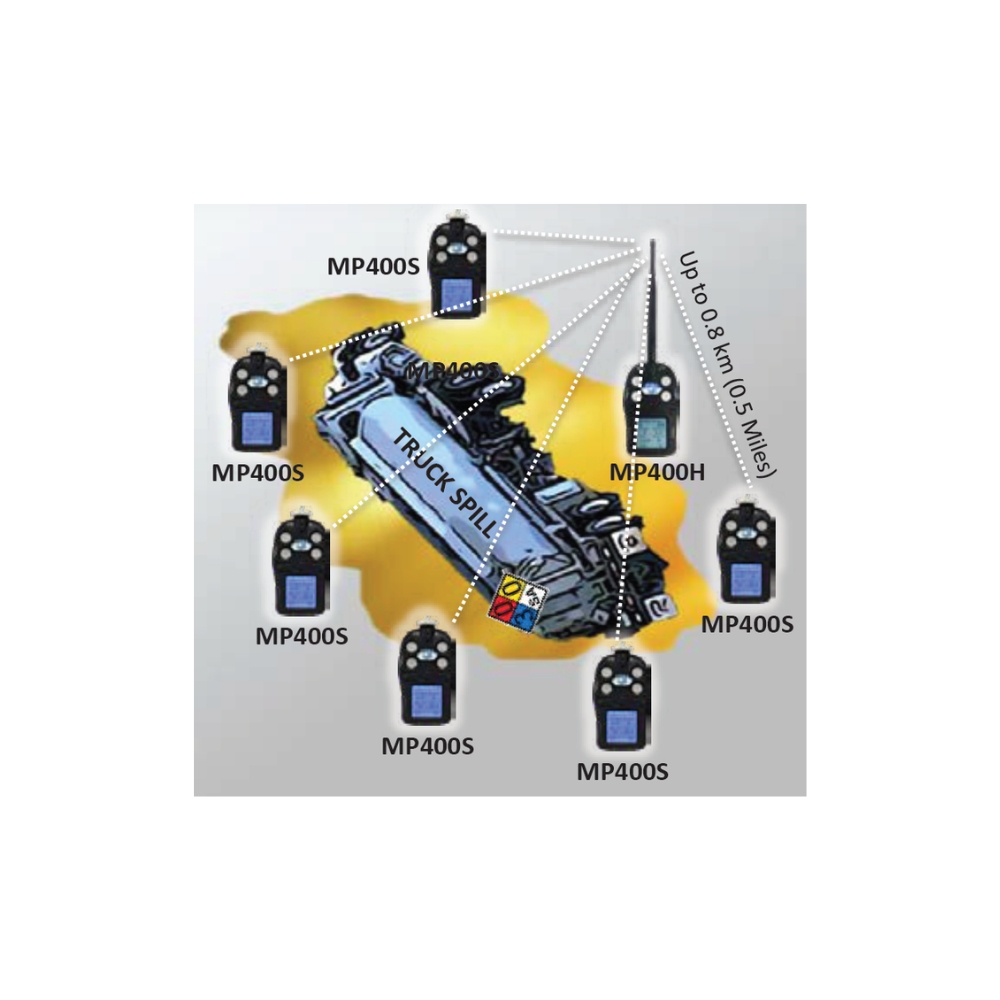
The system is built around POLI multi gas monitors. Each MP400H head monitor communicates with up to 7 MP400S soldier monitors within 0.8 km, forming an mSquad of up to 8 monitors.
For larger jobs, long range MP400HS monitors and the mLink modem connect teams to a command station up to 3 km away, line of sight. The mPower Suite platform handles up to 32 remote monitors. That makes the system just as suited to a small confined space entry team as to a plant turnaround or hazmat response.
Three Configurations
The mSquad is the entry level option. One MP400H head monitor shows the gas readings and alarm status of up to 7 soldier monitors. If any monitor goes into alarm, all monitors in the mSquad alarm too, so the whole team is warned without a command station. mSquad monitors are certified intrinsically safe for use in hazardous areas.
The mSquad Pro adds long range MP400HS monitors and the mLink modem, sending data to a command station outside the hazardous area up to 3 km away. It doesn’t include GPS mapping.
The mPlatoon is the full system. It adds GPS mapping through mPower Suite RT software, which shows each monitor’s position on a site map alongside live gas readings and alarm status. Alarms, Man Down events and Panic alarms are shown with their location. The mLink connects to a Windows PC within 10 m via Bluetooth, and mPower Suite covers up to 32 remote monitors for a one time licence fee, with no subscription.
Alarm Broadcast and Man Down
When any monitor in an mSquad detects a gas alarm, all monitors in that squad alarm for about one minute, alerting the whole team. The alarm continues on the affected unit and the head monitor until it’s cleared.
Man Down triggers when a worker stops moving, sending local and remote alarms. A manual Panic alarm lets workers raise an emergency alert at any time.
Compatible Monitors and Sensors
The system works with POLI MP400H, MP400S and MP400HS monitors. Each has four sensor slots, with combination sensors allowing up to six gas measurements.
Sensor options include electrochemical sensors for CO, H2S, NH3, HCN, Cl2, ClO2, NO, NO2, SO2, PH3, H2, ethylene oxide and methyl mercaptan, pellistor sensors for LEL, NDIR for CO2 and methane, and a PID for VOCs. That suits confined space entry, hazmat response, fire overhaul, turnarounds, marine and offshore work and venue protection.
Benefits
- Deployable in minutes with no fixed infrastructure required
- Scales from 8 monitors in a single mSquad to 32 monitors across multiple teams in a full mPlatoon deployment
- Up to 3 km (2 miles) line-of-sight wireless range from mLink modem to MP400H head monitor
- When any one unit alarms, all units in the mSquad alarm simultaneously for immediate team-wide warning
- Man Down and Panic alarms broadcast wirelessly to the command station and all team monitors in real time
- GPS mapping available in the mPlatoon configuration for real-time worker location on a site map
- Up to 2 days of continuous operation on one Li-ion charge, using low power sensor options
- Compatible with POLI MP400H, MP400S and MP400HS multi-gas monitors covering up to 6 simultaneous gases
- Works with mPower Suite mobile app via Bluetooth within 10 m for mLink control and monitoring
- One-time license fee for up to 32 monitors: no ongoing subscription cost
Wireless frequency
ISM band, 915 MHz (902 to 928 MHz). FCC Part 15 approved. Confirm Australian approval with Gastech
mSquad range
MP400H to MP400S: up to 0.8 km (0.5 miles) line-of-sight
mPlatoon range
mLink to MP400H: up to 3 km (2 miles) line-of-sight
Maximum monitors
Up to 8 per mSquad. Up to 32 total in mPlatoon (one-time license fee)
mLink to PC
Bluetooth within 10 m (33 ft)
Software
mPower Suite RT on Windows PC for mPlatoon. mPower Suite mobile app on smartphone or tablet for mSquad
GPS mapping
mPlatoon only
Battery runtime
8 to 36 hours depending on sensors and pump fitted. Up to 2 days with low power sensor options
Alarm broadcast
An alarm on any monitor is sent to all others in the mSquad
Man Down alarm
Yes. Local and remote wireless notification with location data
Panic alarm
Yes. Manual activation
Hazardous area rating
POLI monitors: Class I, Division 1, Groups A, B, C and D, T4. IECEx Ex ia IIC T4 Ga. mLink modem for the command station: for use outside the hazardous area
Compatible monitors
POLI MP400H (head), MP400S (soldier), MP400HS (long-range soldier)
Sensor options
Over 30 sensors from the POLI sensor library. Up to 6 gases per monitor using combination sensors
Ethylene Oxide (ETO)
C2H4O
Methyl Mercaptan (Methanethiol)
CH3SH
Methane
CH4
Chlorine
Cl2
Chlorine Dioxide
ClO2
Carbon Monoxide
CO
Carbon Dioxide
CO2
Hydrogen
H2
Hydrogen Sulphide
H2S
Hydrogen Cyanide
HCN
Combustible Gas
LEL
Ammonia
NH3
Nitric Oxide
NO
Nitrogen Dioxide
NO2
Oxygen
O2
Phosphine
PH3
Sulphur Dioxide
SO2
Volatile Organic Compounds
VOC
- Aviation & Transportation
- Chemical Manufacturing
- Confined Space & Compliance
- Energy (Oil & Gas)
- Landfill & Remediation
- Marine & Maritime
- Mining & Minerals
- Power Generation & BESS
- Technology & Semiconductor
- Water & Wastewater
The mSquad is the entry-level configuration with one head monitor and up to 7 soldier monitors within 0.5 miles, fully self-contained and intrinsically safe for use inside hazardous zones. The mSquad Pro extends this using long-range MP400HS monitors and the mLink modem to connect multiple mSquads to a command centre outside the hazardous zone up to 2 miles away, without GPS mapping. The mPlatoon adds GPS mapping through mPower Suite RT software, displaying each monitor's location and gas readings on a site map in real time. All three scale from the same underlying POLI wireless platform.
The system is designed for deployment in minutes with no fixed infrastructure required. All components are battery-powered and mobile. The mLink modem connects to a Windows PC or smartphone via Bluetooth, and the mPower Suite software launches a live map view immediately upon connection.
Yes. When any monitor in an mSquad detects a gas alarm, all monitors in that squad simultaneously enter alarm for approximately one minute, alerting the entire team to the hazard. The alarm continues on the affected unit and head monitor until cleared.
The full mPlatoon configuration handles up to 32 monitors on a one-time license fee with no ongoing subscription cost. Multiple mSquads of up to 8 monitors each are linked via the mLink modem to form the larger mPlatoon network.
Yes. The mSquad's POLI MP400H and MP400S monitors are certified intrinsically safe to Class I, Division 1 and IECEx Ex ia IIC T4 Ga. The mLink modem used at the command station is for use outside the hazardous area.
The POLI MP400H, MP400S and MP400HS monitors support the full POLI sensor library of over 30 options, including electrochemical sensors for common toxic gases, pellistor for LEL combustibles, NDIR for CO2 and methane, and PID for VOC detection. Combination sensors allow up to 6 gases per monitor across 4 sensor slots.
Trusted by









Contact Us
Can’t find what you’re looking for? Our team is happy to help.