
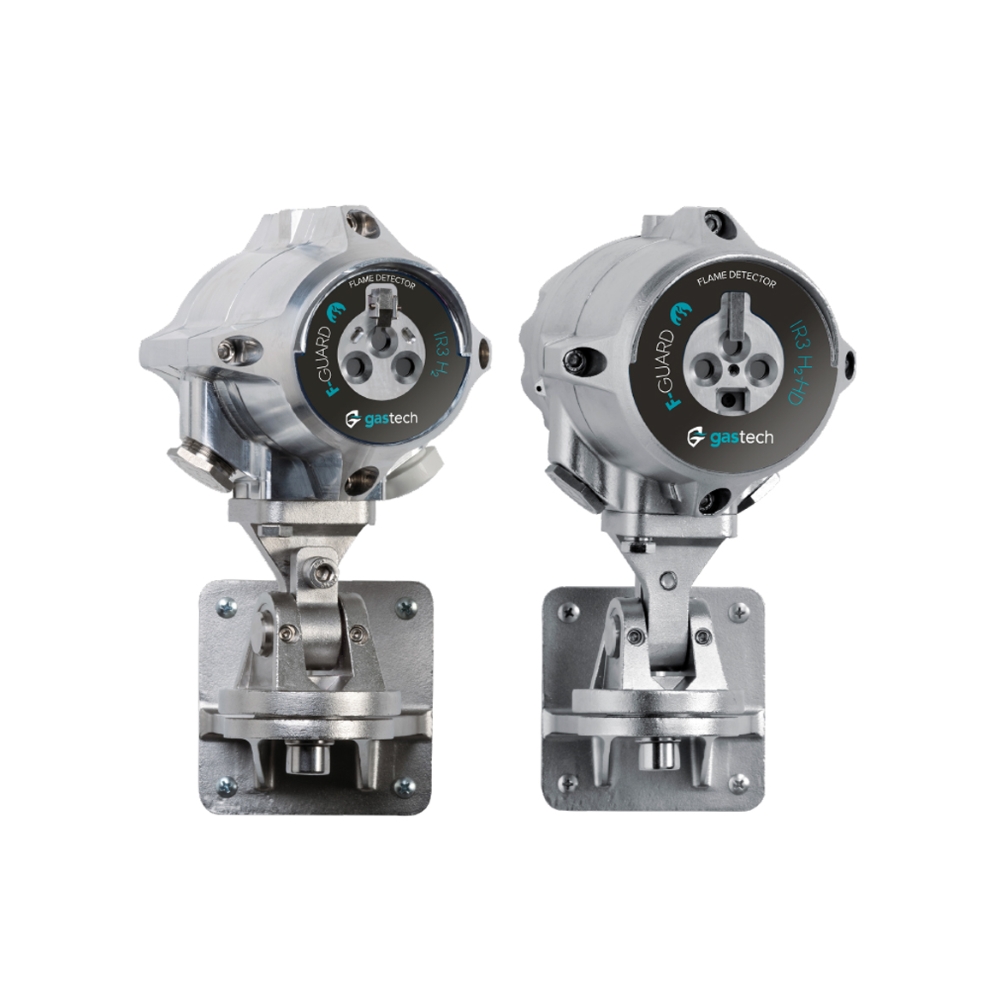
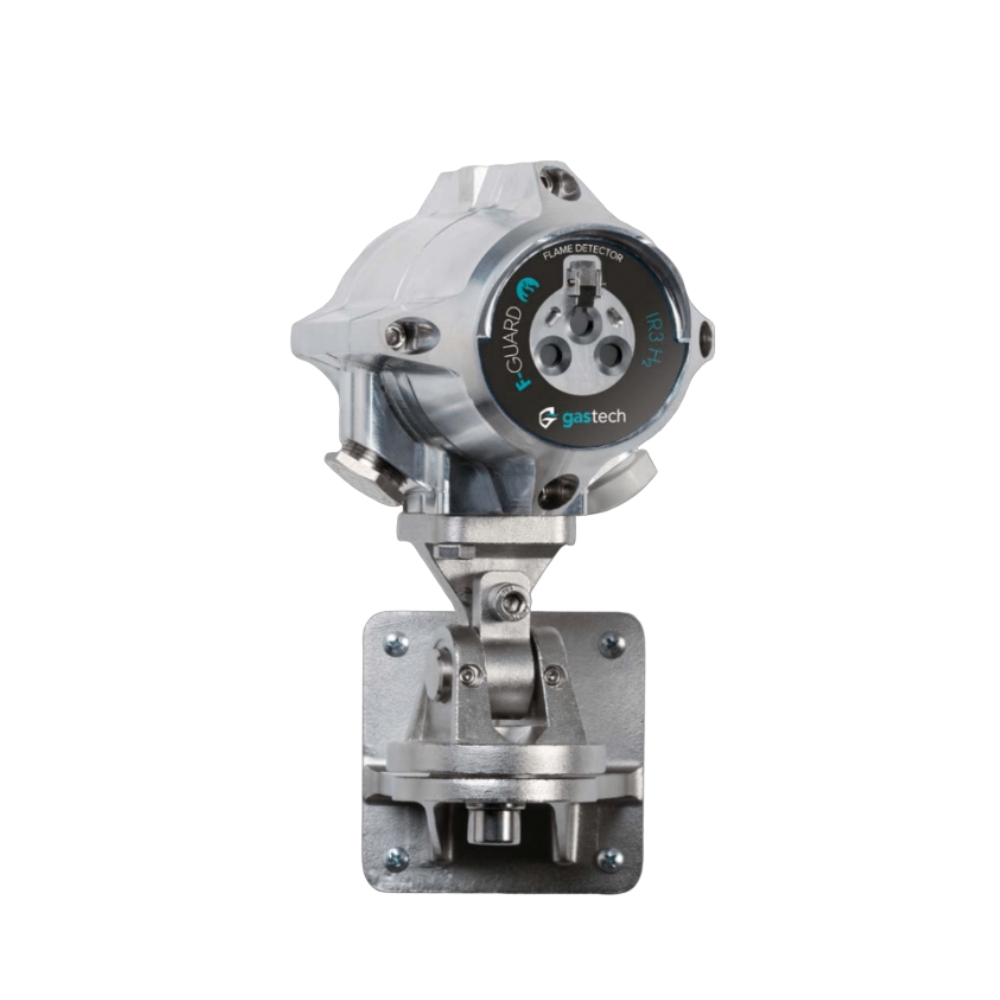
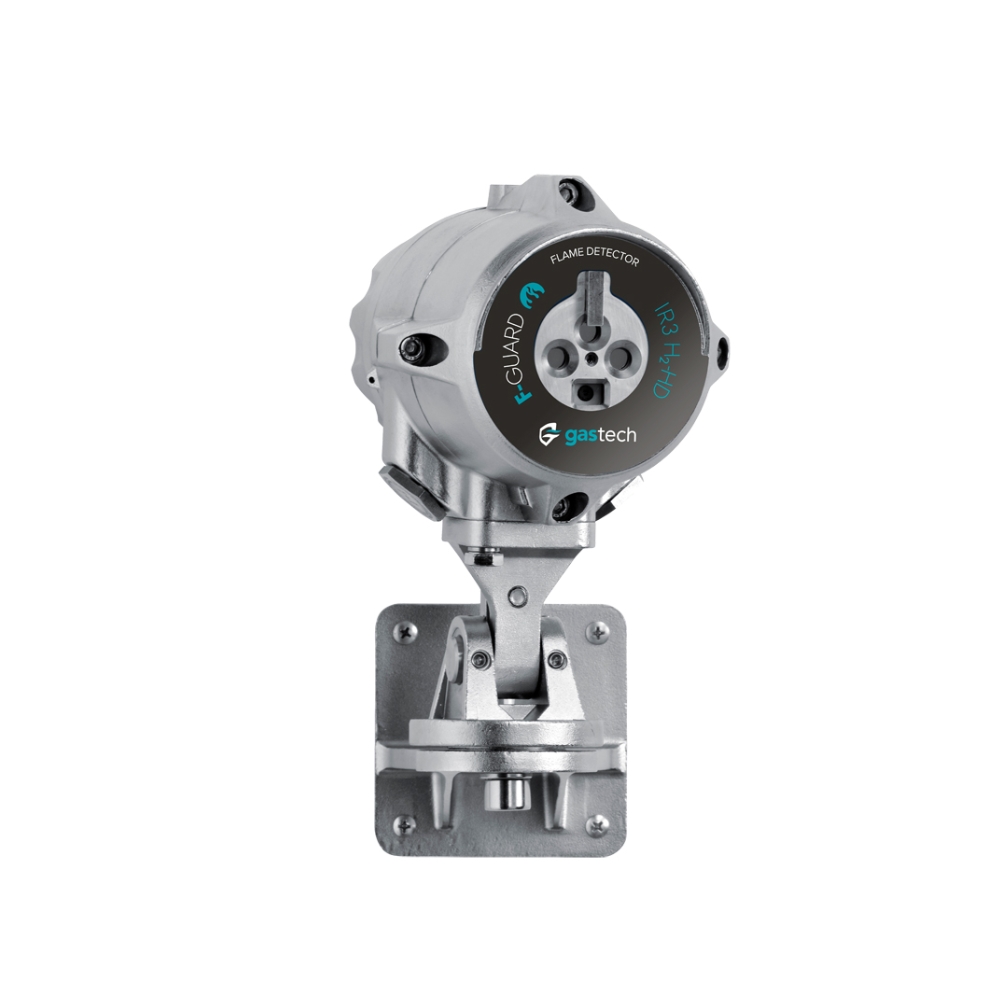
F-Guard IR3-H2
Hydrogen Flame Detector
The F-Guard IR3-H2 is built for a job most flame detectors can’t do. A hydrogen flame is close to invisible and produces no carbon dioxide, so a standard infrared detector looks straight at it and registers nothing. This detector is tuned for hydrogen and other energy transition fuels, reaching 30 metres and responding to a hydrogen fireball or explosion within 40 milliseconds. It’s FM and IECEx certified for hazardous areas, carries a 5 year warranty, and an HD variant adds live video with automatic event recording.
KEY BENEFITS
- Detects hydrogen fires, which infrared detectors tuned for hydrocarbons can't see at all
- Ultra fast mode responds to a hydrogen fireball or explosion within 40 milliseconds
- Detects a 0.8 metre hydrogen fire in 1.5 seconds out to 20 metres
- Sensitivity to 30 metres for a hydrogen fire
- FM and IECEx certified for hazardous areas, and usable in non classified areas as well
+ more in the Description tab below
Why Hydrogen Needs Its Own Detector
Hydrogen fires are dangerous for two reasons that have nothing to do with how much energy they release.
The first is that you can’t see them. A hydrogen flame gives off almost nothing in the visible spectrum, so a serious fire can be burning in daylight with no visual sign at all. People have walked into them.
The second is that most flame detectors can’t see them either. Infrared flame detection works by watching the band given off by hot carbon dioxide, which is what hydrocarbon combustion produces. Hydrogen contains no carbon. It burns to water vapour. So a detector watching the carbon dioxide band is looking for a signature a hydrogen fire never produces, and it will report clean air while a fire burns in front of it.
That isn’t a sensitivity limit you can solve by mounting the detector closer. The detector is blind to it.
The F-Guard IR3-H2 is built for hydrogen and other energy transition fires, including methane, syngas and methanol. It uses the same improved IR3 platform as the hydrocarbon detectors, tuned to the signature hydrogen actually produces.
Detection Times
| Fire and distance | Detection time |
|---|---|
| Hydrogen fireball or explosion | Within 40 milliseconds |
| 0.8 metre hydrogen fire, 0 to 20 m | 1.5 seconds |
| 0.8 metre hydrogen fire, 20 to 30 m | 4 seconds |
One thing to understand when comparing this with a hydrocarbon detector: the test fire here is a 0.8 metre hydrogen fire, not the 0.1 square metre n-heptane pan fire used to rate hydrocarbon detectors. The two figures can’t be compared directly, because you can’t test a hydrogen detector with heptane. Compare hydrogen detectors against hydrogen figures.
Forty Milliseconds
Hydrogen has a very wide flammable range and a very low ignition energy. A release is more likely to find an ignition source, and more likely to deflagrate than to burn steadily.
So the explosion response matters more here than with a hydrocarbon detector. Forty milliseconds is fast enough for the detector to sit in front of a suppression or isolation system that has to act during the event, rather than after it.
The detector handles the slower case as well, covering gradually developing fires alongside fast eruptions.
Two Variants
Replace the existing variant table with:
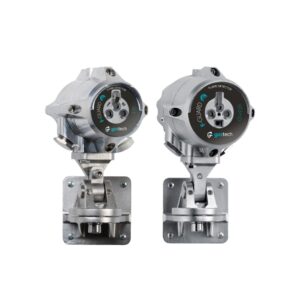
| F-Guard IR3-H2 | F-Guard IR3-H2-HD | |
|---|---|---|
| Hydrogen detection | Up to 30 m | Up to 30 m |
| Explosion response | 40 milliseconds | 40 milliseconds |
| HD video output | No | Yes, clear imaging of fire and personnel to 30 m |
| Automatic video recording | No | 1 minute before, up to 3 minutes after |
| Outputs | Relays, 0-20 mA, RS-485 Modbus | Relays, 0-20 mA, RS-485 Modbus, Ethernet video, composite video |
| Size and weight | Contact us for details | 200 x 130 x 130 mm, 4.4 kg |
The HD variant matters more with hydrogen than with hydrocarbon, precisely because the flame is invisible. A responder arriving at an alarm can’t see where the fire is or how far it has developed by looking through a window. Video from a detector that can see it is the only way to know before going in.
Choosing Between This and the F-Guard UV/IR
The F-Guard UV/IR also detects hydrogen, alongside hydrocarbon, metal and inorganic fires, and responds to an explosion in 5 milliseconds. It has an ultraviolet channel, which is what gives it that broad fuel coverage.
The F-Guard IR3-H2 is infrared only, tuned for hydrogen and other energy transition fuels. Without an ultraviolet channel, it doesn’t rely on UV for detection. But it still needs care around welding: the manual says arc welding shouldn’t be done within 5 metres of the detector, and the system should be inhibited during welding.
So the decision comes down to the fuels and the environment. Where hydrogen and energy transition fuels are the main risk, the IR3-H2 is built for it. Where the risk spans hydrocarbon, metal and inorganic fires as well, the UV/IR. Gastech engineering will work through it against your area.
Certified for Hazardous Areas
The detector holds FM approval for both the United States and Canada, along with IECEx certification and a EUTEC certificate. The HD version is certified flameproof (db), dust ignition protection (tb) and increased safety (eb), so it suits both gas and dust hazardous areas. The Standard version is certified flameproof (db) only, for gas hazardous areas.
IECEx matters for Australian installations, since hazardous areas here are assessed under the Zone system, and hydrogen facilities are classified almost by definition. The detector is certified for hazardous locations, and can also be used in areas that aren’t classified as hazardous.
Window Heater and Self Test
A window heater prevents condensation and icing forming on the optics. An obscured optical detector is blind, not degraded.
The built in test runs automatically and can be triggered manually, checking window cleanliness and the overall operation of the detector, including its optics, electronics and software.
As with all flame detectors, the self test confirms the detector can see. It doesn’t activate the alarm outputs. Proving the relays, the loop, the panel and any suppression release needs an external flame simulator, and Gastech supplies an F-Guard simulator kit matched to this detector.
Welding: Design Around It
The manual says arc welding shouldn’t be done within 5 metres of the detector, and recommends inhibiting the system during welding. Gas welding always needs an inhibit, because the torch is an actual fire.
That’s worth designing around, rather than discovering during a shutdown. Where maintenance welding is routine in the protected area, either position the detector outside that radius, or plan for it to be inhibited during hot work, with the inhibit recorded and reversed.
Built for Harsh Sites
The housing is 316 stainless steel, rated IP66 and IP67, and NEMA 250 4X and 6P. It operates from -55°C to +85°C. Both variants carry a 5 year warranty.
Where It’s Used
Hydrogen production and electrolyser halls. Hydrogen storage and compression. Hydrogen refuelling stations. Ammonia to hydrogen cracking. Renewable energy and power to gas facilities. Methanol and syngas facilities. Battery and fuel cell manufacturing. Semiconductor facilities using hydrogen. Refineries and petrochemical plant with hydrogen units. Laboratories and test cells. Gas turbine facilities running hydrogen blends. Battery rooms where hydrogen builds up during charging.
Benefits
- Detects hydrogen fires, which infrared detectors tuned for hydrocarbons can't see at all
- Ultra fast mode responds to a hydrogen fireball or explosion within 40 milliseconds
- Detects a 0.8 metre hydrogen fire in 1.5 seconds out to 20 metres
- Sensitivity to 30 metres for a hydrogen fire
- FM and IECEx certified for hazardous areas, and usable in non classified areas as well
- Also detects other energy transition fuels, including methane, syngas and methanol
- HD variant streams live video and records the event automatically
- Window heater prevents condensation and icing from obscuring the optics
- Data and event logger writes alarms, faults and events to non volatile memory
- 5 year warranty, and a tilt mounting bracket that fits above or below the detector
Detection principle
Improved triple infrared, tuned for hydrogen
Fires detected
Hydrogen and other energy transition fires, including methane, syngas and methanol
Detection distance
Up to 30 m
Detection time, 0 to 20 m
1.5 seconds for a 0.8 m hydrogen fire
Detection time, 20 to 30 m
4 seconds for a 0.8 m hydrogen fire
Ultra fast mode
Within 40 milliseconds for hydrogen fireballs or explosions
Operating conditions
All weather and light conditions
Window heater
Fitted, to prevent condensation and icing
Built in test
Automatic and manual, covering window cleanliness, optics, electronics and software
Data and event logger
Alarms, faults and other relevant events written to non volatile memory
Outputs
Alarm, fault and auxiliary relays, volt free, 2 A at 30 VDC. 0-20 mA (stepped), 3 and 4 wire, sink or source. RS-485 Modbus. HD variant adds Ethernet (IEEE 802.3) and composite video (NTSC or PAL)
Video output, HD variant
High definition, clear imaging of fire and personnel to 30 m
Video recording, HD variant
Automatic, 1 minute before and up to 3 minutes after alarm
Cable entries
Two, either side of the lower housing
Mounting
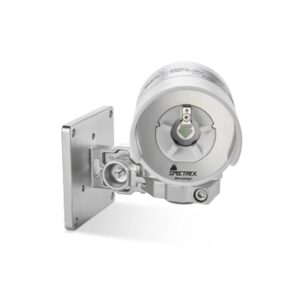
Tilt bracket, connectable above or below the detector
Certification
FM United States, FM Canada, IECEx, EUTEC. Standard version certified db for gas. HD version certified db, tb and eb for gas and dust.
Area classification
Certified for hazardous locations, and usable in non classified areas
Installation note
Arc welding shouldn't be performed within 5 m of the detector. Inhibit the system during welding. Gas welding always needs an inhibit
Operating temperature
-55°C to +85°C
Ingress protection
IP66 and IP67. NEMA 250 4X and 6P
Indication
Tri colour LED
Size and weight, HD variant
200 x 130 x 130 mm. Detector 4.4 kg, tilt mount 2.4 kg
Warranty
5 years
- Aviation & Transportation
- Chemical Manufacturing
- Energy (Oil & Gas)
- Marine & Maritime
- Medical & Healthcare
- Mining & Minerals
- Power Generation & BESS
- Technology & Semiconductor
- Water & Wastewater
Because hydrogen contains no carbon and burns to water vapour rather than carbon dioxide, so it never produces the signature an infrared detector is tuned to find.
Up to 30 metres, detecting a 0.8 metre hydrogen fire in 1.5 seconds out to 20 metres and in 4 seconds between 20 and 30 metres.
Within 40 milliseconds, which is what allows it to sit in front of a suppression or isolation system expected to act during the event.
It holds IECEx certification alongside FM approval for the United States and Canada, and IECEx is the scheme Australian hazardous areas are assessed under. The HD version is also certified for dust hazardous areas. The Standard version is certified for gas only.
Both detect hydrogen. Choose the IR3-H2 where hydrogen and other energy transition fuels are the main risk. Choose the UV/IR where the risk also includes hydrocarbon, metal or inorganic fires. Either way, plan for welding: the IR3-H2 manual says arc welding shouldn't be done within 5 metres, and the system should be inhibited during welding.
Live high definition video and automatic event recording, which matters more with hydrogen than hydrocarbon because the flame is invisible and a responder cannot otherwise see what they are approaching.
Trusted by









Contact Us
Can’t find what you’re looking for? Our team is happy to help.