
testo 350
Emissions and Combustion Analyser
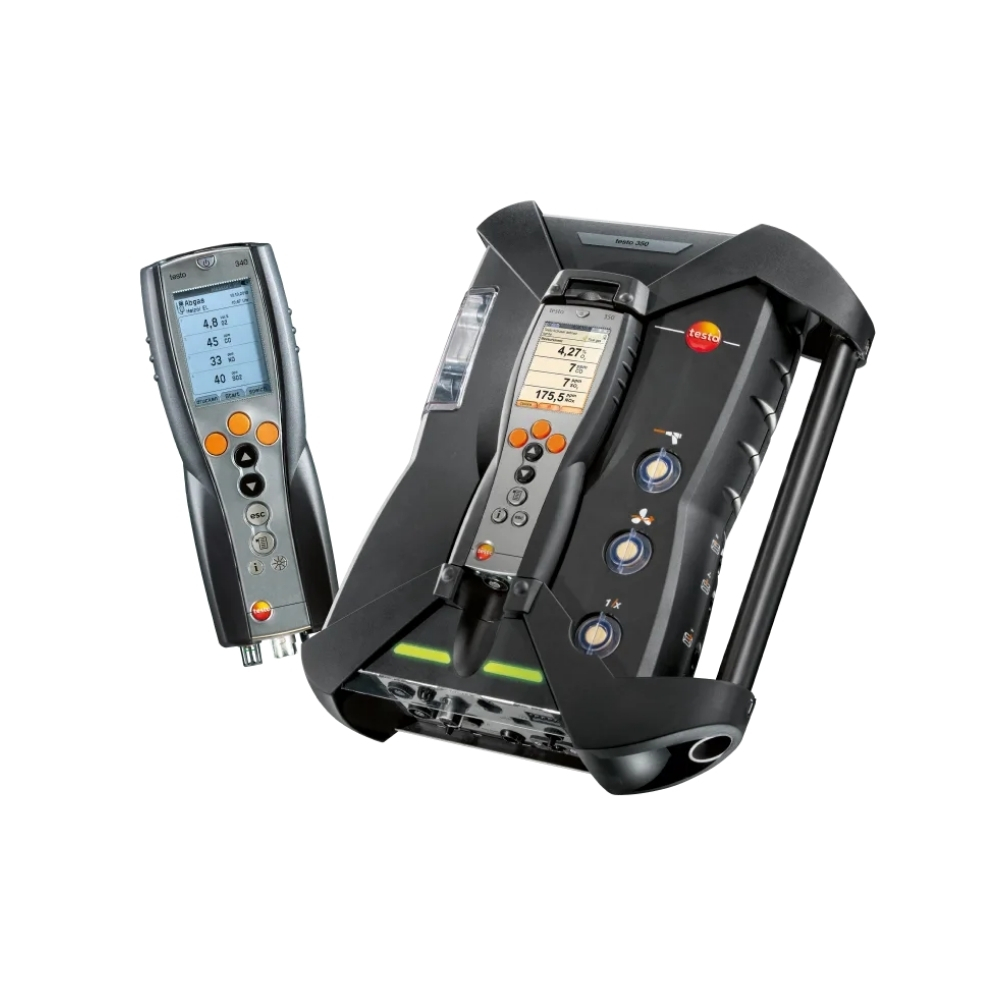
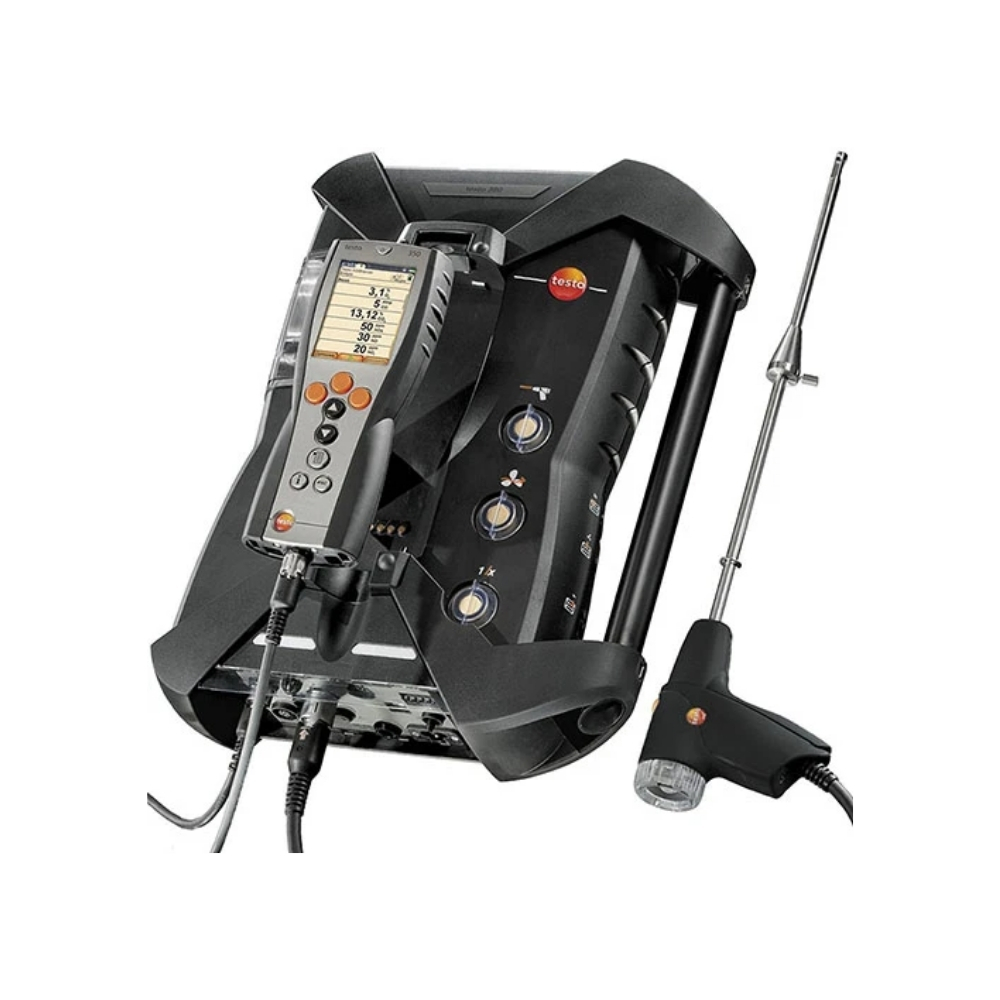
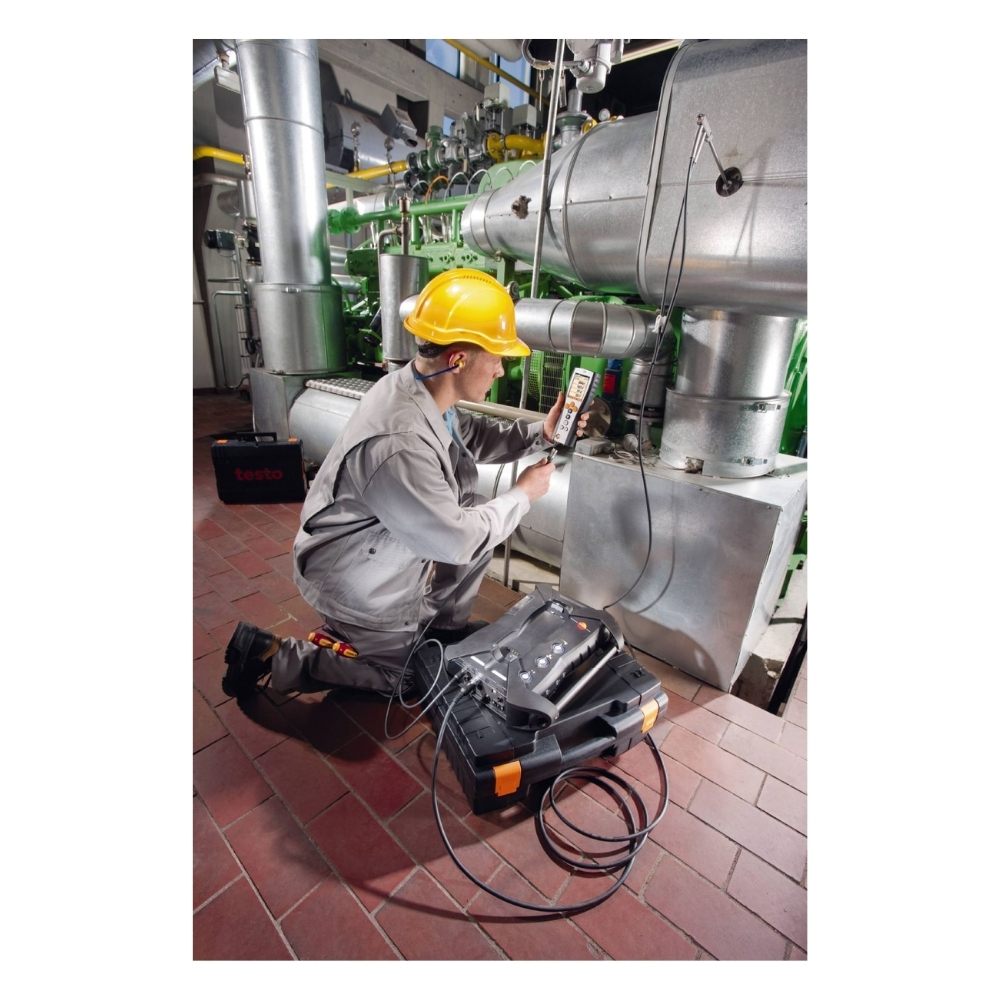
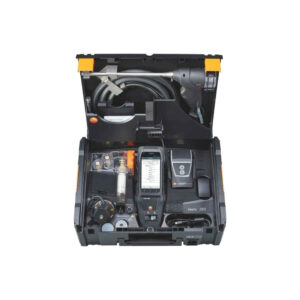
The Testo 350 is the industrial instrument in the Testo range, built for turbine tuning, engine exhaust, process plant and emissions compliance. The analyser box takes up to six sensors chosen from nine, so the instrument is configured for the application rather than sold as a fixed set. Automatic dilution handles concentrations that would saturate other analysers, and the bus function measures before and after an after-treatment system at the same time.
KEY BENEFITS
- Configure up to six sensors from nine options, so the instrument matches the application
- Measures NO and NO2 separately, which is required for an accurate real NOx figure on engine exhaust
- NOlow sensor resolves to 0.1 ppm for low NOx gas turbine work
- Automatic measurement range extension dilutes high concentrations rather than saturating
- Bus function measures before and after an after-treatment system simultaneously
+ more in the Description tab below
Two Boxes, One System
The testo 350 comes in two parts, and the split matters in practice.
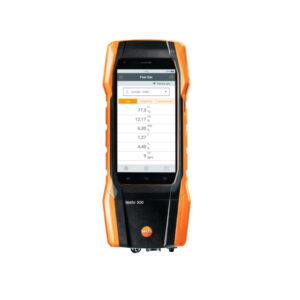
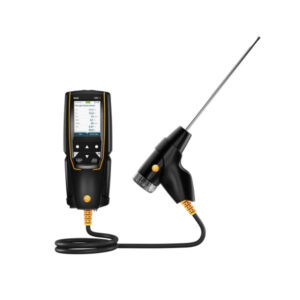
The analyser box holds the gas sensors, electronics, pumps and gas preparation. The control unit operates it, sets up the test, defines sites and locations, runs calibrations and displays results.
The useful result is that the analyser box can carry out tests and save results on its own, once programmed. So it can be left running a long term measurement at the stack while the operator is elsewhere. The two connect by the Testo data bus, with USB and Bluetooth also available.
Choose Six From Nine
The analyser box ships with an oxygen sensor and can take up to five more, for six in total.
The options are carbon monoxide (0 to 10,000 ppm), a low range hydrogen compensated carbon monoxide (0 to 500 ppm), carbon dioxide by infrared (0 to 50 vol %), nitric oxide (0 to 4,000 ppm), low range nitric oxide (0 to 300 ppm), nitrogen dioxide (0 to 500 ppm), sulphur dioxide (0 to 5,000 ppm), hydrogen sulphide (0 to 300 ppm) and hydrocarbons (CxHy). The gas sensors are pre calibrated and can be swapped or added on site without test gas, so a configuration can change as the work changes.
That flexibility is why this instrument suits contractors and service teams. One analyser covers industrial boilers, engine testing, turbine tuning and emissions monitoring, as long as it’s configured for the job in front of it.
Why NO and NO2 Are Measured Separately
This is the technical point that decides whether an engine emissions figure is worth anything.
NOx is the combination of nitric oxide and nitrogen dioxide. Many analysers measure NO alone and estimate NOx from it using an assumed ratio. That works where the ratio is stable. In engine exhaust it isn’t. The share of NO2 can be high and changes with load and after treatment, so a NOx figure based on NO alone can be wrong, by an amount that varies.
Measuring both separately gives a real NOx value rather than a calculated approximation. On engine set up, and on any work where the number goes into a compliance record, that matters.
Low NOx Turbines and 0.1 ppm
Emission measurements during inspection and adjustment of low NOx gas turbines have to be very accurate, because the concentrations are very low.
The NOlow sensor measures 0 to 300 ppm with 0.1 ppm resolution. Combined with the NO2 sensor, also at 0.1 ppm resolution, it gives the detail that work needs. A standard NO sensor with 1 ppm resolution isn’t enough when the reading itself is in single figures.
The Hose Problem
This is worth understanding, because it explains why measurements taken on different days sometimes disagree for no obvious reason.
Nitrogen dioxide and sulphur dioxide are absorptive gases. They stick to the inside of a sampling hose, so part of the gas drawn from the stack never reaches the sensor. How much depends on the hose material, its condition, its temperature and what it’s carried before.
The testo 350’s industrial engine probe uses a special hose for NO2 and SO2 measurement, and the integrated gas preparation conditions the sample before it reaches the sensors. For a monitoring programme rather than a one off test, consistent sampling is what makes a trend meaningful.
When the Reading Goes Off the Scale
Industrial combustion can produce concentrations that are extreme and unexpected. An analyser that saturates gives you nothing, and risks the sensor.
The testo 350’s measurement range extension dilutes the sample so measurement can continue. Individual dilution, with selectable factors of x2, x5, x10, x20 or x40, handles a single high channel. Dilution of all sensors at a factor of 5 handles the whole sample, extending CO measurement up to 50,000 ppm, for example. Fresh air or nitrogen can be used as the diluting gas.
The practical effect is that a test doesn’t have to be abandoned and repeated with different equipment, and a sensor isn’t exposed to a concentration that would shorten its life.
Measuring Before and After
The Testo data bus allows flue or exhaust gas to be measured at the same time before and after an exhaust after treatment system. Up to 16 analyser boxes can run on the bus, over up to 800 metres of cable, controlled from a PC or a control unit.
That’s how you show a scrubber, catalyst or SCR system is working. It can’t be done properly with one instrument taking two readings at different times, because the plant changes between them. Two analyser boxes sampling at the same moment give a removal efficiency, rather than two unrelated numbers.
Gas Preparation
An integrated thermoelectric (Peltier) chiller conditions the sample before it reaches the sensors. It’s recommended where flue gas humidity is high, and for long term measurements.
Water in a sample line affects readings and damages sensors. On a short test in dry gas, that can be tolerated. On a four hour measurement in a wet stack, it can’t, which is why the gas preparation option is usually specified with the special main gas pump for long term work.
Two Versions
| Version | Application |
|---|---|
| testo 350 | Industrial combustion, turbines, engines, process plant and emissions measurement |
| testo 350 Maritime | Marine engine emissions measurement. Talk to our Technical Consultants for details |
Built for the Environment
The analyser box housing is sealed, with built in impact protection, for use in harsh conditions. An opening on the underside gives easy access to the pumps and filters, the parts needing attention most often. Dirt filters can be changed without tools.
Modular flue gas probes come in 335 mm and 700 mm lengths, with thermocouples rated to 500°C or 1,000°C, and versions with a pre filter for dusty gas. A dedicated industrial engine probe covers engine exhaust work. The analyser box handles up to 20 g/m³ of dust in the flue gas.
Power is mains, 100 to 240 V AC, or the built in lithium ion battery, which runs for about 4.5 hours without the gas cooler and IR module. An 11 to 40 V DC input is available as an option for vehicle and site use.
Benefits
- Configure up to six sensors from nine options, so the instrument matches the application
- Measures NO and NO2 separately, which is required for an accurate real NOx figure on engine exhaust
- NOlow sensor resolves to 0.1 ppm for low NOx gas turbine work
- Automatic measurement range extension dilutes high concentrations rather than saturating
- Bus function measures before and after an after-treatment system simultaneously
- Special probe hose for NO2 and SO2 measurement on the industrial engine probe
- Integrated gas preparation chiller improves accuracy in humid gas and long term measurement
- Analyser box runs tests and stores results independently of the control unit
- Sealed housing with built in impact protection, and underside access to pumps and filters
- Modular probes for flue gas up to 1,000°C, plus a dedicated industrial engine probe
Instrument type
Portable industrial flue gas and emissions analysis system
Architecture
Analyser box holding sensors and electronics, plus separate control unit
Sensors
Oxygen fitted as standard, up to six total, field changeable
Sensor options
CO (0 to 10,000 ppm), COlow H2 compensated (0 to 500 ppm, 0.1 ppm resolution), CO2 IR (0 to 50 vol %), NO (0 to 4,000 ppm), NOlow (0 to 300 ppm, 0.1 ppm resolution), NO2 (0 to 500 ppm, 0.1 ppm resolution), SO2 (0 to 5,000 ppm), H2S (0 to 300 ppm), CxHy (methane 100 to 40,000 ppm, propane 100 to 21,000 ppm, butane 100 to 18,000 ppm)
Measurement range extension
Individual dilution with selectable factors x2, x5, x10, x20, x40. Dilution of all sensors at factor 5. Diluting gas: fresh air or nitrogen
Gas preparation
Integrated thermoelectric chiller, for humid gas and long term measurement
Long term measurement
Special main gas pump option
Pressure
Differential pressure measurement with automatic pressure zeroing for flow
Temperature
Thermocouple, with probe options to 500 or 1,000 degrees Celsius
Bus function
Simultaneous measurement before and after an after treatment system. Testo data bus supports up to 16 analyser boxes, up to 800 m of cable
Independent operation
Analyser box conducts tests and saves results without the control unit
Interfaces
USB 2.0, Bluetooth, Testo data bus, trigger input
Power
Mains 100 to 240 V AC, 50 to 60 Hz. Li-ion battery, about 4.5 hours (2.5 hours with gas cooler and IR module). Optional 11 to 40 V DC input
Housing
Sealed, with built in impact protection
Serviceability
Underside opening for access to pumps and filters. Field changeable sensors
Probes
Modular flue gas probes at 335 mm and 700 mm immersion depth, pre-filter versions available, plus a dedicated industrial engine probe with patented hose
Software
Testo easyEmission
Carbon Monoxide
CO
Carbon Dioxide
CO2
Hydrogen Sulphide
H2S
Nitric Oxide
NO
Nitrogen Dioxide
NO2
Oxygen
O2
Sulphur Dioxide
SO2
- Aviation & Transportation
- Carpark & HVAC
- Chemical Manufacturing
- Energy (Oil & Gas)
- Food & Beverage
- Landfill & Remediation
- Marine & Maritime
- Mining & Minerals
- Power Generation & BESS
- Technology & Semiconductor
- Water & Wastewater
Six in total. Oxygen is fitted as standard, and up to five more can be chosen from nine options: CO, COlow, CO2 (IR), NO, NOlow, NO2, SO2, H2S and CxHy.
Because the proportion of NO2 in engine exhaust is high and fluctuating, so a NOx figure calculated from NO alone can be substantially wrong. Measuring both gives a real NOx value.
The measurement range extension activates automatically and dilutes the sample, so measurement continues and the sensor is protected rather than saturated.
Nitrogen dioxide and sulphur dioxide stick to sampling hose surfaces, so part of the gas never reaches the sensor. The industrial engine probe uses a special hose for NO2 and SO2 measurement to reduce that.
Yes, using the Testo data bus with two analyser boxes sampling at the same moment. That gives a removal efficiency, since plant conditions change between two separate readings.
If the flue gas is humid or the measurement runs for a long period, yes. Water in the sample line affects readings and damages sensors.
Trusted by









Contact Us
Can’t find what you’re looking for? Our team is happy to help.