
ModRAE
Modular Gas Detection Platform
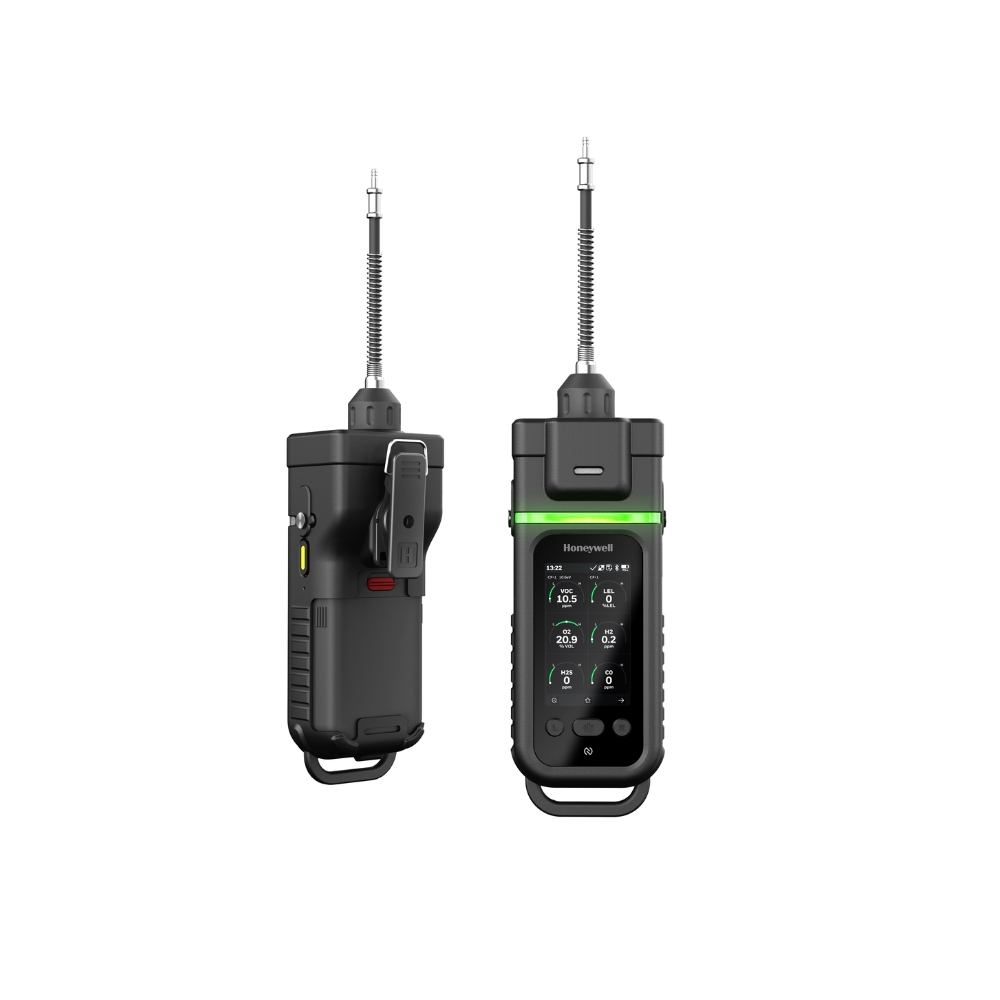
The ModRAE changes what it can detect by swapping a cartridge in the field. Seven photoionisation options cover everything from 100 ppm trace work to 20,000 ppm, including a 9.8 eV cartridge that reads benzene to 200 ppm. SensorRAE technology keeps each cartridge’s sensors biased while it’s out of the instrument, so a spare stays ready for use.
KEY BENEFITS
- Detection capability changes by swapping a cartridge rather than buying another instrument
- Seven photoionisation options from 100 ppm trace work up to 20,000 ppm
- Supports compound specific workflows such as benzene, alongside broad VOC screening
- SensorRAE keeps a cartridge ready while it's out of the instrument, so a spare is always ready to go
- Intrinsically safe to Zone 0, IECEx and ATEX, with RCM approval for Australia
+ more in the Description tab below
One Instrument, Reconfigured Rather Than Replaced
Most sites end up with several instruments, because detection requirements differ: a broad VOC screening tool, something for confined space entry, and something else when a specific compound has to be measured at trace level. That’s three instruments, three calibration schedules and three sets of training.
The ModRAE is built to collapse that. Sensing sits in interchangeable smart cartridges with a quick release, slide and lock design. So moving from broad screening to targeted measurement is a cartridge change, not a different instrument.
That matters beyond convenience. When a regulation changes, or a new hazard appears on site, the response is a cartridge, rather than a capital purchase and a retraining exercise.
Cartridges That Stay Ready
This is the detail that makes modularity work in practice, and it’s easy to miss.
Sensors need to be powered to stay in a ready state. Unpowered, they drift, and need time to stabilise once reconnected. So on many modular instruments, a spare sensor sitting in a drawer isn’t actually ready, and swapping one means waiting.
Each ModRAE cartridge has SensorRAE technology built in. A coin cell keeps the sensors biased while the cartridge is out of the instrument, so it can be stored, transported or sent for servicing, and stay ready throughout. Cartridges can also be calibrated and serviced independently, without taking the instrument apart.
The practical effect is that a spare cartridge in a vehicle or store is ready to use.
Seven Photoionisation Configurations
The photoionisation range is where this platform stands out, and the spread is wide.
| Lamp | Range (isobutylene) | Accuracy |
|---|---|---|
| 10.6 eV | 100 ppm | ±10% |
| 10.6 eV | 2,000 ppm | ±15% |
| 10.6 eV | 5,000 ppm | ±15% |
| 10.6 eV | 15,000 ppm | ±15% to 5,000 ppm, ±20% above |
| 10.6 eV | 20,000 ppm | ±15% to 5,000 ppm, ±20% above |
| 9.8 eV | 5,000 ppm, or 200 ppm benzene | ±15% to 1,000 ppm, ±20% above |
| 11.7 eV | 5,000 ppm | ±15% to 1,000 ppm, ±20% above |
The 100 ppm configuration resolves to 1 ppb at ±10%, which is trace level work. The 20,000 ppm configuration covers a fumigated space or a tank. Normally, those are different instruments.
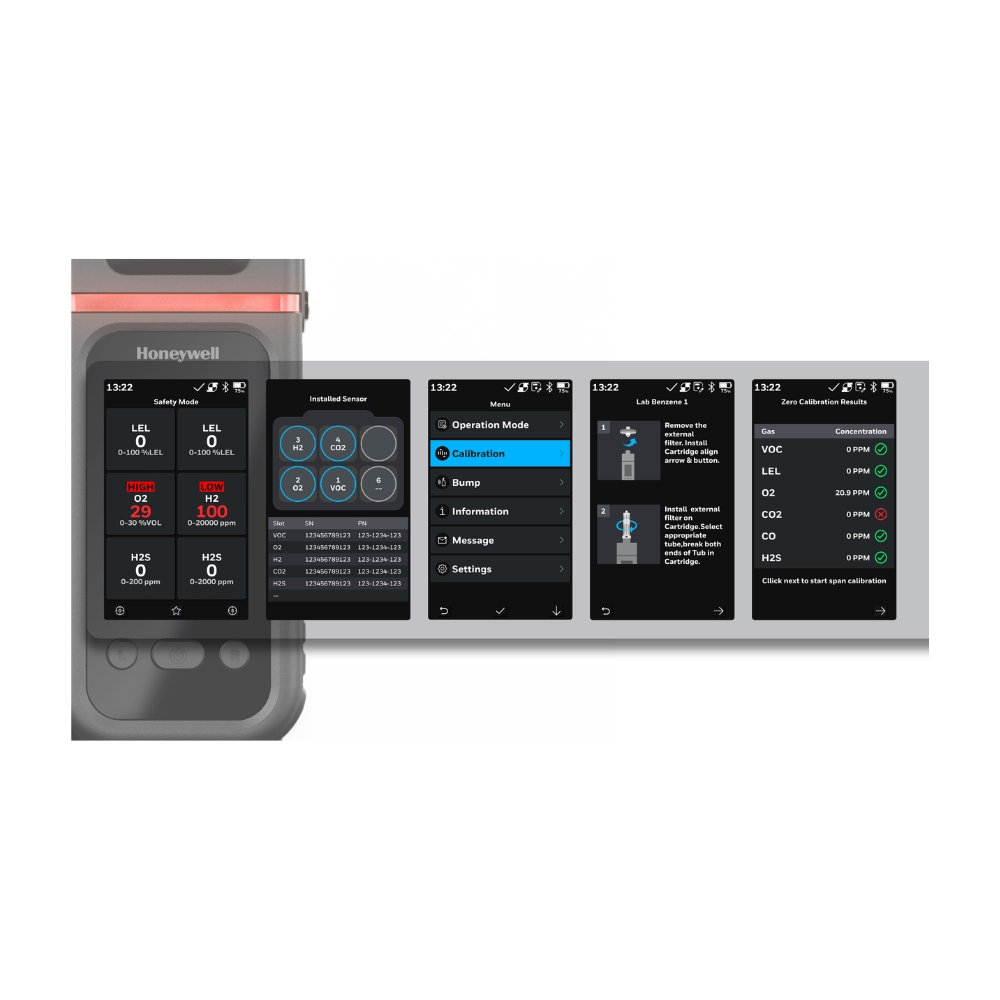
For benzene, the 9.8 eV cartridge reads up to 200 ppm benzene. ModRAE also supports compound specific workflows such as benzene measurement, with guided steps on screen and support for a separation tube cartridge. That gives a benzene reading, rather than a total VOC figure that happens to include it.
One honest point on the 11.7 eV lamp. It ionises compounds the others can’t, which is why it exists, but its rated life is 500 hours, against 10,000 for the rest, and it works from 0 to 60°C rather than -20°C. Treat it as a consumable, and budget for it as one.
Response time is 5 seconds to T90, and warm up is 5 seconds.
Two Modes for Two Different Jobs
Health Mode runs continuous monitoring with exposure metrics, so TWA and STEL build up across a shift. That’s the occupational hygiene job, where the question is what someone was exposed to over time.
Safety Mode is for targeted investigation. It offers survey detection with real time graphing and object measurement, for consistent, repeatable sampling, when the question is where the source is, rather than what the average was.
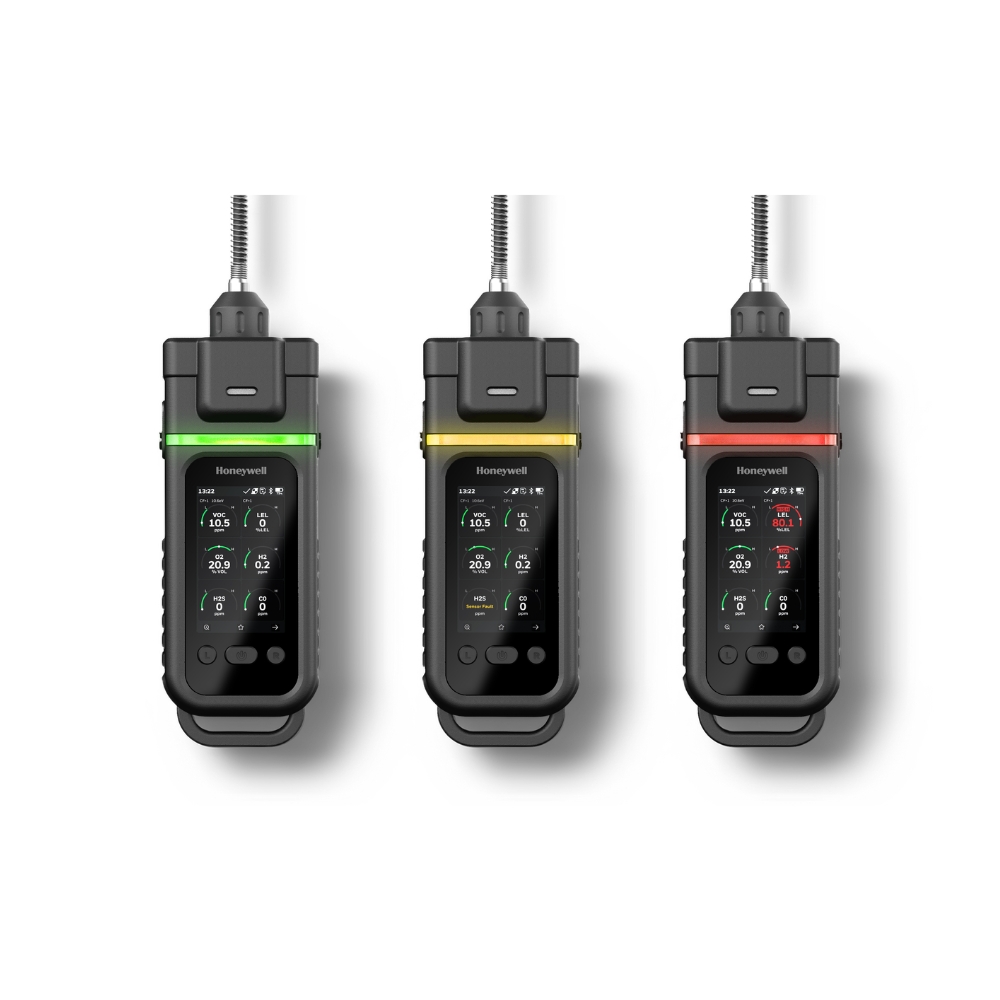
Having both as deliberate modes, with the interface changing to suit, is what makes one instrument credible across both jobs. A colour display with colour coded alerts and guided workflows helps keep operation consistent across users.
Built for the Conditions
The ModRAE is intrinsically safe to Ex ia IIC T4 Ga under IECEx and ATEX, which covers Zone 0. Its wireless approvals include RCM, so the radio side is compliant for Australia.
It’s rated IP66 and IP68 across the whole product, and operates from -20 to +60°C, at up to 95% humidity.
The pump is a serviceable diaphragm type, rated for more than 200 calendar weeks at 8 hours a day, five days a week, which is roughly four years. It’s replaceable, not a reason to retire the instrument. Flow is 300 mL per minute with automatic adjustment, a low flow warning below 210 and a blockage alarm below 150. It samples by pump, with or without a probe, and supports a separation tube cartridge and a water trap.
The maximum sampling distance is 45 metres, which covers pre entry sampling of a confined space from a safe position.
Alarms include a 95 dB buzzer at 30 cm, six LEDs (three each side), and two internal vibration motors. An accelerometer drives a man down alarm, and the configurable side button defaults to an SOS panic alarm.
Power and Data
The battery is a 5,700 mAh lithium polymer, giving more than 12 hours in the worst case configuration at room temperature, and more than 10 hours at -20°C. Worst case means continuous measurement, all sensors fitted including a photoionisation sensor and two high power sensors, the backlight on for outdoor use, and the wireless module running.
Charging takes under 5.5 hours between 10 and 30°C, and it suspends automatically outside 0 to 40°C, rather than damaging the cell. After two weeks in storage, about 80% of capacity remains.
Datalogging holds up to 180 days at a 60 second sampling interval, and the interval is adjustable from 1 second to 1 hour.
Connectivity, Fitted When You Need It
Bluetooth Low Energy and NFC are standard. Beyond that, a wireless module can be fitted in the field when you need it, so an upgrade doesn’t mean a new instrument.
The cellular module covers LTE across a wide range of bands, with a nano SIM, and adds GNSS positioning to about 10 metres, using GPS, Galileo, GLONASS, BeiDou and QZSS. The LoRa module runs on the 868 and 915 MHz bands, with a line of sight range of 600 metres to an external antenna, and the same GNSS capability.
The instrument integrates with Honeywell Safety Suite 2.0, for centralised device management and monitoring data.
Where It’s Used
Industrial hygiene and worker exposure monitoring. Soil remediation and contamination assessment. Fumigation monitoring and re entry decisions. Confined space entry. Hazmat and emergency response in unknown environments. Leak detection and evaluation. Perimeter and area monitoring. Benzene measurement in refining and petrochemical work. Any site where detection requirements change often enough that a fixed instrument becomes a constraint.
Benefits
- Detection capability changes by swapping a cartridge rather than buying another instrument
- Seven photoionisation options from 100 ppm trace work up to 20,000 ppm
- Supports compound specific workflows such as benzene, alongside broad VOC screening
- SensorRAE keeps a cartridge ready while it's out of the instrument, so a spare is always ready to go
- Intrinsically safe to Zone 0, IECEx and ATEX, with RCM approval for Australia
- IP66 and IP68, with a serviceable pump rated beyond 200 calendar weeks
- Samples from up to 45 metres away through a probe
- Health Mode tracks TWA and STEL continuously, Safety Mode surveys with live graphing
- More than 12 hours runtime in the worst case configuration, and over 10 at minus 20 degrees
- Cellular, WiFi, LoRa, Mesh, Bluetooth and NFC, with a wireless module fitted in the field
Product type
Modular portable gas detection platform with interchangeable smart cartridges
Dimensions
375 x 83 x 48 to 60 mm, including sensor probe and rubber boot
Weight
Approximately 975 g complete, including base unit, cartridge, strap, clip and boot
Ingress protection
IP66 and IP68, for the entire product
Operating temperature
Minus 20 to plus 60 °C
Operating pressure
80 to 120 kPa
Operating humidity
0 to approximately 95 percent RH
Display
89 mm TFT colour LCD, 480 x 800, white backlight
Controls
Three front panel buttons and one configurable side button
Side button options
Disabled, SOS panic alarm as default, zero calibration, or alarm view switching
Standard connectivity
Bluetooth Low Energy and NFC
Optional wireless
Cellular or LoRa module, field installable
Cellular
LTE FDD and TDD across a wide band range, nano SIM
LoRa
868 and 915 MHz ISM bands, 600 m line of sight to external antenna
Positioning
GPS, QZSS, Galileo, GLONASS and BeiDou, to approximately 10 m
Integrated sensors
Ambient light, flow, temperature, humidity and pressure, accelerometer
Audible alarm
95 dB at 300 mm
Visual alarm
Six LEDs, three each side
Vibration
Two internal motors
Flashlight
Two high intensity white LEDs
Sampling interval
1 second to 1 hour, 60 seconds by default
Datalog capacity
Up to 180 days at a 60 second interval
Pump
Serviceable diaphragm type, field replaceable
Pump flow
300 mL/min, automatically adjusted
Flow alarms
Low flow warning below 210 mL/min, blockage alarm below 150 mL/min
Pump life
More than 200 working weeks at 8 hours a day, five days a week
Maximum sampling distance
45 m
Sampling modes
Pump mode with or without a probe. Supports a single separation tube cartridge and a water trap.
Cartridge
Quick release slide and lock, field changeable
Sensor bias backup
SensorRAE. A coin cell keeps the sensors biased while the cartridge is out of the instrument
Battery
Lithium polymer, 3.7 V, 5,700 mAh
Wireless module size and weight
LoRa: 97 x 48 x 35.8 mm, about 75 g. Cellular: 97 x 62 x 40.4 mm, about 130 g
PID cartridge temperature range
-20 to +60°C. 11.7 eV: 0 to +60°C
PID lamp life
10,000 hours or more. 11.7 eV: 500 hours or more
PID response and warm up
T90 5 seconds or less at 100 ppm isobutylene. Ready in 5 seconds
Accuracy note
Accuracy applies from 20% to 150% of the lower calibration point
Battery charging indicators
2 LEDs on the battery sides
Runtime
More than 12 hours worst case at room temperature, more than 10 hours at minus 20 °C
Charging time
Under 5.5 hours at 10 to 30 °C, under 7.5 hours at 0 to 10 and 30 to 40 °C
Charging safety
Suspended automatically below 0 °C or above 40 °C
Battery standby
Approximately 80 percent capacity retained after two weeks storage
Hazardous area, IECEx
Ex ia IIC T4 Ga, minus 20 to 60 °C, certificate IECEx CSA 26.0034X
Hazardous area, ATEX
II 1G Ex ia IIC T4 Ga, minus 20 to 60 °C, certificate CSA Ne26ATEX1097X
Wireless approvals
RE-D, FCC ID, IC and RCM
EMC
EN 50270, 47CFR Part 15, ANSI C63.4, ICES-003
Compliance
RoHS, REACH, TSCA, Bluetooth SIG qualified
Software
Honeywell Safety Suite 2.0
Benzene
C6H6
Volatile Organic Compounds
VOC
- Aviation & Transportation
- Carpark & HVAC
- Chemical Manufacturing
- Confined Space & Compliance
- Energy (Oil & Gas)
- Food & Beverage
- Landfill & Remediation
- Marine & Maritime
- Medical & Healthcare
- Mining & Minerals
- Power Generation & BESS
- Technology & Semiconductor
- Water & Wastewater
Sensing sits in interchangeable smart cartridges with a quick release, slide and lock design. Changing what the instrument detects is a cartridge swap, not a new instrument.
Because sensors need power to stay ready. SensorRAE uses a coin cell to keep a cartridge's sensors biased while it's out of the instrument, so a spare stays ready to use.
Yes. The 9.8 eV cartridge reads up to 200 ppm benzene, and ModRAE supports compound specific benzene workflows, including a separation tube cartridge. Talk to our Technical Consultants about the right setup for your application.
It depends on the concentrations expected. The 100 ppm option resolves to 1 ppb at ±10 percent for trace work. The 20,000 ppm option suits a fumigated space. Talk to us with the application.
At least 500 hours, against 10,000 for the other lamps, and it works from 0 to 60°C. It ionises compounds the others can't, so it's worth having, but budget for it as a consumable.
Yes. It is intrinsically safe to Ex ia IIC T4 Ga under IECEx and ATEX, which covers Zone 0.
Trusted by









Contact Us
Can’t find what you’re looking for? Our team is happy to help.