
Monitor VOCs in Hazardous Areas with the Falco 2 11.7
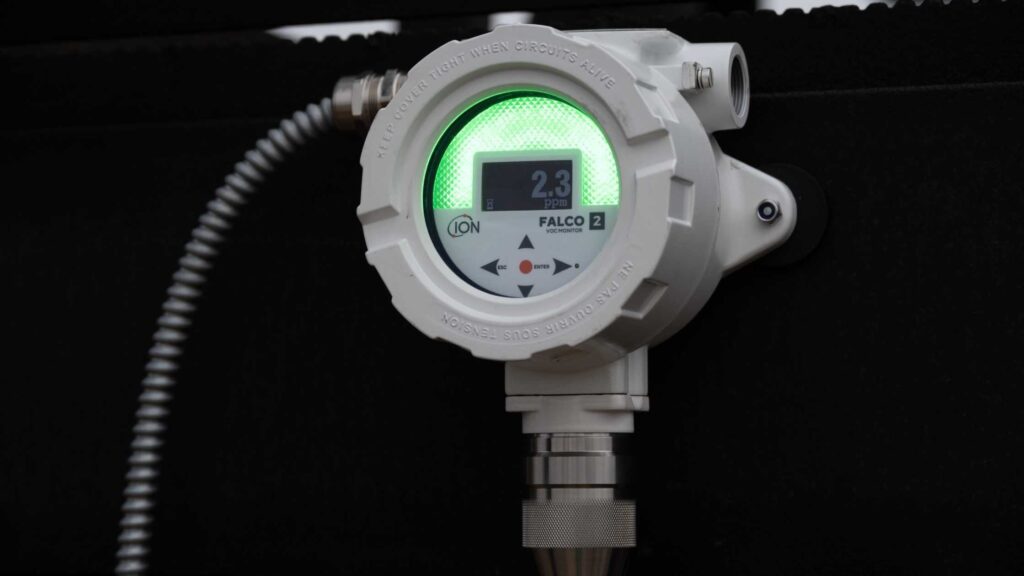
Volatile Organic Compounds (VOCs) are harmful gases released by fuels, solvents, paints, adhesives, and other industrial chemicals. In confined or hazardous environments, these gases can quickly reach dangerous levels, risking worker safety, damaging equipment, and causing costly operational downtime.
The Falco 2 11.7 from ION Science is a fixed gas detector built to monitor VOCs in tough industrial and mining environments. Using advanced PID technology and an 11.7 eV lamp, it delivers accurate, real-time data while reducing maintenance demands.
What Is the Falco 2 11.7?
The Falco 2 11.7 is a wall-mounted, fixed VOC gas detector designed for Zone 1 hazardous areas. It uses photoionisation detection (PID) and an 11.7 eV lamp to detect a broader range of VOCs, including lower-volatility and less easily ionised compounds.
Designed for harsh operating environments, it features Typhoon Technology to resist condensation, ExD housing for added durability, and a bright status indicator (green, amber, red) for instant alarm recognition. It supports flexible installation with Modbus and analogue outputs and can be serviced without shutting down your system.
Why Is It Important?
Whether in chemical manufacturing, mining, ports or tank farms, VOC exposure can lead to safety breaches, regulatory penalties, and health risks. The Falco 2 11.7 helps mitigate these risks by:
- Detecting harmful VOCs in real time
- Enabling fast action through visible alarms
- Supporting compliance in ATEX and IECEx rated hazardous areas
- Reducing false alarms in humid environments
It offers peace of mind that gas levels are continuously monitored with accuracy and reliability.
Key Features
- IP65 ingress protection, for harsh weather and environmental conditions
- Duty cycling, which improves efficiency and extends lamp life
- Robust ExD housing, easy to install and built to last
- Typhoon Technology, which prevents condensation inside the PID sensor
- ATEX and IECEx certification
- Live readings and bright red, amber and green status indicators
Where Can It Be Used?
The Falco 2 11.7 is ideal for use in:
- Chemical plants
- Mining and resources
- Oil & gas refineries
- Ports and terminals
- Wastewater treatment facilities
- Hazardous materials storage areas
Common Questions
What is a VOC gas sensor?
A VOC sensor detects volatile organic compounds, carbon-based chemicals that evaporate easily at room temperature. Some VOCs are harmless, but many can be toxic or flammable. PID sensors, like those used in the Falco 2 11.7, measure these compounds in real time.
What is a fixed gas detector?
A fixed gas detector is a permanently installed device that continuously monitors for gas hazards in a specific area. It’s used to automate safety alerts and support response systems.
Which sensors are effective at detecting VOCs?
Photoionisation detectors (PIDs) are highly effective due to their fast response times, wide detection range, and sensitivity. The Falco 2 11.7 uses an 11.7 eV lamp for detecting VOCs that lower-energy sensors might miss.
What does VOC mean on a gas meter?
It refers to the concentration of volatile organic compounds in the air. VOC levels are typically displayed in parts per million (ppm), helping determine when to take action.
A Smarter VOC Monitoring Solution
The Falco 2 11.7 offers rugged performance, wide-ranging VOC detection, and ease of maintenance, all tailored for high-risk environments. If you’re reviewing your current gas detection system or planning new infrastructure, the Falco 2 11.7 can help your site stay safe, compliant, and future-ready.
To learn more, visit our Falco 2 11.7 product page, or contact a Gastech Technical Consultant for expert advice. For guidance on VOC exposure limits and hazardous chemical management in Australian workplaces, refer to Safe Work Australia.