
Searchpoint Optima Plus
Fixed Infrared Gas Detector
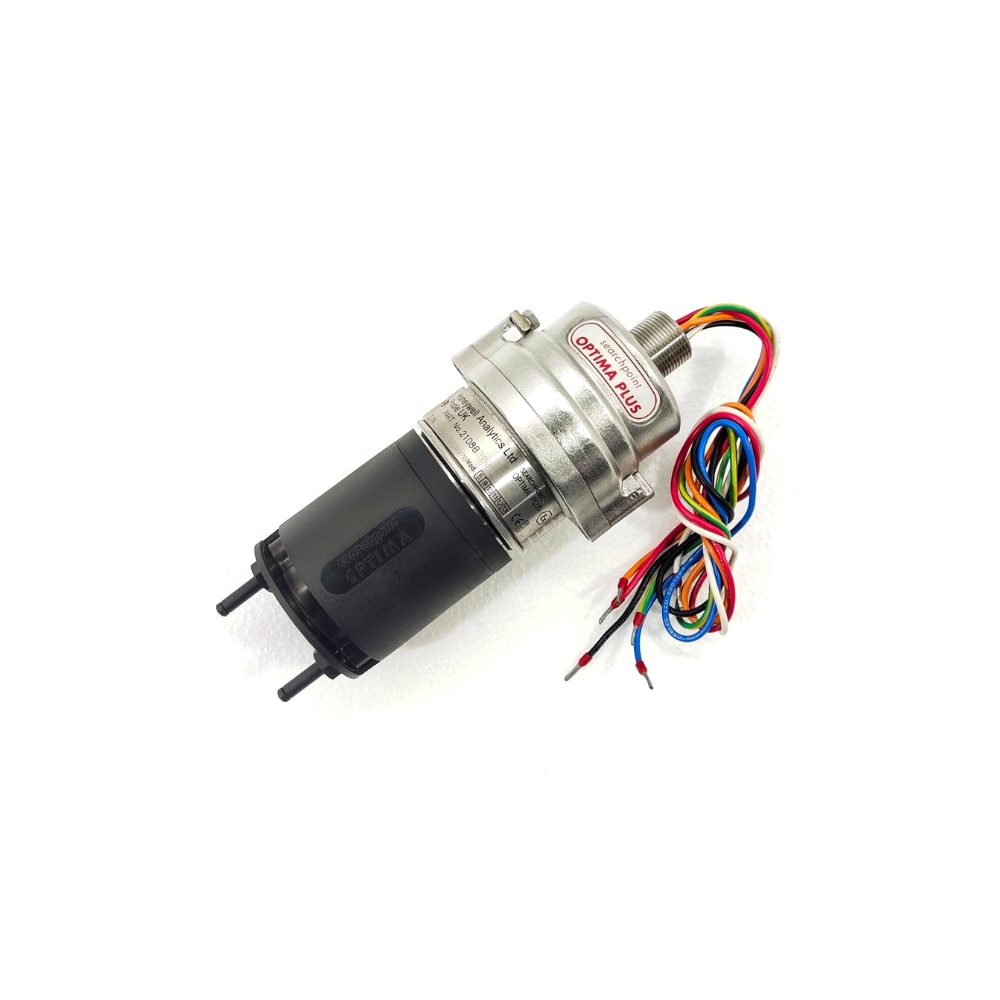
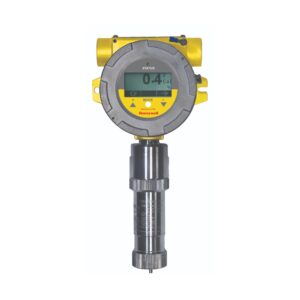
The Honeywell Searchpoint Optima Plus is a market leading point infrared hydrocarbon gas detector, built on Honeywell’s more than 40 years of infrared detection experience and over 100,000 units installed worldwide. Infrared detection gives fast response, failsafe operation, immunity to catalytic poisons and less routine maintenance than catalytic detectors. It measures 0 to 100% LEL across more than 100 hydrocarbon gas and vapour calibrations, operates from -40°C to +65°C, is rated IP66/67 and holds UL, CSA, ATEX, IECEx and SIL 2 certifications.
KEY BENEFITS
- Infrared detection eliminates the need for oxygen in the atmosphere to function, allowing reliable combustible gas monitoring in inert environments and oxygen-depleted spaces where catalytic sensors fail
- Immune to long-term component drift through self-compensating optics, maintaining accuracy without frequent recalibration
- Dynamic Heating Control prevents condensation on the optics for continuous reliable detection in high-humidity and outdoor environments
- Contaminated optics warning alerts operators before detection capability is compromised, protecting uptime and maintaining site protection
- Advanced false alarm rejection algorithms reduce nuisance alarms on sites where operational disruption is costly
+ more in the Description tab below
Proven Infrared Detection for Harsh Environments
Honeywell has more than 40 years of experience in designing, making, installing and maintaining point infrared gas detection, with over 100,000 infrared hydrocarbon detectors installed worldwide. The Searchpoint Optima Plus builds on that experience.
It’s used where catalytic bead poisons or inhibitors may be present, or where harsh conditions mean longer gaps between maintenance. Typical sites include offshore oil and gas platforms, FPSOs, tankers, onshore terminals, refineries, LNG and LPG bottling plants, gas compressor and metering stations, gas turbine power plants, and solvent printing and coating plants.
Why Infrared?
A catalytic bead sensor needs oxygen to work, and can be degraded by chemical poisons. Infrared detection measures gas by how much infrared light it absorbs, so there’s nothing to poison and no moving parts. The Optima Plus works in inert atmospheres, responds fast, and needs less routine maintenance than catalytic detectors, keeping ongoing costs low.
Failsafe by Design
The 4 channel, dual compensated optics block is the heart of the Optima Plus. It compensates for changes in the external environment and for long term drift in the infrared sources and detectors, giving a very stable optics design.
Advanced internal diagnostics and false alarm rejection algorithms mean there are no undetected failures. The contaminated optics warning alerts operators before dirty optics affect detection. Heated optics with Dynamic Heating Control prevent condensation, while saving power. Integral event logging records alarms and maintenance events.
Wide Calibration Range
The Optima Plus measures 0 to 100% LEL. More than 100 gas and vapour calibrations are available, from methane, propane, butane and ethylene through to a wide range of industrial solvents. Other measuring ranges and solvent calibrations are available for specialist applications. Talk to our Technical Consultants to confirm the right calibration for your gas.
Testing, Sampling and Accessories
An optional remote gassing cell, fitted at the factory, lets functional test gas be injected remotely to check the detector. For remote or hard to reach locations, the Optima Plus can be fitted with a flow housing and built into a single point or multi point gas sampling system.
Sunshade and deluge protection and standard weather protection are supplied as standard. Optional accessories include a storm baffle for high wind sites, a dust barrier, a gassing cover, a calibration cap and a duct mounting kit.
Communications and Integration
The 4-20 mA output is autosensing sink or source, compatible with standard controllers and alarm panels. Optional HART 7 over 4-20 mA adds diagnostics and configuration, and optional multidrop Modbus RS485 is available through the DX100(M).
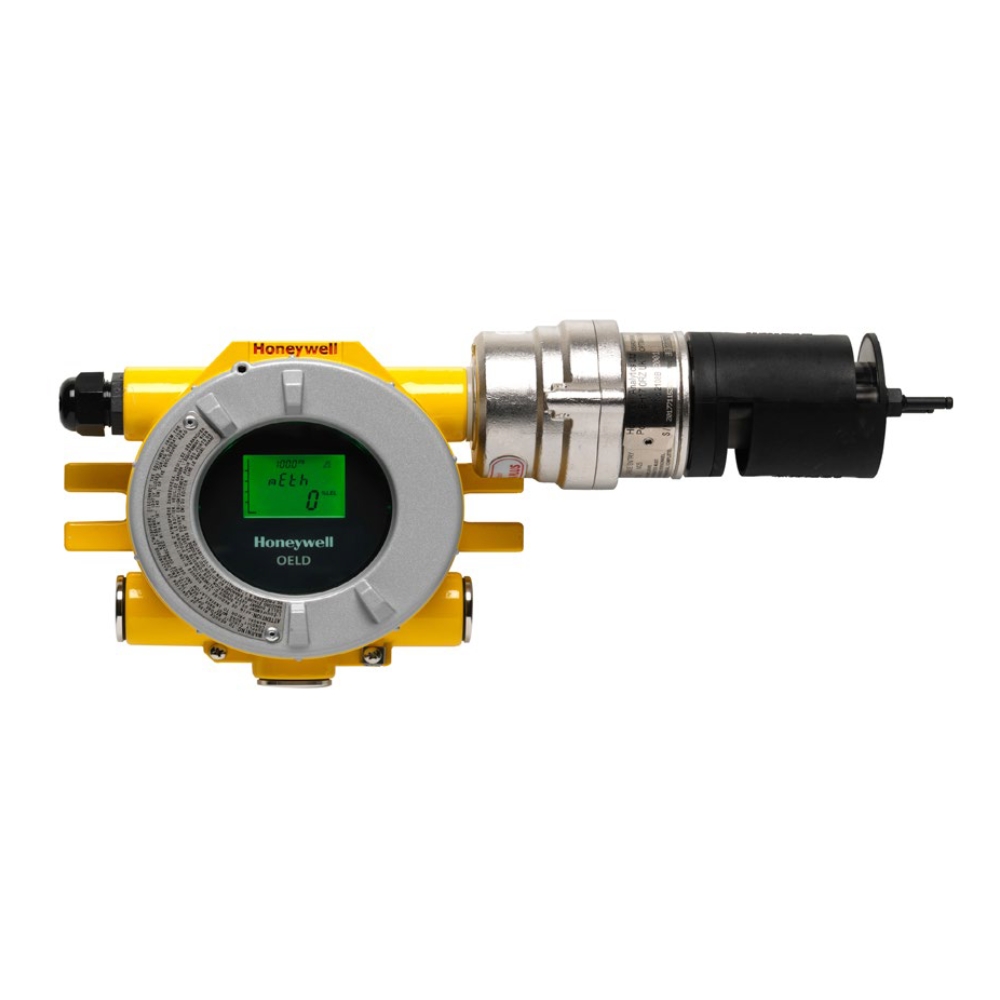
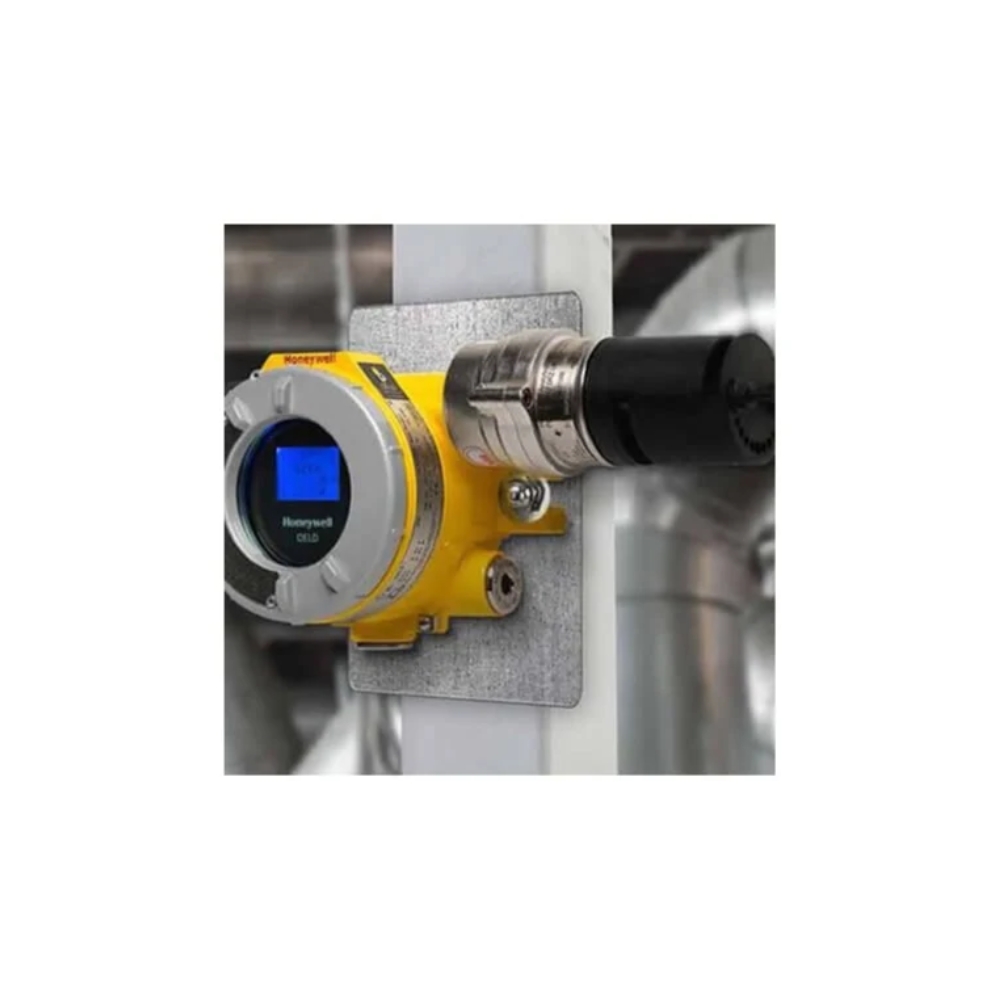
For a local display and non intrusive magnetic access, the Optima Plus pairs with the XNX Universal Transmitter. The certified SHC-1 handheld interrogator handles reconfiguration and fault diagnostics in hazardous areas.
Benefits
- Infrared detection eliminates the need for oxygen in the atmosphere to function, allowing reliable combustible gas monitoring in inert environments and oxygen-depleted spaces where catalytic sensors fail
- Immune to long-term component drift through self-compensating optics, maintaining accuracy without frequent recalibration
- Dynamic Heating Control prevents condensation on the optics for continuous reliable detection in high-humidity and outdoor environments
- Contaminated optics warning alerts operators before detection capability is compromised, protecting uptime and maintaining site protection
- Advanced false alarm rejection algorithms reduce nuisance alarms on sites where operational disruption is costly
- Integral event logging provides a built-in audit trail of alarm and maintenance events without requiring additional hardware
- SIL2 functional safety certification confirms suitability for use in safety instrumented systems at the highest levels of process safety integrity
- 3-year warranty from date of shipment
- Optional remote gassing cell allows functional gas testing without accessing the detector
- Sunshade and deluge protection supplied as standard for harsh outdoor sites
Detection principle
Point infrared
Measuring range
0 to 100% LEL. Wide selection of hydrocarbon gas and vapour calibrations available
Signal output
4-20 mA autosensing sink or source
Signal levels
Inhibit: 1 to 3 mA (default 2 mA). Warning: 0 to 6 mA (default 3 mA). Fault: 0 mA (HART units adjustable to 1 mA). Over range: 20 to 21.5 mA (default 21 mA)
Digital output
Optional Modbus RS485 via DX100(M). Optional HART over 4-20 mA (HART Version 7)
Power supply
18 to 32 VDC (24 VDC nominal). Less than 4.5 W maximum
Weight
1.6 kg
Material
316 stainless steel
Response time
T50 under 3 seconds. T90 under 4 seconds (methane)
Accuracy (hydrocarbon)
Baseline less than ±1% FSD. At 50% FSD less than ±2% FSD
Accuracy (ethylene)
Baseline less than ±2% FSD. At 50% FSD less than ±3% FSD
Repeatability
Less than ±2% FSD at 50% FSD
Linearity
Less than 5% FSD
Drift over temperature
Baseline less than ±2% FSD. At 50% FSD: methane less than ±0.131% FSD per °C. Ethylene less than ±0.078% FSD per °C
Operating temperature
-40°C to +65°C certified
IP rating
IP66/67
Diagnostics
Via certified handheld interrogator or optional HART communications
Safety certifications
UL/CSA: Class I, Division 1, Groups B, C and D (-40°C to +65°C). IECEx: Ex d IIC tb IIIC T86°C (Ta -40°C to +55°C) or T96°C (Ta -40°C to +65°C), IP66/67. ATEX: BAS99ATEX2259X, II 2 GD Ex d IIC Gb Ex tb IIIC Db, T96°C (Ta -40°C to +65°C) or T86°C (Ta -40°C to +55°C), IP66/67
Performance approvals
CSA C22.2 152. FM ANSI/ISA-12.13.01. EN 60079-29-1
Functional safety
IEC 61508 Safety Integrity Level 2
EMC compliance
EN 50270:2006
Software
EN 50271:2010
Warranty
3 years from date of shipment
Ethylene (Ethene)
C2H4
Propane
C3H8
Butane
C4H10
Methane
CH4
- Aviation & Transportation
- Chemical Manufacturing
- Energy (Oil & Gas)
- Landfill & Remediation
- Marine & Maritime
- Mining & Minerals
- Power Generation & BESS
- Technology & Semiconductor
- Water & Wastewater
Catalytic bead sensors require oxygen to function, degrade over time through chemical poisoning and are susceptible to long-term drift. Infrared detection has no moving parts, no active chemical components to poison and no drift mechanism. The result is a longer service life, less routine maintenance, reliable operation in inert atmospheres and inherently failsafe behaviour. For critical fixed gas detection applications, infrared is the preferred technology.
The Optima Plus measures 0 to 100% LEL across more than 100 hydrocarbon gas and vapour calibrations, including methane, propane, butane, ethylene and a wide range of industrial solvents. It can't detect hydrogen, which doesn't absorb infrared light. Talk to our Technical Consultants to confirm the calibration for your gas.
The Optima Plus monitors the clarity of its own optics continuously. If contamination reaches a level that would compromise detection capability, it reports a contaminated optics warning to the control system before the gas reading is affected. This allows maintenance to be scheduled before site protection is impacted.
Yes. Unlike catalytic bead sensors that require a minimum oxygen concentration to function, infrared detection does not rely on oxygen. The Optima Plus maintains accurate combustible gas detection in inert atmospheres, nitrogen-blanketed systems and other oxygen-depleted environments.
The Optima Plus holds IEC 61508 Safety Integrity Level 2 functional safety certification, confirming it is suitable for use as a component in safety instrumented systems at SIL2. This is required documentation for formal functional safety assessments in process industries.
Trusted by









Contact Us
Can’t find what you’re looking for? Our team is happy to help.