
C-Guard
Carpark and HVAC Gas Detector
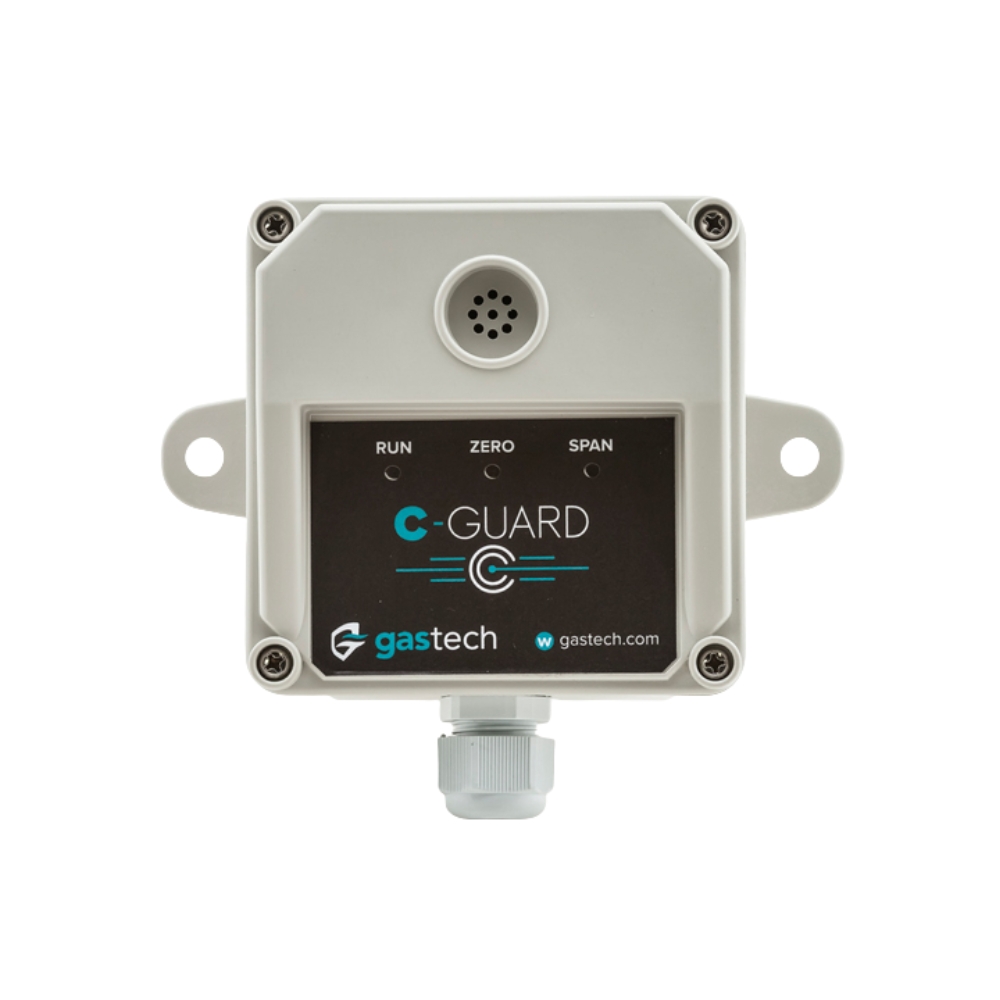
The C-Guard is Gastech’s own detector for commercial carpark and HVAC ventilation control, monitoring carbon monoxide and nitrogen dioxide. It calibrates in 45 seconds by one person with no tools, and an AS 1668.2 auto test mode drives the vent fans for five minutes without using any test gas. The housing is vandal resistant, IP65 and grey to blend into carpark walls. One board covers the gases, ranges and sensor styles across the range, so a building manager holds one spare rather than several.
KEY BENEFITS
- Calibrates in 45 seconds by one person, with no screwdrivers, meters or programming tools
- AS 1668.2 auto test drives vent fans and alarms for five minutes without using test gas
- Output locks at zero during calibration, so calibration causes no false alarms or fan starts
- One board covers the gases, ranges and sensor styles, cutting spares to a single card
- Vandal resistant high impact housing, grey to blend into carpark walls
+ more in the Description tab below
The Real Cost of a Carpark System Isn’t the Detectors
A multi level carpark might have twenty detection points. You buy them once, then service them for the next fifteen years.
That service cost has two parts. Labour, which usually means two people, a ladder and a screwdriver at each head. And test gas, which is used up at each point and isn’t cheap.
The C-Guard was designed to cut both. Calibration takes 45 seconds and one person, and the system itself can be tested without any test gas at all.
Testing the Ventilation Without Test Gas
This is the feature worth understanding.
The C-Guard has a zero gas activation mode. Enter it, and the detector raises its output to 12 mA and holds it there for five minutes. That’s a mid scale signal, which the control system reads as a real gas level.
So the fans start, the alarms sound and the dampers move. The whole ventilation response runs exactly as it would in a real event, for long enough to check it properly. There’s no gas cylinder, no regulator and no consumable.
For a building manager who needs to show that a carpark ventilation system works to AS 1668.2, that turns a gas dependent job into a push button one. Across twenty points, it removes test gas from the maintenance budget.
Calibration in 45 Seconds, By One Person
Calibration is non intrusive, with no screwdrivers, no meters, no special programming tools and no laptop.
Zero stability logic handles drift correction, and the whole cycle takes 45 seconds. One technician can complete a head without a second person reading a meter at the panel.
On a twenty point carpark, moving from two people to one, and from several minutes to 45 seconds per head, changes what a service visit costs.
No False Alarms While You Calibrate
Calibrating a live detector normally means someone at the panel putting the point into inhibit, or accepting that the fans will start and the alarms will sound while you work.
The C-Guard locks its output at the zero gas reading until calibration is finished, so nothing downstream reacts. Fail safe logic keeps monitoring running in the background, so the point isn’t simply switched off while the work happens.
One Board for the Whole Fleet
The design philosophy is one card to suit all applications.
Many Gastech customers work in remote locations, and holding stock for several detector types and ranges is expensive and hard to manage. So the C-Guard card is configurable across gases, ranges and sensor styles, with enough program memory to hold the detection logic for each gas type.
In practice, a site holds one spare card rather than one for each variant. Cards are easy to upgrade as requirements change, and there’s spare capacity on the board for future features. Sensors are 4 series plug in units, shared with the rest of the Gastech fixed range.
A Housing Built for a Carpark
Carparks are hard on equipment. Vehicles clip things, people interfere with things, ramps get wet and washdown happens.
The enclosure is high impact, UV stable, chemically resistant nylon, rated IP65 and designed to be vandal proof. The sensor is protected inside it. The housing is grey, so it blends into carpark walls rather than drawing attention.
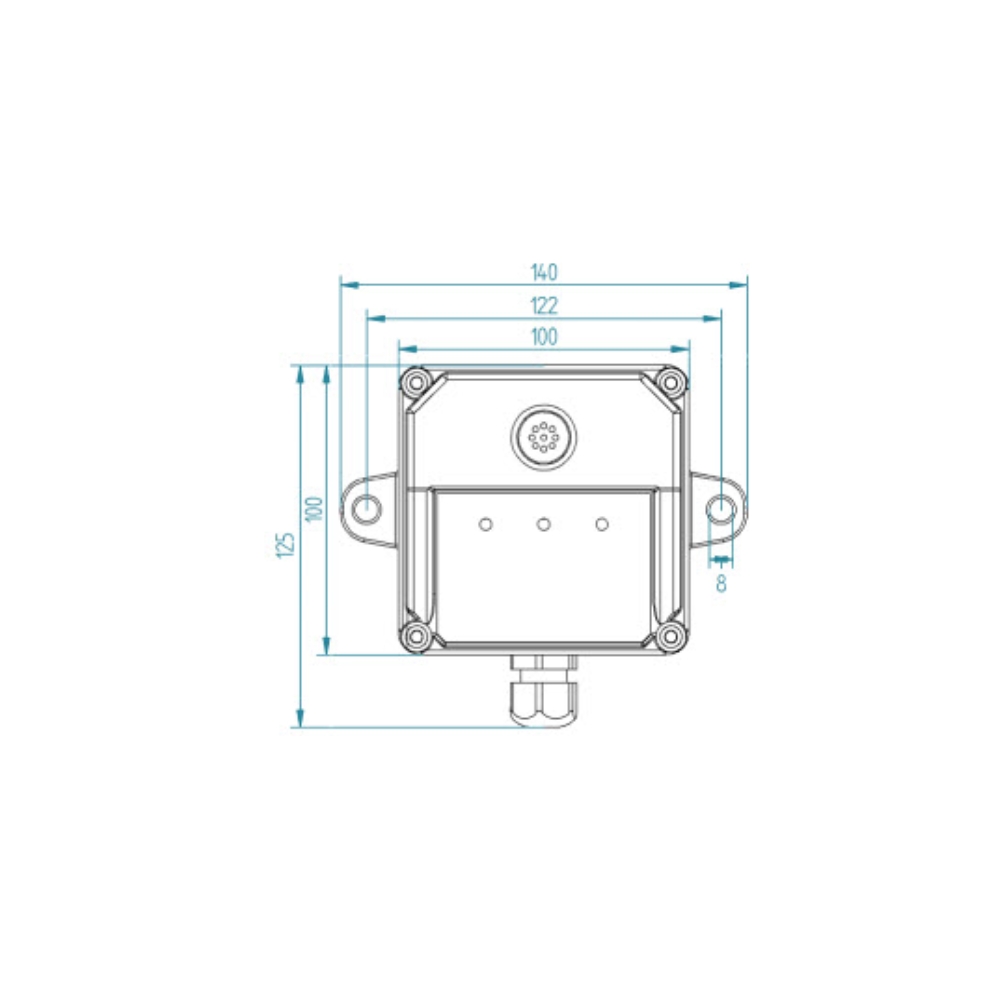
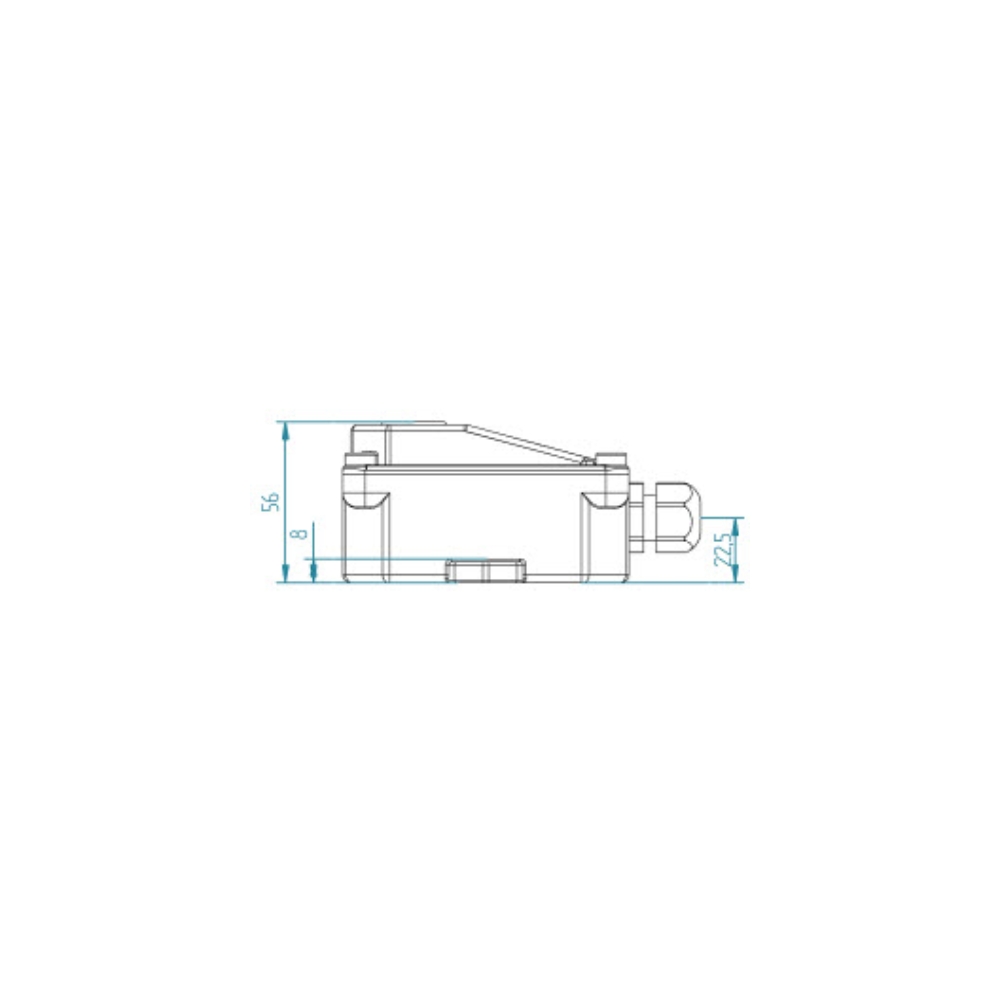
At 250 grams and 140 x 56 x 100 mm, it mounts on a wall without a fabricated bracket.
Where It Sits in the Gastech Range
The C-Guard is deliberately focused: carbon monoxide and nitrogen dioxide, in non classified areas, for ventilation control.
That focus keeps the cost down. If your application needs hazardous area certification, a wider gas list, relays or a local alarm at the detector, the rest of the Gastech range covers it. The D-Guard²R adds relays, the D-Guard²S adds a sounder strobe, and the D-Guard² is certified intrinsically safe for classified areas.
For a commercial carpark, or a plant room that needs vehicle exhaust monitoring, the C-Guard is the right tool, and anything more is unnecessary cost.
Where It’s Used
Commercial and residential carpark ventilation, basement and underground parking, loading docks and delivery bays, vehicle workshops and service bays, bus and truck depots, forklift charging and operating areas in warehouses, plant rooms with vehicle access, generator halls, vehicle decks on ferries and ro-ro vessels, ambulance bays and hospital carparks, and tunnels and covered ramps.
Benefits
- Calibrates in 45 seconds by one person, with no screwdrivers, meters or programming tools
- AS 1668.2 auto test drives vent fans and alarms for five minutes without using test gas
- Output locks at zero during calibration, so calibration causes no false alarms or fan starts
- One board covers the gases, ranges and sensor styles, cutting spares to a single card
- Vandal resistant high impact housing, grey to blend into carpark walls
- IP65, UV stable and chemically resistant, so a washdown or a wet ramp is not a problem
- Weighs 250 grams, so mounting needs no bracket fabrication
- Two wire 4 to 20 mA on 10 to 30 volts DC, which drops into existing carpark control wiring
- Drift under 5 percent a year keeps the calibration interval predictable
- Two year warranty on sensor and electronics for carbon monoxide
Analogue output
Two wire 4 to 20 mA
Indication
3 LED status indication
Input power
10 to 30 V DC
Response time
90% of full scale in under 30 seconds, sensor dependent
Operating temperature
Minus 20°C to plus 50°C
Humidity range
0 to 95%, non-condensing
Accuracy
Plus or minus 5% of reading
Repeatability
Plus or minus 1% of reading
Sensor style
4 series plug in sensors
Calibration
Non-intrusive push buttons. No screwdrivers or meters needed
Calibration time
45 seconds
AS 1668.2 test mode
5 minutes operation at 12 mA output
Drift
Under 5% signal loss per year
Weight
250 g
Dimensions
140 x 56 x 100 mm, 125 mm including the cable gland
Enclosure
High impact, UV stable, chemically resistant nylon
IP rating
IP65
Warranty
2 years on sensor and electronics for carbon monoxide. 1 year on other sensors
Carbon Monoxide
CO
Nitrogen Dioxide
NO2
- Aviation & Transportation
- Carpark & HVAC
- Chemical Manufacturing
- Confined Space & Compliance
- Food & Beverage
- Marine & Maritime
- Medical & Healthcare
- Mining & Minerals
- Power Generation & BESS
- Technology & Semiconductor
- Water & Wastewater
Yes, the AS 1668.2 activation mode raises the output to 12 mA for five minutes, which starts the fans and alarms so the full response can be verified.
45 seconds, using non-intrusive push buttons, and one person can complete it without a second technician at the panel.
No, the output locks at the zero gas reading throughout calibration, while fail-safe logic keeps monitoring active underneath.
Carbon monoxide, in ranges up to 100, 150 or 200 ppm, and nitrogen dioxide, up to 10 or 20 ppm. CO suits petrol vehicle environments, and NO2 suits diesel.
No, it is designed for non-classified carpark and HVAC applications. Classified areas need the D-Guard² or the S-Guard.
No, it outputs 4 to 20 mA to a controller. Where relays or a local sounder are needed at the detector, the D-Guard²R and D-Guard²S cover that.
Trusted by









Contact Us
Can’t find what you’re looking for? Our team is happy to help.