
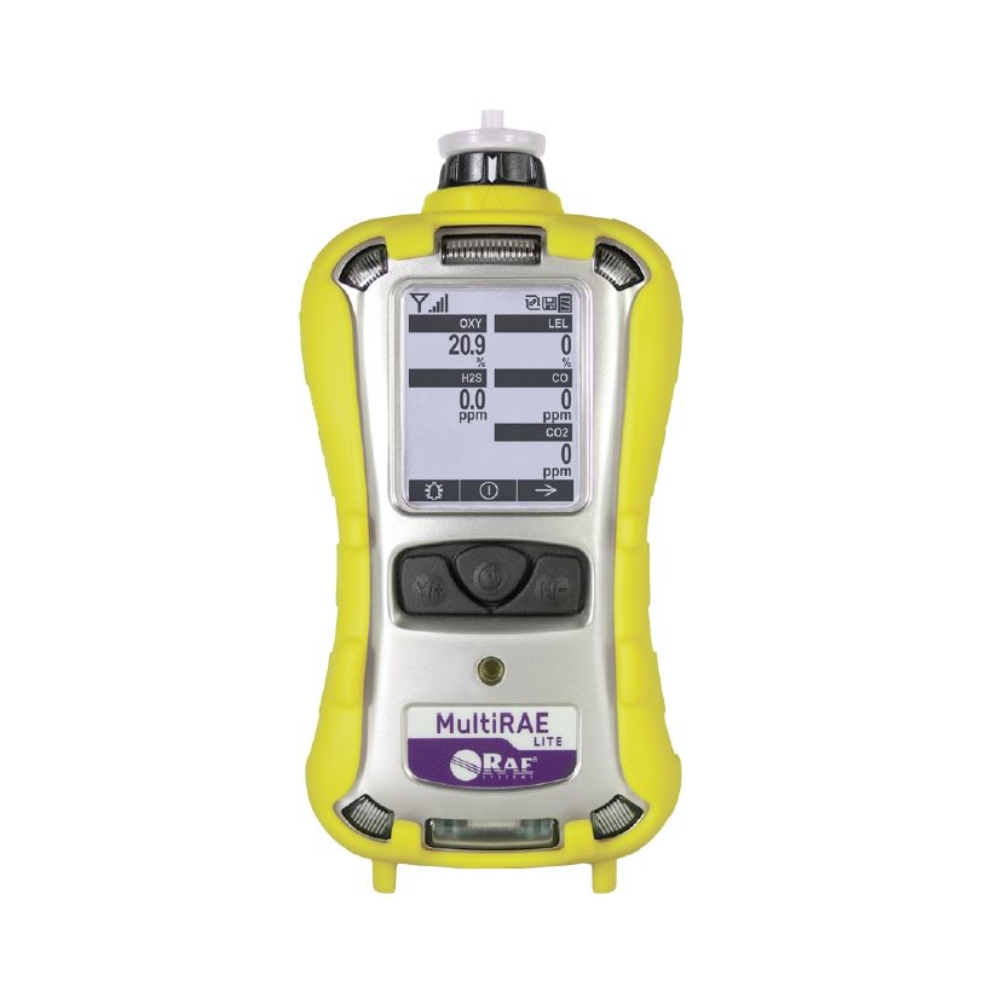
MultiRAE Lite
Portable Multi-Gas Detector
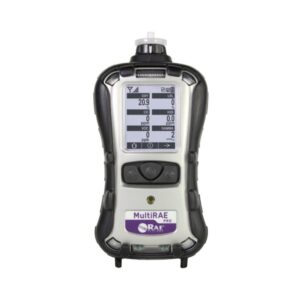
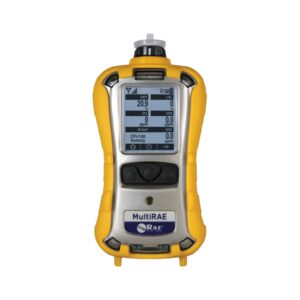
The Honeywell MultiRAE Lite is a one to six gas monitor for personal protection and leak detection, available in pumped and diffusion versions. Honeywell says it has the broadest choice of sensors in its class, with over 25 options including PID for VOCs (pumped version), NDIR for combustibles and CO2, and electrochemical sensors for toxic gases and oxygen. Optional wireless sends live readings and alarm status to ProRAE Guardian or an EchoView Host.
See which gases this detector covers under the new Workplace Exposure Limits (WEL).

KEY BENEFITS
- Broadest sensor selection in its class: over 25 options for up to 6 gases simultaneously
- Pumped version for remote sampling, or a lighter diffusion version for all day personal monitoring
- Optional wireless connectivity for real-time readings and alarm status at a central command
- Man Down alarm provides automatic protection for lone workers
- IP65 pumped and IP67 diffusion ingress protection ratings
+ more in the Description tab below
Personal Protection and Leak Detection Across Industry
The MultiRAE Lite is a one to six gas monitor for personal protection and multi gas leak detection. It’s built for chemical plants, food and beverage, downstream oil and gas, pharmaceutical, telecommunications and wastewater treatment, as well as fire overhaul.
It can be configured to match the detection needs and compliance requirements of different industries and applications, without moving to a more complex instrument.
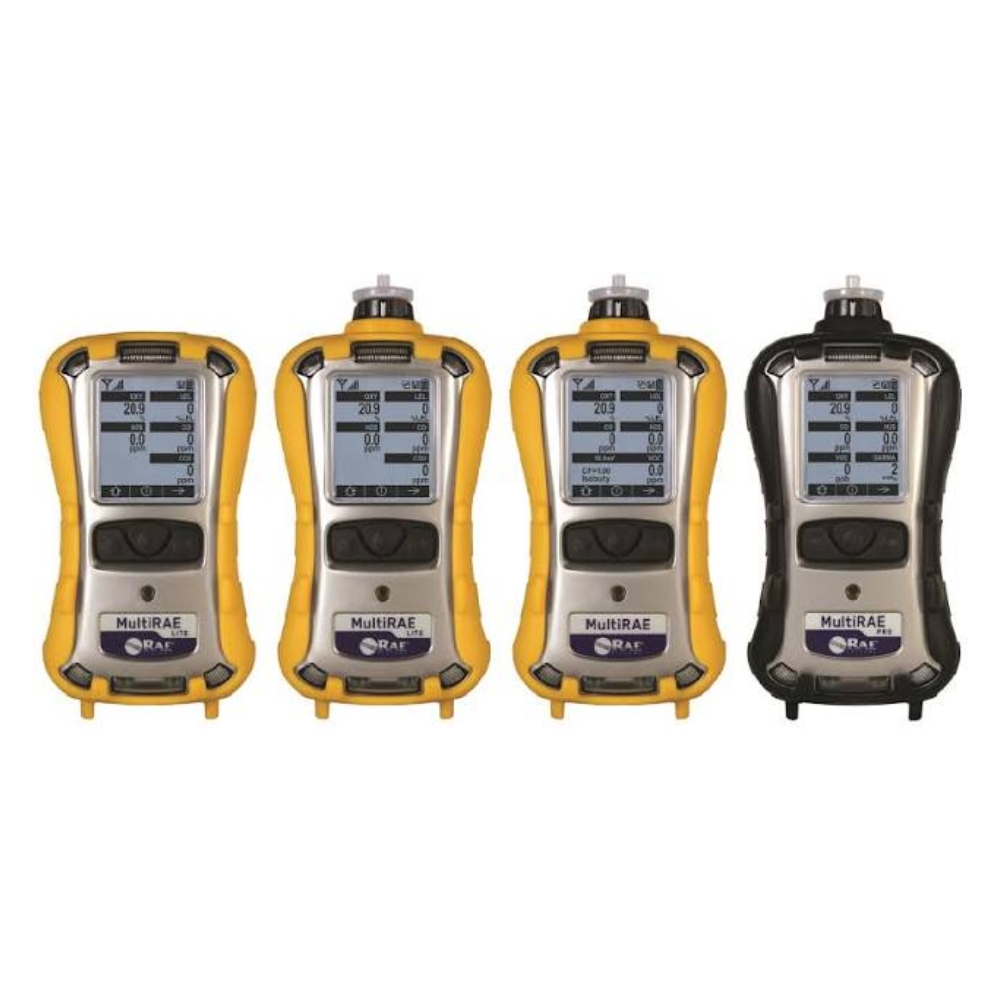
Pumped or Diffusion
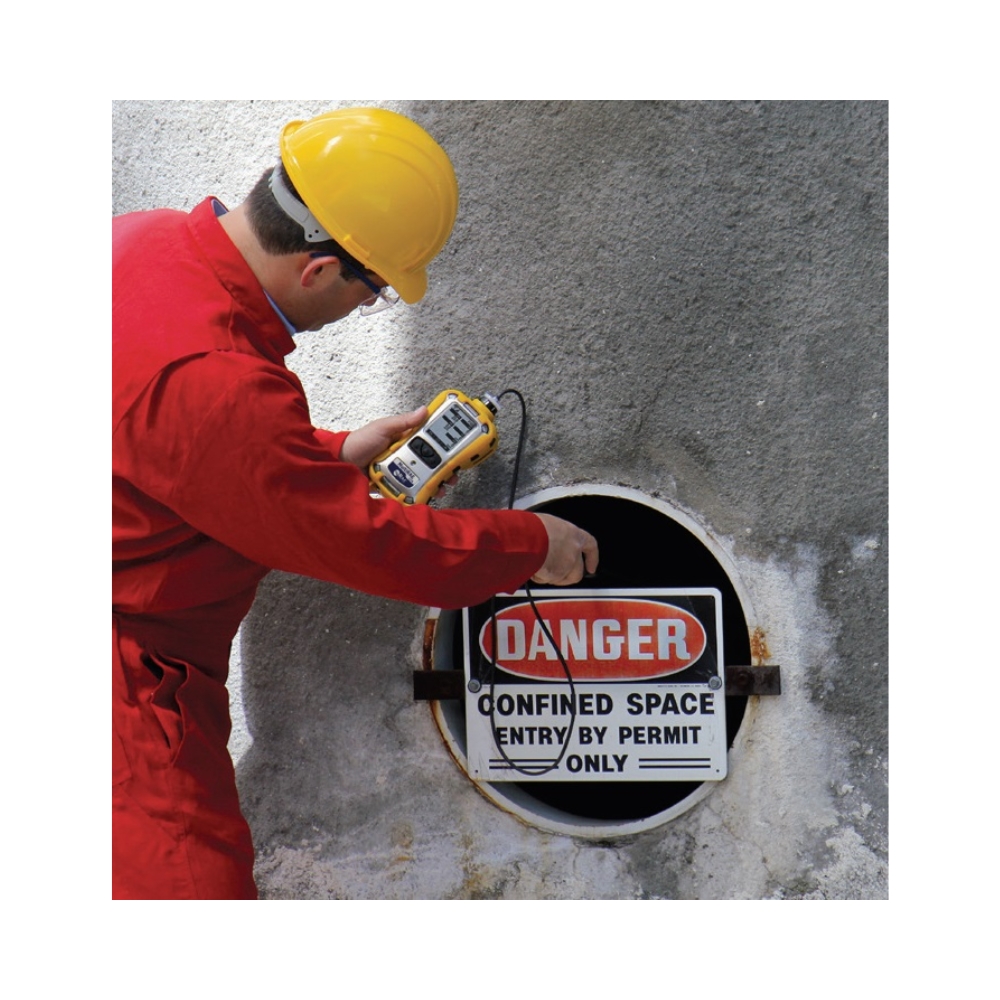
The MultiRAE Lite comes in two versions. The pumped version samples remotely from up to 30 metres, so a confined space can be tested before entry. It’s also the version to choose for PID, since the PID sensor needs a pumped configuration.
The diffusion version is lighter, at 760 g, and runs for longer between charges, making it the better choice for all day personal monitoring.
Over 25 Sensor Options
Choose from over 25 intelligent, interchangeable sensors. They include a PID for VOCs, catalytic and NDIR sensors for combustibles, NDIR for CO2, and electrochemical sensors for toxic gases and oxygen. A two gas combination sensor allows a six gas configuration.
Intelligent sensors store their own calibration data, so they can be swapped in the field.
Wireless Visibility
With the optional built in wireless modem, the MultiRAE Lite sends live gas readings and alarm status to ProRAE Guardian or an EchoView Host. Commanders and safety officers see what’s happening from any location. Remote monitoring may need additional equipment or software licences.
Alarms come through five ways, including a 95 dB buzzer, vibration, flashing red LEDs and a remote wireless notification. The Man Down alarm triggers a pre alarm, then a real time wireless notification if it isn’t cancelled.
Easy Maintenance
The sensors, pump and plug and play battery are easy to replace. On the pumped version, the AutoRAE 2 handles fully automatic bump testing and calibration. Data download, setup and upgrades run through the desktop cradle, travel charger or AutoRAE 2.
The MultiRAE Lite logs data continuously, storing six months of readings for five sensors at one minute intervals.
Benefits
- Broadest sensor selection in its class: over 25 options for up to 6 gases simultaneously
- Pumped version for remote sampling, or a lighter diffusion version for all day personal monitoring
- Optional wireless connectivity for real-time readings and alarm status at a central command
- Man Down alarm provides automatic protection for lone workers
- IP65 pumped and IP67 diffusion ingress protection ratings
- Fully automatic bump testing and calibration with AutoRAE 2 (pumped version)
- 19 languages for international deployment
- CSA, ATEX, IECEx and ANZEx certified for hazardous locations
- Lighter and lower cost than the MultiRAE, for standard industrial protection
- Intelligent sensors store their own calibration data, so they can be swapped in the field
Dimensions
Pumped: 193 x 96.5 x 66 mm. Diffusion: 175 x 96.5 x 56 mm
Weight
Pumped: 880 g. Diffusion: 760 g
Battery
Rechargeable Li-ion: about 12 hours pumped, 18 hours diffusion. Extended Li-ion: about 18 hours pumped, 28 hours diffusion. Alkaline (4 x AA): about 6 hours pumped, 8 hours diffusion. Figures for non wireless monitors
Gases
Up to 6 simultaneously from over 25 interchangeable sensor options
Sampling
Built in pump (PGM-6208) or diffusion (PGM-6208D). Pumped version samples up to 30 m. PID sensor requires the pumped version
Display
Monochrome graphical LCD (128 x 160) with backlight and automatic screen flip
Keypad
3 operation and programming keys
Alarms
Audible 95 dB, vibration, flashing LEDs, on-screen indication, Man Down alarm
Datalogging
Continuous, 6 months for 5 sensors at 1 minute intervals. User configurable from 1 to 3,600 seconds
Wireless
Optional. ProRAE Guardian, EchoView Host, WiFi Access Point
Wireless range
200 m to EchoView Host or RAEMesh Reader. 100 m to RAELink3 modem or WiFi access point
Operating temperature
-20°C to 50°C
Humidity
0 to 95% RH non-condensing
IP rating
IP65 pumped. IP67 diffusion
Calibration
Automatic with AutoRAE 2 (pumped version only) or manual
Languages
19 languages
Certifications
CSA Class I, Division 1, Groups A, B, C and D, T4. ATEX II 1G Ex ia IIC T4 Ga and I M1 Ex ia I Ma. IECEx and ANZEx Ex ia IIC T4 Ga and Ex ia I Ma (Ex ia d IIC T4 Gb with IR sensor)
Warranty
2 years non-consumable components and catalytic LEL sensors. 3 years CO and H2S sensors. 4 years liquid O2 sensors. 1 year all other sensors and consumables
Ethylene Oxide (ETO)
C2H4O
Methyl Mercaptan (Methanethiol)
CH3SH
Methane
CH4
Chlorine
Cl2
Chlorine Dioxide
ClO2
Carbon Monoxide
CO
Carbon Dioxide
CO2
Hydrogen
H2
Hydrogen Sulphide
H2S
Formaldehyde (CH2O)
HCHO
Hydrogen Cyanide
HCN
Combustible Gas
LEL
Ammonia
NH3
Nitric Oxide
NO
Nitrogen Dioxide
NO2
Oxygen
O2
Phosphine
PH3
Sulphur Dioxide
SO2
Volatile Organic Compounds
VOC
- Aviation & Transportation
- Chemical Manufacturing
- Confined Space & Compliance
- Energy (Oil & Gas)
- Food & Beverage
- Landfill & Remediation
- Marine & Maritime
- Medical & Healthcare
- Mining & Minerals
- Power Generation & BESS
- Technology & Semiconductor
- Water & Wastewater
The MultiRAE Lite comes in pumped and diffusion versions, while the MultiRAE is pumped only. The MultiRAE has a higher range PID (0 to 5,000 ppm with 0.1 ppm resolution, compared with 0 to 1,000 ppm on the Lite) and larger on board gas libraries. Both share the same wireless platform, and both work with AutoRAE 2 (pumped Lite only).
No. Wireless is optional on both the pumped and diffusion versions. Both are also available without wireless, for sites that don't need remote monitoring.
Yes. The pumped version draws samples from up to 30 metres for remote atmosphere testing before confined space entry.
No. The PID sensor for VOCs needs the pumped version of the MultiRAE Lite. Some other sensors, such as hydrogen and extended range H2S, are only available on the diffusion version. Talk to our Technical Consultants about the right setup for your gases.
From 1 December 2026, Safe Work Australia’s Workplace Exposure Limits (WEL) replace the old Workplace Exposure Standards (WES). The table below shows the MultiRAE Lite’s capability for each gas: whether it can measure down to the new WEL. It doesn’t tell you whether your site meets the WEL.
Meeting the WEL is the workplace’s responsibility. Your site sets its alarm levels, based on your own risk assessment. New detectors we configure ship with our default alarm levels, or you can tell us your own levels when you order.
| Gas | WEL compliant |
|---|---|
| Ammonia (NH₃) | ✓ |
| Carbon Dioxide (CO₂) | ✓ |
| Carbon Monoxide (CO) | ✓ |
| Chlorine (Cl₂) | ✓ |
| Chlorine Dioxide (ClO₂) | ✓ |
| Formaldehyde (HCHO) | ✓ |
| Hydrogen Cyanide (HCN) | ✓ |
| Hydrogen Sulphide (H₂S) | ✓ |
| Methyl Mercaptan (CH₃SH) | ✗ |
| Nitric Oxide (NO) | TBC¹ |
| Nitrogen Dioxide (NO₂) | ✓ |
| Phosphine (PH₃) | ✗² |
| Sulphur Dioxide (SO₂) | ✗³ |
| VOCs (PID) | Varies⁴ |
Oxygen (O₂) and flammable gas (LEL) aren’t covered by the WEL, so they’re not in this table, and their alarm levels don’t change.
See our default alarm levels for each gas on our WES to WEL page.
✓ Can measure this gas down to the new WEL.
✗ Can’t measure this gas down to the new WEL.
TBC: awaiting confirmation from the manufacturer.
Varies: depends on the specific chemical.
¹ Nitric oxide: the new limit is 2 ppm over 8 hours. Current sensors can’t yet confirm readings that low, so this detector provides alarm protection, but checking actual exposure needs another monitoring method. Victoria has deferred this limit to 2029.
² Phosphine: the new limit of 0.05 ppm starts 1 December 2026 in most states. WA and Victoria have deferred it to 1 December 2029, so the current limit still applies there until then.
³ Sulphur dioxide: the new limit is 0.25 ppm over 15 minutes. Current sensors can’t yet confirm readings that low, so this detector provides alarm protection, but checking actual exposure needs another monitoring method. Victoria has deferred this limit to 2029.
⁴ This detector measures VOCs via a PID sensor. PID sensors are broad spectrum and can detect hundreds of chemicals. Make sure you know the specific chemical you’re checking for, so you can confirm its WEL.
This detector also measures ethylene oxide, which has no WEL from 1 December 2026 as there is no safe exposure level.
Information as at 24 November 2026. See the full list of limits on the Safe Work Australia website.
Trusted by









Contact Us
Can’t find what you’re looking for? Our team is happy to help.